DbcultAccessing Vault...
6.1/10
Senior Film Conservator
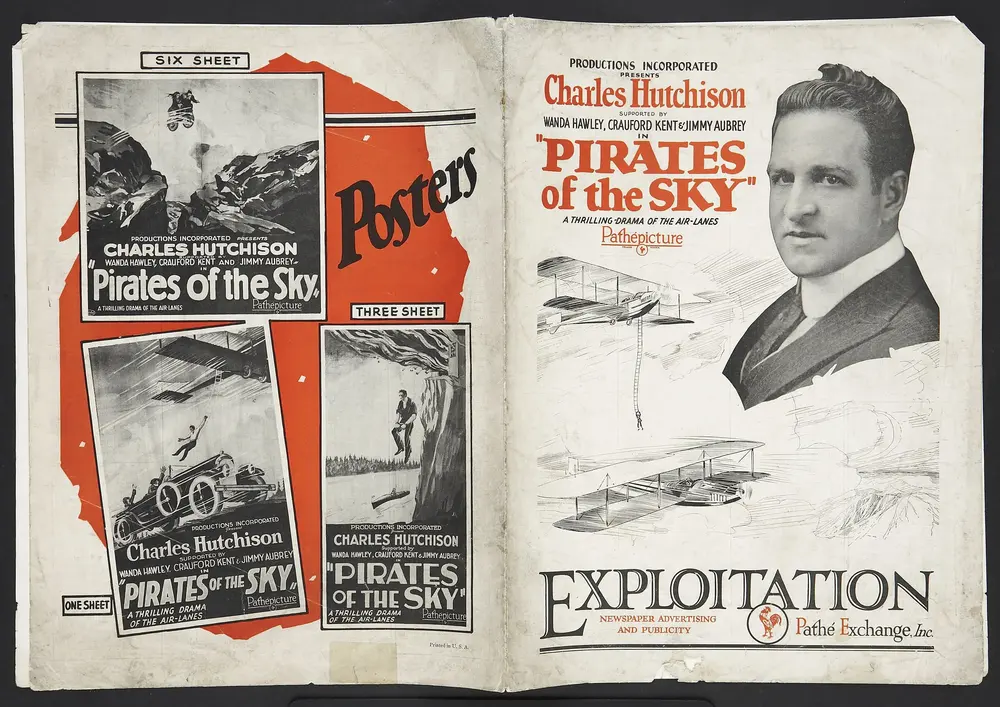
A definitive 6.1/10 rating for a film that redefined the boundaries of cult cinema. Pirates of the Sky remains a cornerstone of transgressive art.
Is Pirates of the Sky worth watching today? Short answer: absolutely, if you approach it with the right historical lens and an appreciation for raw, unpolished kinetic energy. This film is a fascinating relic for silent cinema aficionados and action film historians, but it's decidedly not for those seeking modern narrative sophistication or subtle character development.
This early 20th-century serial-style adventure, while undeniably a product of its time, offers a surprising amount of escapist fun. It’s a testament to the ingenuity and sheer audacity of early filmmaking, a thrilling snapshot of a nascent art form pushing boundaries with limited resources. You’re not just watching a film; you’re observing a piece of cinematic archaeology, a vital stepping stone in the evolution of action spectacle.
This film works because: Its relentless, almost breathless pacing and a series of genuinely audacious practical stunts keep the audience engaged, even through moments of narrative absurdity. The commitment to spectacle, particularly the aerial sequences, is commendable and often thrilling, pushing the boundaries of what was technically feasible at the time.
This film fails because: Character motivations are paper-thin, plot conveniences abound, and the melodrama often borders on the unintentionally comical. Any expectation of nuanced storytelling will be quickly dashed against the rocks of its single-minded pursuit of action, often at the expense of logical consistency.
You should watch it if: You have a deep appreciation for the silent era, an interest in the evolution of action cinema, or simply enjoy a no-holds-barred, pulpy adventure that prioritizes thrills over logic. It’s a perfect case study for understanding the serials that laid the groundwork for modern blockbusters, showcasing raw cinematic ambition.
The narrative of Pirates of the Sky is less a carefully woven tapestry and more a series of explosive dominoes, each falling to propel the hero into another impossible predicament. We are introduced to Manning, a secret police agent whose dedication to duty is immediately established. His target: a shadowy cabal of aeroplane thieves, a fascinating concept for an era still marveling at the marvel of flight. The film wastes no time in escalating the stakes, as the villains, proving themselves cunning adversaries, snatch Manning's former fiancée, Doris, as a means of leverage.
This abduction ignites a personal fire under Manning, transforming a professional assignment into a desperate rescue mission. The early highlight, a chaotic escape from a burning building perched precariously on a cliff, is a masterclass in early cinematic tension. The sheer physical danger, the frantic scramble against flames and gravity, immediately grounds the fantastical aerial elements in a palpable sense of peril.
The plot then veers into classic melodrama with the gang leader's sudden, inexplicable infatuation with Doris. This contrivance, while narratively flimsy, provides a brief, uneasy truce and allows for a moment of dramatic irony as Doris navigates her captor's misguided affections. It’s a plot device straight out of the serial playbook, designed to milk every ounce of suspense and emotional complexity (however superficial) from the situation.
The interception of a crucial note, a classic trope, shatters this uneasy calm, revealing Manning's undercover identity and reigniting the chase. From this point, the film becomes a relentless barrage of escalating action sequences: a daring rescue, a high-speed motorcycle pursuit that feels genuinely dangerous, and an almost unbelievable mid-air plane transfer. The plot serves primarily as a framework for these incredible stunts, a vehicle for continuous, heart-pounding movement rather than intricate character arcs.
Silent film acting is a unique art form, relying on exaggerated gestures, expressive facial contortions, and a physical vocabulary that transcends spoken dialogue. In Pirates of the Sky, the cast embraces this style with gusto, delivering performances that are broad, bold, and entirely appropriate for the film's pulpy nature. Nuance is not the goal; immediate, visceral communication of emotion is.
Jimmy Aubrey, as the intrepid Manning, embodies the quintessential silent-era hero. His performance is characterized by an earnest intensity, his eyes conveying determination and his body language a constant state of readiness. During the various chase sequences, Aubrey’s frantic energy is palpable, his every move telegraphing a desperate urgency. He’s not a deep character, but he is an effective one, a clear-cut protagonist for whom the audience can easily root. His earnestness is almost disarming.
Charles Hutchison, playing the formidable gang leader, provides a compelling antagonist. He projects a menacing charisma, a blend of ruthlessness and a surprising, if misguided, romantic streak. His villainy is clear, yet his infatuation with Doris adds a layer of unexpected, almost campy, complexity. It’s a performance that doesn’t shy away from grand theatricality, making him a memorable, if not entirely believable, foil.
Wanda Hawley, as Doris, fulfills the role of the classic damsel in distress with grace and conviction. Her terror in the burning cliff-side building is genuinely conveyed through wide eyes and desperate gestures, making her peril feel real. Later, her subtle defiance when confronted by the gang leader, even amidst her vulnerability, hints at a strength beneath the surface. Hawley successfully elicits sympathy and concern, making her rescue a compelling driving force for Manning’s actions. These performances, while lacking modern subtlety, are perfectly calibrated for the era’s storytelling demands.
The directorial choices in Pirates of the Sky are singularly focused on maintaining momentum and delivering spectacle. The film moves at a breakneck pace, eschewing lingering shots or contemplative moments in favor of a relentless forward thrust. This episodic, serial-like structure means that just as one perilous situation is resolved, another quickly emerges, keeping the audience on the edge of their seats. It’s a masterclass in early pacing, understanding that constant action is the key to engagement.
The cinematography, while technically limited by the era, excels at capturing movement and scale. The outdoor sequences, particularly those involving the aeroplanes, are impressively shot, conveying the vastness of the sky and the inherent danger of early aviation. There’s a raw, documentary-like quality to some of these shots, lending an authenticity to the stunts that modern CGI often struggles to replicate. The camera is often dynamic, following the action rather than merely observing it, pulling the viewer directly into the fray.
Consider the groundbreaking sequence where Manning transfers from a speeding motorcycle onto a moving aeroplane. This is not just a stunt; it’s a meticulously choreographed piece of cinematic daring. The camera work here is crucial, framing the action to maximize its impact, capturing every perilous grip and precarious leap. Similarly, the later mid-air transfer between two planes is astonishing, a testament to both the stunt performers' bravery and the director's vision for pushing boundaries. These moments feel genuinely thrilling, a clear precursor to the elaborate set pieces that define modern action cinema.
The tone throughout is one of unadulterated adventure, laced with melodramatic urgency. There’s no pretense of deep social commentary or psychological exploration; this is pure, escapist pulp. The editing contributes significantly to this, often employing quick cuts to heighten tension and accelerate the narrative. While it doesn't possess the atmospheric dread of something like Les Vampires, it shares that serial's relentless pursuit of excitement, albeit with a far more overt action bent. The film understands its purpose: to thrill, to entertain, and to leave audiences gasping.
One cannot discuss Pirates of the Sky without dedicating significant attention to its remarkable stunt work. In an era before green screens and digital effects, every perilous leap, every mid-air transfer, and every explosive escape was a real, tangible risk. The film's true stars aren't Jimmy Aubrey or Wanda Hawley, but rather the sheer, reckless audacity of the stunt performers and the innovative spirit of the filmmakers.
The motorcycle-to-plane transfer, a sequence that would still raise eyebrows today, is executed with a breathtaking realism. The danger is palpable, amplified by the grainy film stock and the absence of safety nets visible to the viewer. This commitment to practical effects gives the film a visceral edge that many modern action blockbusters, reliant on polished CGI, often struggle to achieve. It’s raw. It’s immediate. It’s utterly captivating.
The aerial sequences, in particular, are pioneering. The sight of actors (or their daring doubles) navigating the open cockpits of biplanes, performing transfers between aircraft high above the ground, is nothing short of incredible. These moments are not just thrills; they are historical documents of early aviation and filmmaking pushing the boundaries of what was thought possible. The film, in many ways, is a celebration of human courage and mechanical ingenuity, making it a unique artifact of cinematic history.
Yes, Pirates of the Sky is absolutely worth watching today, but with specific expectations. It's a goldmine for film historians and silent cinema enthusiasts. It’s also perfect for anyone who enjoys early action films and appreciates the sheer audacity of practical stunts. This film is not for viewers who demand complex characters or logical plot consistency. It’s a pure, unadulterated thrill ride, a fascinating glimpse into the nascent days of cinematic spectacle. Its value lies in its historical significance and its ability to deliver raw, unpolished excitement.
Pirates of the Sky is a joyous, unpretentious romp through the early days of action cinema. It works. But it’s flawed. Its narrative might be as thin as the air its characters fly through, and its melodrama occasionally borders on the comical, yet these are minor quibbles when weighed against its sheer, unadulterated energy and daring. It’s a film that demands to be seen for its historical significance and its pioneering spirit, a testament to an era when filmmakers literally risked life and limb for a thrilling shot.
This isn't a film you analyze for deep thematic resonance; it's a film you experience for its raw, kinetic power. It's a loud, proud declaration of what cinema could be: a spectacle, a chase, a pure, unadulterated thrill. For those willing to embrace its antiquated charm and celebrate its incredible ambition, Pirates of the Sky remains a surprisingly high-flying adventure, a true gem from the silent era that still has the power to impress.
IMDb 7.2
1936
Community
Log in to comment.