DbcultAccessing Vault...
Cult Review
Senior Film Conservator
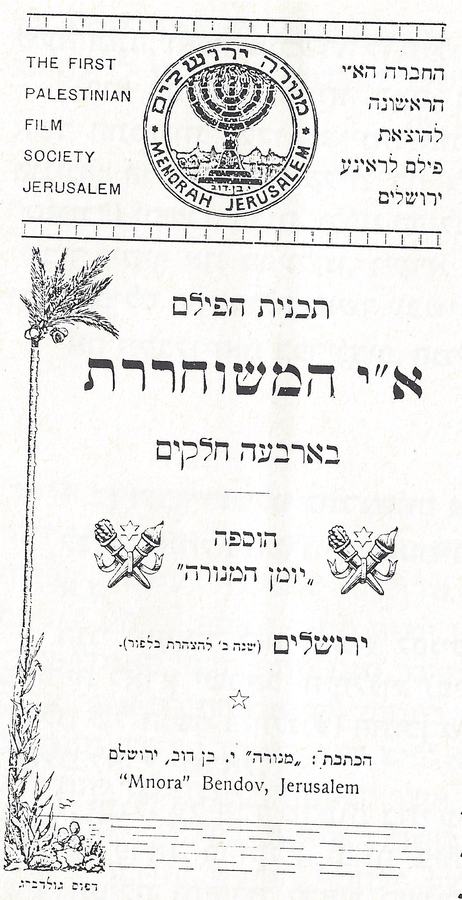
Stepping back into the nascent days of cinema, particularly when examining a work as profoundly rooted in its socio-political moment as Ya'ackov Ben-Dov's 'Eretz Yisrael Hameshukhreret' (The Liberated Land of Israel), is to engage with more than just moving images. It is to confront a historical artifact, a declaration, and a piece of visual rhetoric all at once. This isn't a film that seeks to entertain with dramatic tension or intricate character arcs in the vein of contemporary narrative features like The Labyrinth or the more sensationalist The Raven. Instead, its purpose is far grander, far more foundational: to document, to persuade, and to inspire a burgeoning national consciousness. Ben-Dov, often hailed as the father of Hebrew cinema, wasn't just a filmmaker; he was an archivist of a dream, capturing the very genesis of a nation on the silver screen.
At its core, 'Eretz Yisrael Hameshukhreret' is a testament to the power of film as a medium for ideological dissemination. Released during a period of intense Zionist activity and global upheaval, it stands apart from much of the commercial cinema of its time. While American audiences might have been captivated by the thrilling escapades of Captain Alvarez or the moral dilemmas explored in One Touch of Sin, Ben-Dov's lens was fixed on a different kind of drama: the gritty, often arduous, reality of settlement and development in Ottoman and later Mandate Palestine. The film, rather than constructing a fictional narrative, presents a mosaic of life in the Jewish yishuv – the pre-state Jewish community. We witness, through Ben-Dov's pioneering cinematography, the meticulous process of land reclamation, the tireless efforts of agricultural workers, the construction of new homes and institutions, and the vibrant, if idealized, communal life taking root. Each frame is imbued with a sense of purpose, a quiet declaration of intent. The film's 'plot' is the unfolding of a collective destiny, a visual chronicle of a people returning to their ancient homeland and striving to build a modern future.
Ben-Dov’s approach is less about individual heroism and more about the collective spirit. He captures the faces of the pioneers – weathered, hopeful, determined – not as actors playing roles, but as living embodiments of an ideal. There’s a raw authenticity to the footage, a stark contrast to the often melodramatic performances seen in films like The Symbol of Sacrifice. This is cinema as documentation, but a highly curated and purposeful documentation. The camera lingers on scenes of labor – plowing fields, building roads, planting trees – transforming mundane activities into acts of profound national significance. The very act of working the land becomes a spiritual and political statement, a visual metaphor for the 'liberation' proclaimed in the title. This careful selection and framing of images elevates the everyday into the epic, turning the struggles of a fledgling community into a powerful narrative of resilience and triumph.
Ya'ackov Ben-Dov, though listed here as 'cast' (likely due to the early, less defined roles in filmmaking, where the primary creative force might also appear on screen or simply be the singular, driving presence), was far more than an on-screen personality; he was the singular creative architect of this cinematic endeavor. A photographer by trade, Ben-Dov brought a documentarian's eye and a Zionist's heart to his filmmaking. He understood the nascent power of the moving image to shape perceptions and mobilize support. His work predates and operates in a fundamentally different sphere than the dramatic narratives of Hollywood, yet it shares with them the desire to tell a compelling story. While filmmakers like D.W. Griffith were exploring complex narrative structures in films like Suspense, Ben-Dov was pioneering a form of national cinema, using the raw capabilities of early film technology to capture the very essence of a socio-political movement.
His cinematography, while perhaps lacking the sophisticated camera movements or editing techniques that would later define cinematic artistry, possesses an undeniable directness and sincerity. He understands the power of the close-up to reveal character, even if that character is a collective. He frames landscapes not just as backdrops, but as protagonists in their own right – the reclaimed swamps, the budding orchards, the nascent urban centers – all tell a story of transformation. Ben-Dov's technical limitations, characteristic of early cinema, are paradoxically what give 'Eretz Yisrael Hameshukhreret' its raw, unvarnished charm. Unlike the polished studio productions of the era, this film feels immediate, almost like a direct transmission from the past. It’s a snapshot, a living photograph, imbued with the hopes and struggles of its subjects. He was, in essence, a visual historian, meticulously recording the foundational moments of a nation, ensuring that these images would serve as both memory and inspiration for generations to come. His commitment to this vision is palpable in every frame, a dedication that transcends mere technical skill to touch upon something far more profound: a deep-seated belief in the subject matter itself.
The central themes of 'Eretz Yisrael Hameshukhreret' revolve around reclamation, rebirth, and the forging of a new identity. The concept of 'liberation' in the title is multi-faceted: it speaks to the liberation of the land from neglect, the liberation of a people from diaspora, and the liberation of the spirit through self-determination. The film implicitly argues for the legitimacy of the Zionist project by visually demonstrating its progress and its commitment to constructive development. Unlike films that might focus on individual moral struggles, such as What Becomes of the Children?, Ben-Dov's work is preoccupied with the collective moral imperative of national revival. It showcases the burgeoning infrastructure – schools, hospitals, agricultural cooperatives – as evidence of a thriving society taking root. Children are frequently featured, symbolizing the future and the continuity of the Zionist dream, a stark contrast to the often-bleak portrayals of youth in some contemporary social dramas.
The film's impact cannot be overstated, particularly within the context of early Zionist propaganda and cultural production. It served as a powerful tool for fundraising abroad, demonstrating to potential donors the tangible results of their contributions. Domestically, it fostered a sense of unity and pride, reinforcing the shared purpose among the pioneers. While films like The Service Star galvanized support for a national war effort, 'Eretz Yisrael Hameshukhreret' sought to galvanize support for a national *building* effort, a project of peace and creation. It articulated a vision, not just of a place, but of a possibility. The film’s aesthetic, while simple, was profoundly effective in conveying its message. The sun-drenched landscapes, the determined faces, the communal gatherings – all contribute to an image of a vibrant, resilient, and purposeful community. This was not merely documentation; it was myth-making in its purest form, laying the visual groundwork for a national narrative that would resonate for decades.
When placing 'Eretz Yisrael Hameshukhreret' within the broader cinematic landscape of its time, its unique nature becomes even more apparent. While American and European cinemas were rapidly developing narrative conventions, genre specificities, and star systems, Ben-Dov was charting a different course. Consider the dramatic flair of a film like Saint, Devil and Woman, or the intricate plotting of I Will Repay – these were designed for mass entertainment, often exploring universal themes through highly individualized stories. 'Eretz Yisrael Hameshukhreret,' by contrast, operates on a collective, historical plane. Its 'characters' are the pioneers, the land, and the nascent nation itself. Its 'story' is the very act of becoming, a continuous present rather than a resolved past or a predicted future.
Even when comparing it to other forms of early documentary or propaganda, Ben-Dov's work has a distinct flavor. Films like John Redmond, the Evangelist, might have focused on a charismatic individual to rally support, but 'Eretz Yisrael Hameshukhreret' largely eschews such a singular focus, preferring to highlight the broader community. The emphasis is on the practical, the tangible, the communal effort. It’s less about a leader's oratorical power and more about the collective will manifested through labor. This makes it a fascinating counterpoint, showcasing how different cultural and political contexts shaped the very purpose and aesthetics of early film. While Irish Eyes might evoke a sense of national pride through romanticized narratives, Ben-Dov's film grounds its national pride in the sweat and soil of real-world construction. It's a pragmatic idealism, captured on film.
In retrospect, 'Eretz Yisrael Hameshukhreret' is more than just a historical curiosity; it is a foundational text in Israeli cinema and a vital document for understanding the early Zionist movement. It captures a moment of intense optimism and fervent dedication, offering a rare glimpse into the practical realities of building a society from the ground up. The film's enduring power lies in its ability to transcend its immediate propagandistic aims and offer a poignant, humanistic portrayal of a people striving for self-determination. It is a testament to the idea that film, even in its infancy, could be a powerful engine for social change and national identity formation. Its influence, though perhaps not directly mirrored in later narrative films, established a precedent for using the cinematic medium to reflect and shape the national discourse, a trend that would continue to evolve in Israeli filmmaking.
The film’s simple yet profound visual language speaks volumes about the ethos of the time. It avoids the sensationalism or complex psychological dramas that were becoming popular in other film markets, like the intense character studies in The Pit or the social critiques found in Broken Barriers. Instead, it focuses on the collective, the communal, and the concrete. The images of children learning Hebrew, of communal dances celebrating harvests, of newly built structures standing proudly against the vast landscape – these are not just scenes; they are affirmations. They are visual arguments for the viability and vitality of the Zionist project. Ben-Dov's work is a vital reminder of cinema's capacity to serve as both a mirror and a blueprint, reflecting the present while simultaneously sketching the contours of a desired future. It's a powerful and essential piece of cinematic history, inviting viewers to engage not just with a film, but with the very unfolding of a nation.
IMDb 6.5
1928
Community
Log in to comment.