DbcultAccessing Vault...
Cult Review
Senior Film Conservator
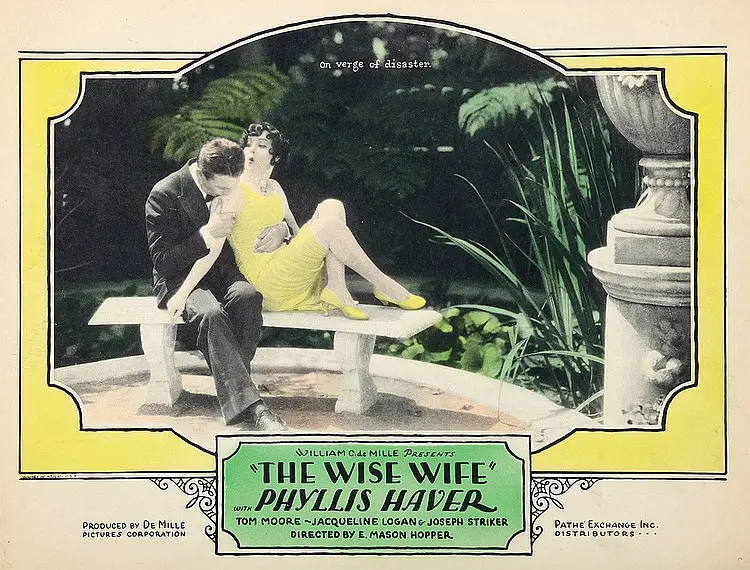
Is The Wise Wife worth your time in the modern era? Short answer: Yes, but only if you have an appetite for the psychological warfare that defined pre-Code domestic dramas. It is a film for those who appreciate the subtle art of the silent performance; it is certainly not for viewers who require explosive action or a protagonist with a traditional moral compass.
This film works because it avoids the typical 'wronged woman' tropes of its era. This film fails because its central male character is so fundamentally unappealing that the protagonist’s fight to keep him feels somewhat misguided. You should watch it if you want to see a rare example of a 1920s comedy that treats marriage like a tactical military operation.
Before he became known for grit and noir, Tay Garnett was honing a specific type of social observation. In The Wise Wife, his direction is surprisingly claustrophobic. Most of the tension is built within the confines of the marital home, turning the domestic space into a battlefield. Unlike the more sprawling narratives of A Kentucky Cinderella, Garnett keeps the camera focused on the micro-expressions of his leads.
There is a specific scene where Helen watches Carter and Mona from the top of the staircase. Instead of a wide shot showing her isolation, Garnett uses a tight medium shot. We see the gears turning in Helen's head. It’s not sadness; it’s calculation. This isn't a woman losing her mind; it's a woman drafting a contract. The pacing in these middle segments is deliberate, reflecting the slow burn of Helen's plan.
Phyllis Haver delivers a performance that is almost unsettling in its restraint. When she decides to 'give up' and look her worst, she doesn't just put on a robe. She changes her entire posture. She becomes a ghost in her own house. It is a risky acting choice that pays off because it makes the audience complicit in her deception. We know she’s winning even when she’s 'losing.'
Jacqueline Logan, as the 'other woman,' provides the necessary friction. While she could have played Mona as a one-dimensional vamp, she gives the character a sense of genuine, if shallow, excitement. The contrast between Haver’s calculated stillness and Logan’s frenetic energy is what keeps the film from feeling like a stage play. It’s a dynamic we see echoed in later silent works like The Return of Mary, though with significantly more bite here.
Why should a modern viewer care about a 1927 silent comedy?
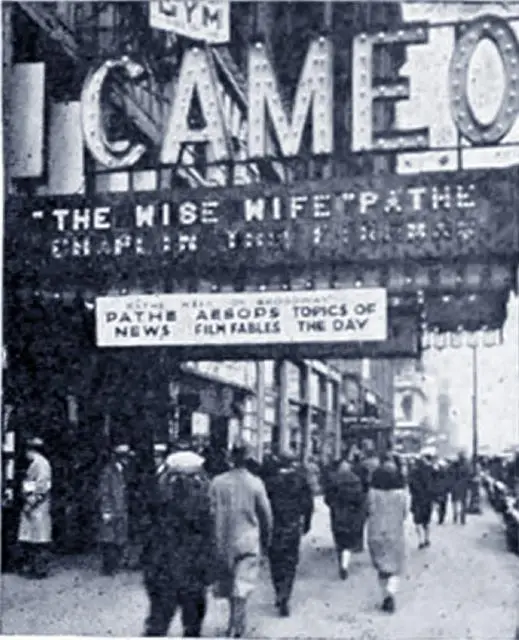
The answer lies in its cynicism. The Wise Wife is not a romantic film. It is a movie about the preservation of property and social status through the guise of love. If you are interested in the evolution of the 'strong female lead,' this film offers a fascinating, if morally complex, blueprint. It shows a woman using the very stereotypes that limit her to reclaim her position of power.
The writing credits, featuring Zelda Sears and Tay Garnett himself, suggest a collaborative effort to subvert the 'happy home' narrative. The dialogue titles are punchy and often carry a double meaning. There is an absence of the sentimental fluff found in films like Midst Peaceful Scenes. Instead, the script focuses on the transactional nature of the characters' interactions.
One of the most striking observations is how the film treats Carter. Tom Moore plays him as a man easily swayed by the nearest bright object. The script doesn't try to redeem him. He is a prize only because Helen has decided he is. This level of honesty about the mediocrity of some men in high positions is a refreshing, albeit brutal, take for 1927. It works. But it’s flawed.
Cinematographically, the film is competent but not revolutionary. It lacks the experimental flair of something like La p'tite Lili, but it makes up for it with clear visual storytelling. The lighting in the final act, as the 'glamour' of the affair begins to fade, becomes harsher. The shadows in the house grow longer, mirroring the cooling of Carter’s passion. It’s subtle, but effective.
The pacing does suffer in the second act. The 'wise' strategy of waiting for the husband to get bored requires the audience to also wait. While this builds a sense of realism, it can feel repetitive. We see one too many scenes of Mona being annoying and Carter looking slightly confused. A tighter edit could have turned this into a lean 60-minute thriller, rather than a padded domestic comedy.
Pros:
- Sharp, unsentimental look at marriage.
- Exceptional lead performance by Haver.
- Directing that maximizes a limited setting.
- High production values in costume and set design.
Cons:
- The husband is a vacuum of personality.
- Repetitive narrative structure in the second act.
- The moral conclusion is debatable by modern standards.
The Wise Wife is a fascinating artifact of a time when cinema was beginning to trade melodrama for psychological realism. While it lacks the visual experimentation of Northern Lights, it provides a much more interesting character study. It is a cold film, perhaps even a cruel one, but its refusal to play nice makes it more memorable than many of its contemporaries. It is a calculated piece of filmmaking that rewards the patient viewer with a masterclass in silent-era manipulation. It’s not a masterpiece, but it’s a damn good argument for the intelligence of 1920s screenwriting.
IMDb 6.2
1921
Community
Log in to comment.