DbcultAccessing Vault...
5.4/10
Senior Film Conservator
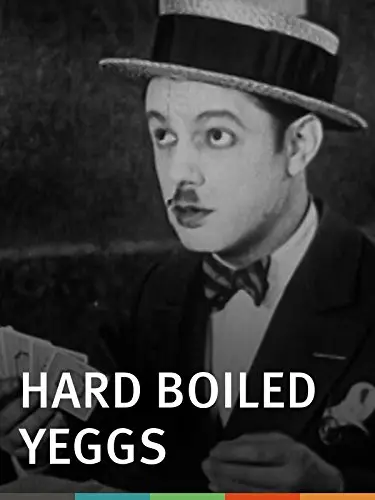
A definitive 5.4/10 rating for a film that redefined the boundaries of cult cinema. Hard Boiled Yeggs remains a cornerstone of transgressive art.
Is Hard Boiled Yeggs worth a watch in the modern era? Short answer: yes, but only if you have a deep-seated appreciation for the physical geometry of 1920s slapstick. This film is specifically for historians of the silent era and those who enjoy the 'Chaplin-clone' subgenre; it is definitely not for viewers who require narrative complexity or high-definition polish.
The film exists in that strange pocket of the late silent era where the formulas were perfected but the innovation had begun to plateau. Billy West, a man who built a career on being the most convincing Charlie Chaplin lookalike in the business, brings a frantic energy to the screen that is both impressive and slightly derivative. It is a fascinating artifact of a time when the 'Little Tramp' archetype was so dominant that even his imitators could carry a feature-length or short-form production with ease.
This film works because of its relentless commitment to physical danger and the surprisingly high stakes of its 'inheritance trap' premise. It fails because it relies too heavily on established tropes without offering a unique visual signature of its own. You should watch it if you want to see a masterclass in low-budget 1920s stunt coordination and set design.
The plot of Hard Boiled Yeggs is a classic 'Old Dark House' setup relocated to a grimy urban dive bar. Billy West’s character is the quintessential 'fish out of water.' He is a college graduate—a signifier of privilege and softness—thrown into a den of 'yeggs' (a period-specific term for safe-crackers and low-life thugs). The central conflict is driven by a legal mechanism: the will. This was a common trope in films like The Home Stretch, where wealth is dangled just out of reach, contingent on a specific, often dangerous, condition.
The villains, played with snarling relish by William Dyer and Les Bates, are not just obstacles; they are the architects of the film's physical comedy. Every scene in 'The Cafe' is designed as a potential death trap. For example, there is a sequence involving a rigged chair that feels like a precursor to the elaborate Rube Goldberg machines of later comedy. West’s ability to dodge these threats—often by mere inches—demonstrates the high level of rehearsal required for these shorts. It works. But it’s flawed. The pacing occasionally stutters when the film shifts from action to the necessary exposition of the will's terms.
The elephant in the room with any Billy West production is the mustache. West didn't just look like Chaplin; he moved like him, sighed like him, and took falls like him. However, in Hard Boiled Yeggs, we see a slightly more athletic version of the persona. While Chaplin was a dancer, West was more of an acrobat. In the scene where he first enters the dive bar, his interaction with the rough clientele shows a defensive agility that is distinct from Chaplin's more offensive, mischievous style.
Compare this to the performances in Cooks and Crooks, and you see that West had a better grasp of the 'heroic' lead role than many of his contemporaries. He isn't just a victim of circumstance; he is a proactive survivor. Ethelyn Gibson, playing the 'pretty young girl,' isn't just window dressing either. She provides the crucial emotional anchor and, in several key moments, the tactical distraction needed for Billy to escape. Their chemistry is rudimentary but effective, providing a light contrast to the heavy-handed villainy of Bates and Dyer.
If you are looking for a deep emotional resonance or a groundbreaking cinematic technique, you won't find it here. However, if you want to understand the 'B-side' of the Roaring Twenties, Hard Boiled Yeggs is essential. It represents the workhorse cinema of the era—the films that filled the gaps between the epics. It lacks the polish of The Virgin Queen, but it makes up for it with a raw, kinetic energy that is infectious.
The cinematography by the uncredited cameramen of the era is functional but surprisingly moody. The use of shadows in 'The Cafe' creates a genuine sense of claustrophobia. You can almost smell the stale beer and cheap tobacco. This atmospheric grounding makes the slapstick feel more dangerous. When a heavy object falls toward Billy’s head, the lighting makes it feel like a genuine threat rather than a prop made of cork.
Pros:
- Exceptional physical comedy that holds up nearly a century later.
- Strong, menacing performances from the supporting villains.
- A brisk runtime that ensures the central gag doesn't overstay its welcome.
- Interesting historical look at 1920s 'underworld' tropes.
Cons:
- The plot is incredibly predictable from the first five minutes.
- Billy West’s imitation of Chaplin can feel distracting to modern eyes.
- Limited emotional depth; the stakes are purely physical.
Director Scott Pembroke was a journeyman of the silent era, and his efficiency is on full display here. He understands how to frame a gag for maximum impact. In one specific scene, Billy is trying to navigate a narrow hallway while the thugs wait around the corner with a mallet. Pembroke uses a wide shot to show both the protagonist's ignorance and the villains' anticipation, creating a classic sense of dramatic irony that fuels the comedy. This is the same type of visual storytelling found in The Slacker, emphasizing movement over dialogue.
The editing is also worth noting. In 1926, the 'language' of film was becoming more sophisticated. The cuts between the thugs' plotting and Billy’s oblivious exploration of the bar are timed to a rhythmic beat. It builds a tension that is rare for a pure comedy short. It’s not quite the psychological depth of Calvaire d'amour, but for a film about yeggs and inheritance, it’s surprisingly tight.
Hard Boiled Yeggs is a fascinating, if minor, entry in the silent comedy canon. It serves as a reminder that the 1920s were a time of immense creative output where even the 'clones' had to be incredibly talented to survive. Billy West might not have the soul of Chaplin, but he had the stamina. The film is a punchy, dangerous, and occasionally hilarious look at greed and survival.
"A relic of a time when a mustache and a will were all you needed to build a cinematic world of chaos."
While it doesn't reach the heights of the era's masterpieces, it occupies its space with confidence. It is a blue-collar comedy for a blue-collar audience. If you go in expecting a light, acrobatic diversion, you won't be disappointed. Just don't expect it to change your life. It’s a job well done, nothing more, nothing less.
IMDb 6.9
1932
Community
Log in to comment.