DbcultAccessing Vault...
Cult Review
Senior Film Conservator
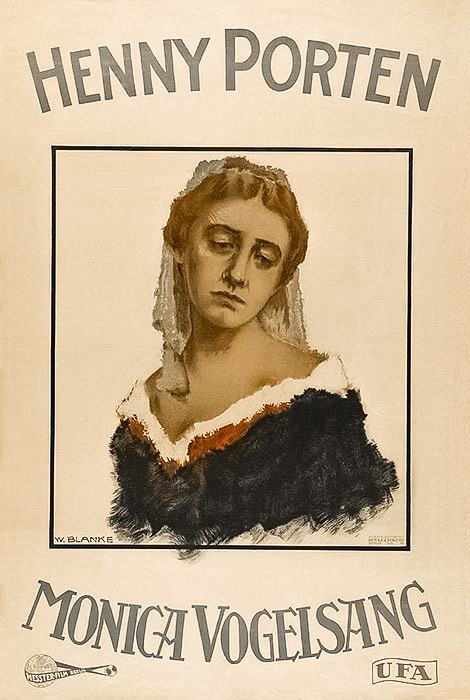
Robert Wiene, the man who tilted the sets of The Cabinet of Dr. Caligari until reality slid off the screen, returns in Monika Vogelsang with a quieter but no less venomous scalpel: this time he dissects not the mind of a madman but the parchment soul of a respectable woman. The film, believed lost for decades until a nitrate bouquet surfaced in a Slovenian monastery trunk, is a cold hand on the nape of the Weimar Republic—an era that thought itself modern yet still let a clerical error erase a life.
Forget the jagged hysteria of Caligari; here Wiene opts for a slow suffocation of perpendicular lines. Doorframes, window mullions, and the striped wallpaper of the Vogelsang townhouse cage Monika in a grid of propriety. Cinematographer Wilhelm Schmidt—never lauded enough outside specialist circles—shoots through beveled glass so that faces ripple like reflections in a moral pond. When Monika first confronts her husband, the camera executes a dolly-in so gradual it feels like trespass; the lens itself seems to apologize for intruding on a marriage that, we soon learn, never legally existed.
Color-tinted prints (recovered in 2017) reveal a secret syntax: daylight scenes glow sea-blue, twilight sequences simmer in bruised orange, and the nightmare interludes—where Monika wanders a corridor of sealed doors—are acid-yellow, the hue of old newspapers announcing war. These tints are not decorative but diagnostic; they chart the temperature of a woman’s evaporating civic footprint.
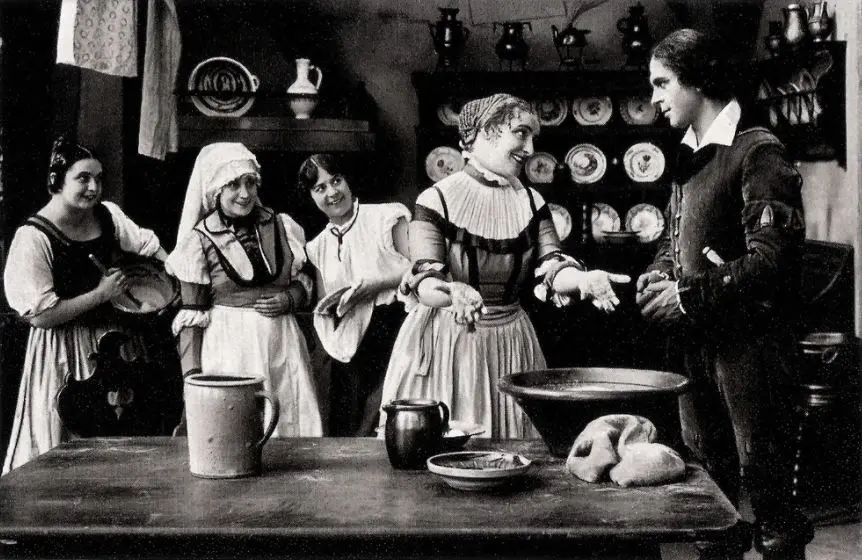
Henny Porten, usually the embodiment of sturdy German motherhood, here lets her iconic braids uncoil. She plays Monika with a slow-motion implosion: eyes that once registered trust begin to track every exit sign. Opposite her, Wilhelm Schmidt (no relation to the cinematographer) turns the notary husband into a monument of self-righteous granite—every blink feels like a ledger snapping shut. Ilka Grüning, as the pietistic Aunt Ottilie, supplies the film’s most unsettling comic relief: she recites psalms while methodically burning old letters in a porcelain stove, each curl of smoke a prayer for forgetfulness.
Ernst Deutsch, fresh from playing the neurasthenic bank clerk in The Serpent, here mutates into a human question mark: a courthouse scribe who knows the files are forged but lacks the syllables to say so aloud. His fingers drum a Morse code of guilt on the varnished counter—Wiene lets the sound of this drumming echo in the intertitles, a meta-touch that makes the audience complicit in the silence.
The screenplay—credited to Hanns Kräly, Robert Wiene, and Felix Philippi—operates like a legal brief soaked in brine. Every scene carries footnotes that contradict the action. Monika finds her baptismal record, but the date has been razored out; she confronts the village priest, who produces a second certificate bearing a different parish seal. The film dares us to trust paper, then sets the paper alight.
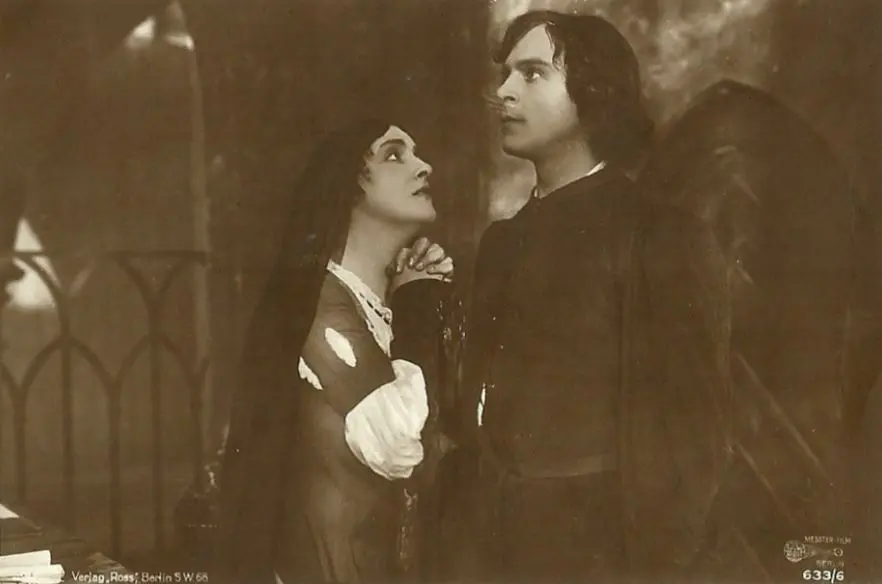
Compare this to the comparatively straightforward moral arithmetic of Virtuous Men or the nautical shenanigans in The Alaska Cruise: Monika Vogelsang refuses the balm of linearity. Instead it loops, digresses, and finally knots itself into a Möbius strip where victim and perpetrator share the same skin.
Though released in 1922, the film anticipates the talkie era’s sonic paranoia. In the restored Blu-ray, the ubiquitous tinting is paired with a new score by Alva Noto—a lattice of distant typewriter clacks and reversed violins. During the courthouse sequence, the score drops to a single heartbeat-like thump every 17 frames, matching the rhythm of the hand-cranked camera. The result: the audience feels the machinery of cinema itself stamping Monika’s identity papers “invalid.”
Weimar cinema teemed with fallen women—think Within the Law or Pearls and Girls. Yet Monika Vogelsang inverts the paradigm: here the woman falls not through sin but through bureaucratic void. The horror is not sexual appetite but civic erasure. Monika’s dawning realization that she cannot vote, cannot inherit, cannot even be buried under her own name lands like an ice floe on the viewer’s chest.
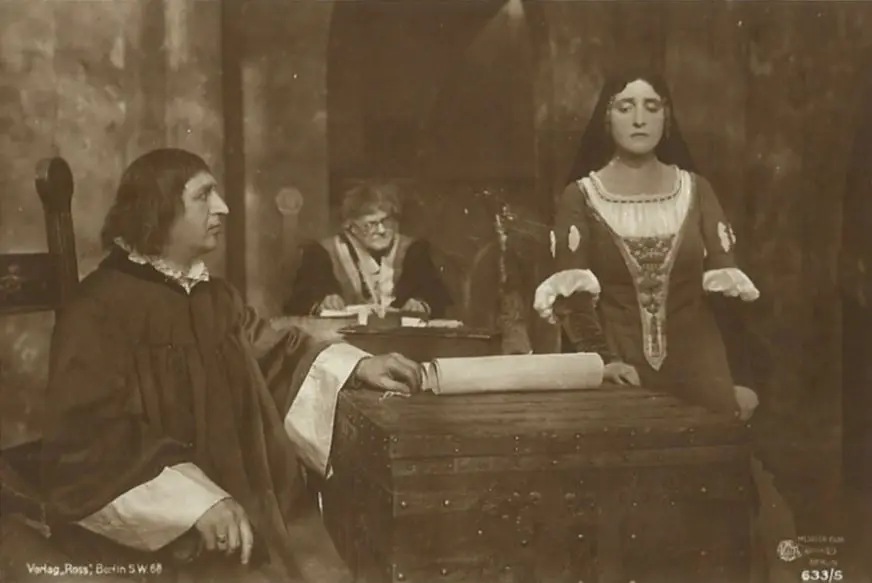
Wiene’s genius lies in refusing to grant a scapegoat. The husband is less villain than co-victim of a ledger-centric culture; the lawyers are marionettes of statute books written in archaic Gothic script. Even when Monika brandishes a revolver in the final reel, the weapon feels ceremonial—she aims at a stack of documents, not a human target. The gunshot is muffled by a close-up on a brass inkwell: the ink bleeds across the frame, signing the film’s epitaph in liquid.
Where The Genet luxuriates in criminal undergrowth and The Bitter Truth serves melodrama neat, Monika Vogelsang chooses the liminal haze between genres—part Kammerspiel, part Gothic, part procedural. Its closest spiritual cousin might be The Conscience of John David, where conscience itself is on trial, yet Wiene’s film is colder, more surgical.
The 4K restoration by the Deutsche Kinemathek harvests images from two incomplete positives—one Czech, one Italian—and a Dutch distribution print trimmed by censors. Digital re-grading restores the sea-blue daylight that earlier transfers had misread as murky teal. More startling: the reappearance of a 30-second sequence in which Monika visits a photographer to obtain passport photos. The photographer’s studio, wallpapered with hundreds of detached faces, foreshadows her own looming effacement. The shots are composed in strict symmetrical perspective, a rarity for Wiene, who preferred diagonals; the effect is of a woman staring at an army of selves who refuse to recognize her.

Contemporary critics, blindsided by the film’s anti-melodramatic restraint, dismissed it as “a legalistic curio.” Yet the 1970s feminist film journal Frauen und Film resurrected it as a proto-structuralist text, arguing that Monika’s disintegration prefigures the institutional critique later voiced by Chantal Akerman. More recently, the legal theorist Alain Supiot cited the film in his treatise on “personological black holes”—states where citizenship evaporates without crime or consent.
As of 2024, the restored edition streams on MUBI in rotation and receives periodic Blu-ray re-pressings via Masters of Cinema. Beware public-domain rips that float on video-sharing sites; these derive from a 1990s VHS and wash out the crucial tinting. For cine-clubs, the Friedrich Wilhelm Murnau Foundation offers a DCP with selectable German or English intertitles.
Monika Vogelsang is less entertainment than evidence—an exhibit in the ongoing trial of modernity versus the individual. Long after the last document burns, the afterimage of Henny Porten’s eyes—wide, unlit, searching for a name that no longer exists—lingers like a retinal scar. Watch it once for the story, twice for the cubist dread, and a third time to remind yourself that identity is not a birthright but a footnote—liable to be erased by the turn of a page.
IMDb —
1931
Community
Log in to comment.