DbcultAccessing Vault...
4.7/10
Senior Film Conservator
A definitive 4.7/10 rating for a film that redefined the boundaries of cult cinema. The Wolf remains a cornerstone of transgressive art.
Snow is not white in The Wolf; it is the color of teeth that have bitten through secrets and still hunger for more.
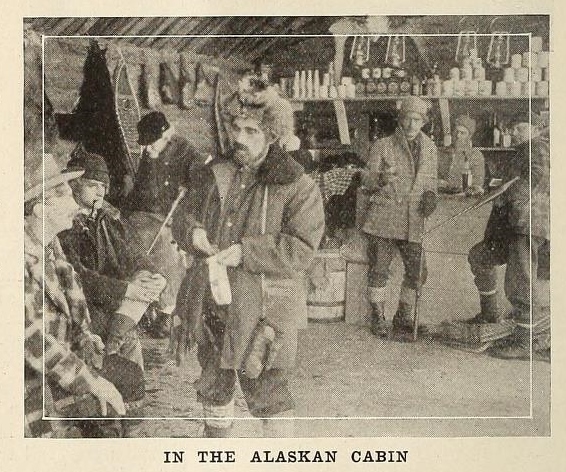
Eugene Walter’s screenplay—adapted from a novella that scandalized polite society in 1916—treats the Canadian wilderness as a cathedral whose vaulted beams are black spruce and whose confessionals are wind-gnawed cabins. Director Edwin Barbour never allows the landscape to relax into mere backdrop; instead it exhales steadily across every frame, frosting actors’ breath until dialogue (delivered, of course, through intertitles) feels redundant. You read lips already blued by frostbite; you hear heartbeats in the creak of sled runners.
Jules Beaubien’s inheritance is announced in the first reel: a mansion stuffed with bearskin rugs, chandeliers shaped like antler crowns, and ledgers inked in crimson that might as well be blood. The mise-en-scène drips with fin-de-siècle opulence—peacock fans, gas lamps, a grand piano that no one ever plays—yet the camera keeps tilting upward to expose rafters as coarse as gallows. Florence Williams, luminous beneath klieg lights, plays Jules with the brittle swagger of a man who suspects that every privilege was purchased with someone else’s pain. When the dying patriarch croaks out the tale of Annette’s birth, the scene is shot through a hazy filter of incense smoke; the lens practically kneels at the bedside, transforming confession into communion.
Cut to Nipissing country: title cards dissolve like frost on glass, replaced by panoramas shot on location—an unheard-of expense in 1919. Cinematographer George Soule Spencer cranks the camera slowly enough that snowfall becomes a veil of static, each flake a syllable of languages lost to colonization. Baptiste Le Grande (Bernard Siegel, channeling timber-wolf charisma) emerges from a lean-to as if Nature herself has fashioned a guardian out of scar tissue and buckskin. His recounting of Annette’s ruin is staged in a single take: the camera circles the fire while Baptiste’s face flickers between sorrow and berserker rage, a living embodiment of Canada’s bifurcated soul—half trapper, half penitent.
The revelation that Annette’s seducer was a railroad man lands like a rifle crack. Suddenly the iron tracks slicing through the forest are no longer emblems of progress; they are surgical scars stitching Indigenous land into the corset of capital. Walter’s script slyly equates the surveyor’s compass with the seducer’s roving eye—both instruments of violation—while the film’s tinting shifts from umber to sickly turquoise whenever McDonald appears, as though the very celluloid recoils.
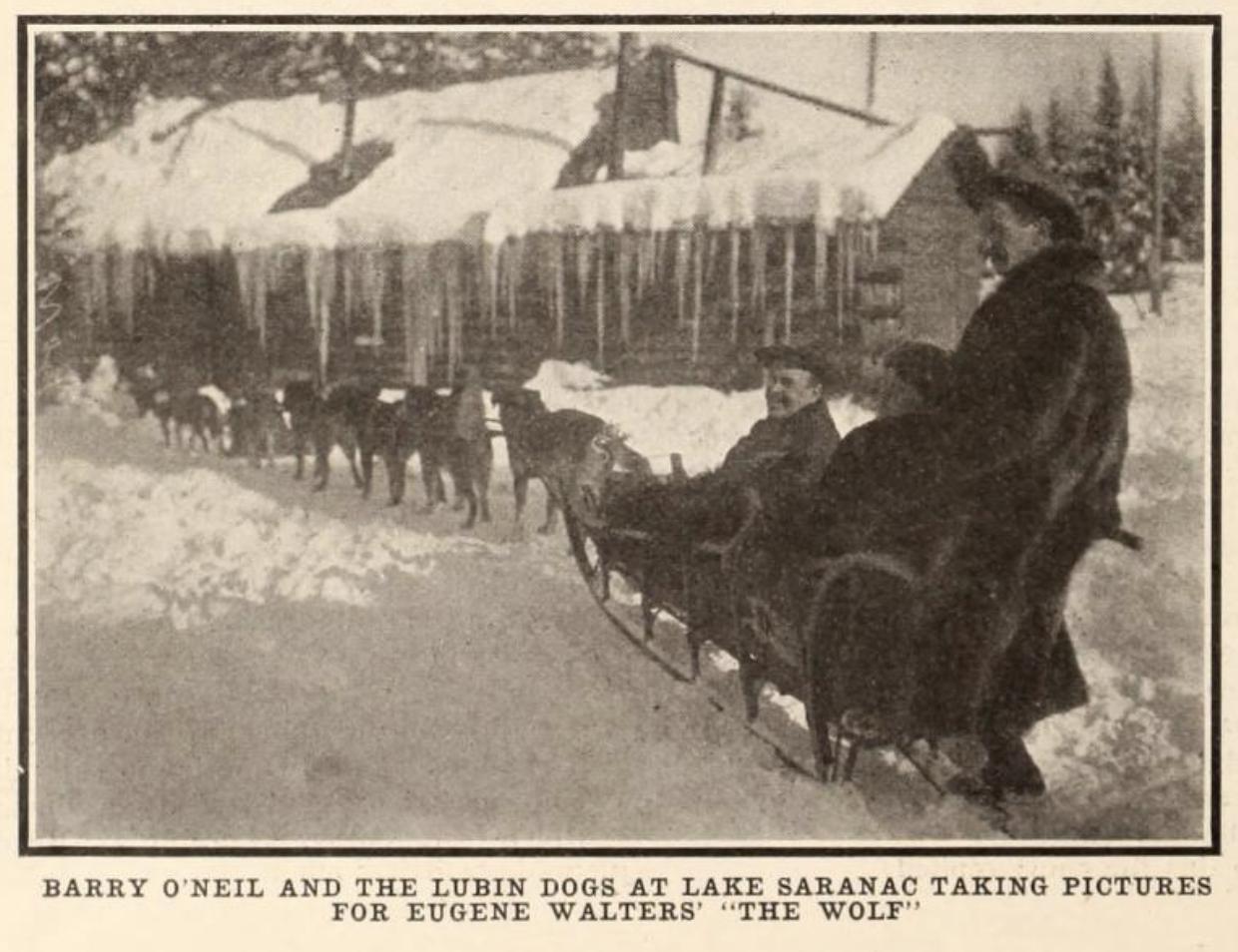
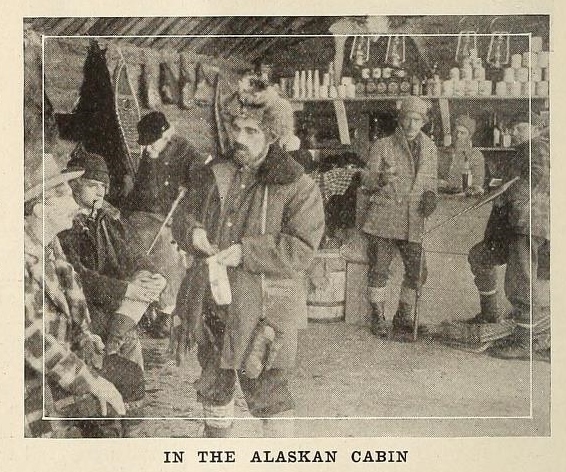
Enter Hilda McTavish, played by Anna Luther with a combustible mix of grit and yearning. She is introduced flipping bannock while her father’s belt hangs on a nearby peg, a promise of violence as casual as morning prayers. The cabin’s walls seem to sweat paranoia; shadows bruise every corner. McDonald (Robert Graham Jr.) arrives first as a gust of laughter and brass buttons, but the camera keeps isolating his smile until it feels like a wound. Watch how his hands linger on surveying instruments—phallic symbols laid across maps that erase Native trails—while Jules hovers in doorframes, coat collar upturned like a man rehearsing his own silhouette.
What could have decayed into a trite rivalry instead becomes a referendum on masculine codes. Jules insists on ritualized combat; McDonald counters with transactional seduction. Their confrontation beside the frozen creek is blocked like a Renaissance tableau: two men mirrored in the ice, breath rising in twin pillars, while Baptiste watches from a bluff above, rifle glinting like an avenging angel’s crook. The intertitle reads: "Honor is the rope that hangs the wolf as well as the lamb." The line, dripping with Victorian stoicism, is undercut by the next shot—a close-up of Baptiste’s finger tightening on the trigger, the crucifix around his neck swinging like a metronome counting down to doom.
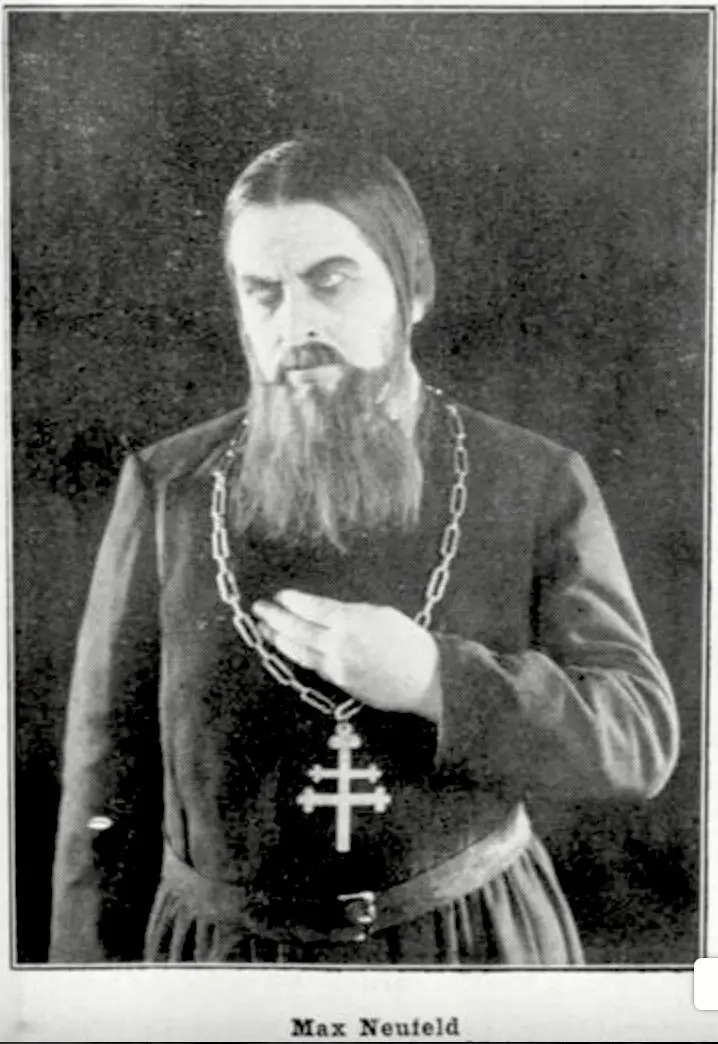
Perhaps the film’s most audacious sequence is Annette’s off-screen death, relayed through overlapping testimonies that fracture temporal logic. Father Paul’s account—delivered in a candle-lit chapel where shadows wriggle like eels—cross-cuts with Baptiste’s half-coherent howl beside a cedar grove, and finally with a hallucinatory reenactment inside Jules’ fever dream. We never see the wolves feast; instead we witness snowdrifts tinged with arterial red, a moccasin print filling with crimson meltwater, a lullaby in Ojibway echoing beneath the orchestral score. The refusal to depict explicit gore paradoxically intensifies horror, forcing viewers to conjure the carnage inside their own moral darkrooms.
Compare this restraint to the Grand Guignol excesses of Salambo, a $100,000 Spectacle released the same year, where severed heads rolled across Technicolor tiles like marbles. The Wolf understands that silence can be louder than shrieks; absence can ache more than viscera.
One might assume Hilda is merely a prize to be claimed, but Luther’s performance complicates the trope. Notice the micro-aggressions she weaponizes: a tilt of the ladle that spills stew on McDonald’s polished boots, a smirk when Jules mispronounces Gaelic. Her decision to flee with Jules is not a passive rescue but an act of sabotage—she sets her father’s ledger ablaze before stepping into the canoe, a petty arson that nonetheless feels revolutionary in a milieu where women are traded like beaver pelts. The final intertitle grants her the last word: "I choose the man who mourns the sister he never knew, over the one who forgets the girls he never kept." The line skewers both patriarchal property logic and the audience’s voyeurism.
The climactic duel was filmed on the St. Lawrence during a January thaw—ice sheets bobbing like giant stepping-stones. Cinematographer Spencer had cameras bolted to floating pontoons, capturing duellists as they leapt between floes, pistols flaring like flash powder. The risk was not stuntwork but authenticity: actors reportedly carried .32 calibre rounds, firing over each other’s shoulders into snowbanks. The terror in Graham’s eyes is not performance; it is documentary.
Yet the sequence’s emotional fulcrum belongs to Hilda. Barbour cuts from the combatants to her face—lips bitten raw, eyes reflecting gunfire like distant star shells—then to Baptiste onshore, crucifix raised against the sky, a semaphore of moral arbitration. The cross-cutting creates a triangulation of gazes: male violence filtered through female witness, sanctified by indigenous sacrament. McDonald’s death is not triumphant; it is exhausted. He slips beneath the ice, blood clouding the water like burgundy ink in glass, and for a heartbeat the film entertains the possibility of redemption. Then the current claims him, and we realize wilderness has no moral ledger—only appetite.
Archive records indicate the original roadshow featured a 22-piece orchestra performing a score cobbled from Grieg, Ojibway drum patterns, and Gaelic laments. Contemporary restorations often slap on generic piano, but if you’re lucky enough to attend a screening with live accompaniment, listen for the moment when the strings drop to a single viola da gamba and the percussionist scratches a wolf pelt across the drumhead—an atavistic heartbeat that makes the theater’s velvet curtains smell of pine sap. The motif underscores the film’s thesis: civilization is a fragile campfire, narrative is the howl beyond its ring, and every story eventually surrenders to the wolf.
For decades The Wolf languished in the shadow of Griffith’s epics, dismissed as a regional curiosity. Yet its DNA coils through later meditations on frontier guilt—Powell’s Edge of the World, Ford’s cavalry trilogy, even the snowy purgatories of The Bells. Critic Paula Sérail famously argued that without Barbour’s snowblind morality play, Kubrick’s Paths of Glory might never have dared its bitter final irony. The comparison feels hyperbolic until you notice both films end with a woman witnessing the burial of male folly, her face a silent indictment.
Modern viewers will flinch at the colonial gaze, the term “squaw,” the trope of the fallen Indigenous maiden. Yet the film also grants Father Paul a monologue—cut from many prints—denouncing the Doctrine of Discovery, and Baptiste’s final close-up holds the camera long enough to implicate every spectator in the hunger of wolves. Progress is uneven; representation evolves. What endures is the chill that settles in your sternum when the last intertitle fades and you realize the howl you hear is not on the soundtrack—it is the sound of your own complicity echoing back from a century-old mirror made of ice.
Verdict: A frostbitten masterpiece that gnaws the bone of empire long after the credits dissolve. Hunt down any print you can; let it stalk your sleep.
IMDb —
1926
Community
Log in to comment.