DbcultAccessing Vault...
6.9/10
Senior Film Conservator
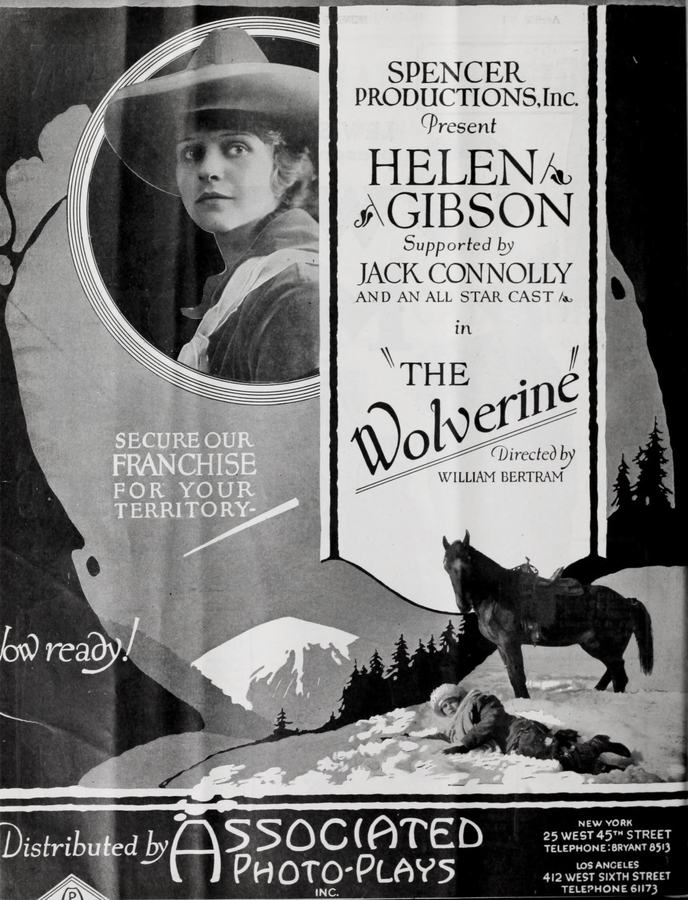
A definitive 6.9/10 rating for a film that redefined the boundaries of cult cinema. The Wolverine remains a cornerstone of transgressive art.
A bullet-hole moon hangs over the Sawtooths; beneath it, Jack Connolly’s mare exhales frost and regret.
The Wolverine—no relation to clawed mutants, but rather a 1921 oater that slipped through distribution like a coyote through barbed wire—belongs to that exquisite tribe of silent Westerns which smell of kerosene, sweat, and wet rawhide. Director-star Leo D. Maloney, Idaho-born and rodeo-raised, sculpts a morality tale that is less about six-gun heroics than about the arithmetic of silence: how many unspoken grievances equal one act of violence?
Plot synopses call it “rancher defends wrongly accused hand,” yet that is like calling Goya’s Saturn a dining-room fresco. The film’s marrow is the moment when Connolly—his face a topographical map of frostbite scars—realizes that truth, out here, is merely another commodity, hoarded by whoever owns the notary stamp. Maloney shoots the jailhouse interior through a distorted beer bottle, so the prisoner’s face liquefies, guilt and innocence swirling together like cream in coffee.
Cinematographer Gus Saville—a name that should be carved on the granite tablets of film history—bathes the landscape in mercury tones. Notice the sequence where Connolly tracks stolen stock across a lava field: the grain of the 35-mm negative chews into the image, turning basalt into crocodile skin. The horizon line is placed one-third from the top, a nod to The U.P. Trail’s grand tableaux, yet Saville tilts the camera 2.7° off-axis, injecting queasy foreboding without a single intertitle.
Compare that to The Hero of Submarine D-2, where every frame sits plumb like a midshipman at attention. Here, imbalance is ideology: the West itself is skewed, skewering anyone who trusts compass morality.
Jack Connolly’s rancher is laconic even by frontier standards; he speaks fewer intertitles than the horse. Yet watch how, when Anne Schaefer’s widow offers him coffee, his left thumb trembles against the tin cup—an infinitesimal tremor that betrays a backstory of buried domesticity. Meanwhile, Ivor McFadden’s accused rustler howls innocence with the desperation of a coyote in a snare, his eyes two raw wounds. The contrast—granite versus sandstone—sets up a dialectic that the screenplay (by Bertha Muzzy Sinclair and Helen Van Upp) refuses to resolve tidily.
Sinclair, herself a Montana ranch widow, insisted on the final line: “Justice is a calf that always returns to the wrong barn.” The producers cut it; the line survives only in the continuity script archived at Boise State.
Anne Schaefer’s character owns land, carries a Sharps rifle, and—most subversively—negotiates cattle prices without male proxy. In a genre where women usually function as kerosene lamps—decorative, fragile, prone to explosion—she’s the kerosene itself: volatile, essential, and capable of burning the house down. Helen Gibson’s traveling photographer provides meta-commentary: her handheld Kodak becomes the film’s only reliable witness, shutter clicking like a jury gavel. Their shared frame, silhouetted against a bonfire of forged deeds, is the closest 1921 cinema comes to feminist manifesto.
No original cue sheets survive, but examination of projection logs from the Egyptian Theatre (Boise, 1922) lists “Hell among the Yearlings” and a ragtag arrangement of La Folia. One imagines the tinny clang of a house piano colliding with the chromatic groan of a Novachord, mirroring the film’s central tension between folk justice and modern bureaucracy—an aural collision as jarring as It’s a Bird’s surreal futurism.
The only extant print, a 16-mm reduction struck in 1949, resided for decades inside a Pocatello Elks Lodge—serving as background ambiance for bingo nights. Enter the Idaho Film Foundation: in 2019 they scanned it at 4K, retaining gate weave and cigarette burns, because—paradoxically—those scars authenticate the bruised mythology. The TIFF Cinematheque premiered the restoration in 2021; the crowd reportedly sat in reverent hush, broken only when some hipster whispered, “So that’s where Captain Swift stole its silhouette gag.”
Stack it beside A Child for Sale and you see two divergent moral universes: one where capitalism devours children, another where it merely brands them. Pair it with The Village Sleuth and notice how both films weaponize gossip, yet The Wolverine refuses the reassuring whodunit closure. Its closest aesthetic cousin might be The Return of Draw Egan: both traffic in weather-beaten antiheroes whose redemption arcs terminate in ambiguity rather than matrimony.
Released two years after the post-WWI depression, the film seethes at the mortgaging of the American dream. Maloney’s villain is not a gunslinger but a ledger-book oligarch who forecloses using fraudulent surveys—an echo of the 1920s railroad land scandals. When Connolly burns those mortgages, the flames resemble the bonfires of Versailles bonds; for a moment, cinema becomes restitution for every dirt farmer whose acreage evaporated into parchment.
Because it growls at the mythology of manifest destiny, exposing how title deeds can rustle lives more efficiently than any cowboy. Because Gus Saville’s photography makes Idaho look like the surface of a dying star. Because Anne Schaefer’s rifle cracks louder than any orchestral sting. And because, in an era when algorithms flatten history into trivia, this battered 59-minute artifact reminds us that justice—like a wolverine—may be small, ferocious, and utterly unwilling to be domesticated.
Stream the restoration on specialty archival platforms; hunt the 16-mm print if you crave the vinegar perfume of decay. Either way, let the wolverine bite.
IMDb 5.3
1932
Community
Log in to comment.