DbcultAccessing Vault...
Cult Review
Senior Film Conservator
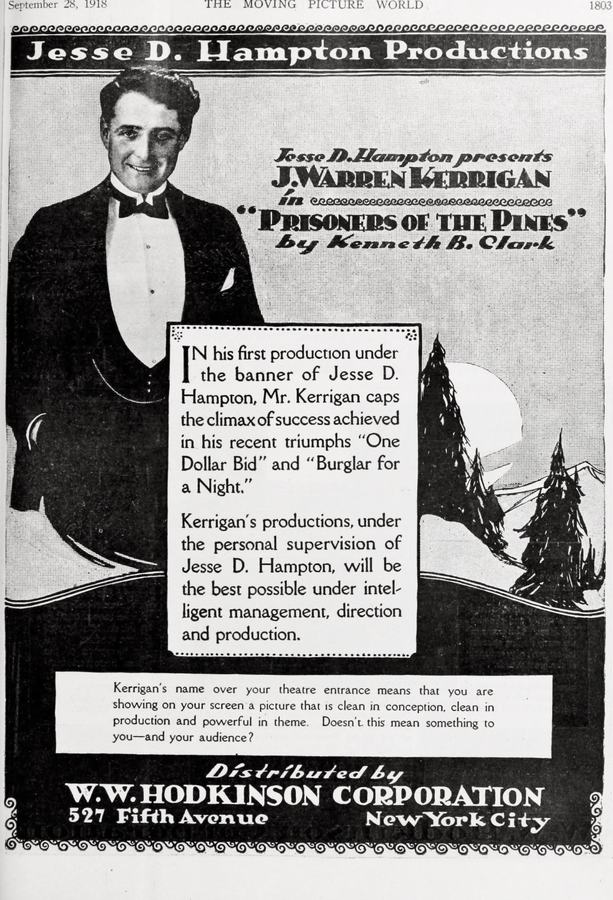
In the annals of early cinema, few narratives capture the raw, visceral essence of human struggle against both nature and temptation quite like Kenneth B. Clarke's Prisoners of the Pines. This silent film, a compelling tableau of ambition, betrayal, and eventual triumph, plunges us into a world where the promise of prosperity in the untamed Canadian wilderness is inextricably linked with moral peril. It's a journey not just through dense forests, but through the very soul of a man pushed to his limits, a testament to the enduring power of familial love and the fierce will to reclaim what is lost. From its melancholic opening to its profoundly satisfying resolution, the film resonates with an authenticity that transcends the lack of spoken dialogue, communicating a universal story through the expressive artistry of its players and the stark beauty of its setting.
At the heart of this poignant drama stands Hillaire Latour, portrayed with an affecting blend of earnestness and burgeoning resolve by J. Warren Kerrigan. Hillaire begins his cinematic odyssey as a man of simple, pure intentions. His marriage to Rosalie Dufresne, beautifully embodied by Lois Wilson, is depicted with a tenderness that immediately establishes the emotional anchor of the entire narrative. Rosalie is not merely a plot device; she is the hearth Hillaire seeks to protect, the future he strives to build. His decision to leave the relative tranquility of his trapper's life for the arduous, often brutal, world of the lumber camps is born not of greed, but of an admirable, if somewhat naive, aspiration to secure a better future for his beloved. This initial portrait of Hillaire is crucial, as it provides a stark contrast to the hardened, disillusioned man he will become through the crucible of experience. His journey into the pines is, in many ways, an archetypal hero's quest, fraught with peril and self-discovery, reminiscent of the arduous personal trials seen in films like Juan José, where protagonists are tested by the harsh realities of their chosen paths.
The lumber camp itself is a fascinating microcosm, a rough-hewn community of men driven by a singular purpose, yet constantly shadowed by the darker forces lurking 'down the hill.' It is here that Hillaire encounters "Spud" Lafferty, a character whose tragic trajectory serves as a potent, almost prophetic, warning. Walter Perry imbues Spud with a weary resignation, a man repeatedly ensnared by the same seductive trap. His six-year struggle to return home, perpetually thwarted by the saloon's alluring siren, is a cautionary tale whispered through the camp, a testament to the psychological grip of vice. This shared plight immediately binds Hillaire and Spud, fostering a bond of camaraderie that underscores the pervasive nature of the camp's dangers. The saloon, with its beautiful, predatory women, particularly Louise (played with captivating menace by Claire Du Brey), is not merely a place of entertainment but a crucible of moral compromise, a financial black hole designed to strip men of their earnings and their dignity. It represents the corrupting influence of civilization's underbelly, a stark contrast to the honest, if brutal, labor of the forest. The film effectively uses this setting to highlight the vulnerability of men far from home, echoing themes of temptation and moral decay often explored in early cinematic morality plays, such as The Temptations of Satan, where external forces test the very fabric of a character's rectitude.
The narrative's central turning point arrives with the news of Hillaire's fatherhood. This revelation, delivered through a letter from home, acts as a powerful catalyst, transforming his abstract desire for fortune into an urgent, deeply personal imperative. The thought of his child, a new life awaiting his return, ignites a fierce determination within him. He demands his accumulated earnings, eager to embark on the journey back to Rosalie and their infant. However, the path home is fraught with peril. On his very first night away from the relative safety of the lumber camp, Hillaire, despite Spud's implicit warnings and perhaps his own growing apprehension, falls prey to the same insidious trap that has claimed so many others. Louise, with her calculated charm and ruthless efficiency, orchestrates his complete undoing, leaving him stripped of his money and his dreams. Kerrigan's portrayal of Hillaire's despair and humiliation upon realizing his plight is remarkably affecting, conveying a profound sense of defeat without a single uttered word.
This initial robbery forces Hillaire into a soul-crushing retreat, back to the grueling labor of the lumber camp. The cycle of aspiration, hard work, and betrayal repeats itself the following year, further cementing the sense of a man trapped, a 'prisoner of the pines' in the truest sense. The film deftly builds this escalating tension, allowing the audience to feel Hillaire's mounting frustration and the crushing weight of his repeated setbacks. Each time he earns enough to leave, the saloon and its agents, personified by Louise, are there to intercept his hopes. This cyclical narrative structure is incredibly effective in highlighting the pervasive nature of the threat and the sheer resilience required to overcome it. It's a testament to the film's narrative economy that it can communicate such complex emotional arcs through repeated patterns of action and reaction. One could draw parallels to the relentless personal battles depicted in films like The Square Deceiver, where characters face repeated deceptions and must find the inner strength to persevere against overwhelming odds.
The climax of Hillaire's struggle is a cathartic explosion of long-suppressed rage. As Louise prepares to rob him for a third time, the gentle, somewhat naive trapper is replaced by a man utterly consumed by righteous fury. This transformation is pivotal. It's not merely a fit of anger but a primal assertion of self, a desperate refusal to be victimized any longer. Hillaire's rampage through the dance hall is a spectacle of raw, unbridled power, a visceral tearing down of the very symbols of his oppression. He doesn't just demand his money back; he forces Louise to return it, asserting his agency in a way he hadn't before. Claire Du Brey, as Louise, expertly conveys the shift from predatory confidence to startled fear, a testament to Kerrigan's commanding presence in this pivotal scene. This moment of violent reclamation is not gratuitous; it's the culmination of years of frustration and the manifestation of a man's unbreakable will to protect his family. It speaks to a universal human desire to right wrongs, to break free from cycles of exploitation, and to stand firm in the face of injustice.
The film's resolution, while perhaps a touch convenient, is deeply satisfying. Hillaire, having finally recovered his earnings and asserted his dominance over the forces that sought to imprison him, is reunited with his family at the police station. This reunion is the emotional payoff for all the trials and tribulations Hillaire has endured. Rosalie and their child, having journeyed into the wilderness in search of their lost patriarch, represent the unwavering strength of familial bonds. It underscores the idea that love and loyalty are ultimately the most powerful forces, capable of spanning vast distances and overcoming immense obstacles. This poignant ending reinforces the film's core message: that even in the face of overwhelming adversity, the human spirit, especially when fueled by love, can triumph. The narrative arc of separation and reunion, of enduring love through hardship, finds echoes in timeless stories like Jane Eyre, where characters endure long periods of solitude and struggle before finding their rightful place and connection.
The success of Prisoners of the Pines rests heavily on the shoulders of its cast, who, without the aid of spoken dialogue, must convey complex emotions and motivations through gesture, facial expression, and physicality. J. Warren Kerrigan delivers a nuanced performance as Hillaire, evolving from an innocent idealist to a hardened, yet ultimately victorious, survivor. His ability to project both vulnerability and immense strength is commendable. Claire Du Brey's Louise is a formidable antagonist, her beauty a deceptive mask for a calculating and ruthless nature. She perfectly embodies the seductive danger that lurks in the shadows of the lumber camps. Lois Wilson, as Rosalie, portrays a quiet strength and unwavering loyalty, providing the emotional bedrock for Hillaire's quest. Walter Perry's Spud, though a supporting character, leaves a lasting impression as a tragic figure, a living embodiment of the dangers Hillaire faces.
Kenneth B. Clarke's direction is assured, capturing both the rugged grandeur of the natural setting and the claustrophobic tension of the saloon. The cinematography, a crucial element in silent film, effectively uses light and shadow to create mood, emphasizing the stark contrasts between the purity of the forest and the moral murkiness of the 'down the hill' establishments. The pacing is deliberate, allowing the emotional beats to land with maximum impact, building slowly towards the explosive climax. The film's ability to maintain narrative drive and emotional engagement without the benefit of sound is a testament to the skill of its creators and the inherent power of visual storytelling. While a direct comparison to a film like Huo wu chang might be limited by cultural context, the universal language of visual narrative and expressive performance bridges such gaps, showcasing the global reach of early cinematic artistry.
Beyond its engaging plot, Prisoners of the Pines delves into several profound themes that remain relevant even today. The central conflict between the purity of nature and the corrupting influence of civilization is vividly portrayed. The lumber camps, while providing opportunity, also create an environment ripe for exploitation, where the hard-earned money of honest laborers becomes a target for opportunistic predators. This highlights the inherent dangers of unchecked capitalism and the vulnerability of individuals seeking to improve their lot. The film also explores the theme of perseverance against overwhelming odds. Hillaire's repeated setbacks and his eventual triumph speak to the indomitable human spirit, a narrative thread common in tales of arduous journeys and personal growth, much like the struggles against societal expectations found in films such as Pride or the resilience shown in Emmy of Stork's Nest.
Moreover, the film is a powerful examination of temptation and moral fortitude. Louise, as the embodiment of vice, represents the constant lure of instant gratification and the destructive power of greed. Hillaire's journey is, in essence, a moral one, a battle for his soul as much as for his earnings. His ultimate victory is not just financial, but a triumph of character, a refusal to be defined by his misfortunes. The film subtly suggests that true wealth lies not in accumulated money, but in the integrity of one's character and the strength of one's family bonds. This moral compass, guiding the protagonist through a labyrinth of challenges, is a cornerstone of many compelling narratives, including those focused on social justice or ethical dilemmas like The Long Arm of the Law, albeit with a different focus on institutional rather than personal morality.
In conclusion, Prisoners of the Pines stands as a compelling testament to the narrative power of silent cinema. It's a film that, despite its age, speaks to timeless human experiences: the quest for prosperity, the dangers of temptation, the resilience of the human spirit, and the enduring strength of familial love. Kenneth B. Clarke, along with his talented cast and crew, crafted a story that is both deeply personal and universally resonant. The raw emotion, the vivid characterizations, and the dramatic arc combine to create a cinematic experience that remains impactful. For anyone interested in the evolution of film, the artistry of silent storytelling, or simply a gripping tale of struggle and redemption, Prisoners of the Pines is an essential viewing. It reminds us that even in the vast, unforgiving wilderness, the most profound battles are often fought within the human heart, and the greatest treasures are not always those that glitter. Its narrative simplicity belies a depth of character and theme that elevates it beyond a mere historical curiosity, cementing its place as a significant, enduring work of early American cinema. Its focus on individual struggle against societal and personal demons can be seen as a precursor to more complex character studies, much like the introspective journeys found in films such as Rablélek, which explore the inner turmoil of its characters, or the adventurous spirit of I tre moschettieri, albeit with a more intimate scale of heroism. The film's ability to draw audiences into Hillaire's plight, to make them feel his frustration and celebrate his ultimate triumph, is a mark of its timeless quality and its profound understanding of the human condition.
IMDb 6
1935
Community
Log in to comment.