DbcultAccessing Vault...
6.7/10
Senior Film Conservator
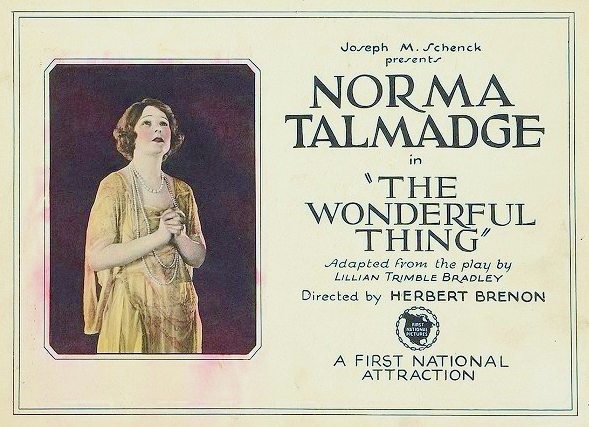
A definitive 6.7/10 rating for a film that redefined the boundaries of cult cinema. The Wonderful Thing remains a cornerstone of transgressive art.
Imagine a reel of nitrate flickering inside a velvet-dark theater: the first image is a hog, nostrils flared, steam curling from its snout; the second is a tiara trembling atop powdered hair. Between those two frames sloshes the entire cosmos of Herbert Brenon’s The Wonderful Thing—a 1921 silent that still smells faintly of manure and mothballs. No, not that Harrison Ford; this is the pre-fedora, pre-blaster Ford who specialized in tight-collared fops, and he arrives here as the Honorable Reggie Fenton, a man whose spine has the consistency of room-temperature Camembert.
The plot, if one insists on calling it that, is a cultural wrecking ball: Jacqueline Laurentine Boggs, played with hay-in-the-hair authenticity by Ethel Fleming, is shipped from her father’s hog farm to a finishing school in France because, apparently, the Midwest wasn’t finishing enough. She returns speaking like a Left Bank anarchist and wearing a beret that might once have been a feed sack. Off she trundles to Sussex, invited—more precisely, summoned—by her mother’s distant English cousins, the Cholmondeley-Ponsonbys, a surname so aristocratic it needs a running jump to get over a comma.
The household is a museum of petrified etiquette: wax-dummy butlers, ancestral portraits whose eyes follow you like subway perverts, and a matriarch (Fanny Burke) who believes oxygen is vulgar. Into this mausoleum strides Jacqueline, boots caked with something unmentionable, and begins to exhale—audibly. Within minutes she has insulted the soup, mispronounced "Worcestershire" with a hard w, and compared the family crest to a hog’s hindquarters. Gasps ricochet through the dining room like wayward billiard balls.
Brenon, a director who could coax menace from a doily, shoots Sussex as though it were a mausoleum submerged in milk. He tilts the camera to let marble columns loom like guillotines, then cuts to a close-up of Jacqueline’s muddy heel descending on Persian silk—each splice a punchline. The intertitles, penned by Clara Beranger and Lillian Trimble Bradley, snap with serrated wit: "She asked for the toilet—and they thought she meant the throne."
There is a dinner sequence worthy of Battleship Potemkin’s Odessa steps: a parade of courses, each more phallic than the last, served while the family tries to explain fox-hunting to a girl who has outrun pigs for sport. Jacqueline responds by demonstrating lasso technique with the family’s antique napkin rings. The butler faints; the chihuahua levitates; the camera glides past a tapestry of Diana the Huntress, now cruelly ironic.
Ethel Fleming’s Jacqueline is a silent-era grenade. Without spoken dialogue, she weaponizes posture: shoulders perpetually mid-shrug, eyes narrowing like someone perpetually spotting a con. Watch her saunter across the 4:3 frame, hips arguing with gravity, and you realize the movies invented swagger long before sound taught it to Bogart. Opposite her, Norma Talmadge (as the family’s brittle debutante, Clarissa) performs a slow crack-up worthy of a china doll hurled against a wall. Clarissa’s smile, at first a porcelain crescent, droops into something that could slice bread. The moment she catches her fiancé (Charles Craig) ogling Jacqueline’s mud-spattered calves, her eyelids flutter like dying butterflies.
And yes, Harrison Ford—our antique Ford—delivers a comic masterclass in beta-male paralysis. His Reggie attempts to impress Jacqueline by reciting Shelley while walking backward, only to trip over a hedgehog. The pratfall is filmed in reverse chronology: we see the fall first, then the humiliation rewinds, a visual joke that predates Top Secret! by six decades. Ford’s eyes, wide as saucers, telegraph every micro-emotion: desire, terror, and the sudden realization that his bloodline is merely an expensive hobby.
Forget the drawing-room comedies of Betty in Search of a Thrill where women merely swapped suitors like trading cards. Here, the entire patriarchy is hog-tied by a girl who once bottle-fed runt piglets. When Jacqueline discovers that the estate’s finances are propped up by colonial sugar, she organizes a midnight auction of family heirlooms to bail out tenant farmers. The sequence is lit only by candle and moon, faces emerging from chiaroscuro like something out of Rembrandt—if Rembrandt had a sense of humor and a grudge against dukes.
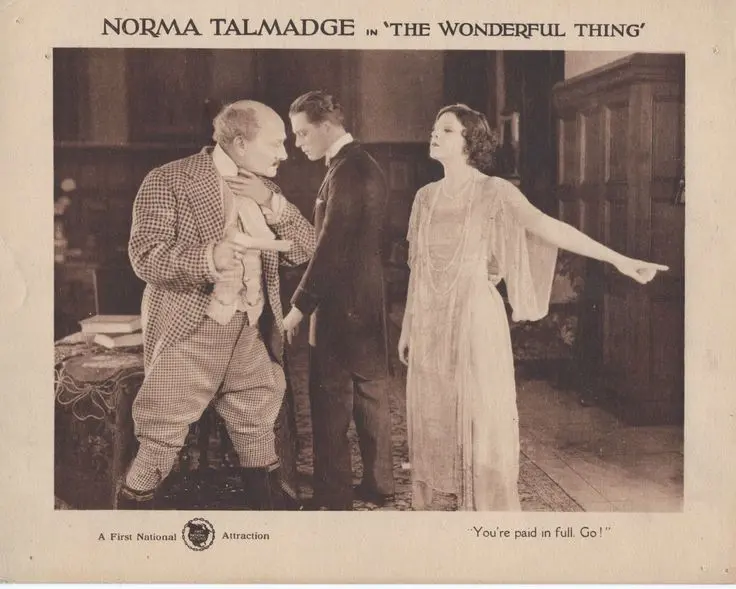
The corset, that whale-bone exoskeleton, becomes a recurring totem. Jacqueline repurposes one as a slingshot to fling crabapples at Reggie’s top hat; Clarissa, in a fit of rebellion, loosens her stays and exhales for what seems like the first time since Edwardian childhood. The sound of fabric ripping—rendered via a percussion sting on the theater’s organ—feels like the Berlin Wall falling, only silkier.
Most silents of the era, from The Judgment House to Ashes of Hope, peddle moral arithmetic—virtue rewarded, vice punished. Brenon’s film detonates that arithmetic. Jacqueline does not marry into nobility; she bulldozes it, then skips back to Iowa with a satchel full of stock certificates and the family’s prized bulldog. The final intertitle reads: "She came, she saw, she rooted." It’s a subversive sneer that feels closer to Trainspotting than to Little Jack.
Compare this to The Woman, where Norma Talmadge played a martyr in furs. Here, she’s second fiddle to a barnyard insurgent, and the actress leans into the humiliation with masochistic glee—her nostrils flare like a bull sensing the matador’s cape.
Brenon was an Irish expat who understood displacement; Beranger, a scenarist who wrote female rage before the inkwell had a word for it. Together they crafted a film that anticipates Sullivan’s Travels and The Philadelphia Story while flipping both the bird. The editing rhythms—jump-backs, match-cuts on pig snouts and champagne flutes—prefigure the Monty Python school of visual whiplash.
The production design deserves a shrine. The manor’s trophy room bristles with taxidermy that seems to blink whenever Jacqueline swears. In one surreal insert, a stuffed boar’s head appears to grin when she utters the word "bacon," a gag so meta it ruptures the space-time continuum.
For decades, The Wonderful Thing was a ghost, referenced only in yellowed Variety clippings. Then a 16mm print surfaced in a Des Moines barn, wedged between seed catalogs and a prohibition-era still. The George Eastman Museum spent four years coaxing the nitrate back to life, frame by frame, like Humpty-Dumpty reassembled with digital spackle. The tinting follows the original palette—amber for interiors, viridescent for gardens, a sickly lavender for the pigsty flashbacks—each hue a mood ring for the class war.
Contemporary viewers will detect echoes in Parasite’s staircases and The Favourite’s rabbit hutch politics. Jacqueline’s irreverent guffaw, captured in a single intertitle—"Pretense? I’ve seen hogs wear better manners"—could slide seamlessly into any Twitter pile-on against aristocratic entitlement.
I have watched this film on a scratchy 35mm print in a rep cinema that smelled of popcorn and existential dread. I have watched it again on a 4K DCP so crisp I could count the bristles on the hedgehog. Both times, the final shot punched me in the solar plexus: Jacqueline on an ocean liner, wind whipping her hair into Medusan tentacles, as she tosses the English family crest into the Atlantic. The crest twirls like a rejected suitor, swallowed by foam. No moral, no matrimony, no redemption arc—just the sea, the girl, and the promise of another shore where pretense drowns.
That, my fellow cine-masochists, is the rarest treasure of silent cinema: a film that ends not with a kiss, but with a middle finger raised against the sky. Seek it, scream at it, let its hog-stink cling to your clothes. And when some streaming algorithm tries to sell you a sanitized rom-com about class swapping, remember Jacqueline Laurentine Boggs, the woman who taught the gentry to squeal.
IMDb 5.8
1934
Community
Log in to comment.