DbcultAccessing Vault...
Cult Review
Senior Film Conservator
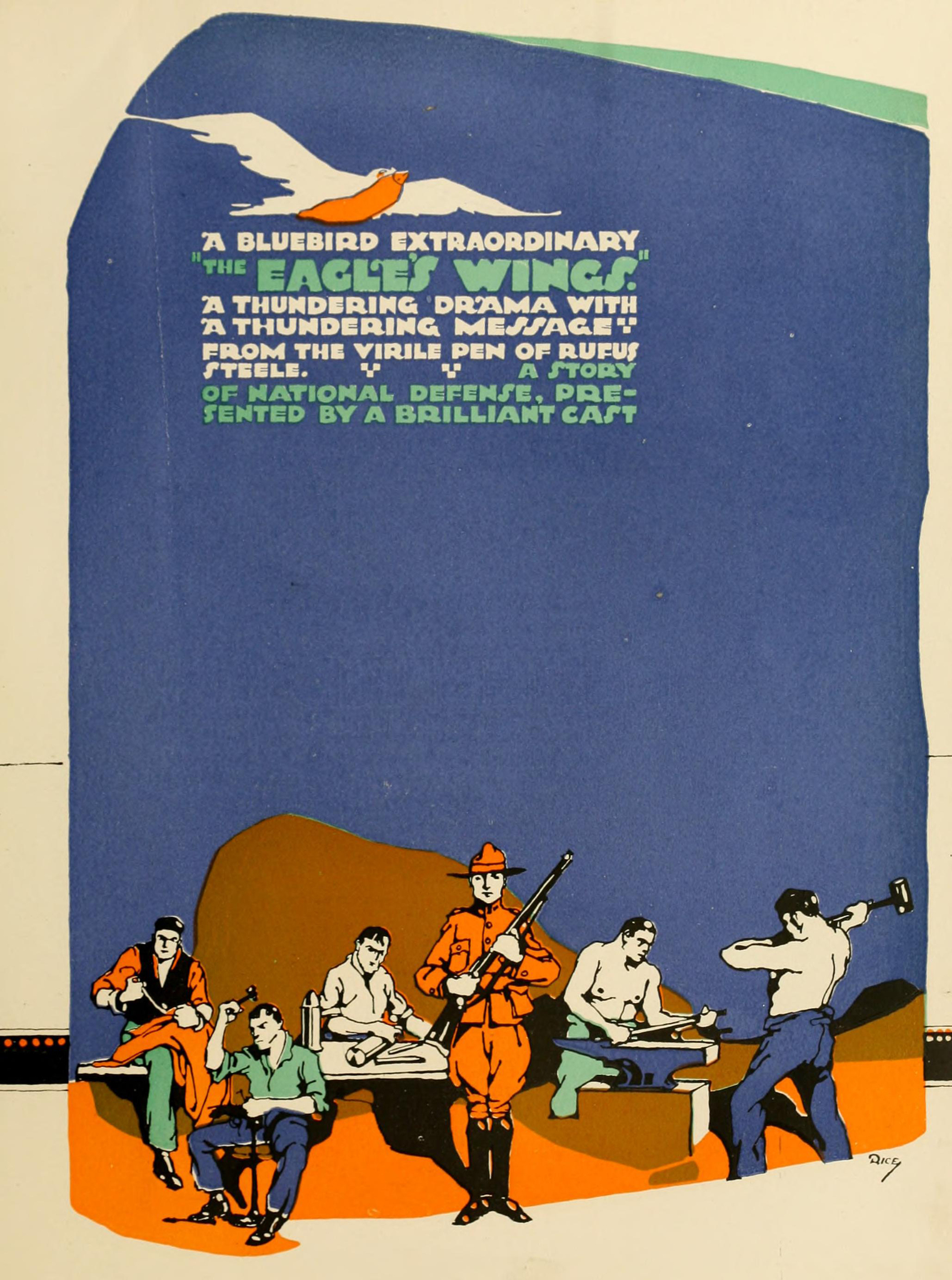
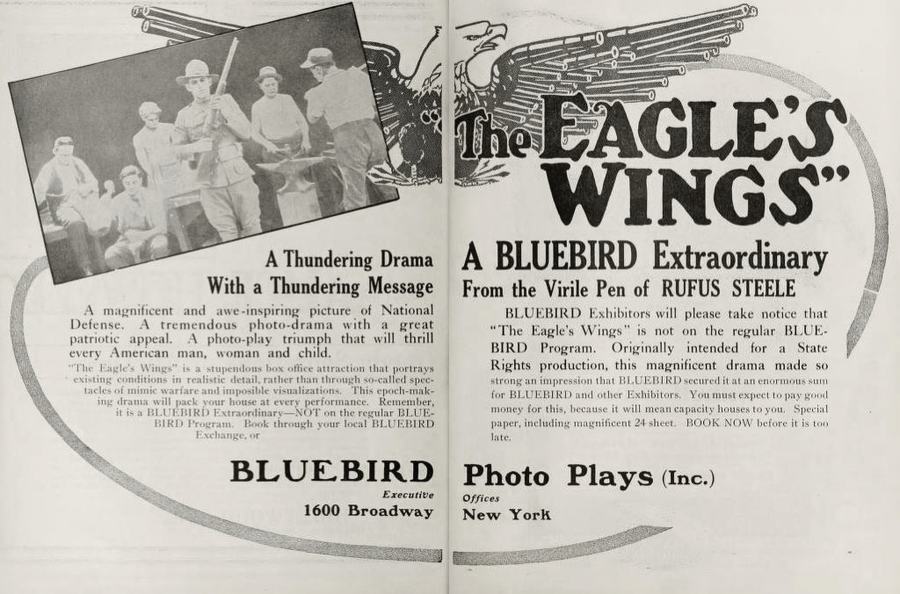
Stepping back into the nascent days of cinematic storytelling, one encounters films that, despite their age and technical limitations by contemporary standards, resonate with a profound historical and cultural significance. The Eagle's Wings, a compelling drama from an era when the silent screen was the dominant medium, stands as a testament to the anxieties and aspirations of early 20th-century America. Released at a time when global tensions were frequently high, and the concept of national defense was paramount in the public consciousness, this film, penned by Rufus Steele and Maud Grange, offers more than just a plot; it provides a window into the collective psyche of a nation grappling with its place on the world stage.
The narrative thrust of The Eagle's Wings is remarkably prescient, almost prophetic in its depiction of industrial mobilization and strategic foresight. It plunges us into a pre-war milieu where the political machinations of Washington D.C. collide with the pragmatic grit of American industry. At its heart is the tenacious duo of Senator Wright and foundry foreman Richard Wallace. Their shared conviction regarding the urgent necessity of a robust national defense propels them into a rigorous lobbying campaign, a struggle against both apathy and entrenched bureaucratic inertia to secure the passage of a pivotal war preparedness bill. This legislative battle, depicted with an earnestness characteristic of the era, underscores the vital role of civic engagement and the often-arduous path to governmental action. The film doesn't merely present the bill's passage as a fait accompli; it highlights the relentless effort, the persuasive rhetoric, and the sheer willpower required to steer policy in a direction deemed essential for national security.
The dramatic tension escalates dramatically with the introduction of the foreign espionage element. Keron Theris and Orlin Dagore, shadowy figures operating with a calculated coldness, represent the external threat, the very forces against which the preparedness bill is designed to defend. Their initial assessment, based on what they perceive as America's slow-moving industrial apparatus, is a dangerously confident miscalculation. They relay intelligence to their respective governments, asserting a comfortable two-year window before the United States could realistically achieve a state of war readiness. This erroneous intelligence, a classic narrative device, serves to heighten the stakes, presenting an immediate and existential threat that the protagonists are initially unaware of. The audience is privy to this looming danger, creating a sense of dramatic irony that keeps them on the edge of their seats, anticipating the inevitable clash between perception and reality.
It is at this critical juncture that the character of Richard Wallace, portrayed with a quiet intensity by Herbert Rawlinson, truly shines. Wallace is not merely a political advocate; he is an embodiment of American ingenuity and practical problem-solving. When summoned by the President, a moment of profound national urgency, Wallace doesn't offer platitudes or reassurances. Instead, he presents a meticulously conceived, audacious plan: a method by which American industry, far from being sluggish, could be galvanized into an armaments powerhouse almost instantaneously. This pivotal scene is the turning point, a moment where the abstract concept of national defense is transformed into a tangible, executable strategy. Wallace's vision, rooted in an intimate understanding of industrial processes and logistical capabilities, represents a triumph of practical brilliance over conventional wisdom and foreign underestimation.
The President's swift and decisive action in adopting Wallace's plan is a powerful affirmation of leadership and trust in innovative solutions. The immediate implementation sends shockwaves through the intelligence networks. Theris and Dagore, confronted with irrefutable evidence of America's rapid mobilization, are forced into a humiliating and strategically vital reassessment. Their urgent, revised warnings to their governments, retracting their initial counsel for invasion, symbolize the narrative's resolution and the averted crisis. This rapid shift from vulnerability to formidable readiness encapsulates the core message of the film: the latent strength and adaptability of the American spirit, particularly when faced with external threats.
Beyond its thrilling plot, The Eagle's Wings functions as a fascinating cultural artifact. It speaks volumes about the early 20th-century American self-image – a nation of industrious, resourceful people, capable of extraordinary feats when challenged. The film subtly champions the idea that true national power lies not just in standing armies, but in the collective will and innovative capacity of its citizens and its industrial base. The casting, featuring Herbert Rawlinson as the pragmatic hero, alongside Vola Vale, Grace Carlyle, and Charles Gunn, among others, brings a certain gravitas and authenticity to the ensemble. Rawlinson, a prolific actor of the silent era, imbues Richard Wallace with a quiet determination that makes his character's ingenuity believable and inspiring. His performance anchors the film, providing a relatable human core to what could otherwise be a dry political drama.
The screenplay by Rufus Steele and Maud Grange is particularly noteworthy for its ability to weave together political intrigue, industrial mechanics, and patriotic fervor into a cohesive and engaging narrative. In an era often characterized by more melodramatic or simplistic plots, Steele and Grange crafted a story with a sophisticated understanding of geopolitical dynamics and the intricate dance between policy and practical execution. They managed to convey complex ideas without the benefit of spoken dialogue, relying instead on strong visual storytelling, expressive acting, and well-placed intertitles to drive the plot and communicate emotional depth. The dialogue, as presented through these intertitles, is often direct and impactful, pushing the narrative forward with clarity and purpose.
Comparing The Eagle's Wings to other films of its period reveals some interesting contrasts and parallels. While many films of the time, such as The Ventures of Marguerite or The Princess of India, often delved into romantic escapism or exotic adventures, The Eagle's Wings grounds itself firmly in a more immediate, politically charged reality. It shares a thematic kinship with films that explored national identity and resilience, perhaps echoing the spirit found in stories of American strength, though often through different lenses. For instance, while Captain of the Gray Horse Troop might have explored heroism through military action or frontier spirit, The Eagle's Wings finds its heroism in intellectual and industrial innovation, shifting the focus from the battlefield to the factory floor and the legislative chamber. This distinction highlights the film's unique contribution to the early cinematic landscape.
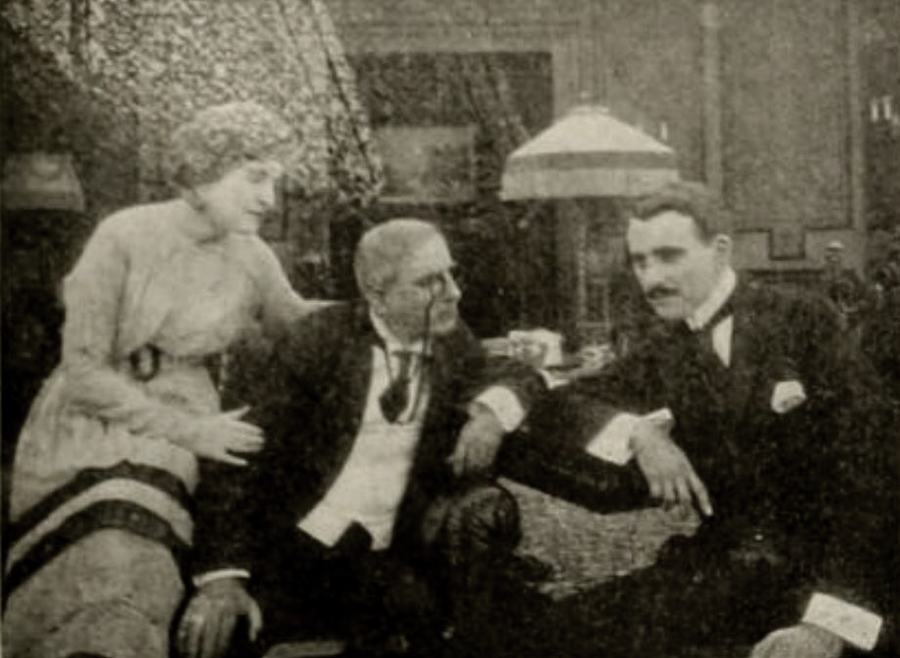
Moreover, the film's portrayal of espionage, though perhaps less overtly thrilling than later spy thrillers, is effective for its time. The foreign agents, Theris and Dagore, are depicted not as cartoonish villains but as calculating, if ultimately fallible, adversaries. Their misjudgment underscores a key theme: the underestimation of American potential. In this regard, one might draw a very loose, anachronistic parallel to the foundational elements of intelligence gathering and counter-intelligence that would become staples in later genre films, even if the execution here is far simpler. The intrigue is less about elaborate chases and more about the critical importance of accurate information and swift, decisive national response. The simplicity of the narrative allows the core message to shine through without excessive embellishment.
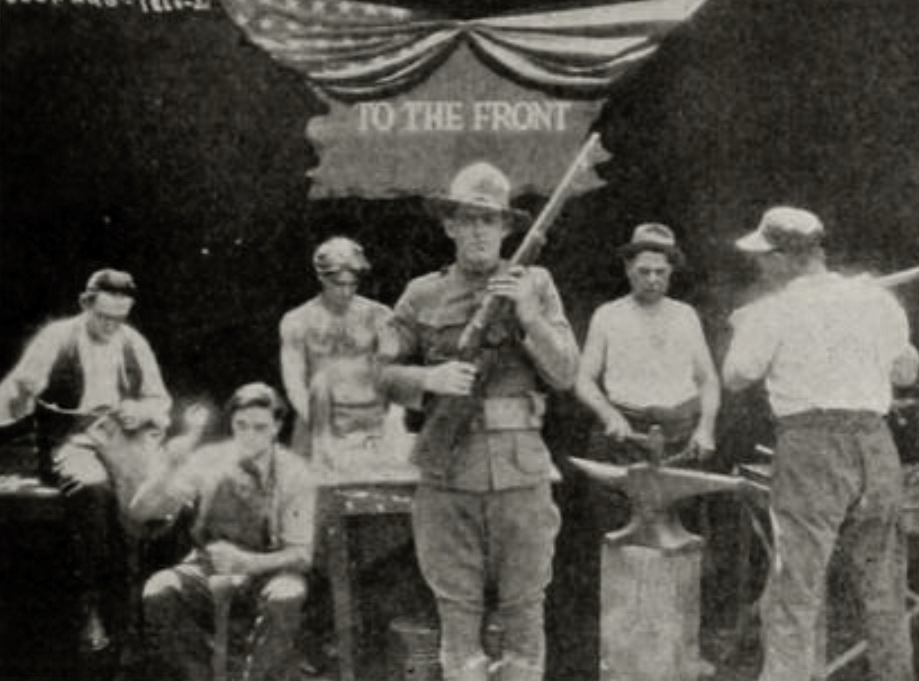
The visual language of The Eagle's Wings, typical of its era, relies heavily on clear compositions, expressive acting, and the power of the intertitle to convey dialogue and exposition. While modern audiences accustomed to dynamic camera work and rapid editing might find its pacing deliberate, there's an undeniable charm and effectiveness in its straightforward approach. The silent film era demanded a heightened reliance on physical performance and visual cues, and the cast delivers. The tension is built through close-ups on the faces of characters reacting to news, the stern expressions of the President, and the anxious looks of the spies. The industrial scenes, though likely modest in scale, would have been evocative for contemporary viewers, symbolizing the very engine of national strength. The film’s aesthetic choices, while constrained by the technology of the day, are nevertheless deliberate and serve the narrative’s patriotic and industrial themes.
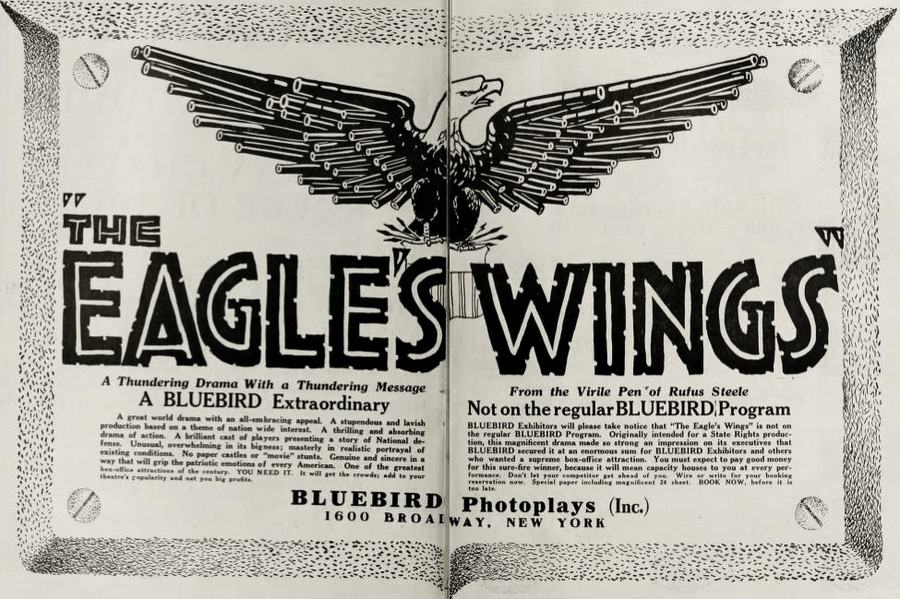
One cannot discuss The Eagle's Wings without acknowledging its underlying message of self-reliance and preparedness. In an uncertain world, the film argues, a nation's greatest asset is its ability to adapt, innovate, and, crucially, to arm itself. This sentiment would have resonated deeply with audiences recovering from or anticipating major global conflicts. It's a call to arms, not necessarily for war, but for vigilance and the cultivation of domestic strength. This theme echoes through American history and cinema, from early propaganda films to Cold War thrillers, highlighting a perennial concern that The Eagle's Wings articulates with remarkable clarity and foresight. It's a film that, in its quiet way, asserts the power of a nation to define its own destiny through internal strength and innovation.
The ensemble cast, including Albert MacQuarrie, Rodney Ronous, Malcolm Blevins, Walter Belasco, and Charles Hill Mailes, collectively contributes to the film's atmospheric realism. Each actor, through their nuanced pantomime and body language, helps to build the world of political urgency and industrial might. While Herbert Rawlinson takes center stage as the inventive Richard Wallace, the supporting players provide the necessary backdrop of concerned officials, determined politicians, and insidious adversaries. Their performances, viewed through the lens of early cinematic acting conventions, are often grander and more physically demonstrative than modern acting styles, yet they effectively convey the emotional weight and dramatic stakes of the narrative. The film, therefore, serves as an excellent example of how an ensemble, even with limited screen time for individual roles, can collectively enhance the narrative's impact and credibility.
The enduring legacy of The Eagle's Wings lies not just in its historical value as an early American film, but in its timeless exploration of themes that remain pertinent today. The dynamic between national security, industrial capacity, and political will is a constant. The film posits that true strength comes from within—from the ingenuity of its people and the efficiency of its production. In an era where global power dynamics are constantly shifting, and the threat of unseen adversaries persists, the core message of vigilance and innovative self-reliance articulated by this silent drama continues to resonate. It reminds us that strategic thinking, combined with practical execution, can avert crises even when the odds seem stacked against a nation.
While it might lack the elaborate special effects or rapid-fire dialogue of contemporary cinema, The Eagle's Wings possesses a raw power rooted in its clear thematic purpose and its direct engagement with pressing national concerns. It’s a film that asks its audience to consider the sources of true strength and the importance of foresight in an unpredictable world. For cinephiles and historians alike, it offers a fascinating glimpse into the moral and political landscape of a bygone era, presented through the then-revolutionary medium of moving pictures. It stands as a compelling argument for the proactive pursuit of peace through strength, a narrative that, despite its age, continues to flutter with relevance, much like the very wings it invokes.
In conclusion, The Eagle's Wings is far more than a historical curiosity; it is a robust, thoughtfully constructed piece of early American cinema that tackles significant themes with intelligence and conviction. From the spirited performances of its cast, particularly Herbert Rawlinson, to the astute writing of Rufus Steele and Maud Grange, the film delivers a powerful message about national resilience and the unexpected wellsprings of innovation. Its narrative arc, moving from precarious vulnerability to decisive readiness, serves as a potent reminder that a nation's destiny is often shaped by the bold vision of a few and the collective will of many. It’s a compelling watch for anyone interested in the evolution of storytelling on screen, and an important document illustrating how early filmmakers engaged with the most pressing issues of their day. It is a film that, even in its silence, speaks volumes about preparedness, patriotism, and the enduring power of American ingenuity, deserving a place in the cinematic canon for its unique blend of political drama and inspiring narrative.
IMDb 6.2
1932
Community
Log in to comment.