DbcultAccessing Vault...
5.6/10
Senior Film Conservator
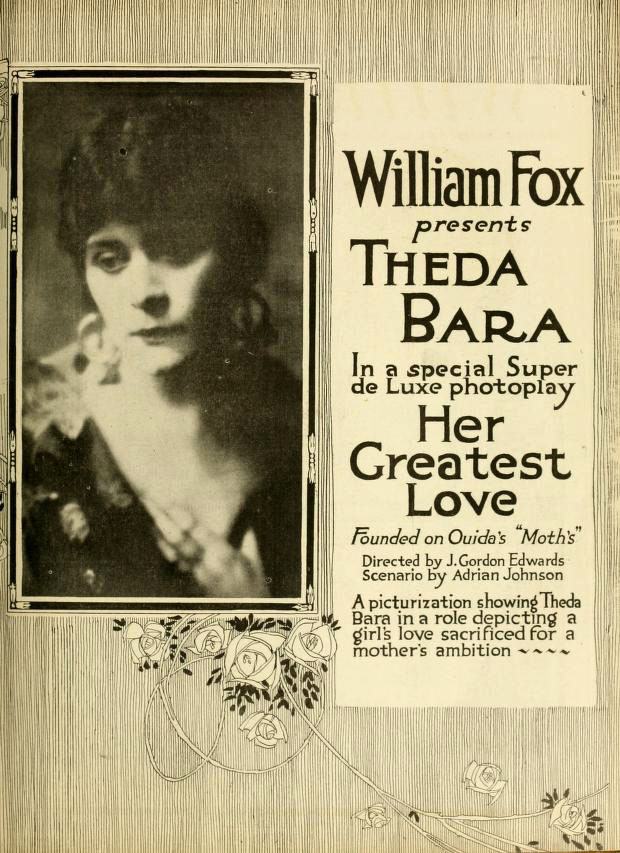
A definitive 5.6/10 rating for a film that redefined the boundaries of cult cinema. Her Greatest Love remains a cornerstone of transgressive art.
The first close-up of Lady Dolly’s eyes—two calcified sapphires flanked by the feathery eclipse of Theda Bara’s mascara—announces the film’s governing philosophy: matrimony as imperial acquisition, daughters as negotiable scrip. Director J. Gordon Edwards frames her inside a gilt doorway whose arches resemble a bishop’s mitre, hinting that maternal ambition will soon sermonize the plot into obedience.
Cut to Vere, incandescent in Grace Saum’s performance, pirouetting through a conservatory where moonlight pools like liquid mercury. The camera lingers on her fingertips as they graze a marble bust of Echo—an unsubtle prophecy that her own voice will soon be confiscated by contract. Into this hush bursts Harry Hilliard’s Lucien Correze, a tenor whose sideburns seem electrically alive, every curl a tuning fork vibrating with middle-class danger. Their meet-cute is no slapstick collision but a slow pan shared across an opera program: the lens travels from his name on the playbill to her pupils dilating—a silent sonnet more erotic than any kiss captured that year.
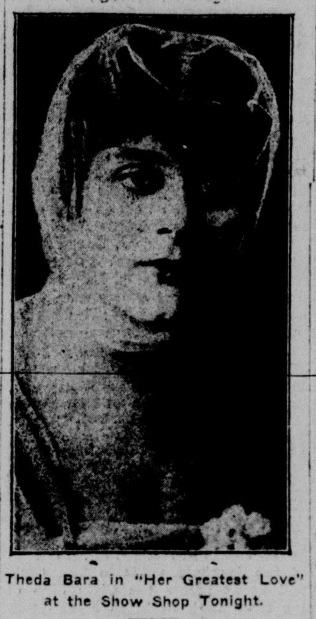
From here the narrative coils into matrimonial noir. Lady Dolly’s soirées resemble stock exchanges where dowries rise and fall on whispered libel; the intertitles, lettered in Cyrillic-styled font, flash like imperial decrees. Note the costume logic: Vere’s gowns migrate from virginal chiffon to the crimson weight of a Kazan ceremonial robe, each layer stitched by her mother’s anxiety. Meanwhile Zuroff—Walter Law channeling a thawing iceberg—first appears flanked by two Borzoi hounds whose collars are studded with the Romanov double-headed eagle, a visual shortcut for viewers to smell the musk of Roman decadence before anyone utters “prince.”
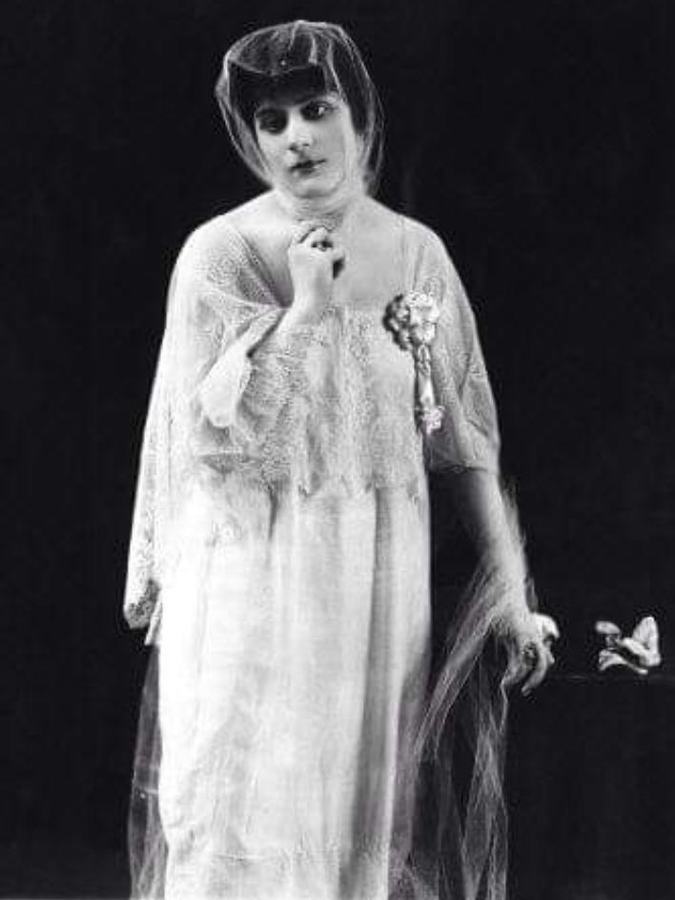
The wedding sequence, a twelve-minute tableau of neurotic splendor, intercuts orthodox choral footage shot on location—rare for 1917—with studio close-ups of Vere’s veil consuming the screen like a blizzard. Edwards double-exposes the image so that ghostly silhouettes of Correze hover above the incense, literalizing the opera singer’s status as spiritual intruder. In this moment the film achieves a proto-expressionist jolt that rivals the wedding montage in Trilby yet predates it by months.
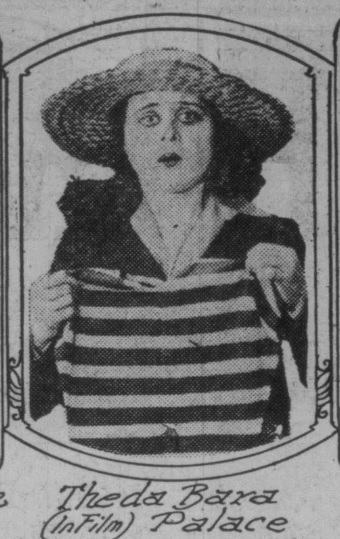
Post-nuptial doom arrives wearing the Duchess de Sonnaz’s pearls. Marie Curtis plays her as a cat who has memorized the encyclopedia of cruelty; she descends a staircase in a gown whose train is so long it must be carried by a pageboy—a living metaphor for the drag she intends to place on Vere’s sanity. Their first dinner is blocked like a triptych of power: duchess at center, Vere and Zuroff flanked, candlesticks forming a baroque prison. The prince’s yawn when Vere confronts him is the film’s most violent gesture, more chilling than any slap, because it signals that her replacement is already warmed in his bed.
Banishment to the monastery permits cinematographer Rial Schell to swap St. Petersburg’s artifice for the vertiginous whites of rural Russia. Snow dunes crest like frozen tsunamis; nuns scuttle across the frame as black stitches on a vast bedsheet. Inside a cell whose walls sweat icicles, Vere’s silhouette shrinks until her nurse—Alice Gale in a performance of granite tenderness—wraps her in a bearskin. The film here flirts with Scandinavian sacramentality, recalling the spiritual claustrophobia of Az utolsó hajnal yet retaining a perfumed melodrama uniquely Ouida.
Correze’s invasion of this sanctum is staged as a heist of the soul. He and Lord Jura—Glen White sporting a monocle fogged by vodka—trek through a blizzard whose flakes resemble shredded contracts. Edwards overlays their trek with a parchment map of the monastery, dotted lines inching toward the heroine like a penny dreadful. Once inside, Correze’s plea to Vere is shot through a lattice of iron bars that cast cruciform shadows on his face, turning him into a martyr of romance. The camera dollies inward until only his tear and her trembling lower lip fill the frame—an intimacy so microscopic it feels leviathan.
The duel, brisk yet operatic, transpires in a candlelit scriptorium where snow blows through shattered stained glass. Zuroff’s blade catches the sulfur glow, turning every parry into a calligraphic flare. Edwards employs a rotating dolly that spirals around the combatants, giving the skirmish a centrifugal nausea. When both men collapse—Zuroff onto a mosaic of St. George, Jura across a folio of Psalms—their blood forms a Rorschach that looks, for a blink, like the double-headed eagle itself, now decapitated.
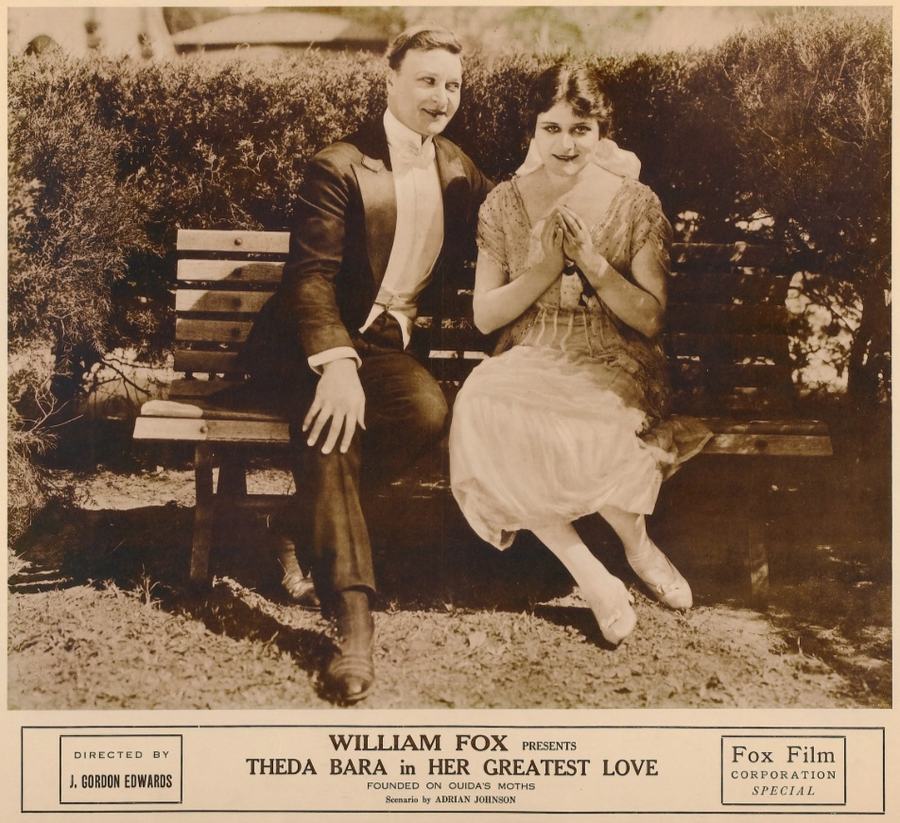
Liberation is not a jubilant sprint but a slow dissolve: Vere sheds her sable cloak, walks into Correze’s arms, and the film irises out on their kiss silhouetted against the monastery doorway—an aperture closing on a world that tried to catalog hearts by lineage. The final intertitle, flashed sparingly, reads “And love sang on, ungovernable,” a manifesto that feels subversive in January 1917, only months before Petrograd’s real Romanovs would topple.
Bara, marketed as the vamp of A Florida Enchantment, here swaps seduction for social surgery. Every gesture is subtraction: the way she removes her gloves finger by finger while negotiating Vere’s dowry becomes a striptease of morality. Watch her eyes in the wedding scene—two unblinking coins refusing to reflect the priest’s candle—proof that narcissism can calcify into coinage.
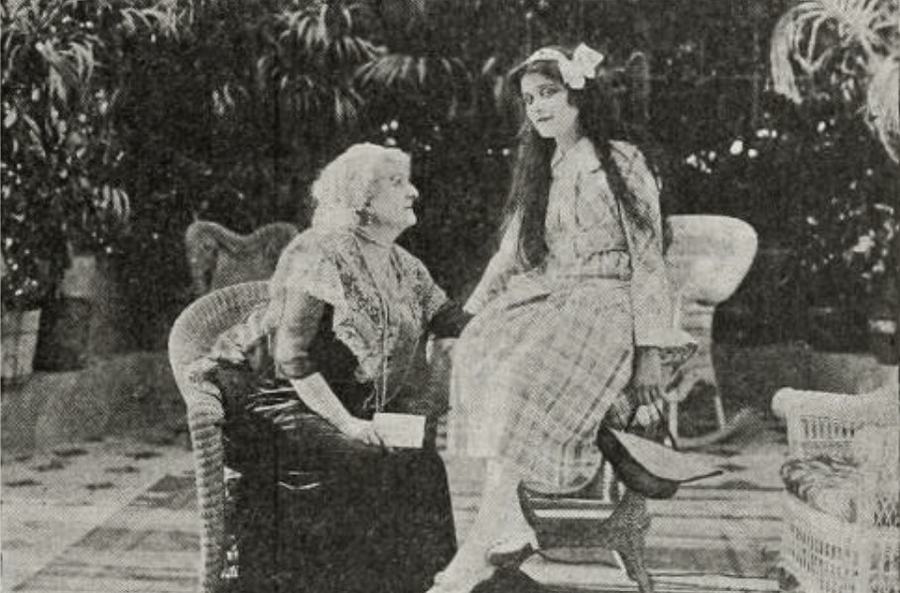
Unlike the maternal meddling in A Modern Mother Goose, which plays as farce, Her Greatest Love treats matchmaking as geopolitics in miniature. Its DNA shares strands with The Woman and the Beast—both posit women as beasts corralled by contract—yet it tempers that pessimism with the utopian aria that art (Correze’s voice) can sabotage capital. Meanwhile the cynicism of Public Be Damned resurfaces here in Zuroff’s press-clipping narcissism, reminding viewers that tabloid culture was already cannibalizing aristocracy before the Bolsheviks arrived.
Though filmed in black-and-white, the movie’s symbolic palette is polychromatic. The crimson of Vere’s exile shawl is rendered through deep gray contrast; the saffron of orthodox robes becomes shimmering silver nitrate; the sea-green of Correze’s cravat flickers as a spectral moiré. Modern viewers can train themselves to see these hues by the density of grain—an ocular synesthesia that makes the absence of Technicolor feel like artistic choice rather than limitation.
A century on, the film’s algorithmic marriage markets echo in dating-app analytics where pedigree mutates into follower counts. Lady Dolly’s ledgers are grandmothers to today’s compatibility spreadsheets. Yet the movie’s final faith in romantic anarchy—two people walking into a snowy horizon without banknotes or bodyguards—feels more utopian now than it did in 1917, making this relic a portable revolution you can slip into a cloud server.
9/10 — A frost-laced melodrama whose emotional amplitude belies its age. For cineastes, it’s a Rosetta Stone of silent acting codes; for romantics, it’s a reminder that love letters once took the form of duels and duets. Stream it during a midnight blizzard; let your radiator impersonate a monastery hearth.
IMDb —
1936
Community
Log in to comment.