DbcultAccessing Vault...
6.3/10
Senior Film Conservator
A definitive 6.3/10 rating for a film that redefined the boundaries of cult cinema. The Wrongdoers remains a cornerstone of transgressive art.
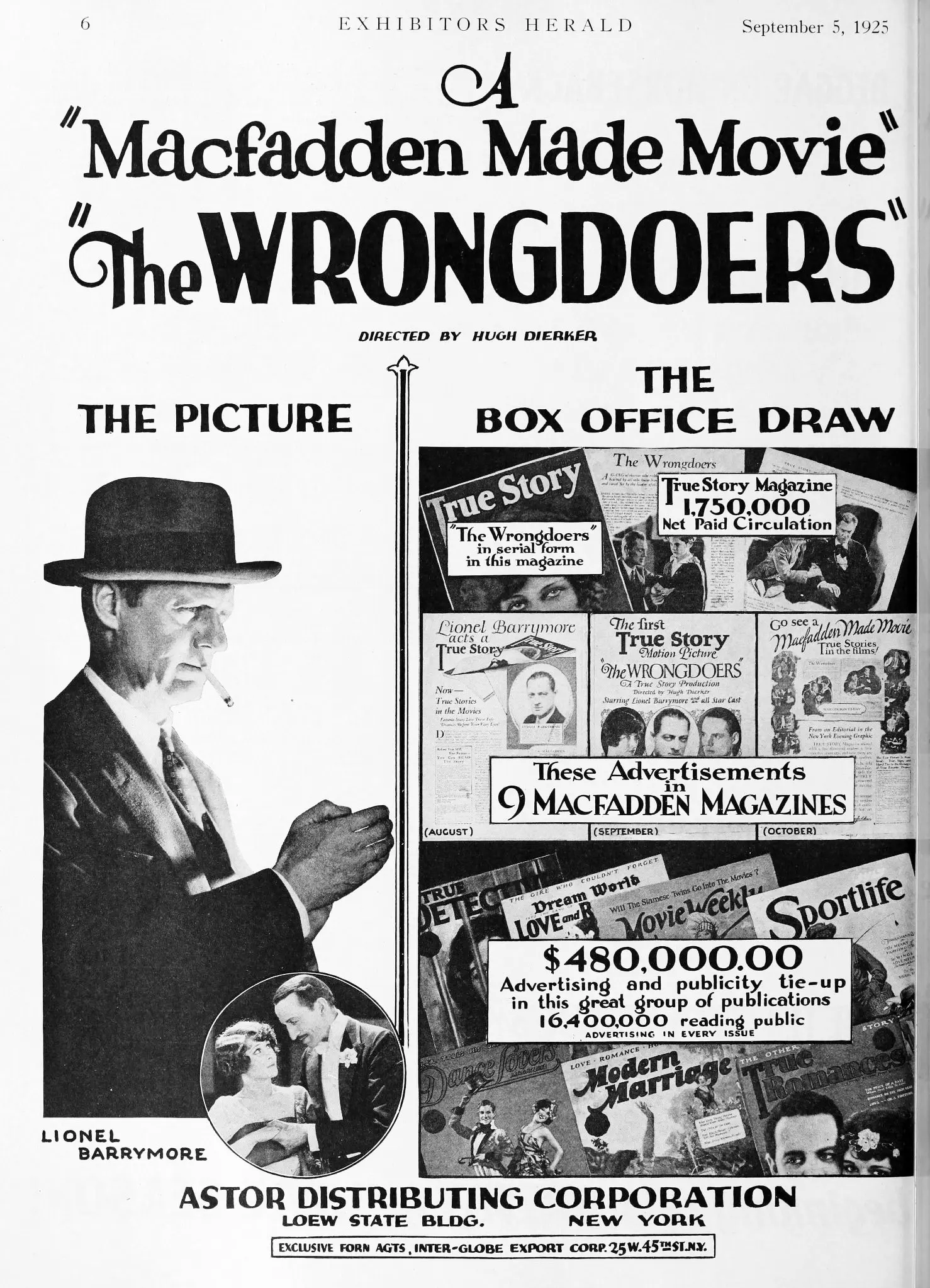
In a landscape where silent films often prioritize spectacle over nuance, *The Wrongdoers* (1919) emerges as a quietly subversive exploration of moral relativism. Directed with a painter’s eye for composition and a dramatist’s ear for subtext, the film transforms its protagonist Daniel Abbott into a modern-day Robin Hood figure, rendered in shades of gray rather than black-and-white heroism. The narrative, penned by John W. Krafft and Lewis Allen Browne, eschews the didactic moralizing common to its era, instead probing the psychological toll of a man who justifies theft as welfare.
Lionel Barrymore’s portrayal of Abbott is a masterclass in conflicted gravitas. His angular features and measured gestures convey a man perpetually torn between self-righteousness and self-loathing. When Abbott takes in Mrs. Warren and her infant—after witnessing her court-ordered despair—the film pivots from social commentary to intimate tragedy. The child, Helen, becomes both a moral compass and a catalyst, her innocence a mirror to the adults’ moral decay.
The film’s most daring structural choice is its refusal to sanitize Abbott’s crimes. Unlike *Youth to Youth* (1919), which romanticizes youthful rebellion, *The Wrongdoers* interrogates the ethics of paternal authority. Abbott’s decision to rob Sylvester Doane—a capitalist represented as both a villain and a victim—highlights the cyclical nature of exploitation. Doane’s love for Helen, though genuine, is framed as a predatory desire that Abbott must quash, even if it means bloodshed. This duality is echoed in the chemistry between Barrymore and Harry Lee as Jimmy, whose youthful idealism collides with his father’s pragmatism.
The cinematography, though rudimentary by modern standards, employs chiaroscuro to symbolic effect. Abbott is often framed in shadow, his face half-lit as if caught between two worlds. The courtroom scenes, stark and almost theatrical, contrast with the soft, golden glow of Abbott’s home, where charity masquerades as sanctity. Such visual metaphors elevate the film beyond its genre conventions, aligning it with the proto-existentialism of later classics like *The Forbidden Room* (1918).
Critics of the time, including those who lauded *Heart of Gold* (1919) for its saccharine optimism, dismissed *The Wrongdoers* as "morally muddled." Yet this muddiness is its greatest strength. The film dares to ask: Can a thief be a saint? Should a child inherit the sins of their guardian? These questions gain urgency in the climax, where Abbott’s fatal duel with Doane becomes less a showdown than a ritualized absolution. Jimmy’s subsequent marriage to Helen—a bittersweet coda—hints at renewal, though the cost of their happiness is etched into the film’s every frame.
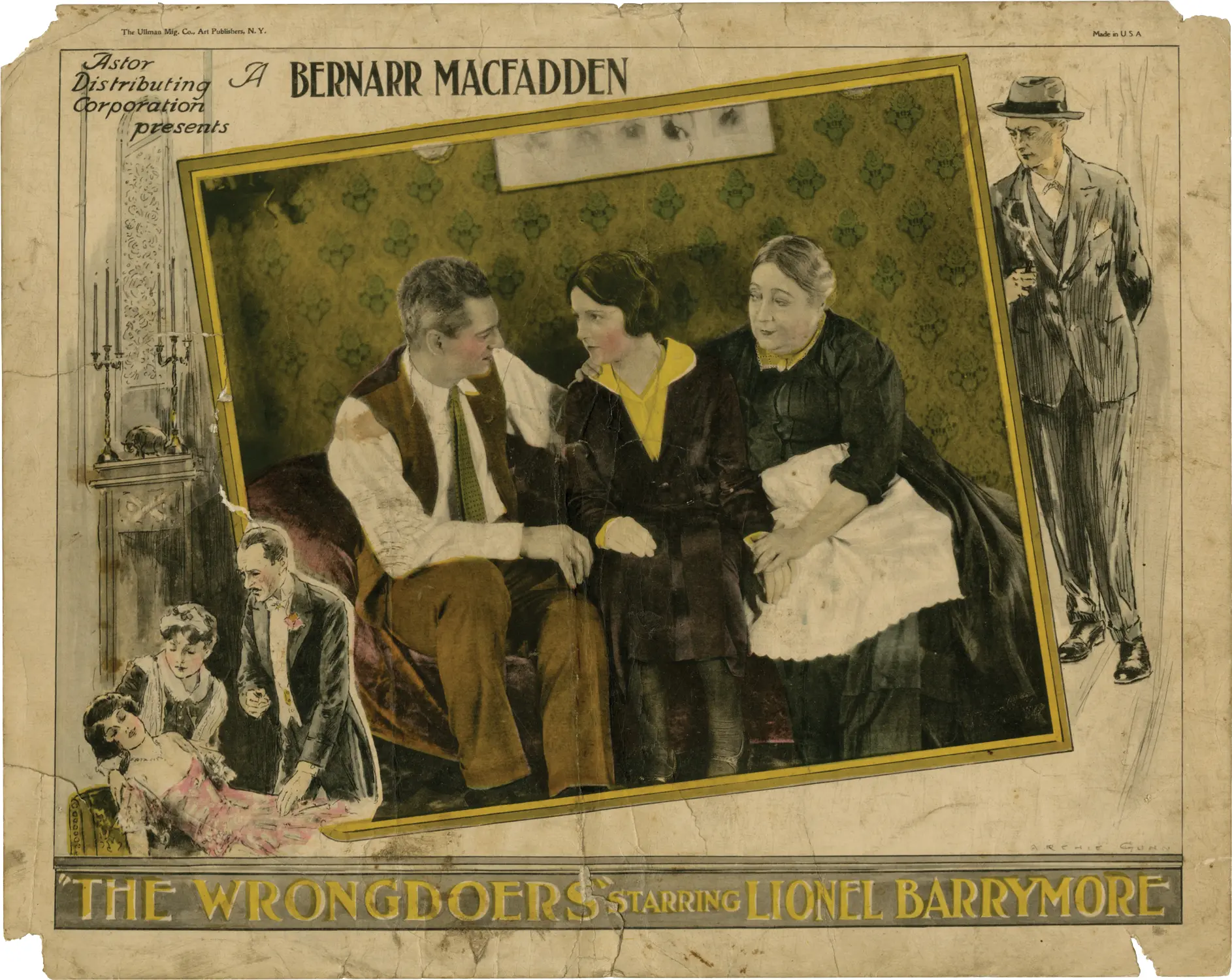
Supporting performances, particularly Blanche Craig’s portrayal of Mrs. Warren, add layers of pathos. Her arc—from despondent mother to symbol of resilience—avoids cliché, instead emphasizing the societal failures that push women to the brink. The script, while occasionally heavy-handed in its dialogue, finds grace in its restraint, letting Barrymore’s eyes and Lee’s restless energy convey what words cannot.
Comparisons to *Pay Me!* (1922) are inevitable, yet *The Wrongdoers* distinguishes itself through its unflinching examination of paternal legacy. Abbott’s relationship with Jimmy is less a father-son bond than a power struggle, with both men projecting their ideals onto the other. The film’s most haunting moment arrives when Jimmy, having discovered Abbott’s plans to rob Doane, chooses to steal the gems himself—a gesture of rebellion or a tragic echo of his father’s hypocrisy?
The score, though lost to time, is said to have featured a melancholic waltz motif that underscores the film’s fatalism. This musical absence in modern screenings only amplifies the narrative’s austerity, forcing audiences to confront the silence between Abbott’s actions and their consequences. Such restraint is a hallmark of the era’s best works, from *Madeleine de Verchères* (1918) to *Men* (1924), where atmosphere often speaks louder than action.
In the century since its release, *The Wrongdoers* has become a benchmark for films grappling with the ethics of privilege and sacrifice. Its themes resonate in contemporary works like *Once a Plumber* (1926), where class divides are rendered with equal introspection. Yet none have matched its audacity in conflating saintly intent with criminal means. The film’s final act—Abbott’s death by his own hand, mirrored by Doane’s bullet—is not a resolution but an indictment of the world that demands such moral compromises.
For modern viewers, *The Wrongdoers* offers a masterclass in character-driven storytelling. Barrymore’s performance, though rooted in the silent era’s physicality, transcends the medium, revealing the universal ache of a man who believes he can outwit fate. The film’s enduring relevance lies in its refusal to offer easy answers. Is Abbott a hero or a villain? A savior or a thief? The answer, like the film itself, is a mosaic of contradictions.
For those seeking further exploration, consider *The Impossible Mrs. Bellew* (1924) and *Dandy Lions* (1925), both of which dissect societal hypocrisy through similarly complex protagonists. Yet none capture the tragic beauty of *The Wrongdoers*, where every act of charity is shadowed by a crime, and every crime is justified by love.
IMDb 6.1
1930
Community
Log in to comment.