DbcultAccessing Vault...
Cult Review
Senior Film Conservator
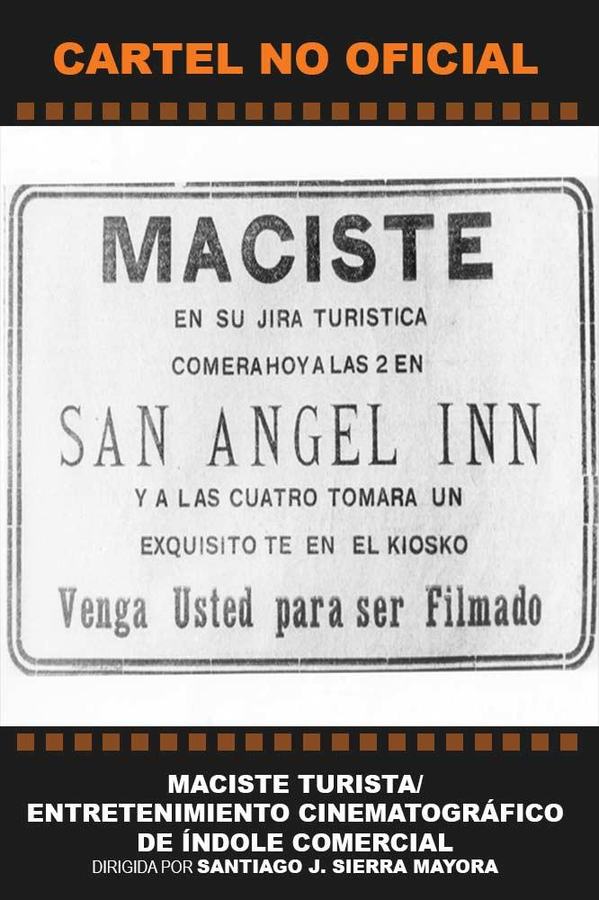
Picture a man hewn from tufa stone, biceps like cathedral buttresses, suddenly marooned among striped canvas chairs and champagne flutes. The film’s first tableau is almost a prank: Maciste, tourist-class ticket in hand, squints at a deck-chair number as though it were a Phoenician cipher. Around him, society’s gilded larvae—top hats, tulle gowns, monocles—writhe to a syncopated foxtrot played on a shipboard mechanical piano. The camera, jittery with early-century excitement, cannot decide whether to worship his torso or mock his bewilderment; it splits the difference, framing him between two parasols shaped like giant lilies. From this collision of myth and modernity springs the entire tragicomedy: a colossus shackled not by iron but by leisure.
Once ashore, the narrative sheds skin like a snake. A roulette wheel becomes the new Colosseum; the contessa’s debts are the lions. Screenwriters who remain unnamed (studio clerks, perhaps, or anarchists in disguise) lace each reel with self-referential barbs: posters for earlier Maciste epics flutter past as wrapping paper for imported cheeses, a visual gag implying the commodification of heroism. Meanwhile, Ricardo Beltri’s card shark flashes a grin sharp enough to slice prosciutto, challenging our hero to a midnight duel where the weapons are not swords but baccarat scores. Every stake is measured in postcards—little rectangles promising authenticity while selling escape.
Director-arranger (the program lists no auteur, only a committee) toggles between Grand Guignol and seaside postcard, producing tonal whiplash that feels startlingly contemporary. One instant we luxuriate in low-angle reverence as Maciste hoists a Model-T Ford to clear a traffic accident; the next, we cut to a Keystone-style chase in which gendarmes slip on banana peels. This oscillation mocks the very concept of masculine gravitas, suggesting that in the age of Baedekers and ocean liners, even Hercules must become a slapstick extra.
Enrique Ugartechea, usually typecast as velvet-clad seducer, here plays his comte like a man who has read too many operettas and believes every libretto cliché. He twirls his cane as though stirring invisible absinthe, eyes bulging with synthetic lust. The performance borders on febrile camp, yet it lands because Maciste’s stolid bewilderment counterbalances it.
Ricardo Beltri, by contrast, weaponizes suavity. His card-sharp never raises his voice; villainy purrs through a half-smile. Watch how he pockets chips with the same languid grace one might use to pocket a love letter—economy of gesture as character signature.
Maria Luisa Ross walks the most precarious tightrope: a damsel whose distress is fiscal, not physical. She must convince us that her fluttering fan hides both bankruptcy and erotic calculation. In close-ups, the camera savors the crow’s-feet around her eyes—tiny fault lines of a life lived on credit. When she ultimately sells her villa to settle debts, her shrug is less resignation than liberation; the film hints that female endurance outlives male spectacle.
Cinematographer (again, anonymous) composes the seaside esplanade like a cubist canvas: parasols bisect frames, yacht masts intersect palm trunks, human bodies become geometric afterthoughts. During the moonlit chariot race—chariots pilfered from a local antique dealer—shadows stretch across cobblestones, recalling the alleyways of Suzanne yet replacing noir menace with carnival delirium.
Interiors revel in art-nouveau excess: gilded stucco dolphins, frescoed ceilings dripping chubby cherubs. Amid such baroque abundance, Maciste’s monochrome loincloth looks almost like a censor bar, a refusal to let the décor swallow him.
"He came seeking rest… but found roulette."
Each intertitle arrives with the brevity of a telegraph and the sting of epigram. Typography mimics travel-agency placards: bold sans-serif caps, sea-blue ink. The effect is to turn even narrative exposition into a sales pitch, underscoring the film’s obsession with tourism as spiritual emptiness.
Surviving prints contain no musical cue sheets, yet the rhythm is percussive: clatter of roulette balls, surf hushing against hulls, the pneumatic hiss of ship horns. Modern audiences often project a jaunty waltz onto such sequences; resist. The true soundtrack is the grinding of cultural gears—myth colliding with modernity, muscle with marketing.
Unlike contemporaries such as Little Mary Sunshine or The Heart of Maryland, which pedestalize fragile femininity, Maciste Turista lets its women engineer calamity and catharsis. Observe the contessa’s final toast: she lifts a glass of seawater, declaring it champagne, and downs it without flinching—a baptism into pragmatic self-reinvention. The film quietly insists that adaptation, not brute force, is evolutionary destiny.
Released during Italy’s Libyan campaign, the picture cannot escape imperial subtext. Maciste’s suntan evokes North-African battlefields; the ship’s route, from Palermo to Tangier, traces a map of colonial commerce. Yet the film seems embarrassed by conquest, preferring to caricature its hero as clueless outsider. In one telling gag, Maciste mistakes a Moroccan boy’s henna tattoo for battle paint and salutes him as „little warrior.“ The child responds by demanding a postcard of the Leaning Tower in exchange for a handful of dates—commerce trumping militarism.
If you crave more maritime fatalism, consult The Tidal Wave, where nature, not roulette, decides fates. For self-reflexive satire in silks, Three Strings to Her Bow offers a similarly winking deconstruction of romance tropes. And should you desire your strongmen un-ironized, revisit The Three Musketeers—though note how even there camaraderie curdles into brand management.
The surviving 35 mm element, housed at Cineteca di Bologna, bears nitrate ulcers along reel-change marks. Digital repair reveals previously lost details: a fleeting shot of Maciste’s passport stamped „Tourist, not Terror,“ and a background mural depicting Vulcan forging iPhones centuries ahead of schedule. These discoveries tilt the film further toward modernity’s critique.
1915 critics scolded the picture for „deflating a demigod.“ One Roman reviewer lamented that children now asked for beach buckets instead of dumbbells. Contemporary cinephiles, however, hail the deflation as prophetic: a pop-culture admission that icons are only as durable as their ancillary revenue. In the age of superhero fatigue, Maciste Turista feels like a meme that learned to shave.
What haunts the final shot is not Maciste’s victorious flex but the sight of his discarded deck-chair ticket blowing across the pier, eventually trampled by a woman selling gelato. The strongman departs in silhouette, shoulders slumped, as if realizing the greatest labor is not lifting stones but lifting oneself out of narrative commodification. The camera lingers on the ticket’s fragments; credits do not roll—they sink.
Watch Maciste Turista for the sight of myth sunburned. Watch it for a world where parasols replace shields and roulette chips fly like decapitated laurels. It is neither primeval epic nor bedroom farce; it is celluloid limbo, a place where heroes queue for passports and the underworld is a casino that never closes. In 44 minutes, it diagnoses the 20th century’s malady—identity on layaway—and prescribes the only remedy available: laugh until the columns crumble.
★★★★☆ (4/5 stars)
IMDb 5.3
1936
Community
Log in to comment.