DbcultAccessing Vault...
6.6/10
Senior Film Conservator
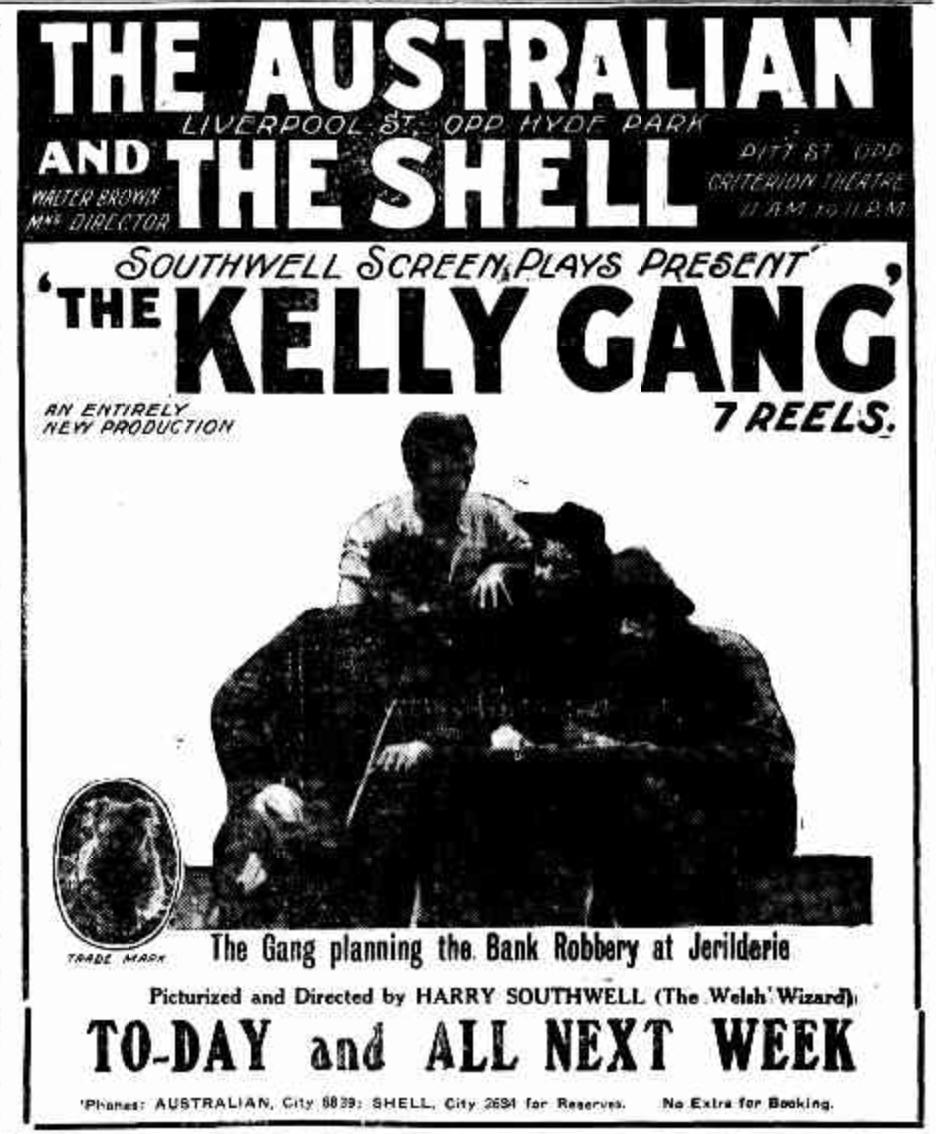
A definitive 6.6/10 rating for a film that redefined the boundaries of cult cinema. The Kelly Gang remains a cornerstone of transgressive art.
When the first public screening of The Kelly Gang flickered to life at Melbourne’s Athenaeum Hall on Boxing Day 1906, startled patrons ducked as oncoming horses appeared to gallop straight off the canvas. More than a century later, that kinetic jolt still reverberates. Commonly cited as the world’s first dramatic feature-length film—predating Hilde Warren und der Tod and This Is the Life—Charles Tait’s outlaw odyssey is less a stolid history lesson than a nitrate baptism by fire.
Restored fragments reveal a visual grammar already restless: low-angle compositions inflate the bushrangers into granite monuments; silhouettes against campfire embers echo Indigenous rock art; the camera, normally static in 1906, occasionally inches forward as though itself an accomplice. Grainy wide shots of the Victorian ranges dissolve into claustrophobic interiors lit by a single kerosene lamp—an early, instinctive montage that anticipators of The Cold Deck would refine a decade later.
Central to the film’s mythopoeia is Godfrey Cass’s Ned Kelly, less a performance than a conjuration. Cass, a stage veteran accustomed to projecting to the gallery, modulates between swaggering bravado and granite resolve with only gesture and pantomime. Close-ups—rare for the era—linger on his singed beard and sulphur-yellow eyes, forging an intimacy that rivals the tortured close-ups in The Bondage of Barbara. When he dons the iconic plough-mold armour, the iron suit becomes chrysalis and coffin alike: a proto-cinematic exoskeleton that predates modern superhero iconography.
Horace Crawford’s Superintendent Hare provides the colonial counterweight. Rather than a sneering moustache-twirler, Crawford presents a bureaucrat haunted by duty, his lantern jaw twitching at each judicial overreach. The film refuses to paint Empire against outlaw in monochrome; instead, it stages a dialectic where both factions are prisoners of a penal ethos. In that sense, the moral architecture mirrors the fatalistic give-and-take of Unto Those Who Sin, though bushranger bravado replaces melodramatic sermon.
Frank Tomlin’s Joe Byrne, the troubadour-turned-revolutionary, embodies the film’s libidinal undercurrent. Whether serenading a Stringybark campfire or scribbling the Jerilderie manifesto, Tomlin supplies a Byronic pulse. His final stand—clutching a revolver in one hand, a blood-spattered book of poems in the other—compresses the tension between art and violence that silent cinema so often externalised through tableau. Jack McGowan’s Dan Kelly ricochets between boyish levity and feral desperation; his death scene—legs twitching beneath a fallen beam—prefigures the abrupt mortality of soldiers in The Explosion of Fort B 2.
Women in The Kelly Gang inhabit liminal spaces. Maud Appleton’s Kate Kelly glides through frame like a mournful wraith, her glare indicting both police and kinfolk. Adele Inman’s barmaid Maggie functions as the film’s moral seismograph: every tremor of conscience registers in her widened eyes. Their collective screen time is scant, yet their spectral presence complicates what could have been a merely testosterone-drenched saga, much as the heroines of A Daughter of Australia re-territorialise masculine narratives of nationhood.
V. Upton Brown’s venal magistrate and Thomas Sinclair’s turncoat stockman embody the colonial power nexus. Brown, encased in starched linen, delivers verdicts with the bored languor of a card-shark in Love; Sinclair’s whispered intelligence to the constabulary reeks of rum and self-preservation. Their collusion forms the ethical quicksand from which Ned’s rebellion springs, a causality chain reminiscent of the systemic entrapment in The Judgment House.
Cinematographically, the film is a study in mercurial light sources. Exterior scenes exploit the Australian sun’s razor-sharp angles; shadows stretch like prison bars across ochre soil. Interiors rely on magnesium flash-pans that hiss white-blue, sculpting faces into cadaverous masks. Such chiaroscuro anticipates the expressionist tenebrism later celebrated in European silents, though here it is born of technical necessity rather than stylistic homage. The camera’s occasional tilt—perhaps caused by an uneven tripod on bush terrain—imbues the composition with a drunken vertigo, as though the landscape itself is morally off-balance.
Editing rhythms alternate between languid observation and staccato shocks. The 45-minute runtime encompasses hold-ups, horseback pursuits, and the climactic gunfight at Glenrowan without recourse to cross-cutting, yet the succession of tableaux accumulates propulsive tension. One memorable transition superimposes a locomotive’s headlamp over Dan Kelly’s grimace, fusing technology and terror—a visual motif that echoes the metaphysical collision of civilisations in The Wrath of the Gods.
Sound, though absent on the print, was originally supplemented by live narration, sound-effects teams, and an onstage piano. Contemporary reports describe coconuts mimicking hoofbeats, tin sheets thundering for lightning, and a community choir humming bush ballads. This synesthetic surround foreshadows the immersive sonic experiments of Miraklet: Tavlor ur det katolska samfundslivet and suggests that even in 1906, spectators craved a totality of illusion.
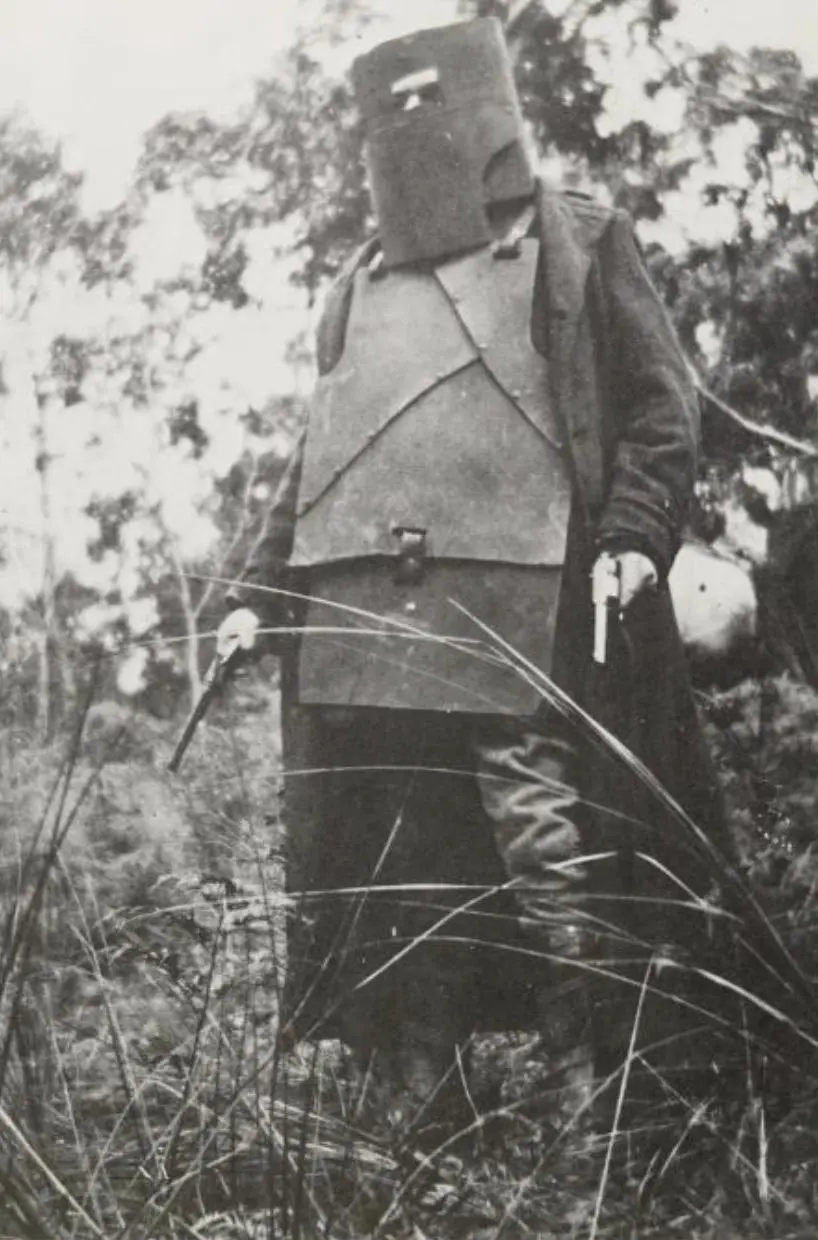
Narratively, the film cherry-picks episodes: the police camp at Stringybark, the Euroa bank robbery, the Jerilderie letter dictation, and the final siege. Omissions—most notably Ned’s trial and execution—leave the saga suspended in mythic amber. Such truncation transforms the outlaw into a Promethean figure perpetually locked in revolt, a structural openness mirrored by the elliptical ending of The Barrier.
Colonial politics seep through every sprocket hole. The British classification boards fretted the film would "glorify criminality"; Victorian police unions lobbied for a ban. Censors demanded the excision of scenes depicting the armour’s construction, fearing real-world replication. Thus, the surviving prints exist in multiple variants—some truncating the hold-ups, others omitting the constable’s death—creating a textual instability that scholars still navigate like cartographers mapping a shifting reef.
Historiographically, The Kelly Gang ignited Australia’s bushranger genre, spawning a cycle that dominated local screens until World War I. Yet its DNA infiltrates global outlaw iconography—from Sergio Leone’s dust-swirled antiheroes to Arthur Penn’s Bonnie and Clyde. The armoured suit, reimagined in steampunk iterations, even resurfaces in contemporary graphic novels, proving the film’s cultural half-life rivals that of Ned’s own mythology.
Comparative contextualisation reveals fascinating echoes. Where A Gentleman of Leisure satirises class pretensions through drawing-room farce, The Kelly Gang weaponises those pretensions into political grievance. Its depiction of state force aligns tonally with the paranoiac authority figures in The Marriage of Molly-O, yet substitutes urban claustrophobia for wide-open scrublands that paradoxically feel just as entrapping.
Performative authenticity derives from location authenticity. Shot around the actual Glenrowan inn—still pocked with bullet holes—the film merges relic with representation, predating Neorealist location zeal by four decades. Contemporary relatives of constables and outlaws served as extras, their weather-beaten visages supplying documentary verisimilitude. This ontological slippage between participant and performer imbues the footage with a séance-like aura: ghosts reenacting their own tragedies for a hand-cranked camera.
Yet the film is no mere antiquarian curiosity; its thematic sinews remain taut. Questions of state surveillance, economic disparity, and media sensationalism flicker across intertitles that read like Twitter-esque proclamations: "Such is life." In an era of algorithmic profiling, Ned’s grievances against biased policing feel freshly ripped from headlines. The armour itself—DIY tech against militarised force—becomes a prototype for hacker resistance, a steampunk ancestor of encrypted anonymity.
Scholarship has recently unearthed production ledgers cataloguing the film’s budget: £1,050, a fortune for local producers. Box-office returns tripled the investment, proving to sceptical exhibitors that Australian stories could rival imported Yankee fare. The success catalysed the Commonwealth’s first sustained film boom—until moral panic and censorship regimes shuttered bushranger narratives, diverting talent toward safer bush comedies and pastoral romances.
Restoration efforts continue. The National Film and Sound Archive has pieced together a 17-minute composite from five international archives, tinting scenes per 1906 exhibition norms: amber for daylight, cyan for night, rose for interiors. Digital re-gradation stabilises the herky-jerky motion without smoothing the artisanal texture; every fleck of emulsion dust remains like fly-spots on a bushranger’s coat. Paired with a newly commissioned score blending Irish fiddle and Aboriginal percussion, the reconstruction premiered at Cannes Classics, earning a five-minute standing ovation—testament to the film’s uncanny afterlife.
Viewing strategies matter. Modern audiences reared on talkie exposition may find the pantomime broad. Resist the urge to read intertitles literally; instead, treat them as haiku-like punctuations. Note how bodies occupy negative space, how horses bisect horizons, how smoke curls perform a Morse code of doom. The film rewards a contemplative gaze—one attuned to the same visual literacy cinephiles bring to Mesék az írógépröl.
Ultimately, The Kelly Gang endures because it is both artifact and prophecy—a celluloid relic that foresaw the symbiosis of media and myth-making. In a digital age where TikTok videos mint legends overnight, Ned’s iron helmet remains an avatar of resistance against institutional erasure. To watch the film is to witness the instant Australia discovered its reflection could be projected, distorted, and yet unmistakably its own. And as the final shot lingers—armoured silhouette against dawn’s first blush—we sense the camera not merely recording history but igniting it, leaving us, like colonial audiences, to rub our eyes and wonder whether the bush still smoulders beyond the theatre walls.
IMDb 6
1919
Community
Log in to comment.