DbcultAccessing Vault...
Cult Review
Senior Film Conservator
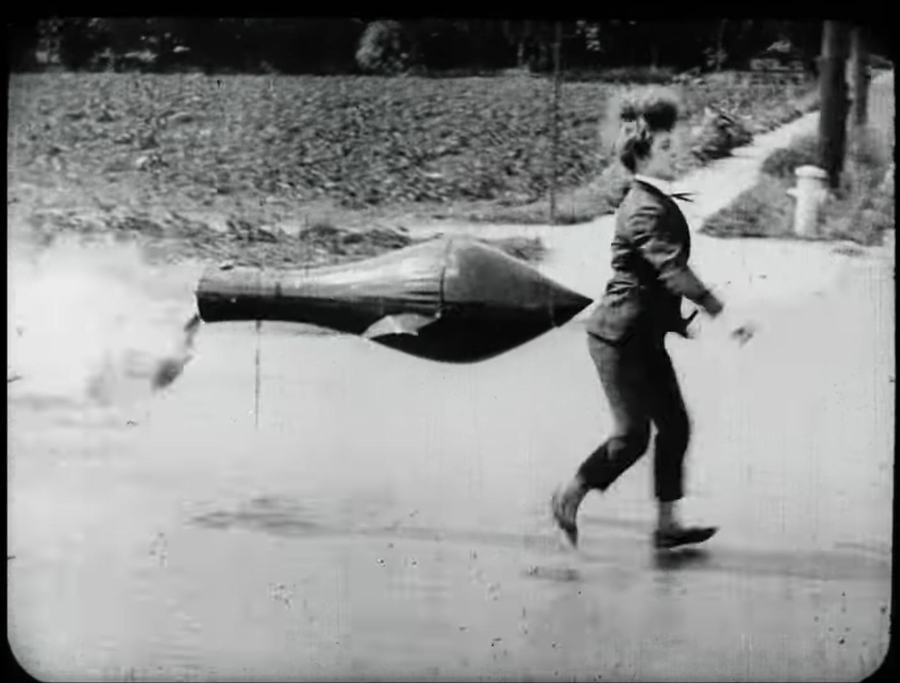
In the annals of silent cinema, where slapstick often met profound social commentary, a gem like 'Hoot Toot' emerges, offering a unique, often uproarious, lens through which to view the tumultuous era of the First World War. Far from the trenches and the grim realities of the battlefield, this film turns its gaze inward, towards the homefront, and specifically, to the indomitable spirit of one woman, Magnolia Milkshake, portrayed with a delightful blend of earnestness and comedic timing by the inimitable Alice Howell. At its heart, 'Hoot Toot' is a testament to the myriad ways individuals sought to contribute to a national cause, even when personal circumstances seemed to conspire against them. It's a comedic exploration of duty, perceived inadequacy, and the surprising avenues through which patriotism could manifest.
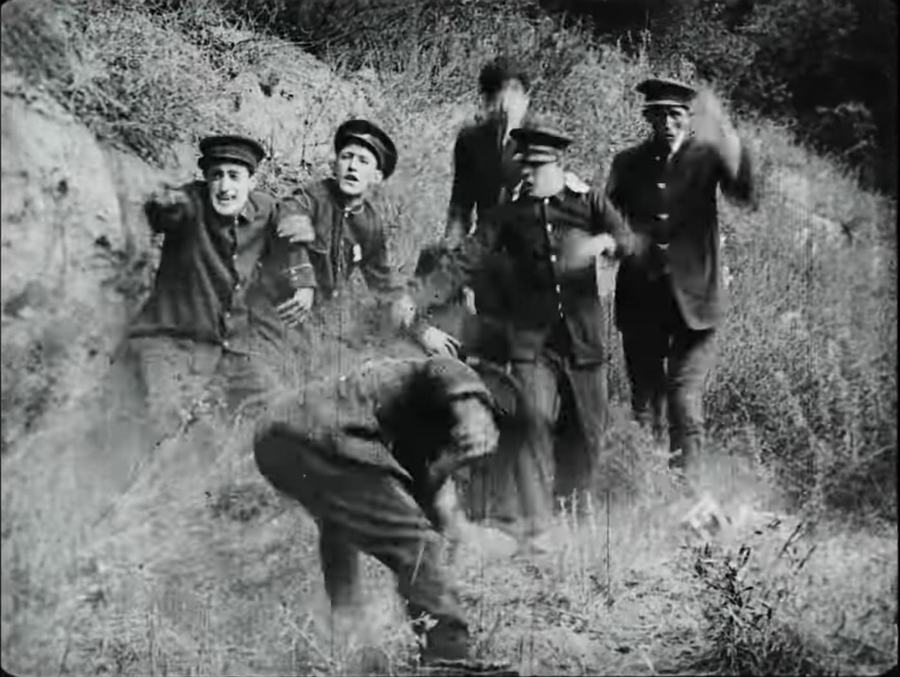
The premise itself is ripe for both laughter and a subtle critique of societal expectations. Magnolia Milkshake's husband, a man of considerable girth, finds himself exempt from military service, a situation that, while perhaps a relief for him, weighs heavily on Magnolia's conscience. This isn't merely a tale of a wife's disappointment; it's a profound exploration of vicarious patriotism, a woman's yearning to contribute when her immediate male counterpart cannot. In an era when masculinity was often equated with military service, Magnolia's husband's exemption creates a void, a perceived deficit in their household's contribution to the war effort. This void, however, becomes the fertile ground for Magnolia's extraordinary, and often misguided, endeavors. Alice Howell, a master of physical comedy and expressive facial acting, imbues Magnolia with a determined spirit that is both admirable and inherently humorous. Her eyes, often wide with conviction, convey a woman utterly committed to her cause, regardless of the obstacles – or absurdities – that lie in her path.

Magnolia's initial impulse, to join the Red Cross, is perhaps the most conventional and socially acceptable avenue for female wartime contribution. Here, the film likely presents a series of delightful vignettes showcasing her earnest, yet often clumsy, attempts at nursing, bandaging, or perhaps even knitting. One can easily imagine her attempts at applying a tourniquet devolving into a comical tangle of fabric, or her well-intentioned efforts at comforting a 'patient' leading to a cascade of accidental mishaps. This phase of her journey, while rooted in compassion, serves to highlight the dissonance between her fervent desire to help and her perhaps less-than-stellar practical skills. It's a classic silent comedy setup: the well-meaning character whose enthusiasm outstrips their competence, leading to a cascade of escalating comedic predicaments. This phase subtly echoes themes found in other wartime films, albeit with a comedic twist, where the homefront support was crucial, as seen in the more serious tones of On the Fighting Line, which depicted the stark realities, or even No Man's Land, which explored the male experience of conflict.
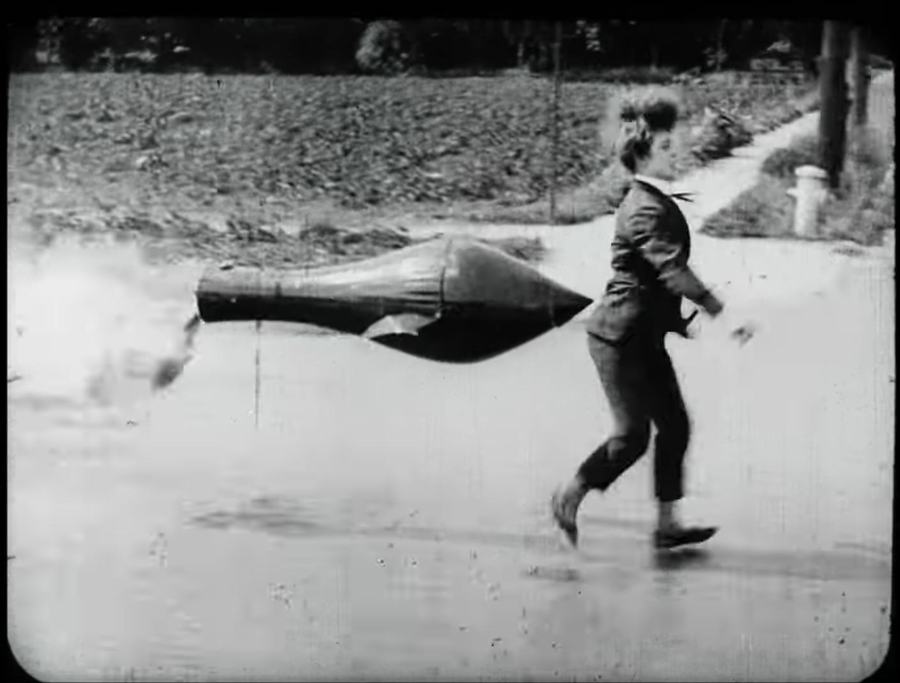
The true comedic and thematic pivot arrives when Magnolia, unsatisfied with the perceived 'softness' of the Red Cross, decides to join the rifle corps. This decision is nothing short of revolutionary for its time, a bold assertion of female agency that directly challenges prevailing gender norms. The image of Magnolia Milkshake, perhaps in an ill-fitting uniform, attempting to master a rifle, is inherently absurd and deeply compelling. This is where the film truly shines in its ability to extract humor from incongruity. Her attempts at drill, target practice, or even simply handling a firearm would undoubtedly be a masterclass in physical comedy. Imagine a sequence where her rifle repeatedly disobeys her commands, perhaps spinning out of control during a marching drill, or her attempts at aiming resulting in a comical ricochet that narrowly misses the stern instructor, possibly played by the stoic yet expressive James Finlayson.
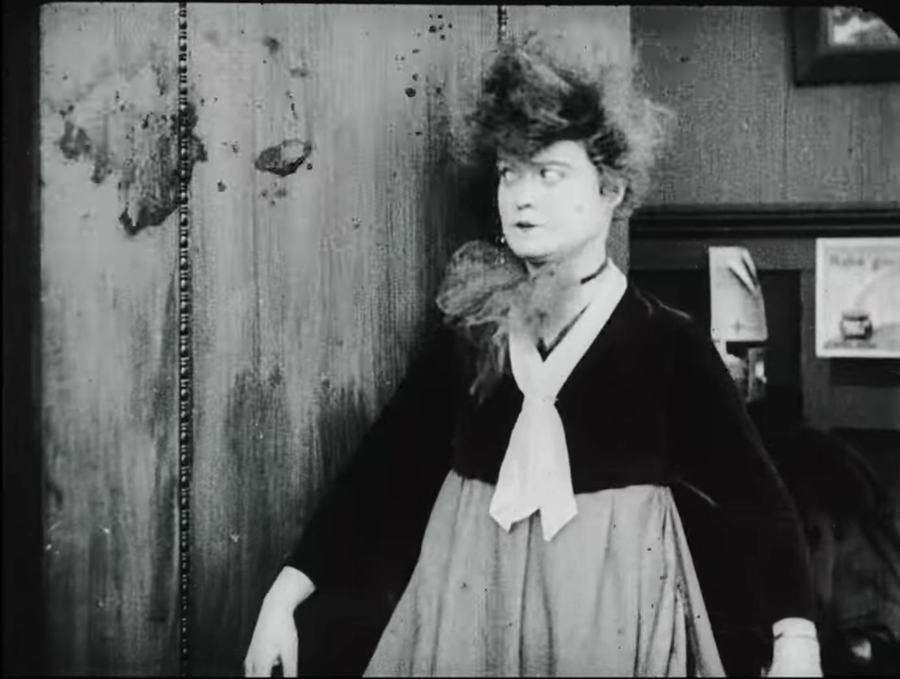
This transition is not just for laughs; it speaks volumes about the shifting roles of women during wartime. While many films, like The Winning of Beatrice or Odette, explored women's struggles and triumphs in more dramatic contexts, 'Hoot Toot' uses comedy to highlight the same underlying spirit of determination. Magnolia's desire to shoulder a rifle, to engage directly with the tools of war, is a powerful, albeit exaggerated, symbol of women stepping into roles traditionally reserved for men. The film, through its comedic lens, implicitly asks: why not? Why shouldn't a woman, driven by patriotism, be afforded the opportunity to contribute in the most direct way possible, even if her execution is less than perfect?
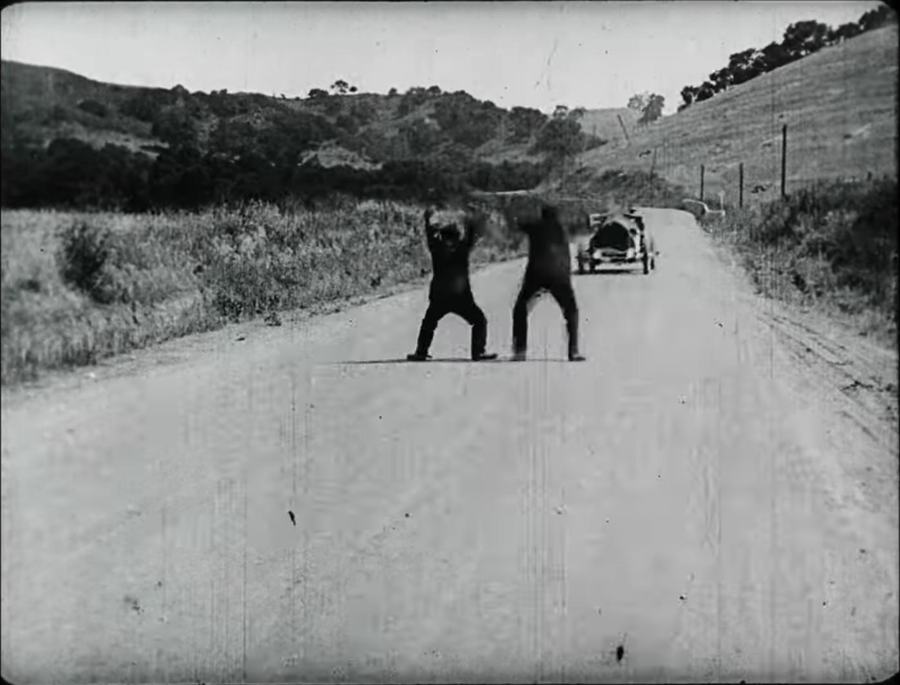
The success of 'Hoot Toot' undoubtedly rests not only on Alice Howell's central performance but also on the supporting cast. James Finlayson, known for his iconic scowl and exasperated reactions, would have been a perfect foil to Howell's energetic Magnolia. As an instructor or a bewildered bystander, Finlayson's presence would elevate the comedic tension, his slow burns and double-takes providing a counterpoint to Magnolia's enthusiastic chaos. Hughie Mack and Bert Roach, both seasoned comedic actors of the era, would likely fill out the ranks of fellow recruits or the various authority figures Magnolia encounters, each adding their distinct flavor to the ensemble. Mack's often boisterous demeanor could provide a contrasting comedic style, while Roach's more subtle, perhaps bewildered, reactions would round out the comedic landscape. The interplay between these talents would have created a rich tapestry of reactions to Magnolia's unorthodox patriotism, making the film a truly ensemble effort in generating laughter.
While 'Hoot Toot' revels in its physical comedy and the absurdity of its premise, it also functions as a fascinating social document. The film, produced in the immediate aftermath of WWI, captures a society grappling with the legacy of conflict and the redefinition of gender roles. Women had stepped into numerous roles traditionally held by men during the war, and films like 'Hoot Toot,' even in their comedic exaggeration, reflect this societal shift. Magnolia's journey from domesticity to the desire for direct military involvement is a symbolic representation of this broader cultural evolution. It's a playful nod to the emerging 'new woman' of the early 20th century, a figure who, much like the strong female protagonists in films such as She or The Inner Shrine, albeit in dramatically different genres, asserted her will and challenged conventional boundaries.
The film's humor, therefore, is not merely superficial. It's a gentle, yet pointed, commentary on the anxieties and aspirations of a nation in transition. The sight of a woman in a rifle corps might have been played for laughs, but it also subtly pushed the boundaries of what was considered appropriate or even possible for women. It challenged the notion that patriotism was solely the domain of physically fit men, suggesting that courage and a desire to serve transcended gender and physical stature. In a way, it's a comedic companion piece to more serious dramas like A Regiment of Two, which would explore camaraderie and service from a male perspective, or even Der Stier von Saldanha, which might delve into the psychological tolls of masculinity and conflict. 'Hoot Toot' offers a lighter, yet equally insightful, angle.
Silent comedies, with their reliance on visual gags, expressive performances, and universal themes, possess a timeless quality. 'Hoot Toot' is no exception. Its humor, derived from human foibles, exaggerated reactions, and the clash of expectations, remains remarkably potent even a century later. The film's ability to communicate complex ideas – patriotism, gender roles, personal ambition – without a single spoken word is a testament to the artistry of its creators and performers. The visual language of silent cinema, particularly in the hands of a skilled comedian like Alice Howell, transcends linguistic barriers, allowing audiences from any era to connect with Magnolia's plight and her hilarious attempts to overcome it. The careful choreography of chaotic scenes, the precise timing of a pratfall, or the nuanced expression that conveys a wealth of emotion – these are the hallmarks of silent comedy, and 'Hoot Toot' undoubtedly leverages them to full effect.
In conclusion, 'Hoot Toot' is far more than just a forgotten relic of the past. It's a vibrant, laugh-out-loud comedy that simultaneously offers a rich commentary on a pivotal moment in history. Through the spirited antics of Magnolia Milkshake, we witness a woman's determined quest for purpose, her hilarious misadventures in the name of patriotism, and a subtle yet powerful assertion of female agency. The film, with its stellar cast including Alice Howell, James Finlayson, Hughie Mack, and Bert Roach, stands as a testament to the enduring power of silent comedy to entertain, provoke thought, and reflect the societal currents of its time. It reminds us that even in the most serious of circumstances, humor can be found, and that the human spirit, particularly when driven by a noble cause, can achieve the most unexpected, and often comical, feats. It's a wonderful example of how cinema, even in its earliest forms, could both reflect and gently challenge the norms of its day, leaving audiences with both a smile and something to ponder long after the final frame.
IMDb 5.7
1926
Community
Log in to comment.