DbcultAccessing Vault...
7.9/10
Senior Film Conservator
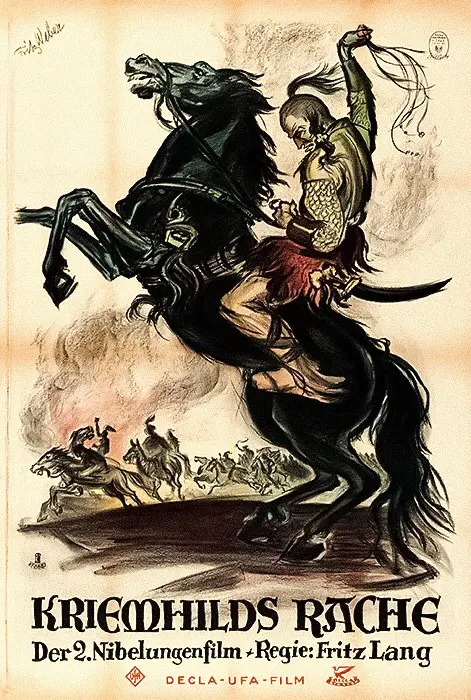
A definitive 7.9/10 rating for a film that redefined the boundaries of cult cinema. Die Nibelungen: Kriemhild's Revenge remains a cornerstone of transgressive art.
In the pantheon of silent cinema, few works possess the sheer, overwhelming gravity of Die Nibelungen: Kriemhild's Revenge. While its predecessor, Siegfried, operated within the realm of mythic pastoralism and heroic grandeur, this second installment is a stark, brutalist exploration of the human psyche's capacity for annihilation. Fritz Lang, ever the architect of the frame, abandons the dappled forests of the Odenwald for the cavernous, oppressive halls of the Huns and the rigid, doomed structures of the Burgundian court. The film is a masterclass in how physical space can mirror internal decay.
At the epicenter of this tectonic shift is Margarete Schön. Her portrayal of Kriemhild is one of the most chilling evolutions in film history. We see her transition from a delicate princess to a monolithic entity of grief, and finally, to a vessel of pure, unadulterated hatred. Unlike the more intimate betrayals found in Drama na okhote, Kriemhild’s tragedy is projected onto a global stage. Her stillness is her greatest weapon; she moves through the film like a statue that has come to life only to demand a blood sacrifice. Every line of her costume, designed with an almost geometric severity, reinforces her role as an avatar of fate.
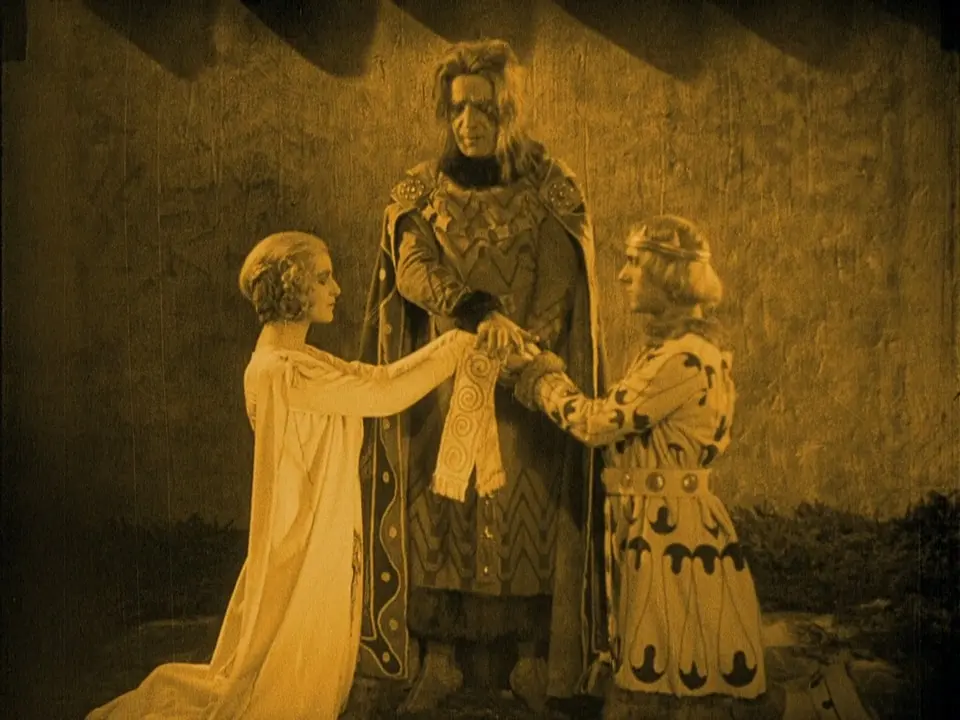
When we compare this to the more sentimental redemptions found in Love's Redemption, the contrast is jarring. There is no redemption here. Lang and writer Thea von Harbou explicitly reject the notion of a moral center. Even the Huns, led by Rudolf Klein-Rogge’s Etzel, are depicted not as mere villains, but as a force of nature—a tidal wave of chaos that Kriemhild unleashes to scour the earth of her brothers' hypocrisy.
Lang’s use of symmetry in this film is legendary. The way the Burgundian knights stand in perfect formation, their shields creating a wall of steel, reflects an ossified social order that is incapable of adapting to the shifting moral landscape. This rigidity is their downfall. While a film like The Primrose Ring might lean into the whimsical or the hopeful, Kriemhild's Revenge is a study in the inexorable. The camera angles are often low, making the characters seem like titans even as they are dwarfed by the monumental sets.
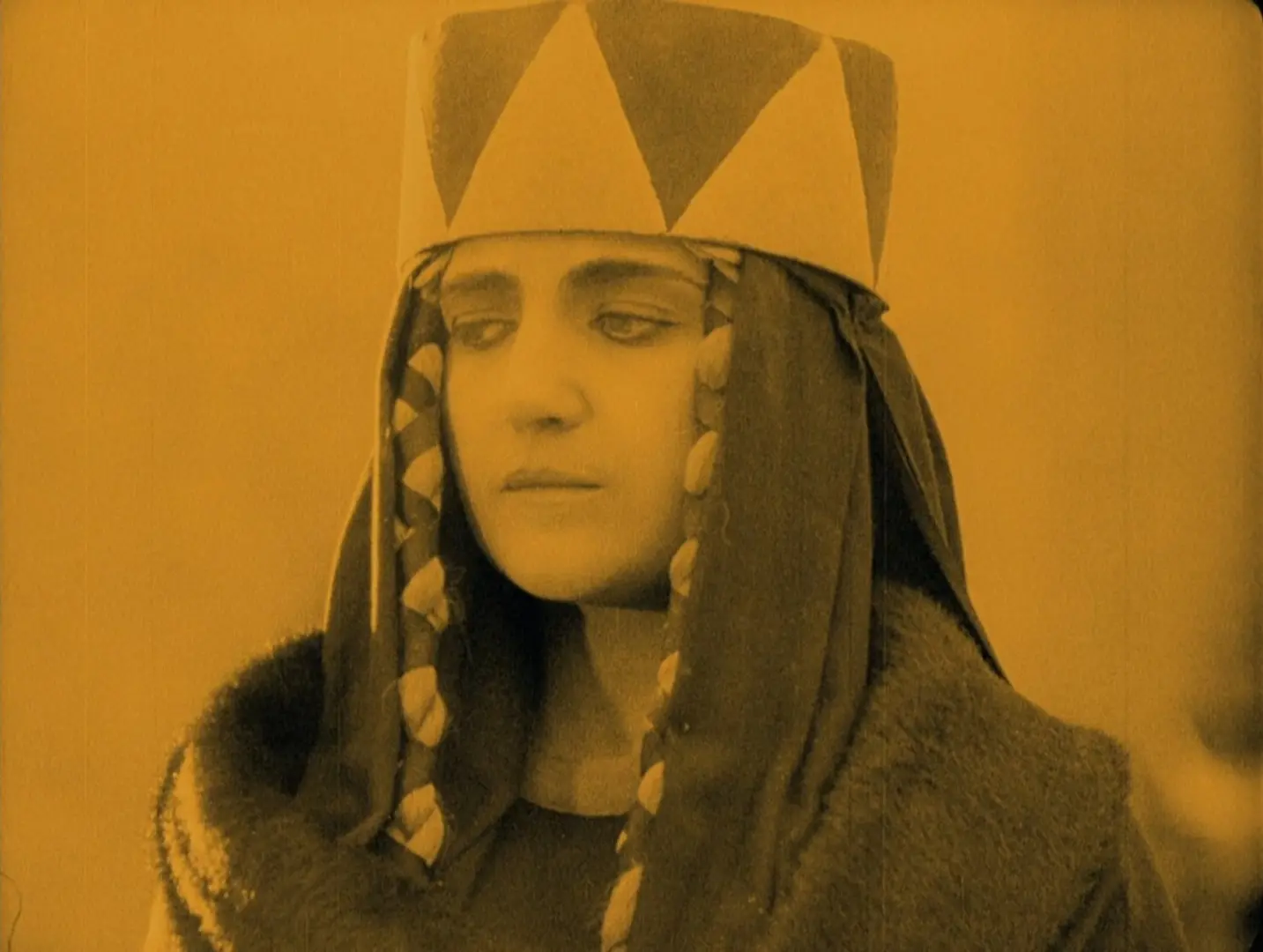
The lighting, a proto-noir use of chiaroscuro, highlights the duality of the characters. Hagen von Tronje, played with a grizzled, terrifying stoicism by Hans Adalbert Schlettow, is often shrouded in shadow, his loyalty to the crown manifesting as a dark, impenetrable shield against Kriemhild’s light. The film doesn't just tell a story; it builds a world where every shadow is a premonition and every ray of light is a scorching indictment.
The second half of the film, set in the Hunnish territory, offers a visual counterpoint to the first. Where Worms was characterized by vertical lines and stone coldness, the world of Etzel is one of dirt, fire, and sprawling, horizontal chaos. It is a visceral experience that rivals the intensity of early historical dramas like The Indian Wars or the ethnographic grit of El último malón. Lang captures the Hunnish court as a subterranean hive of energy, a stark contrast to the stagnant, dying aristocracy of the Nibelungs.
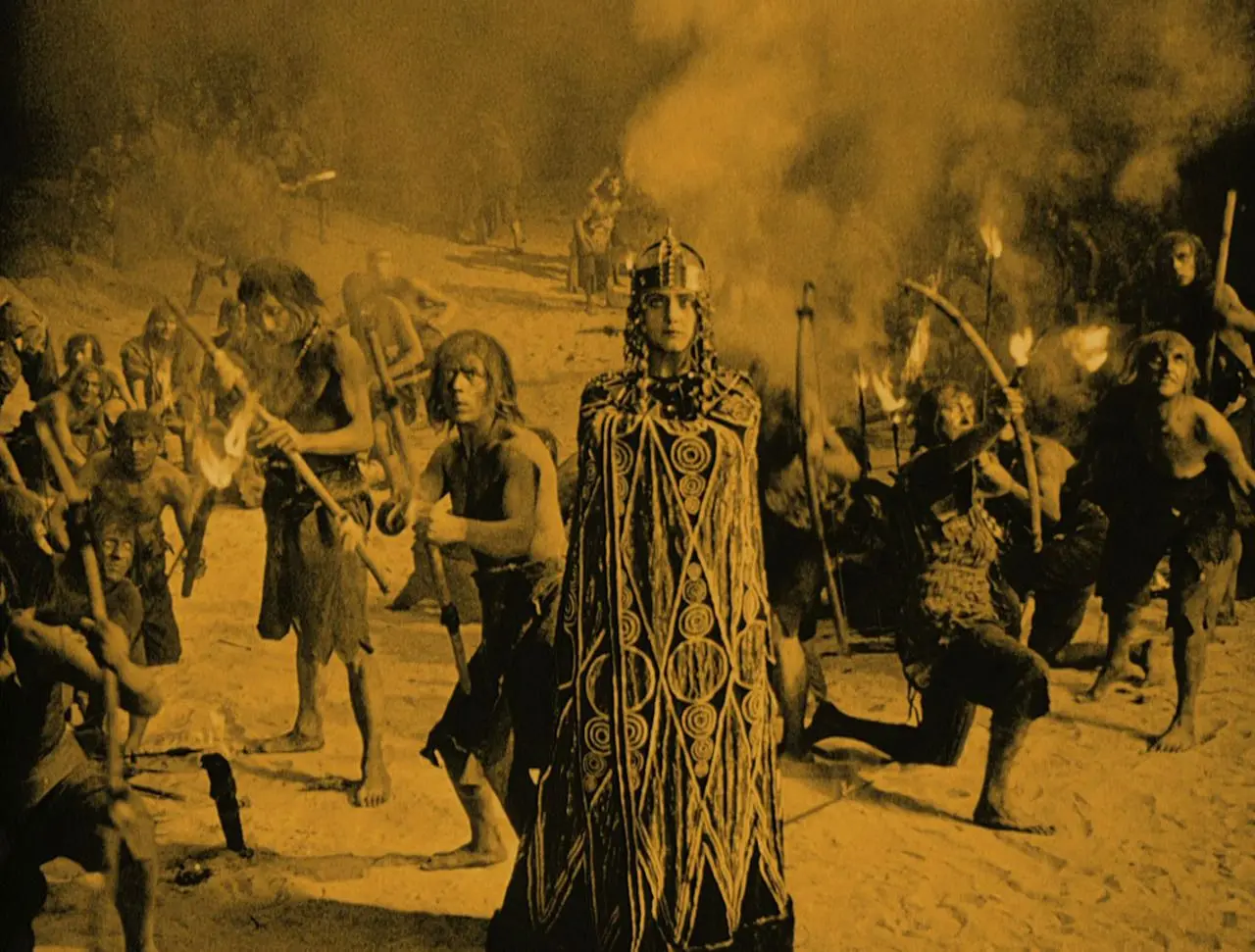
The sequence of the final feast—the Gastmahl—is perhaps the most harrowing scene in silent cinema. The tension is palpable, built through repetitive shots of the Huns lurking in the rafters and the Burgundians clutching their swords under the table. It is a slow-motion car crash of epic proportions. Unlike the lighthearted mishaps in Almost Heroes, the "journey" here is a one-way trip to oblivion.
The special effects, particularly the burning of the hall, remain breathtaking even by modern standards. The use of real fire and the sheer scale of the destruction demonstrate the technical superiority of the UFA studios during the Weimar Republic. This wasn't just a movie; it was a statement of German cultural and industrial might. The film’s pacing, which some modern viewers might find deliberate, is actually a calculated build-up of pressure. It shares more with the suspenseful claustrophobia of Railroaded than with the episodic nature of contemporary serials.
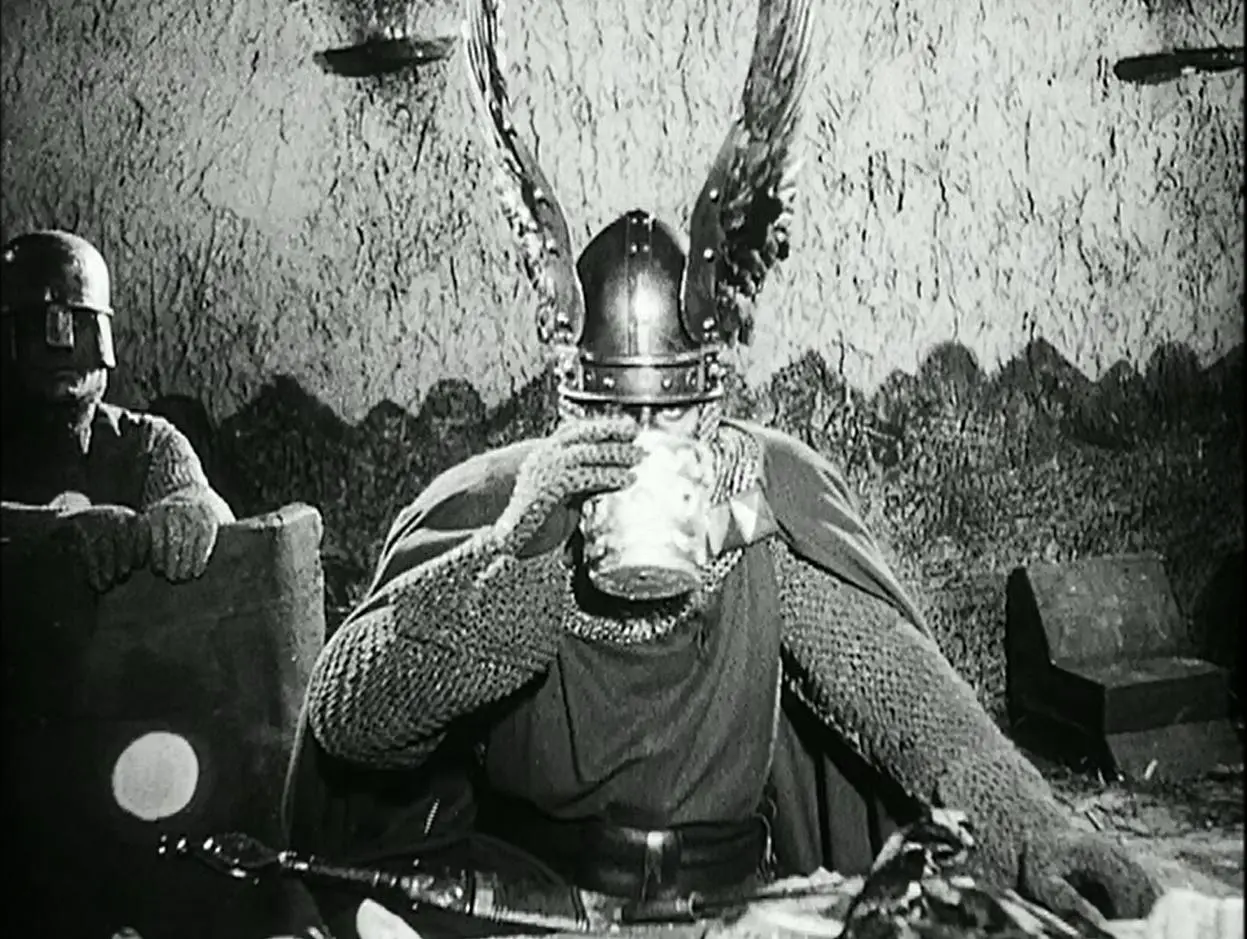
Consider the role of King Gunther (Theodor Loos). His character is a tragic study in the failure of leadership, a man caught between his sister's rightful fury and his vassal's murderous loyalty. This exploration of failed duty is far more complex than the social maneuvering found in Komtesse Doddy or the light-footed escapades of Piccadilly Jim. Gunther is the bridge between two eras, and he is crushed by the weight of both.
What makes Kriemhild's Revenge so enduring is its refusal to offer comfort. Even films with dark themes like Forbandelsen or Die Teufelskirche often provide some form of moral resolution. Lang offers only the pyre. When Kriemhild finally strikes the killing blow, she doesn't find peace; she finds emptiness. The final image of the film—a landscape of ash and corpses—is a haunting precursor to the devastation that would follow in European history, making it a work of unintentional but terrifying prophecy.
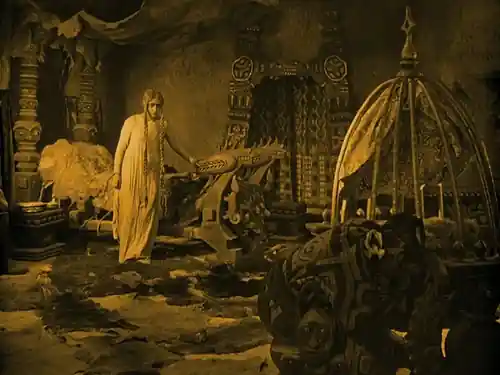
The film’s influence can be seen everywhere from the operas of Wagner to the modern epic fantasies of today. It is a bridge between the high art of the theater and the burgeoning power of the moving image. While Der Tänzer might focus on the grace of movement, Lang focuses on the weight of existence. Every frame is saturated with meaning, every gesture heavy with the burden of thousand-year-old traditions being torn asunder.
Ultimately, Die Nibelungen: Kriemhild's Revenge is an essential viewing for anyone who wishes to understand the potential of cinema as a medium of pure, unbridled expression. It is not an easy watch, nor is it meant to be. It is a visceral, intellectual, and aesthetic assault that demands your full attention and leaves you reeling in its wake. It is the definitive cinematic statement on the high cost of vengeance and the terrifying beauty of total destruction. In the end, we are left with the silence of the grave, a silence more profound than any sound film could ever hope to capture.
Whether you are drawn to the historical spectacle of Crashing Through to Berlin or the melancholic drama of Colombine, you will find something in Lang's work that transcends genre. It is a monolithic achievement that stands as a testament to a time when cinema was discovering its own god-like power to create and destroy worlds. The film's structural integrity, much like the Burgundian hall before the fire, is perfect, and its eventual collapse is as majestic as it is heartbreaking. There is no other film quite like it, and there likely never will be again.
IMDb —
1915
Community
Log in to comment.