DbcultAccessing Vault...
Cult Review
Senior Film Conservator
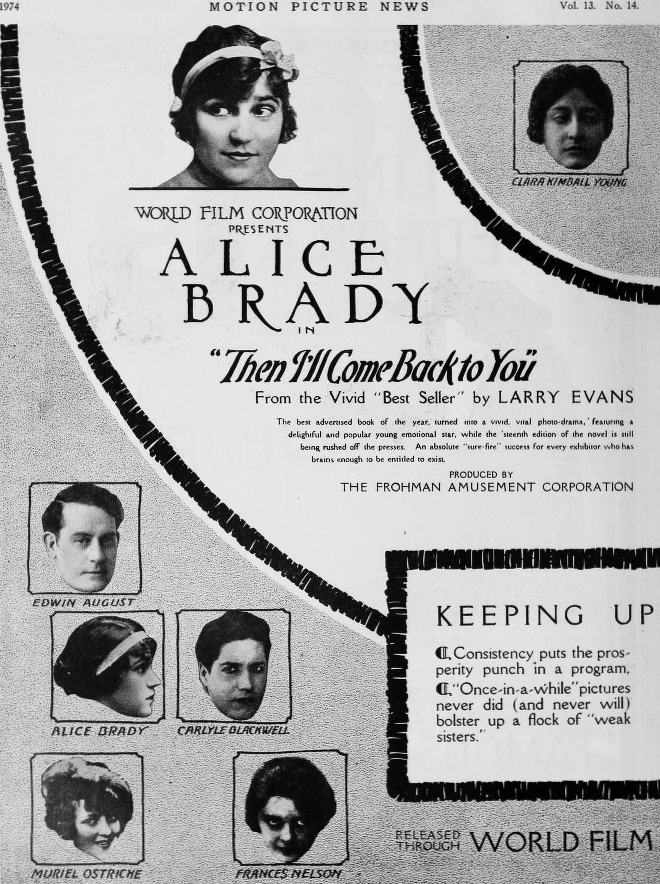
Frances Marion’s 1914 scenario, exhumed from a nitrate crypt and washed in 4K luminance, feels less like a nickelodeon one-reeler than a palimpsest of American myth—inked in sweat, axle-grease, and gunpowder perfume. The Adirondacks, photographed with a frost-bitten orthochromatic palette, loom like black cathedral glass; every hemlock trunk is a baroque pillar, every granite scar a wound in the nation’s infant psyche.
Mountain-boy Steve O’Mara—half Huck, half wolf—erupts onscreen in a tangle of suspenders and bruised knuckles, his glare so electrically alive it seems to throb outside the perforations. Alice Brady’s Barbara arrives like a pre-Raphaelite apparition amid the split-rail fences, her parasol a lily against the viridian gloom. The repellent magnetism between them is staged in depth: foreground bracken trembles while background water thrashes, as though nature itself were refereeing their hormonal duel. When Steve smashes a local rival into the creek, the splash rhymes with the later burst of a railroad trestle collapsing—violence as engineering foreshadowing.
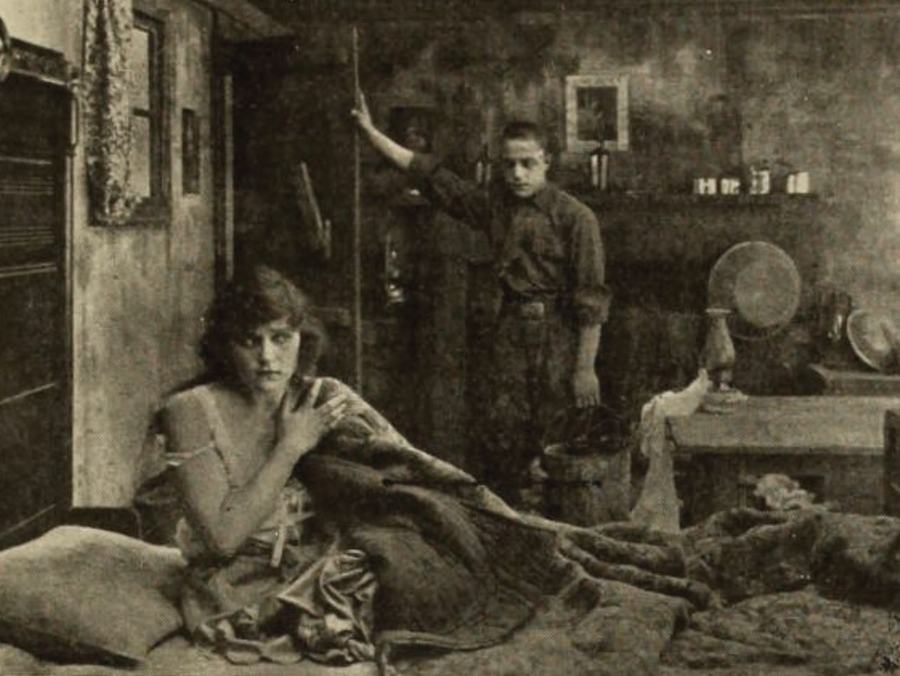
The elliptical leap—title card burns, ten years curl to ash—lands us in a world of surveyors’ chains and rivet storms. Steve, now a laconic engineer for East Coast Railroad, wears the gaunt dignity of one who has traded feral fire for the cold calculus of gradients and dynamite. His mission: to splice steel through the hamlet that once spat him out. The film’s socio-economic vertebrae snap into focus; the railroad is Manifest Destiny contracted into a single line of rail, while the local gentry—embodied by Eric Blind’s silk-cravat villain Archie Wickersham—see only share prices plummeting if the iron horse breaches their hunting preserves.
Wickersham’s cabal anticipates the corporate sabotage noir of Under Cover (1916) yet lacks that film’s urban claustrophobia; here the conspiracy unfurls under panoramic skies where a single telegraph wire hums like a guilty conscience. Frances Marion’s intertitles—razor-edged little prose poems—remind us that capital crimes can smell of pine needles as readily as soot.
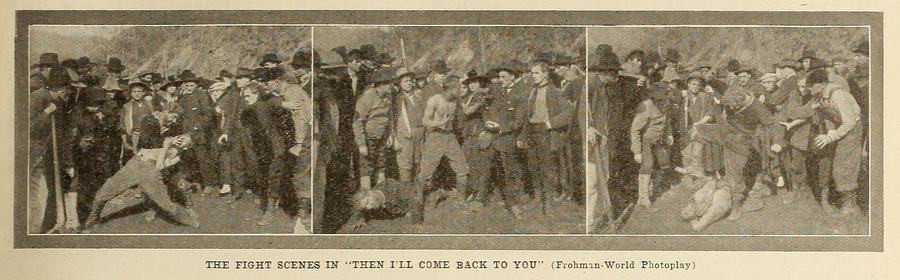
The rekindling of desire is staged as geological event. Barbara, corseted yet stride-assured, confronts Steve amid a half-built trestle cantilevered over a gorge. Wind whips her skirt into semaphore flags; his blueprints flutter like wounded birds. Their dialogue is all eyebrow arch and gloved hand half-raised, yet the subtext seethes: she is engaged to the man who has hired goons to dynamite Steve’s supply tunnels. Leo Gordon’s barrel-chested presence fills the frame with a storm-cloud density; when he finally rips off his cravat to grapple with Steve on a cliff edge, the struggle feels tectonic.
Director Ted Dean orchestrates the fracas with proto-Walsh kineticism—boots skid on shale, the camera tilts vertiginously toward the abyss, dust clouds back-light the combatants into silhouette. Barbara’s frantic flight into the forest is cross-cut with the fight in the rhythm of a heart double-palpitating. Cinematographer George Kline’s handheld sway among the trunks prefigures Malick’s Days of Heaven glades, albeit shot through with expressionist dread: vines claw like gnarled fingers, and a stray moonbeam turns Barbara’s veil into a shroud.
Her night lost in the wild becomes a rebirth baptism. When Steve at dawn—shirt torn, bloodied yet unbroken—carries her out of a hollow log where she took refuge, the close-up registers something rawer than gratitude: recognition of mutual complicity in the American crime of tearing earth for profit. The moment rivals the cave-cradle tenderness in The Pines of Lorey (1914), yet here it is freighted with industrial guilt.
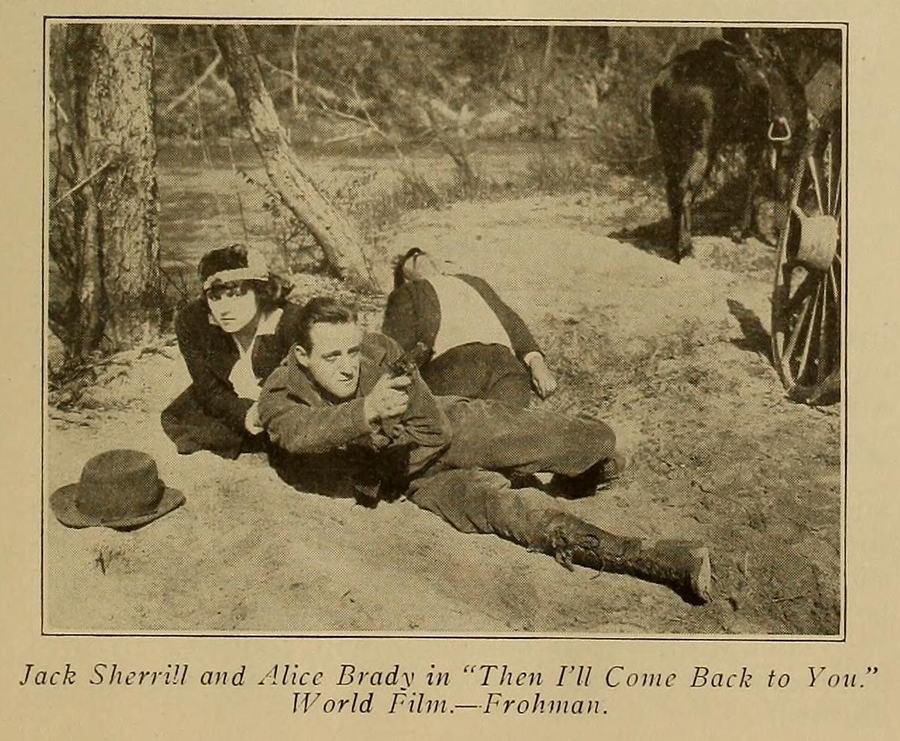
The final act detonates like a nitrate reel spontaneously combusting. Harrigan, Wickersham’s sniveling lieutenant, spies the lovers’ reconciliation through a fringe of birch. His pistol coughs; Steve buckles. Barbara—no wilting Edwardian flower—wrenches the Colt from Steve’s belt and, with a surgeon’s icy precision, drills Harrigan center-mass. The muzzle flash blooms against dusk fog like a deadly chrysanthemum, and the recoil jerks her lace sleeve into a ragged prayer flag.
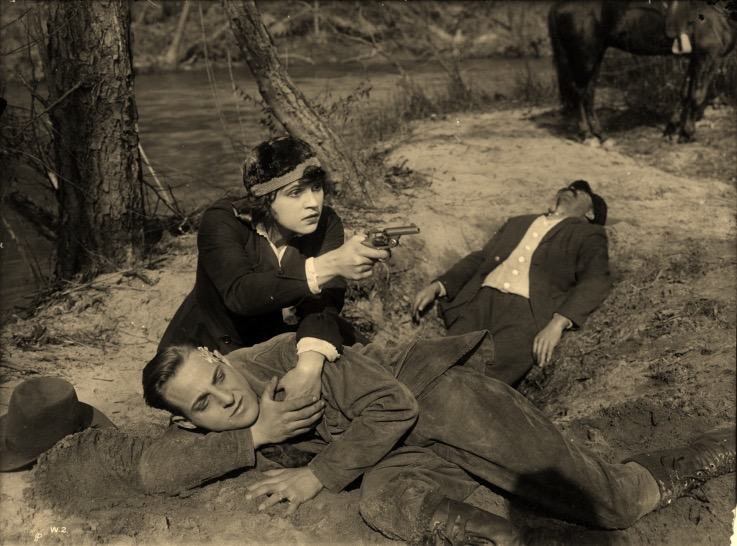
This gendered role-reversal predates and outstrips the fierce sisterhood of The Big Sister (1916); Barbara’s trigger finger re-scripts the damsel into Fury. The film closes on a tableau that smolders rather than soothes: Steve, supine yet lucid, presses his blood-slick palm against Barbara’s cheek, smearing her porcelain with iron oxide—an erotic merger of ore and flesh, industry and intuition, scars and salvation.
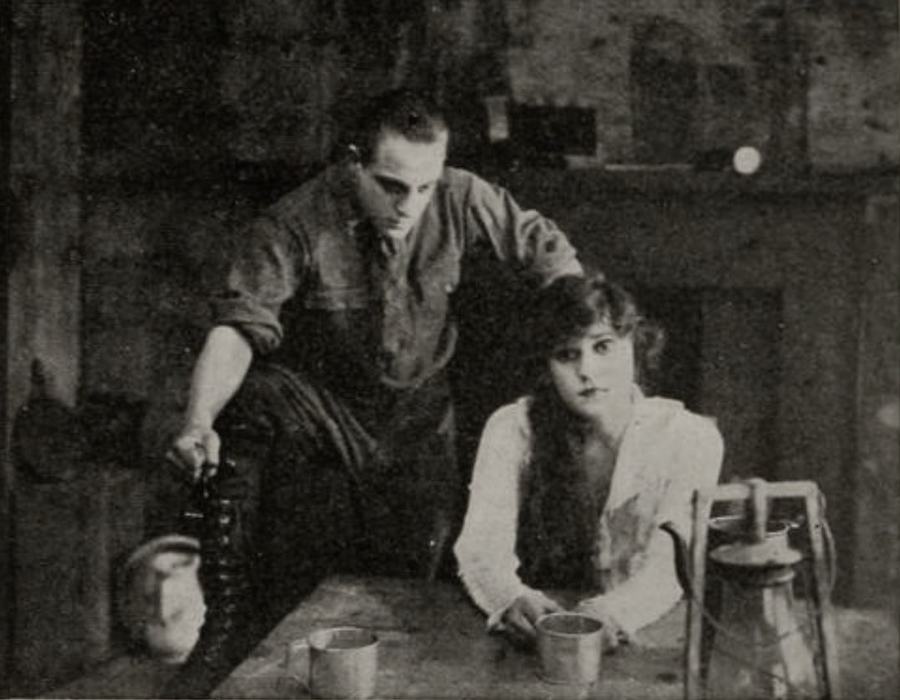
The 2023 restoration harvests details invisible for a century: frost crystals on Leo Gordon’s eyelashes during the cliff duel; the nickel sheen of a Railroad chronometer that ticks like a tiny heart; the herringbone texture of Barbara’s traveling cloak, threadbare at elbows—an heirloom coat passed down from an imperious aunt. The tinting strategy alternates between cobalt night-for-night and amber day-for-day, with one hallucinatory amber-to-crimson shift when the first shot is fired, as though the very filmstock hemorrhages.
The new score—solo viola da gamba, snare brushed like distant thunder, and the faint wheeze of a pump organ—never succumbs to quaint pastiche; instead it coils inside the images, tightening until the last gunshot lands on a subsonic thud you feel in the pelvis.
Alice Brady, only nineteen during production, modulates from haughty revulsion to mineral desire without a single flicker of silent-era mugging. Watch her pupils in the key close-up: they dilate the instant Steve’s blood splatters her cuff—arousal and horror braided. Leo Gordon offsets her ethereality with a grounded physical vocabulary: wrists that rotate as if tightening rail-spikes, a gait that always plants one foot askew like a man forever gauging terrain stability. Their chemistry ignites not in kisses (there are none) but in the way Barbara matches Steve’s breathing after the final gunshot—her ribcage syncs to his wound’s rise and fall.
Co-scenarist Frances Marion, soon to pen Civilization’s anti-war plea, already threads social critique through romantic arteries. Her intertitles read like miniature Sherwood Anderson stories: “He had built a road of steel straight to her door, but the last mile was gouged through the mountain of his past.” Note the symmetry: Steve’s first brawl is over a girl; his last is over the right-of-way of a nation. Marion compresses personal and historical trajectories into one combustible track.
Unlike the pastoral fatalism of Comin’ Thro’ the Rye, this film chooses reconstruction over resignation. Compared to the continental decadence of La Salome, its moral cosmos is puritan yet proto-feminist. ItsDNA strands can be traced to the later redemptive odysseys of I Believe and The Wild Olive, yet none of those titles fuse melodrama with infrastructure epic so seamlessly.
Does the film creak? Occasionally—an over-broad comic rustic lingers like an unwelcome barn cat, and the courtroom coda feels scissored from a Griffith morality play. Yet these are flecks on an iron colossus. Then I’ll Come Back to You endures because it understands love as engineering: you survey the fault lines, blast the obstructions, lay new track, and sometimes—when dynamite fails—you shoot the saboteur dead.
In the age of algorithmic matchmaking and hyperloops, this 1914 relic whispers that passion is still manual labor, forged one rail-length at a time, measured in blood, sweat, and the glint of a woman’s unflinching aim. Stream it in 4K, volume high, lights off; let the viola da gamba bruise your ribs. When the final frame fades to black and that subsonic thud hits, you’ll swear the floorboards beneath your couch vibrate like track-plates under a coming locomotive.
IMDb 7.2
1927
Community
Log in to comment.