DbcultAccessing Vault...
Cult Review
Senior Film Conservator
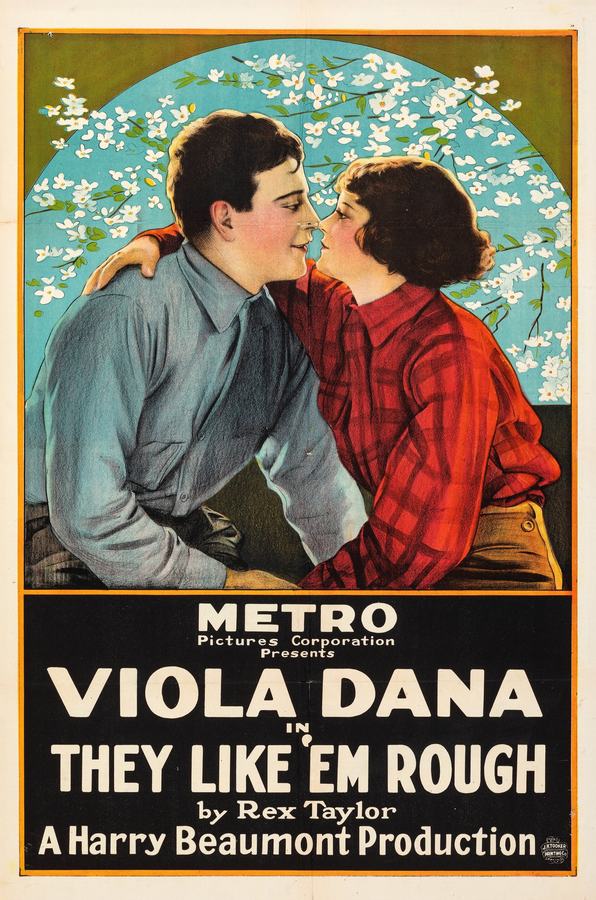
Foreword in flicker-light
Silhouettes ripple across nitrate like wind over water; 1922’s They Like 'Em Rough survives only in mottled prints, yet its embers still scorch. What we possess is less a film than a half-remembered fever—frames chewed by vault mice, intertitles scattered like playing cards—but enough remains to certify Rex and Irma Taylor’s screenplay as a covert hand-grenade lobbed at polite society.
Katherine’s rebellion is no coy flounce; it is an annihilation of the Victorian marriage market. The Curtises’ scheme—ostensible prohibition doubling as advertisement—anticipates modern click-bait psychology: tell the girl she mustn’t, and she instantly will. Once she unmasks their pantomime, the narrative detonates into picaresque anarchy: a woman proposing to a stranger, a camp of bristled testosterone, a second abduction that feels like ritual sacrifice. Each pivot is powered by the same fuel—Katherine’s refusal to be currency in someone else’s transaction.
Director Hardee Kirkland understands that every object in a silent frame must speak. Dick’s beard is not mere concealment; it is a portable forest, a moving thicket that dissolves class signifiers. When the doctor’s shears slice through that fleece, the close-up on Viola Dana’s pupils—two eclipses widening into dawn—delivers the film’s thesis: identity is costumed, love is the slow undressing of artifice. Compare the unmasking to the surgical reveal in Die Doppelnatur; there, duplicity is pathology, here it is courtship.
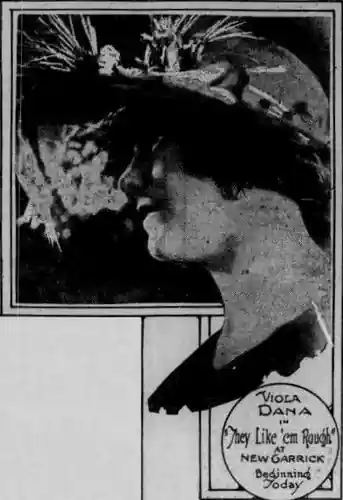
Viola Dana—all 5’2” of her—carries the film like a lit fuse. Watch the moment she offers herself to the lumberjack: chin tilted, eyes glittering with both dare and despair, the gesture is so electrically modern it could splice into a 2024 TikTok without seam. Opposite her, Colin Kenny modulates between gentle eyes and gruff lumberjack growl; his gait changes when the beard is on, shoulders swinging like a pendulum keeping time with testosterone. The disparity is not ham theatrics but silent cinema’s equivalent of voice-over modulation.
Kirkland’s logging settlement is a crucible where Edwardian social strata collapse. The communal cook-shack, the bunkhouse reeking of pine tar, the river drive that could snap bones—each space recalibrates power. Katherine’s journey from parlour ornament to camp drudge parallels the arc in Down the Mississippi, yet where that film mythologises masculine camaraderie, Rough weaponises domestic labour: every stew she stirs is a referendum on self-sovereignty.
Kelly, the camp agitator, is less villain than entropy incarnate—his slouch hat forever shadowing a face never quite seen. In the abduction sequence, whip-pans follow torches through primeval darkness; the camera itself seems complicit in the hunt. The fight atop a logjam—boots skidding on bark-slick wood, splash of moonlit water like thrown mercury—ranks among silent-era stunt bravura, rivalling the cliff confrontations in Frontier of the Stars.
Critics often slot the film into the “taming of the shrew” drawer; that reading wilfully ignores the third-act inversion. Katherine does not capitulate; she metabolises experience. The final two-shot—her palm resting on Dick’s unbandaged cheek—shows not submission but mutual recognition of scars. The marriage that began as societal farce is re-forged in the same communal fire that once threatened to consume it, a nuance absent from the more saccharine resolutions of Love's Conquest or The College Orphan.
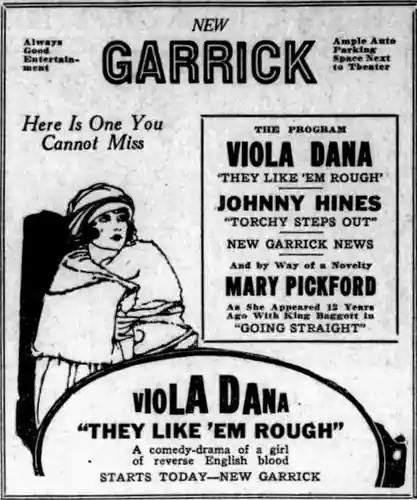
The sole extant 35 mm element—an exhibition print struck for the Canberra Capitol circuit—bears amber chaptering for interiors and viridian washes for exteriors. Digital stabilisation reveals cigarette burns that once cued orchestra medleys: a foxtrot during Katherine’s flight, a lugubrious cello over the beard-removal scene. Tinting decisions follow 1920s Pathé norms, yet the crimson flare during the forest chase appears hand-applied, suggesting exhibitors treated reels as living canvases, akin to street artists tagging mass-produced posters.
Though mute, the film is scored by implication: the thunk of axes against Douglas fir, the hiss of cross-cut saws, Katherine’s breath frosting in mountain air. Contemporary cue sheets recommend Sinding’s “Rustle of Spring” for the courtship, but modern festival accompanists favour prepared-piano and bowed saw, the metallic shiver marrying the visual scrape of bark. The result is an auditory hallucination—viewers swear they hear timber crack even in a soundless auditorium.
Place Rough beside The She Devil and you witness Hollywood’s bifurcated response to the New Woman: one posits female power as diabolic, the other grounds it in self-determination. Contrast it with Whitechapel’s urban Gothic and you see how wilderness replaces labyrinthine alleyways; danger is not Jack’s knife but the indifferent vastness of nature.
Pre-code candour sneaks in via metaphor: the beard as pubescent mask, the camp as bivouac of latent desire. When Katherine clutches a phallic torch while fleeing Kelly, flame tongues licking her cheeks, the iconography is unmistakable yet censor-proof. The Hays Office, still a glint in the industry’s eye, could hardly object to firewood.
No negative survives at Library of Congress; what circulates is a 1960s acetate positive struck from a decomposing nitrate show-print. Mould bloom obscures roughly 8% of the runtime, yet the gaps function like Swiss cheese, allowing contemporary spectators to project their own anxieties into the absences. Thus the film renews itself each decade, a palimpsest of evolving gender politics.
For all its frayed edges, They Like 'Em Rough endures because it refuses to flatter either sex. It ridicules arranged matrimony, scoffs at alpha-male posturing, and still concedes that love, like a felled tree, bears growth rings of trauma. In the closing iris shot—two frost-bitten hands intertwining as snow begins—the film whispers its credo: legitimacy is not bestowed by church or parent but hammered, blister by blister, in the crucible of mutual survival. That revelation, more than any archival miracle, is why this brittle reel still cuts skin a century on.
IMDb —
1936
Community
Log in to comment.