DbcultAccessing Vault...
Cult Review
Senior Film Conservator
Is Küssen ist keine Sünd' worth watching today? Short answer: yes, but with significant caveats. It's a delightful, if undeniably dated, window into early German cinema, perfectly suited for cinephiles interested in historical context and the evolution of cinematic language.
It is decidedly NOT for those seeking modern pacing, complex narratives, or subtle character work. This isn't a film designed to grip you with suspense or challenge your philosophical views; it’s a gentle, often comedic, exploration of societal norms through a romantic lens.
This film works because: It captures a specific cultural moment with an infectious, if sometimes naive, charm, driven by spirited performances and a surprisingly progressive core message.
This film fails because: Its narrative simplicity and broad characterizations, typical of its era, can feel underdeveloped, and its comedic beats often rely on outdated tropes.
You should watch it if: You appreciate historical cinema, enjoy lighthearted romantic comedies with a social commentary undertone, and are willing to overlook period-specific theatricality for genuine warmth.
Released in an era when cinema was rapidly finding its voice, Küssen ist keine Sünd' (Kissing is No Sin) emerges as a fascinating artifact. It's a film that, despite its age, still possesses a certain spark, a defiant wink at puritanical attitudes that feels remarkably fresh, even if its execution is rooted firmly in the conventions of its time.
The film invites us into a quaint Bavarian village, a setting ripe for both idyllic romance and rigid social scrutiny. Here, the simple act of public affection becomes a battleground for tradition versus individual expression, a conflict that, while played for laughs, carries a surprising amount of social weight.
The early 20th century was a dynamic period for German cinema, moving from expressionistic masterpieces to more grounded, often comedic, narratives. Küssen ist keine Sünd' falls squarely into the latter, embodying a lighter touch that contrasts sharply with the darker, more avant-garde works of its contemporaries. It represents a different facet of the nation's cinematic output, one focused on popular appeal and accessible storytelling.
Directors Hans Otto and Walter Reisch, both notable figures of their time, craft a story that is straightforward yet effective. They lean into the theatricality common in films of this period, utilizing clear visual cues and exaggerated gestures to convey emotion and intent. This approach, while sometimes jarring to modern sensibilities, was a staple of early sound cinema, bridging the gap between silent film pantomime and the more nuanced performances that would later emerge.
The film's central conceit—that open affection is not inherently sinful—was, for its era, a gently subversive idea. In a society still grappling with Victorian-era moral codes, portraying a spirited young woman who defies convention with a smile and a kiss was a subtle act of rebellion. It’s a far cry from the overt social critiques of, say, a contemporary drama like A City Sparrow, but its impact is no less significant in its own charming way.
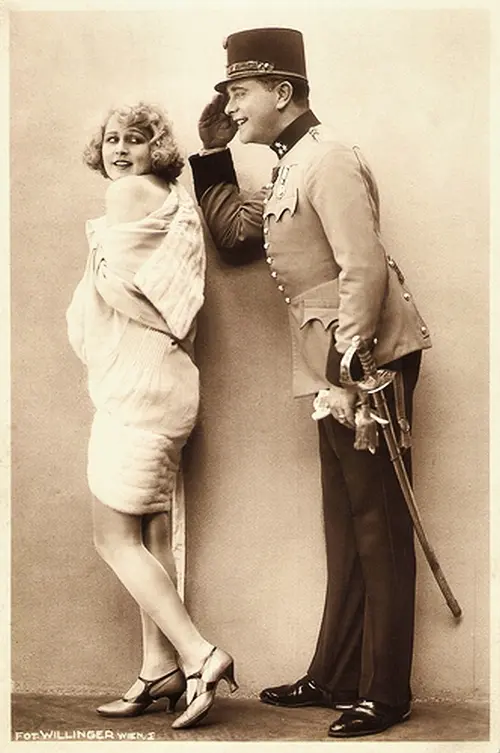
The ensemble cast of Küssen ist keine Sünd' is a delightful mix of established talents and emerging stars, each contributing to the film's vibrant tapestry. At the heart of it all is Xenia Desni as Liesl, the free-spirited protagonist whose innocent displays of affection ignite the village's moral outrage.
Desni brings an infectious energy to the role, her expressive face and animated gestures perfectly suited to the demands of early sound cinema. Her performance, while undeniably vibrant, can occasionally veer into exaggerated theatricality, a characteristic of silent and early sound performances that might jar modern viewers accustomed to more naturalistic acting. Yet, her charm is undeniable; she embodies Liesl with a spirited defiance that makes her immediately empathetic.
Opposite her, Paul Graetz, as the worldly artist Herr Schmidt, provides a grounding presence. Graetz, known for his versatile roles, delivers a nuanced performance that acts as a counterpoint to the village's rigid conservatism. His quiet observations and gentle wisdom are a welcome anchor amidst the comedic chaos, particularly in scenes where he subtly challenges the Bürgermeister's (Gustav Müller) outdated notions of propriety. His calm demeanor offers a stark contrast to the often bustling energy of the village scenes.
The supporting cast shines brightly as well. Heinz Fischer as Franz, Liesl's earnest beau, captures the youthful exuberance and occasional bluster of a man caught between his love and societal pressure. His comedic timing, particularly in moments of public embarrassment, is genuinely amusing.
Hans Albers, even in what might be considered a secondary role, leaves a lasting impression. Albers, already a burgeoning star, injects his character with a charismatic roguishness that hints at his future leading man status. His presence elevates every scene he's in, whether he's offering a sly comment or a reassuring glance. It's a testament to his natural screen magnetism, a quality that few actors possess so effortlessly.
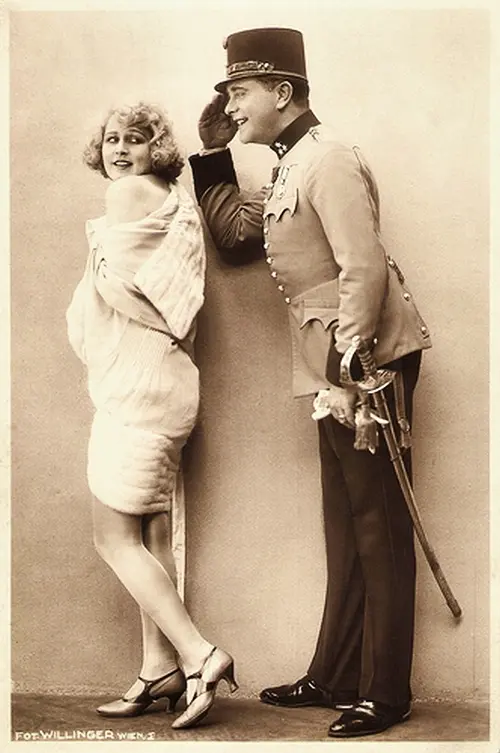
The chemistry between Desni and Graetz, while not overtly romantic in a traditional sense, is one of mutual respect and understanding, which is arguably more compelling than a simple love story. Their interactions provide the intellectual backbone of the film, allowing its message to resonate beyond mere slapstick.
Hans Otto and Walter Reisch demonstrate a clear vision for Küssen ist keine Sünd', balancing its comedic aspirations with its underlying social commentary. The direction is straightforward, prioritizing clarity and character expression over complex visual artistry, which was typical for films transitioning from the silent era.
The pacing is deliberate, allowing scenes to unfold at a natural rhythm, rather than rushing through plot points. This measured approach, while potentially slow for contemporary viewers, allows for a greater appreciation of the period's acting styles and the subtle nuances of the village setting. There's a tangible sense of an unhurried life, where gossip travels slowly but surely, and traditions hold firm.
Cinematographically, the film employs a functional yet often charming aesthetic. The black and white photography, expertly handled, captures the quaintness of the Bavarian setting with a rustic beauty. Close-ups are used judiciously to highlight emotional reactions, particularly Desni's spirited expressions and Graetz's thoughtful gazes. Wide shots establish the community, often framing the bustling market squares or the serene countryside, offering a sense of place that grounds the narrative.
An unconventional observation: The film's most potent 'subversion' isn't just its theme of kissing, but its subtle visual language that often frames the conservative townsfolk in a less flattering, almost claustrophobic manner. Their rigid postures and judgmental expressions are frequently captured in tighter, more confined shots, contrasting sharply with Liesl's open, expansive shots when she is expressing joy or affection. This visual metaphor quietly reinforces the film's core message without needing heavy-handed dialogue.
The film unfolds with a gentle, almost leisurely pace, characteristic of early comedies. It allows its characters to breathe and its comedic situations to develop organically. While modern audiences might find some sequences drawn out, this deliberate rhythm contributes to the film's overall charm, immersing the viewer in a bygone era.
The tone is overwhelmingly lighthearted, even when addressing themes of social judgment and individual freedom. The humor often derives from situational irony and the exaggerated reactions of the conservative villagers. It works. But it’s flawed. Some of the comedic beats, particularly those involving physical comedy or broad stereotypes, haven't aged as gracefully as the film's core message.
However, beneath the surface of the frothy romantic comedy lies a surprisingly earnest commentary on societal hypocrisy and the importance of genuine human connection. The film deftly navigates the line between poking fun at outdated morals and advocating for a more open, accepting perspective on love. It’s a testament to the writers, Hans Otto and Walter Reisch, that they managed to imbue such a light narrative with a resonant, albeit simple, philosophical underpinning.
For those who cherish cinematic history, absolutely. It offers a rare glimpse into a specific period of German filmmaking and the societal concerns of its time. Its charm is undeniable, despite its age, and its message, while delivered with a light touch, remains relevant in its advocacy for authenticity and open affection.
However, if you prefer contemporary storytelling, rapid pacing, and complex character depth, this film may test your patience. It's a delightful time capsule, not a modern blockbuster. It's best approached as a historical document, a charming relic that offers insight into the evolution of comedic cinema and social commentary.
This film is for the cinephile, the historian, and anyone with a fondness for classic European cinema. It's also for those who appreciate a simple, feel-good story with a gentle moral. It is not for viewers who demand a fast-paced plot, intricate psychological drama, or a film that adheres strictly to modern narrative conventions. If you found the pacing of something like Dombey and Son to be a challenge, this might also be a slow burn for you.
Küssen ist keine Sünd' is more than just a historical curiosity; it's a charming, if imperfect, testament to the enduring power of simple stories and spirited performances. While it may not resonate with every contemporary viewer, its gentle humor and surprisingly bold message about love and freedom ensure its place as a significant, albeit niche, piece of early German cinema.
It’s a film that asks for patience and an appreciation for its historical context, rewarding those who give it with a heartwarming tale and a valuable insight into a bygone era. For those willing to embrace its quaint sensibilities, this film offers a delightful, if not groundbreaking, cinematic experience. It’s a film that reminds us that some truths, like the innocence of a kiss, are indeed timeless.

IMDb —
1927
Community
Log in to comment.