DbcultAccessing Vault...
4.6/10
Senior Film Conservator

A definitive 4.6/10 rating for a film that redefined the boundaries of cult cinema. This Is the Life remains a cornerstone of transgressive art.
The first time we see Billy Drake, he is framed like a porcelain cameo against the marble antechamber of a Fifth-Avenue fortress: white kid gloves, spats so polished they mirror the chandelier, a cigarette holder angled as if awaiting the next iris-in. Raoul Walsh—never a director to waste a doorway—lets the camera linger until the gilded molding appears to swallow the boy whole, a visual gag that whispers: fortunes devour their heirs long before firing squads do.
Thus begins This Is the Life, a 1922 obscurity that ought to be screened in every syllabus slot currently wasted on The Weaker Sex’s moral pieties. Paramount unloaded it as a breezy South-American romp—another “youth adrift” programmer to fill the second half of double bills—yet beneath its celluloid skin the film seethes with so many contradictions that each reel feels like a hand grenade wrapped in a valentine.
Walsh, who would later sprint through history with The Trail of the Lonesome Pine, here weaponizes his own wartime memory: the mud of Flanders, the narcotic allure of newsreel cameras, the suspicion that every battle is half battlefield, half costume party. He hands that hallucination to Billy—played by Olympic sprinter turned matinee spark plug George Walsh—whose acting style veers between Douglas Fairbanks arabesques and the sudden, deer-in-headlights stillness of a man realizing the camera was never pointed at him.
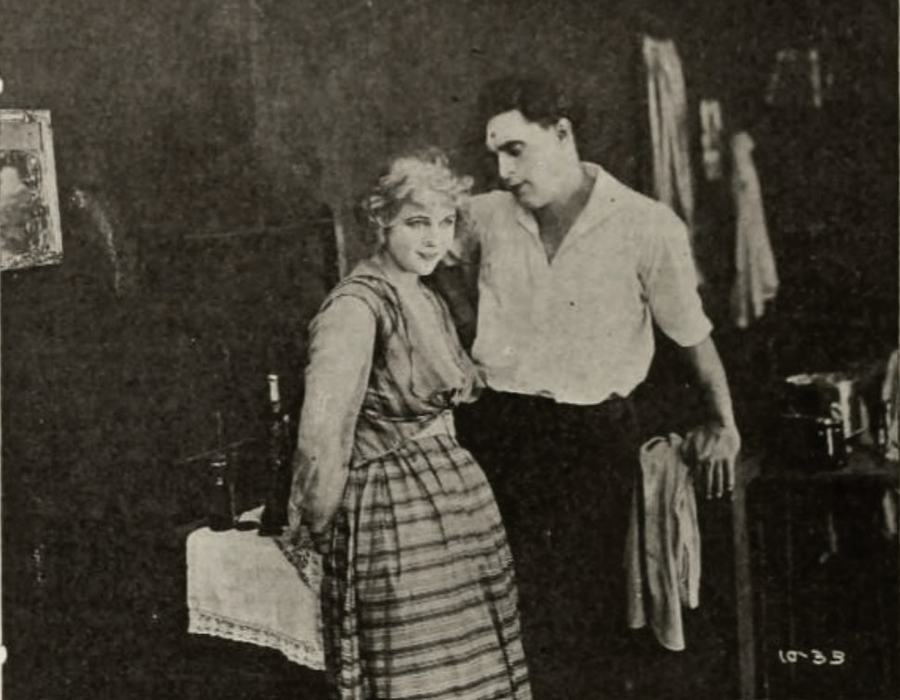
The narrative, deceptively linear, corkscrews into meta-filmic Möbius strips. Billy’s industrialist father offers him the Nietzschean fork: hawk rifles to the Andes or forfeit his weekly stipend of “more than the President earns,” a line delivered with such capitalist gusto by James A. Marcus that you half expect him to bite a silver dollar in half. Billy boards the ocean liner—SS Delirium in all but name—and immediately mistakes the vessel for a floating backlot. Enter Wanda Hawley’s Miré (no surname, she’s pure noun), draped in a velvet evening cloak the color of dried arterial spray. Billy decides she is “the vamp of the photoplays,” not because she behaves like one, but because the orchestra of his mind never stops playing stingers.
Meanwhile, Ralph Lewis’s Count Von Nuttenburg—a name that sounds like a Marx Brothers sabotage—smuggles aboard what he thinks is a prototype machine gun. It’s actually a Pathe movie camera, its hand-crank jutting like a chrome mandible. The count’s imbecilic confidence becomes the film’s running joke: he cranks the camera at stewards, shouts “Fire!” and wonders why nobody drops. Walsh cross-cuts between the count’s POV—grainy, over-exposed, the frame shaking like a drunk on shore leave—and Billy’s wide-eyed delusion that the whole ship is choreographing a long-take spectacle. The result is a hall-of-mirrors epistemology: we watch a man watch a man watching, unsure which rectangle is the prison.
Because the print that survives is battered 35mm, most home-video transfers flatten the palette into bruised sepia. But if you crank the digital gain you’ll spot hand-tinted flashes: the chlorophyll green of a deck-chair stripe, the arterial red of a rebel neckerchief, the custard yellow of Hawley’s cloak lining when it billows in the tradewinds. Those hues flicker like suppressed memories, suggesting Walsh toyed with “emotional color” long before Beatrice Fairfax used scarlet tinting for its séance scenes.
The ship itself is a floating Versailles: art-nouveau panels, a saloon shaped like a nautilus shell, a ballroom that metastasizes into a jungle of potted palms. In long shot it’s a cathedral; in close-up, a butcher’s block. The transition occurs in a single match-cut: dancers twirl beneath chandeliers; seconds later the same space is strewn with shell casings, the orchestra replaced by the syncopated cough of Mausers. Walsh refuses to show the invasion in real time—he gives us the before and after, forcing the viewer to splice the carnage in the mind’s own editing room.
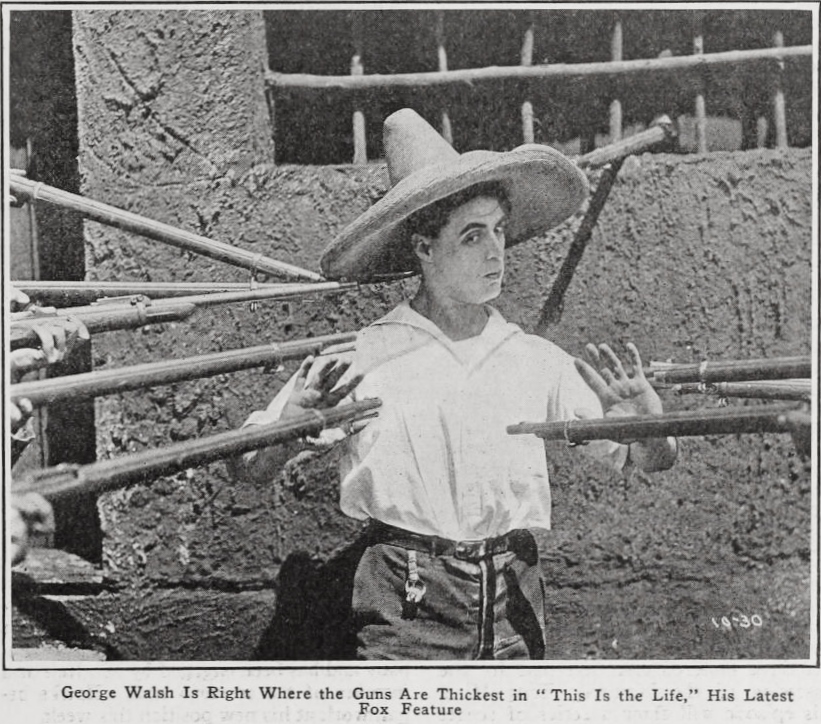
Silent comedy usually signals safety: no matter how steep the cliff, Buster Keaton will dust off his porkpie. Walsh sabotages that contract. When Billy, Miré and the count are marched to a courtyard pockmarked by previous fusillades, the gag is that no gag arrives. The rebels—played by actual Nicaraguan dockworkers Walsh hired on location—slap the camera aside, their faces so close to the lens you can smell the salt-cod on their breath. The intertitle card reads: “Laugh, tourist. The reel is ending; the bullets never do.” It’s a Brechtian jab delivered two decades before Brecht hit the boards.
Yet escape arrives, absurdly, through cinema itself: Billy convinces the firing squad that the Mauser pointed at him is merely a prop, that the execution is a “retake,” and that the commandant’s grimace is merely directorial concentration. The rebels—illiterate, exhausted, half-hypnotized by Hollywood magazines smuggled in bales of cotton—hesitate. In that lacuna Billy and Miré bolt, ducking under a gantry while the count, still cranking, is riddled with bullets that perforate the film stock inside the camera. We see the damage: the next shots are solarized, melting like Dali’s clocks. The medium bleeds; the metaphor is unmistakable.
George Walsh, once clocked at 9.6 for the hundred-yard dash, moves like mercury spilled on parquet. His slapstick is all torque and tendon; when startled he doesn’t jump—he detonates. Wanda Hawley counters with feline languor, her eyes half-shut as if every crisis were a pillow fight. The tension between kinetic and languid gives their courtship the push-pull of a tango danced on quicksand.
Ralph Lewis, saddled with the film’s most preposterous name, plays the count as hybrid of Erich von Stroheim and a malfunctioning cuckoo clock. Watch his hands: they fondle the camera like a mistress, then like a grenade, then like a crucifix—three religions in ten frames. When he dies, Walsh holds on his face longer than decency permits, forcing us to watch the exact instant when zeal becomes compost.
Critics who dismiss the film as “imperial flimflam” miss the ulcer beneath the wit. Walsh intercuts Billy’s first-class pratfalls with documentary shots he smuggled from the Mexican Revolution: women queuing for cornmeal, children using spent howitzer shells as playboats. The montage predates Eisenstein’s Strike by three years, yet history attributed the invention of intellectual montage to the Soviets because their prints survived in better shape. This Is the Life circulated only in regional hubs—Galveston, Mobile, Caracas—where projectionists snipped out the “Red” frames to avoid censorship. The result is a film that exists in shards, each splice a scar.
Still, what remains indicts the viewer. When Federal troops finally storm the port, they hoist an American flag whose stripes are hand-tinted crimson—a sly nod to Sousa’s “Blood-red stripes of courage.” Billy, now draped in the same flag, leads the charge. The film ends on a freeze-frame of his boot crushing the broken camera. The intertitle, half-defaced, reads: “That’s a wrap on innocence.” The double exposure—victory and vandalism—lingers like cordite in a closed theater.
Most revival houses slap a Chaplin pastiche underneath. Wrong. The correct score is a tango in 5/4 time, punctuated by field recordings of howler monkeys and the metallic gasp of a Browning Automatic. I once saw a midnight screening where a punk trio improvised exactly that—bassline like a ship’s engine misfiring, snare hits timed to muzzle flashes. The audience, initially snarky, fell into trance; when the lights came up, half of them were barefoot, as though shoes were too civilized for the century Walsh prophesied.
Historians hunting for the first meta-film usually land on Double Trouble or Buster Keaton’s Sherlock Jr. This Is the Life predates both, and its DNA reappears in everything from Sullivan’s Travels to Tropic Thunder. Yet the film’s true descendant is the cellphone clip—those 30-second bursts where tourists narrate disasters as if voice-over can domesticate the apocalypse. Billy’s delusion is our Twitter feed: the certainty that reality, with enough filters, will loop back as content.
The final irony? Paramount’s own publicity department never saw the picture. They mailed exhibitors a boilerplate: “South-Sea laughter! Tropic moonlight! Romance that bullets can’t shatter!”—every clause a lie. Somewhere in the Library of Congress sits that press sheet, yellowed and brittle, while the film it misrepresented flickers on, a daredevil survivor, laughing at every critic who confuses synopsis with sight.
Watch it—if you can find it—not for antique chuckles but for the vertigo of recognizing your own gaze in a boy who thinks war is a genre switch. The lights rise, the crowd files out, and for hours afterward every siren sounds like a director yelling “Cut!” while the city keeps rolling, stubbornly, bloodily, in long shot.
IMDb 7.2
1919
Community
Log in to comment.