DbcultAccessing Vault...
Cult Review
Senior Film Conservator
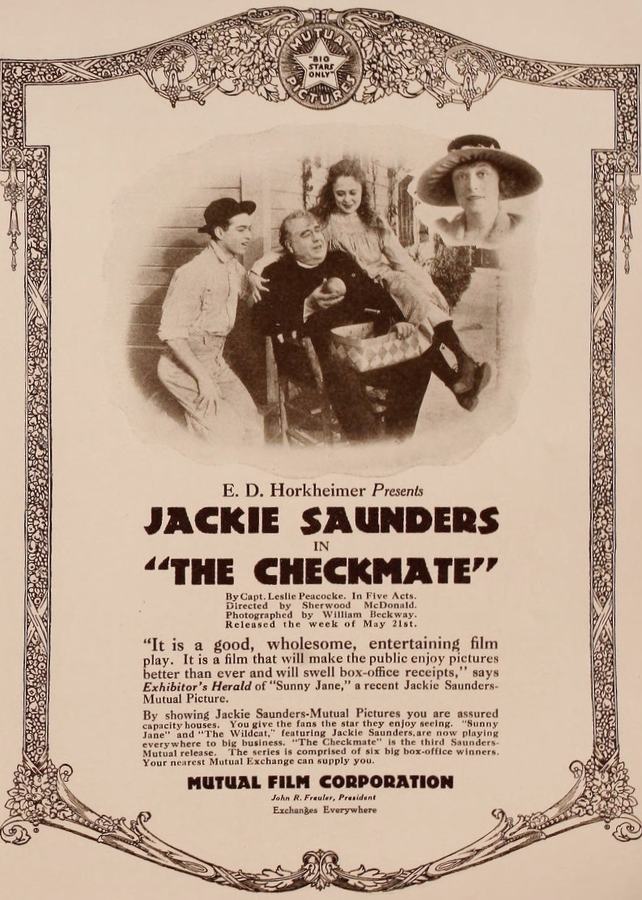
Stepping into the flickering glow of early cinema, one often finds narratives that, despite their age, resonate with an astonishingly modern complexity. Such is the case with 1917's The Checkmate, a film that deftly navigates the treacherous waters of ambition, deceit, and ultimately, a surprising redemption. It’s a compelling slice of silent drama, a testament to the era’s potent storytelling capabilities, even without the spoken word. As a film critic, I’m always searching for those overlooked gems that offer more than just historical curiosity, and The Checkmate, with its intricate plot and poignant character arcs, certainly fits the bill.
At the heart of The Checkmate lies the compelling dichotomy of the Marley twins, Claire and Ida – a narrative device that, while popular, is executed here with notable emotional depth. Claire, portrayed with a compelling blend of youthful yearning and eventual cynicism, embodies the siren call of urban allure. Her departure from the quietude of rural life is not merely a geographic shift but a profound spiritual migration. She seeks not just excitement, but a validation, a transcendence of her humble origins, believing the city holds the key to a more vibrant, significant existence. This yearning for a 'fast set' lifestyle, for the glittering promise of wealth and status, is a theme that echoes throughout cinematic history, reflecting timeless human aspirations and follies.
Ida, her twin, stands in stark contrast. She is the steadfast anchor, the embodiment of domestic virtue and filial piety. Her choice to remain home, to care for aging parents, speaks volumes about a different kind of strength, one rooted in duty and quiet devotion. This immediate split in their destinies sets the stage for the dramatic tension that permeates the film. It's not just a story of two sisters, but a broader commentary on the societal choices available to women at the turn of the 20th century: the allure of independence and potential glamour versus the security and moral rectitude of traditional roles. The film, through their parallel yet opposing lives, subtly interrogates which path truly leads to fulfillment.
Claire's foray into the city, initially depicted as an intoxicating escape, quickly reveals its darker underbelly. Her liaison with Roy Vangrift, a wealthy bachelor, is painted with the stark brushstrokes of a transactional relationship. Vangrift's promises of marriage are not born of genuine affection but rather a casual convenience, a reflection of his privileged indifference. Claire, caught in this gilded cage, experiences the bitter sting of objectification and eventual abandonment. This segment of the narrative serves as a cautionary tale, illustrating how the pursuit of superficial excitement and material gain can lead to moral compromise and emotional desolation. It’s a powerful, if unspoken, critique of the hedonistic fringes of high society, where individuals are disposable commodities in the pursuit of fleeting pleasure.
The subsequent struggle Claire faces in attempting to earn a 'respectable living' after being cast off is particularly poignant. It highlights the precarious position of women in that era who, having strayed from conventional paths, found societal doors firmly shut against them. Her failure to secure honest work isn't just a personal setback; it's a commentary on the unforgiving nature of a society quick to judge and slow to forgive. This desperation, born of societal ostracization and economic hardship, is what ultimately propels her back to the very rural setting she once disdained, a prodigal daughter returning not in triumph, but in quiet defeat.
In this phase of Claire's journey, we find thematic parallels with films like 1915's Sin. While Sin delves into a more direct exploration of moral transgression and its consequences, both films grapple with the concept of a woman's fall from grace and the arduous path to redemption. Claire's predicament, though perhaps less overtly 'sinful' than the narrative of Sin, nonetheless places her in a morally ambiguous space, challenging audience perceptions of virtue and culpability. The silent era, often seen as quaint, was remarkably bold in exploring these complex ethical landscapes, using visual cues and dramatic performances to convey profound internal struggles.
The narrative truly ignites with the almost unbelievable, yet dramatically essential, coincidence of Roy Vangrift's return. His decision to fish near the Marley home, a seemingly innocuous detail, becomes the fulcrum upon which the entire plot pivots. This is where the film leans into its melodramatic roots, but with a purpose. It's a testament to the power of fate, or perhaps a commentary on the inescapable nature of one's past. Vangrift, now removed from the corrupting influence of the city and its 'fast set,' encounters Ida, Claire's twin, and falls genuinely in love. This development is crucial, as it allows for Vangrift's character arc to begin, transforming him from a callous playboy into a man capable of sincere affection.
The irony is palpable: the man who callously discarded Claire now finds himself drawn to her innocent, virtuous counterpart. Ida, unaware of the tangled history between her sister and Vangrift, represents everything Claire once rejected and everything Vangrift, perhaps subconsciously, now seeks. This unwitting romance sets the stage for the film's climactic deception, creating a tension that is both personal and deeply moral. The audience, privy to Claire's past, watches with bated breath as the two unsuspecting lovers navigate their burgeoning affection, completely unaware of the looming storm.
The pastoral setting, and the budding romance within it, brings to mind films like 1914's The Wishing Ring: An Idyll of Old England. While that film embraces a more whimsical, romanticized view of rural life and innocent love, The Checkmate uses the idyllic backdrop as a canvas for profound human drama and moral complexity. The 'idyll' in The Checkmate is not untroubled; it's a fragile peace constantly threatened by the shadows of past mistakes and impending revelation. This contrast highlights how silent cinema could use similar settings to achieve vastly different thematic goals, moving beyond simple romanticism to explore deeper psychological conflicts.
The film's title, The Checkmate, finds its ultimate expression in Claire's audacious plan to prevent Ida's elopement. Driven by a complex cocktail of motives – perhaps a desire to protect her sister from a similar heartbreak, a lingering sense of injustice, or even a desperate bid for her own redemption – Claire, with the complicity of a minister, takes Ida's place at the altar. This moment is the narrative's absolute peak, a daring act of deception that could either lead to utter ruin or an unexpected resolution. The tension is exquisitely managed, relying heavily on the visual storytelling of the silent era: the close-ups of anxious faces, the subtle gestures, the palpable sense of a secret about to burst forth.
The revelation of Claire's true identity immediately post-nuptials is a masterstroke of dramatic timing. One expects outrage, betrayal, and the dissolution of the marriage. Instead, the film delivers a twist that elevates it beyond mere melodrama. Roy Vangrift, confronted with the woman he once scorned, now sees her through the lens of the love he developed for Ida. The film suggests that his affection for Ida was so pure, so profound, that it could transfer to the woman who shares her face and, by extension, her essence. This is where the film transcends its pulpy origins, offering a surprisingly nuanced take on love, identity, and the capacity for forgiveness.
Vangrift's forgiveness of Claire is not a simple plot device; it's the thematic core of the film. It suggests that true love has the power to see beyond past transgressions, to recognize the inherent worth of an individual despite their mistakes. For Claire, this moment is not just a second chance at happiness but a profound validation. It’s a redemption earned through a convoluted, morally questionable act, yet ultimately justified by the sincerity of Vangrift’s transformed heart. The ending, rather than being a saccharine resolution, feels earned through the intricate emotional journeys of its characters.
To truly appreciate The Checkmate, one must immerse oneself in the unique artistry of silent cinema. The performances, particularly by Jackie Saunders in her dual role as Claire and Ida, are central to the film's success. Saunders masterfully differentiates the twins through subtle changes in posture, expression, and gesture, conveying Claire’s world-weariness and Ida’s gentle innocence without a single spoken word. This is the magic of silent acting: the ability to communicate complex internal states through purely visual means. The camera, too, becomes a character, guiding the viewer’s eye, emphasizing crucial details, and building suspense through strategic framing and editing.
The film’s direction by Frank Mayo (who also stars as Roy Vangrift) demonstrates a keen understanding of cinematic rhythm. The pacing builds steadily, from the initial exposition of the twins' lives to the escalating tension of Vangrift’s return, culminating in the dramatic wedding sequence. Each scene is crafted to maximize emotional impact, relying on the audience’s empathy and anticipation. The use of intertitles is sparse but effective, providing essential plot points without overshadowing the visual narrative. This economy of storytelling is a hallmark of well-made silent films, forcing filmmakers to be incredibly inventive with their visual language.
Comparing Jackie Saunders's portrayal of the complex Claire with later silent film heroines, such as Mary Pickford in My Best Girl (1927), offers an interesting perspective on the evolving representation of women in cinema. While Pickford often embodied a more innocent, wholesome ideal, Saunders here tackles a character fraught with moral compromise and a journey towards a hard-won redemption. It shows the breadth of female roles available even in the early days of Hollywood, moving beyond simple ingenues to explore more nuanced and challenging personalities. Claire Marley is not simply a victim or a villain; she is a survivor, a woman shaped by circumstances, making choices that are both questionable and understandable. This depth makes her a compelling figure, even a century later.
What makes The Checkmate resonate today, beyond its historical significance, is its exploration of universal themes. The allure of the city versus the comfort of home, the consequences of youthful ambition, the pain of betrayal, and the transformative power of forgiveness are all timeless human experiences. The film, through its dramatic narrative, invites us to consider the complexities of morality and the often-unpredictable paths to personal growth and happiness. It reminds us that appearances can be deceiving, and that true love, when it arrives, can transcend the most elaborate deceptions.
Moreover, it stands as a powerful example of how compelling narratives were crafted in an era without synchronized sound. The reliance on visual storytelling, on the nuanced performances of its cast, and on the evocative power of cinematic technique, forces us as modern viewers to engage with film on a different, perhaps deeper, level. It strips away the distractions of dialogue and elaborate soundscapes, leaving only the raw emotion and the unfolding drama. For any cinephile, delving into such a film is not merely an act of historical appreciation but a rediscovery of cinema's fundamental power to enchant and provoke.
In an age saturated with digital effects and complex narratives, there’s a quiet beauty in the elegant simplicity and emotional directness of The Checkmate. It's a reminder that the core elements of compelling storytelling – compelling characters, significant stakes, and a journey towards understanding – remain unchanged, regardless of technological advancements. The film truly lives up to its title, presenting a series of strategic moves and counter-moves that ultimately lead to a surprising, yet deeply satisfying, resolution. It's a cinematic game of chess, played with human hearts, and the final move is nothing short of masterful.
IMDb 7.3
1935
Community
Log in to comment.