DbcultAccessing Vault...
Cult Review
Senior Film Conservator
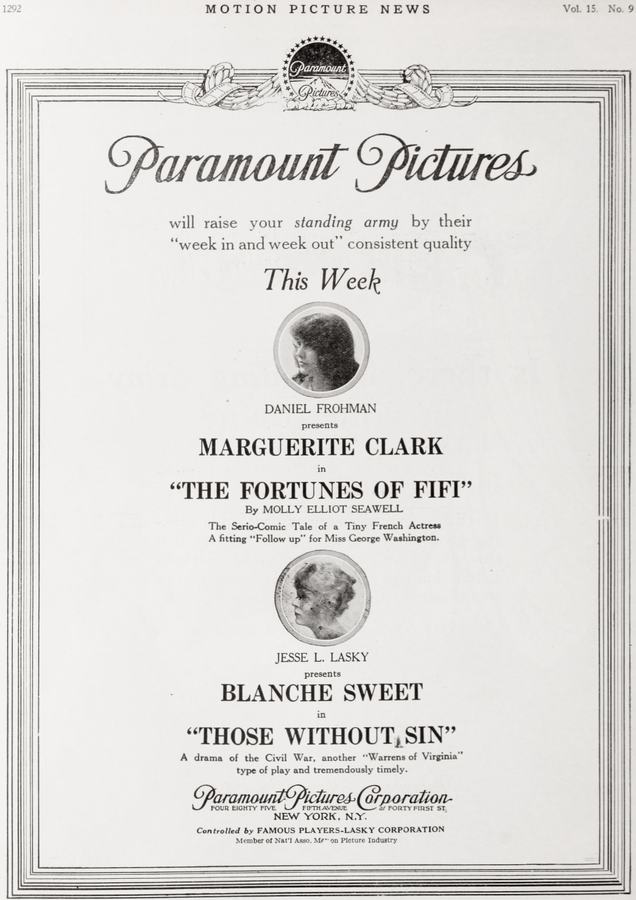
Imagine, if you will, a nation bleeding out its contradictions while the camera of 1916 cranks by gas-lamp—hand-cranked, heart-cranked. Those Without Sin lands like shrapnel from a forgotten cannonade, exposing not the heroics of Blue and Gray but the bruised purples in between.
Director George DuBois Proctor—moonlighting from his day job as scenario hack—brandishes chiaroscuro the way Confederate cavalry once wielded sabers. Interiors swim in umber nicotine; exteriors flare with magnesium-white noon that scalds retinas. Notice how cinematographer Tom Forman tilts the horizon: Union headquarters slant left, Confederate landscapes tilt right, morality itself off-kilter. The visual grammar anticipates German Expressionism by half a decade, yet history books yawn; cine-clubs still genuflect before Griffith’s elephantine epic while this svelte one-reeler suffocates in vault dust.
Melanie’s arc refracts through three symbolic objects: a lace handkerchief embroidered with forget-me-nots, a blood-flecked dispatch sealed with bayonet wax, and a Union medal looted from Shaw’s bureau. Each prop mutates meaning: the hanky is first a flirtation token, then a gag to muffle her screams, finally a tourniquet for a wounded rebel. The dispatch—ostensibly a ledger of troop movements—reveals, under ultraviolet scrutiny, an abolitionist confession smuggled by plantation literati. Even the medal flips: Union pride → colonial plunder → token of exchange in a prisoner hustle. Textures matter; Proctor’s camera lingers on cotton weave as if every fiber still remembers lash and loom.
Blanche Sweet—already canonized for her vampiric turn in 1915—here weaponizes stillness. Her Melanie listens the way spies pray: pupils dilated, breath shallow, absorbing room acoustics to gauge floorboard creak. When Shaw corners her, the actress lets her right hand tremble just once; the quake travels up her forearm, halts at the elbow—discipline incarnate. Opposite her, Guy Oliver eschews moustache-twirling villainy; instead he delivers courteous menace, voice pitched as if every sentence ends with a silent "yet." Listen for the micro-pause before he utters "honor"; the word curdles in his mouth like sour milk.
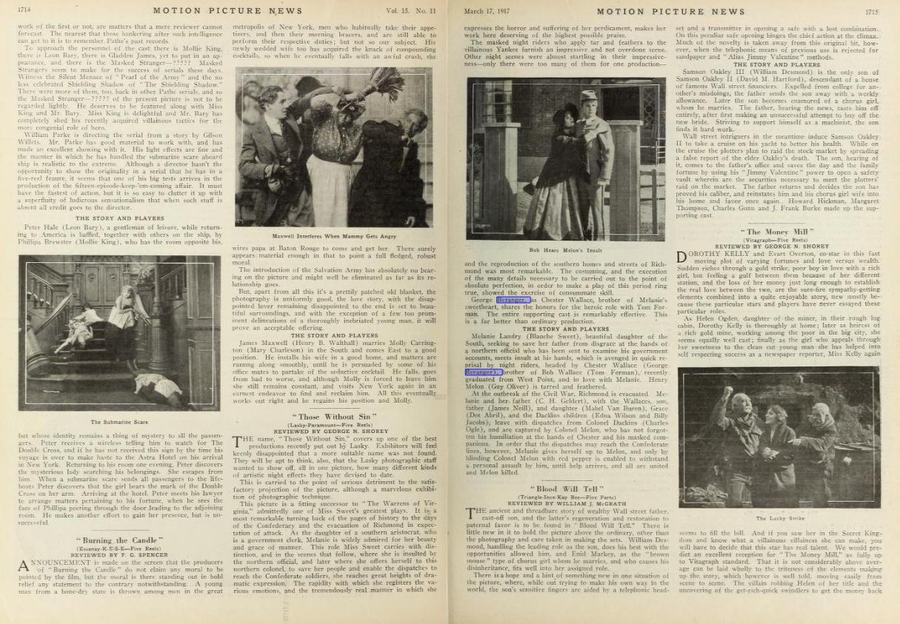
Supporting players orbit like errant planets: Charles Ogle (Union surgeon) supplies gallows humor—he stitches a teddy bear for an orphaned drummer boy while humming John Brown’s Body off-key. Jane Wolfe (Irish laundress) performs a five-second eye-roll that deserves its own dissertation on class resentment. Their collective naturalism feels startlingly modern, worlds removed from the semaphore theatrics that still plagued early Griffith biographs.
Where contemporaneous melodramas fetishize imperiled femininity, Those Without Sin insists on strategic sexuality. Melanie weaponizes the very fragility Shaw exploits: she feigns a swoon to swipe his skeleton keys; she trades on male presumption of hysteria to secrete microfilm in her bustle. The film’s centerpiece—an unbroken 78-second shot—tracks Melanie tiptoeing across a library whose floor map echoes Confederate supply lines; the camera’s lateral glide forecasts video-game stealth missions a century early.
Yet the script, co-penned by suffrage-minded Harvey F. Thew, refuses simple empowerment cant. When Confederate shells liberate the manor, Melanie’s first instinct isn’t gratitude but terror: freedom delivered by slavers’ descendants tastes of rust. The film ends on an unresolved chord—she rides off with raiders whose uniforms stink of tobacco and ideology, clutching both dispatch and misgiving. No swelling orchestra, no iris-in kiss; just a fade to smoke that questions whether survival equals victory.
Proctor’s battle sequence—filmed in Griffith Park with borrowed National Guard artillery—lasts 112 seconds yet etches memory like acid. Cameras bury at trench level; explosions hurl sod into the lens, simulating a soldier’s final vantage. Intercut are half-second flashes of children’s marbles, a mother’s corset, a hymnal—objects trampled under hoof. The montage predates Eisenstein’s dialectical collisions by nine years, yet history again shrugs. Cinephiles who worship The Weavers of Life for its proletarian gravitas would find germane DNA here, though none of the academic syllabi bother to splice the lineage.
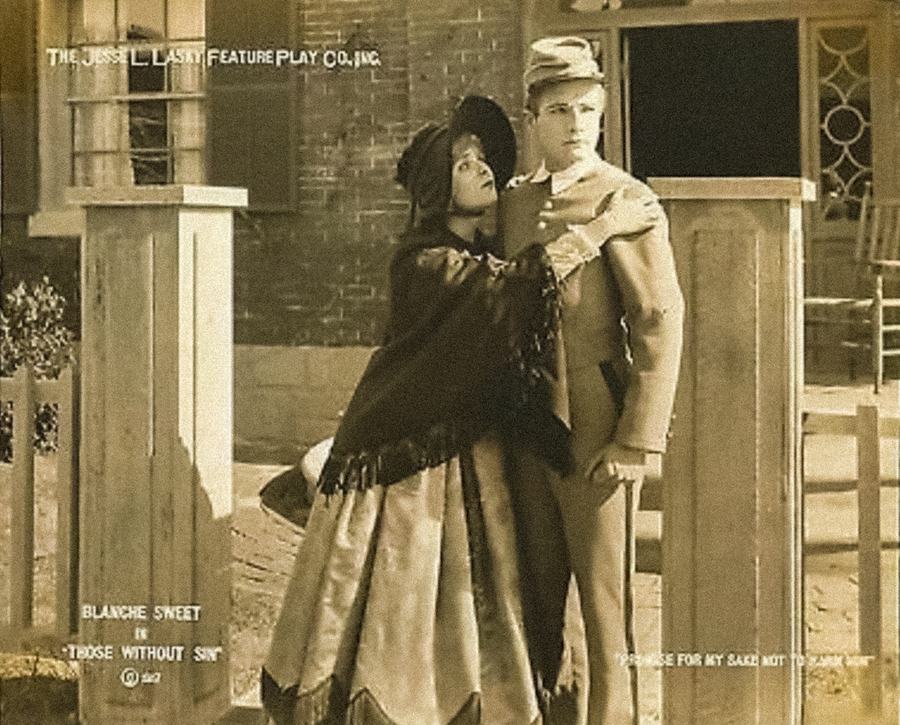
Modern viewers will flinch at the stock Black servant trope—here incarnated as Clarence Geldert’s "Old Ben," whose loyalty to Melanie’s family reads as plantation nostalgia. Yet closer inspection reveals subversive fissures: Ben speaks only in medium shot, never close-up, denying the white gaze intimate access; he hoards contraband soap, a quiet rebellion against the filth of both armies. When Union pickets taunt him with emancipation documents, he retorts via pantomime: freedom without land is merely eviction. The moment is fleeting—likely censored by Southern exhibitors—but its residue scalds.
Archival evidence suggests the original road-show featured a tableau vivant orchestra: fife, field drum, and bowed saw. The cue sheets survive in the Library of Congress: dissonant when Melanie deciphers code, tonal when Confederate bugles blow. Most restorations slap anachronistic Wurlitzer atop, betraying the film’s abrasive intent. Seek out the 2018 Anthology Film Archives restoration—screened with live military snare and delay-loop harmonica—where every rim-shot lands like a moral verdict.
For decades historians misfiled Those Without Sin under Victorian piety, blind to its lacerations. Yet its DNA persists: the tactical femininity of Raffles heroines, the moral murk of London noir, even the class antagonism pulsing through Lords of High Decision. It is a ghost print, an unacknowledged ancestor, waiting for some Tarantino to rip, remix, resurrect.
So, dear reader, if you stumble upon a 16 mm print in your grandmother’s attic—edges vinegar-brittle, title cards sun-singed—treat it like unexploded ordnance. Handle with alcohol-swabbed gloves, splice with surgical silk, and project onto the nearest white wall at midnight. Let the embers of 1916 cauterize your certainties about North, South, man, woman, victor, victim. And when the final frame gutters out, ask yourself the question Melanie’s eyes pose in lingering close-up: Who among us is truly without sin?
—review cinephile in residence, Celluloid Revenant
IMDb —
1928
Community
Log in to comment.