DbcultAccessing Vault...
Cult Review
Senior Film Conservator
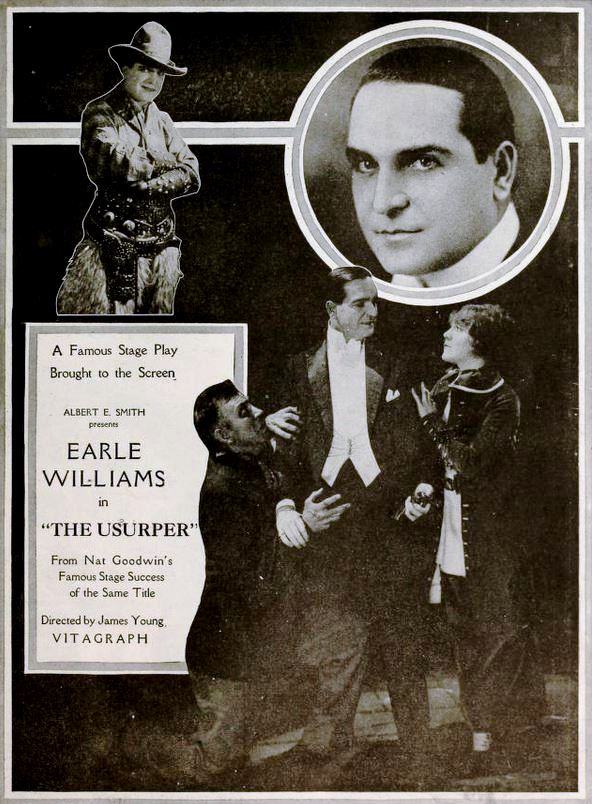
Stepping into the world of The Usurper, a silent film from 1919, is akin to unearthing a forgotten treasure map, where the X marks not gold, but a rich tapestry of human ambition, societal constraint, and the enduring power of love. This cinematic gem, crafted by the pens of I.N. Morris and Catherine Carr, and brought to life by a captivating ensemble including Earle Williams and Helen Carlisle, offers a fascinating glimpse into the moral and social landscapes of its era. It’s a narrative that boldly traverses geographical and class boundaries, pitting the rugged individualism of the American West against the decaying grandeur of English aristocracy. The film dares to ask profound questions about what truly constitutes wealth, power, and belonging, all while delivering a compelling romantic drama that holds its audience captive from its dramatic opening to its satisfying conclusion.
At its core, The Usurper introduces us to John Maddox, portrayed with a compelling blend of stoicism and underlying passion by Earle Williams. Maddox begins his journey as a man seemingly disillusioned with the fairer sex, driven solely by the pursuit of fortune in the untamed expanse of the American West. This initial characterization sets the stage for a profound transformation, making his eventual emotional entanglement all the more impactful. His rescue of Beatrice Clive (Helen Carlisle), a young Englishwoman teetering on the precipice of a steep cliff, is not merely a heroic act; it’s a pivotal moment that irrevocably links their destinies. This chance encounter, imbued with dramatic flair typical of the silent era, plants the seeds of a future romance that will challenge both characters’ preconceived notions and societal expectations. Carlisle’s portrayal of Beatrice is nuanced, conveying both fragility and an underlying resilience that becomes crucial as her circumstances dramatically shift.
The narrative then executes a daring leap, propelling us six years into the future. Maddox, no longer a mere fortune-seeker, has successfully carved out a substantial ranching empire, embodying the quintessential self-made American man. This temporal jump is a stroke of storytelling genius, allowing for significant character development and a heightened sense of anticipation. It’s within this new context that the film’s central conflict truly begins to simmer. Maddox discovers that the ancestral estate of Lord Bulverton, Beatrice’s father, is on the market. His renewed interest, fueled by a lingering attraction to Beatrice and perhaps a subtle desire to integrate into a world he once seemed to disdain, propels him back into her life. However, the Bulverton family’s dire financial straits have forced Beatrice into a grim engagement with Sir George Trenery, a wealthy but morally bankrupt suitor. This development introduces the classic melodramatic tension that silent films often excelled at, painting a stark contrast between love and duty, genuine affection and transactional arrangements.
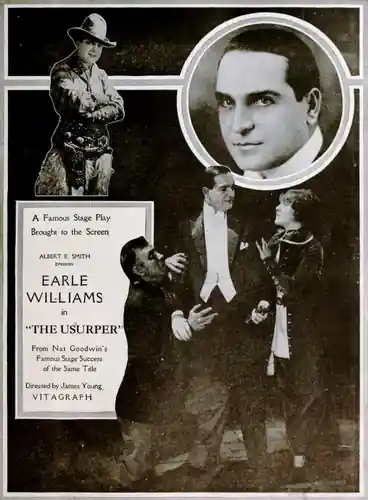
The thematic undercurrents of The Usurper are as rich and varied as the landscapes it depicts. One of the most prominent themes is the clash between old money and new money, inherited status versus self-made success. Lord Bulverton’s decaying estate symbolizes the decline of a certain aristocratic order, unable to adapt to changing economic realities. Maddox, on the other hand, represents the burgeoning American spirit – resourceful, ambitious, and unburdened by antiquated social hierarchies. This contrast is not merely economic; it’s philosophical, highlighting different approaches to life, love, and legacy. The film subtly critiques the rigid class structures of English society, where a woman like Beatrice is compelled to sacrifice her personal happiness for the financial salvation of her family name, even if it means marrying a man as despicable as Sir George Trenery. In this regard, it shares a certain dramatic tension with films like The Fatal Card, which also explored the desperate measures people resort to when faced with financial ruin and the moral compromises that ensue.
The performances in The Usurper are particularly noteworthy, especially considering the constraints of silent cinema. Earle Williams, a prominent leading man of the era, imbues John Maddox with a gravitas that makes his character’s journey from detached adventurer to determined lover entirely believable. His expressions, subtle gestures, and commanding screen presence convey a complex inner world without uttering a single word. Helen Carlisle as Beatrice Clive is equally compelling, her delicate features capable of expressing a wide range of emotions, from fear and desperation to hope and longing. The audience feels her predicament acutely, her silent pleas for salvation resonating deeply. The villainous Sir George Trenery, though perhaps a more archetypal antagonist, is played with sufficient menace to provide a credible obstacle to the protagonists’ happiness, ensuring that the stakes feel genuinely high. The supporting cast, including Louise Lovely, Audrey Chapman, Bessie Eyton, Lillian Langdon, Jay Morley, Bob Russell, William Elmer, and Frank Leigh, each contribute to the film’s rich texture, adding depth and authenticity to the various social circles depicted.
The direction of The Usurper demonstrates a keen understanding of visual storytelling. Without spoken dialogue, the reliance on expressive acting, dramatic staging, and well-placed intertitles is paramount. The film effectively uses close-ups to highlight emotional intensity, drawing the audience into the characters’ inner turmoil. The cinematography, while perhaps not groundbreaking for its time, is competent and serves the story well, particularly in its depiction of both the rugged Western landscapes and the more refined, albeit troubled, English settings. The pacing, though deliberate, never drags, maintaining a steady build of tension that culminates in a satisfying resolution. This careful balance of dramatic incident and character development ensures that the audience remains invested in the fate of John and Beatrice.
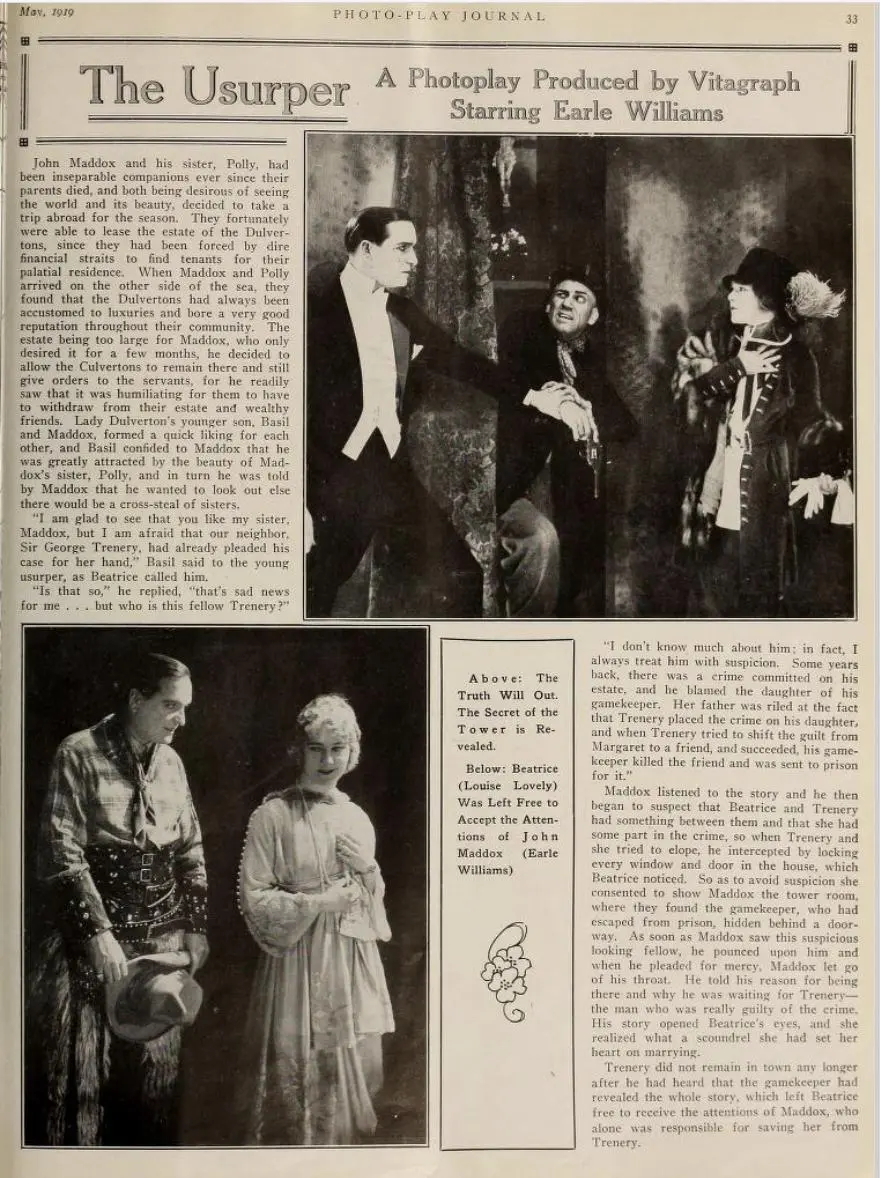
The narrative’s construction by I.N. Morris and Catherine Carr is a testament to the power of a well-structured plot. The initial rescue, the six-year jump, and the re-introduction of the characters under vastly different circumstances create a compelling arc. This isn't merely a simple boy-meets-girl story; it’s a tale of a man who, having found success through sheer grit, now seeks to claim not just an estate, but the woman who inadvertently captured his heart years ago. The title itself, The Usurper, takes on multiple layers of meaning. Is Maddox usurping the Bulverton family’s place, or is he usurping the role of Beatrice’s intended, saving her from a fate worse than destitution? Or is he, in a broader sense, representing the new order usurping the old? This ambiguity adds intellectual depth to what could otherwise be a straightforward romance.
Comparing The Usurper to other films of its era reveals its unique strengths. While not as overtly action-packed as some adventure films like Soldiers of Fortune, its dramatic tension is equally potent. The exploration of social climbing and the pursuit of love against a backdrop of financial hardship can be seen in echoes of films like The Return of Helen Redmond, though The Usurper offers a distinct cross-continental flavor. The film’s ability to weave together elements of Western adventure, high-stakes romance, and social commentary makes it a standout. It avoids the pitfalls of overly simplistic morality plays, instead presenting characters with complex motivations and difficult choices. The journey of John Maddox, from a man who wants little to do with women to one who fights for the woman he loves, is a classic arc, but one rendered with considerable skill and emotional honesty.
The enduring appeal of The Usurper lies in its timeless themes. The struggle between personal desire and societal obligation, the allure of wealth versus the richness of genuine connection, and the transformative power of love are all concepts that resonate across generations. Even in its silent form, the film communicates these ideas with clarity and emotional force. It serves as a powerful reminder of the artistry and storytelling prowess present in the early days of cinema. For those interested in the evolution of film, or simply in a well-told story with compelling characters and a satisfying resolution, The Usurper is a film that demands to be rediscovered. Its intricate plot, strong performances, and thoughtful exploration of human nature solidify its place as a significant, albeit perhaps lesser-known, entry in the canon of silent film classics. It's a journey worth taking, a piece of cinematic history that continues to offer rich rewards to the discerning viewer. The film's ability to transcend its historical context and speak to universal human experiences is a testament to its quality and the enduring power of its narrative.
Ultimately, The Usurper is more than just a historical artifact; it is a vibrant narrative that continues to engage and entertain. Its blend of dramatic tension, romantic yearning, and social critique offers a multifaceted viewing experience. The film’s exploration of what it means to truly ‘own’ something – be it land, love, or one’s own destiny – remains profoundly relevant. It reminds us that while the trappings of wealth and status may shift over time, the fundamental human desires for connection, security, and happiness are constant. The silent era, often overlooked in modern discourse, produced works of remarkable depth and artistry, and The Usurper stands as a shining example of this rich legacy. Its impact resonates, inviting viewers to ponder the choices we make and the forces that shape our lives, much like other thoughtful dramas of the period such as As the Sun Went Down, which similarly delved into the complexities of human relationships and societal expectations. This film, with its compelling characters and intricate plot, firmly asserts its importance, proving that a story well told can truly stand the test of time, regardless of whether words are spoken or merely conveyed through the eloquent dance of light and shadow on screen.
IMDb 7.6
1934
Community
Log in to comment.