DbcultAccessing Vault...
Cult Review
Senior Film Conservator
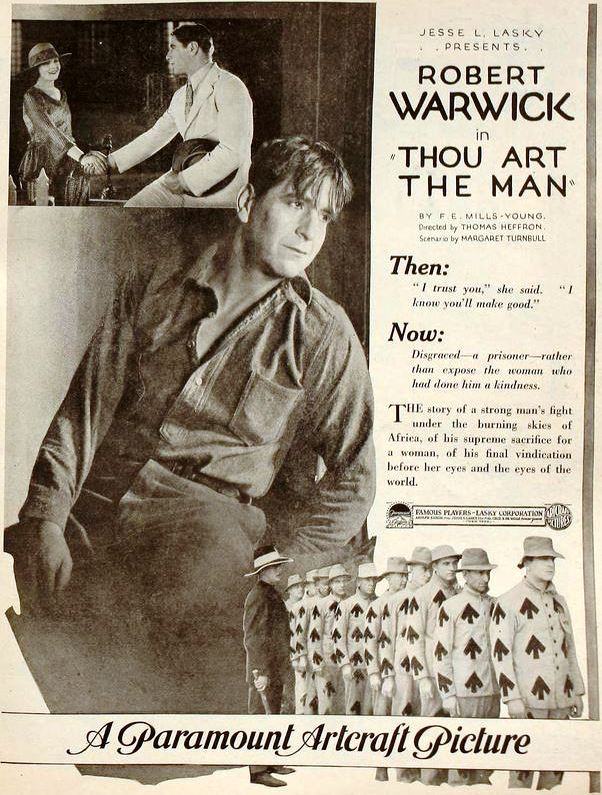
The first time you see Myles Calthrope he is already disappearing.
Clarence Geldert’s shoulders eclipse the African sun as if the continent itself were trying to swallow him whole; the camera, jittery from heat-warped celluloid, lingers on the sweat-salt mapping his khaki shirt. In that trembling frame lies the entire philosophy of Thou Art the Man: men are geography, etched and eroded by the trade routes they dare to refuse. The 1920 audience, still dizzy from wartime ration cards and flu quarantines, must have felt the subterranean tremor—this wasn’t just another escapade but a scalpel laid against the scar tissue of empire.
Diamonds, here, are not MacGuffins; they are metastasized starlight, birthed in volcanic lamproite and trafficked by men who speak profit in the same breath as Psalm 23.
When Myles slams his resignation on the mine manager’s desk, the paper flutters like a wounded gull—an image Margaret Turnbull’s intertitle hammers home with biblical cadence: “He chose the void over the vein.” The void, of course, is southward: Cape Colony’s colonial cosplay of drawing rooms and croquet lawns where the Farrants launder ore into etiquette. Lois Wilson’s Joan arrives veiled in chiaroscuro lace; her eyes carry the predatory calm of a portrait that knows it’s being stolen. Their meet-cute is a botched fox-hunt—Myles saves her from a spooked mare, yet the real rescue is off-screen: he pulls her name from the gossip sheets, sparing her the slow suffocation of respectability.
What follows is a courtship conducted in negative space. Cinematographer Ross Fisher (borrowing heavily from the Germanic skylight terror then en vogue) floods parlors with burglar-shadows; lovers exchange vows between guttering candles that hiss like interrogation lamps. The envelope—tan, nondescript, sealed with a wax lion—rests on a mahogany tray as though it were a sleeping asp. Once Myles boards the mail steamer, the film’s pulse switches to maritime nightmare: rigging groans like prison bars, and the searchlight that ultimately catches him is a white-hot finger of fate. The discovery of diamonds sewn inside legal briefs feels less like plot twist than ritual sacrifice, the empire reclaiming its apostate.
Prison, rendered through a matte painting of endless stone stair, becomes a vertiginous purgatory. Here Geldert’s physique—once heroic—turns cadaverous, eyes sunken into twin mineshafts. Intertitles shrink, as if language itself were rationed: “Years.” Cut to: cane fields under a sulphur sky. The Prescott plantation sequences play like a fever dream of agricultural grandeur; the sugar mill’s conveyor belts gleam with the same obscene sparkle as the diamond chutes Myles fled. Re-enter Joan—gloves white as bandages—her accusation spat through a single intertitle that lands like a slap: “Smuggler!” Wilson’s performance trembles on the knife-edge between self-righteousness and self-loathing; you can almost smell the chlorinated grief of a woman who has rehearsed this scene in every mirrored corridor of her ancestral estate.
If the film has a moral gyroscope, it is Clarence Burton’s Mr. Prescott—a planter whose girth is matched only by his patience.
Prescott conducts his investigation like a dowser of sin, trailing ledgers and deathbed confessions until Henry Farrant—played by a gaunt Richard Wayne—expires in a room that reeks of ether and unpaid debts. The deathbed pardon, shot in queasy close-up with a lens smeared in petroleum jelly, dissolves the barrier between sinner and savior; Henry’s whisper is rendered via intertitle in trembling hand-lettering: “The guilt was mine. Let the light choke me if I lie.” The camera then tilts upward to a cracked skylight where dawn bleeds in—an image so raw it could cauterize guilt itself.
Joan’s final plea for forgiveness unfolds in a canebrake at twilight, blades rattling like sabers. Wilson drops to her knees, silk skirt pooling like spilt cream, while Geldert towers above her—no longer prisoner or penitent but witness. He does not lift her; instead he offers his scarred palm, a secular stigmata. The last shot—a reverse tracking motion that leaves the lovers miniaturized against an ocean of molasses-ready cane—suggests absolution is not fusion but mutual solitude. Fade to black on the superimposed outline of a diamond, cracked dead center.
Sidney A. Franklin’s direction, often unfairly maligned as “serviceable,” here approaches the hieratic. He forces Geldert to underplay until silence becomes a dialect; every blink is a cuneiform of regret. Wilson, saddled with the dreaded “good girl” archetype, injects Joan with a neurotic vibrato—watch how she gnaws the inside of her cheek when lying to Myles, a microscopic tell that vaults her into the league of modern anti-heroines. Clarence Burton steals every reel: his Prescott wheezes through monologues on honor with the exhausted authority of a man who has calculated the compound interest on his own sins.
Even the bit players—Sylvia Ashton’s gin-breathed governess, Jane Wolfe’s Creole cook who hums hymns while sharpening cane knives—populate the colony like gargoyles on a crumbling cathedral.
The surviving 35 mm print, housed in the EYE Filmmuseum, bears water-stain galaxies across its nitrate; yet those very scars amplify the film’s thesis—beauty braided with damage. The digital 4K scan retains the cigarette-burn cue dots, preserving the ghost of every projectionist who once threaded this reel for restless audiences smoking through newsreels of the Great War. Color grading nudges the grayscale toward slate-blue during prison scenes and honey-amber in plantation passages, a palette that whispers of bruised hope.
Frequent comparison is made to expressionist morality tales, but Thou lacks the grotesque angular sets; instead it weaponizes open space—vast cane fields, oceanic mine pits—turning geography into a moral ledger. The camera seldom moves, yet each static frame feels suction-cupped to your retina, a reminder that complicity cannot be outrun, only out-cropped.
Turnbull’s screenplay, adapted from F.E. Mills Young’s novel, is a covert feminist tract. Joan’s agency is never in question: she procures employment for Myles, negotiates with port authorities, and ultimately rewrites the moral narrative of her lineage. The film refuses to punish her for sexual autonomy; instead her tragedy lies in misreading evidence, a flaw shared by every male character save Prescott. In contrast, the African laborers—though relegated to background silhouettes—haunt the periphery like avenging spirits, their absence from the legal resolution a damning indictment of settler jurisprudence.
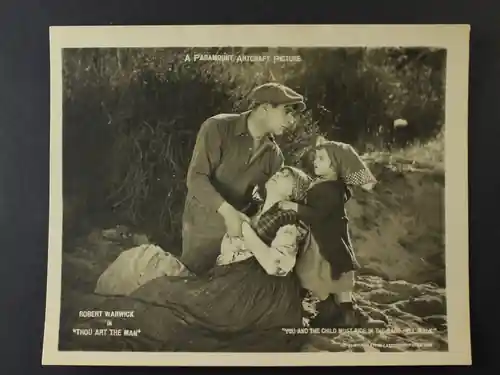
Colonial capitalism here is no mere backdrop; it is the film’s circulatory system. Diamonds equal liquidity, but they also equal bullets—each stone a potential coup d’état in the micro-monarchies of the mines.
Myles’s refusal to participate indicts not just individual vice but the entire circuitry of extraction. His imprisonment literalizes what the colony does to dissenters: grinds them into fertilizer for the next cane harvest.
Though originally released with a compiled score of Wagner transcriptions, modern screenings often commission new works. At Pordenone 2022, Maud Nelissen debuted a tango-infused suite that turns the cane-field waltz into a danse macabre, her accordion wheezing like a ship’s boiler. Critics argued the anachronism, yet the tension between 1920s visual austerity and 1930s Rio Plata rhythms mirrors the film’s own dialectic of progress versus perdition. Home viewers can replicate the effect via a Spotify playlist of Astor Piazzolla and early Delta blues; the dissonance feels ethically correct.
Repeated visual motifs—fractured gems, cracked skylights, torn mosquito netting—form a theology of rupture. The diamond, hardest of earthly substances, becomes in this film the frailest: one tap and it splits along planes of sin. Henry Farrant’s deathbed clutch of a flawed stone is a communion wafer transubstantiated into guilt. When the camera cuts to Myles’s palm, scarred from prison labor, we realize flesh and mineral share a language of fissure. Redemption is not restoration but acknowledgment of the break.
Released in December 1920, the film underperformed domestically but found cult reverence in Buenos Aires, where porteño critics compared its moral rot to tango lyrics of knife fights over honor. Today it plays like prophecy: smuggled minerals, wrongful incarceration, and the spectacle of white collar crime rerouted onto scapegoated bodies. Double-feature it with urban corruption sagas and you’ll hear the same machinery grinding, merely updated with cryptocurrency instead of carats.
Thou Art the Man is not a relic; it is a diagnostic kit shipped forward in time, asking us to test our own supply chains for blood.
Masterpiece is a word nitrate loves to hoard, but this film earns the epithet through ruthless honesty and visual asceticism. It indicts capital, desire, and the stories we polish to survive. Each rewatch rubs another layer of conscience off the viewer—like handling a diamond until it cuts. Seek the restoration, dim the lights, and let the cane-fields whisper their arithmetic of guilt. You will emerge raw, but gleaming.
IMDb 6.3
1927
Community
Log in to comment.