DbcultAccessing Vault...
6/10
Senior Film Conservator

A definitive 6/10 rating for a film that redefined the boundaries of cult cinema. Three Foolish Weeks remains a cornerstone of transgressive art.
The 1920s was an era that revelled in the art of silent comedy, with filmmakers and audiences alike enthralled by the slapstick antics and physical humour that dominated the silver screen. Amongst this pantheon of comedic classics, Three Foolish Weeks stands as a testament to the enduring power of laughter, as a roguish baron's well-laid plans are consistently foiled in this sidesplitting tale of mistaken identities and deception.
The film, expertly crafted by writer John A. Waldron, introduces us to a cross-eyed baron (played with remarkable comedic timing by Toy Gallagher), whose dubious intentions are set in motion when he saves a mysterious woman from a carriage accident. Unbeknownst to him, this enigmatic figure is, in fact, the reigning monarch, incognito and seeking refuge from the burdens of her royal duties. As the baron attempts to compromise her virtue, the inn's loyal residents, aware of her true identity, watch with bated breath as his schemes are continually thwarted.

One of the standout aspects of Three Foolish Weeks is its use of physical comedy, with the baron's myopia serving as a recurring gag throughout the film. His hapless attempts to navigate the inn's corridors, only to find himself lost and confused, are both poignant and hilarious. The supporting cast, including Fanny Kelly and Madeline Hurlock, add to the film's comedic charm, as they skilfully play off the baron's antics.
In terms of its place within the broader context of silent comedies, Three Foolish Weeks bears some resemblance to The Firefly, with its similar blend of slapstick humour and mistaken identities. However, the film's unique charm lies in its rustic setting and the baron's endearingly inept nature. A more apt comparison might be made with The Old Fool, which also features a similarly aged and amusingly inept protagonist.
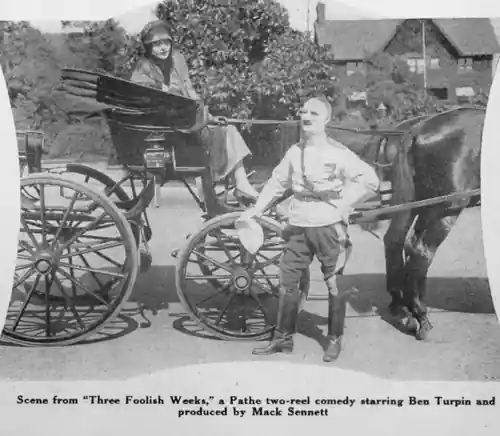
From a technical standpoint, Three Foolish Weeks showcases a number of impressive camera techniques, including the use of close-ups to heighten the comedic effect of the baron's facial expressions. The film's editing is also noteworthy, with a skilful use of montage sequences to convey the baron's frustration and desperation.
In conclusion, Three Foolish Weeks is a side-splitting silent comedy that will leave audiences in stitches. With its talented cast, impressive camera techniques, and endearingly inept protagonist, it is a must-see for fans of the genre. So, if you're in the mood for a laugh-out-loud film that will transport you to a bygone era of cinematic history, then Three Foolish Weeks is an excellent choice.
For those interested in exploring further, Die Verführten and The Book Agent offer a similar blend of comedy and adventure, while His Brother's Wife and The Conspiracy; or, A $4,000,000 Dowry provide a glimpse into the complexities of relationships and societal norms during this period.
Ultimately, Three Foolish Weeks serves as a poignant reminder of the enduring power of silent comedies to enthrall and delight audiences, even nearly a century after its initial release.
IMDb —
1913
Community
Log in to comment.