DbcultAccessing Vault...
Cult Review
Senior Film Conservator
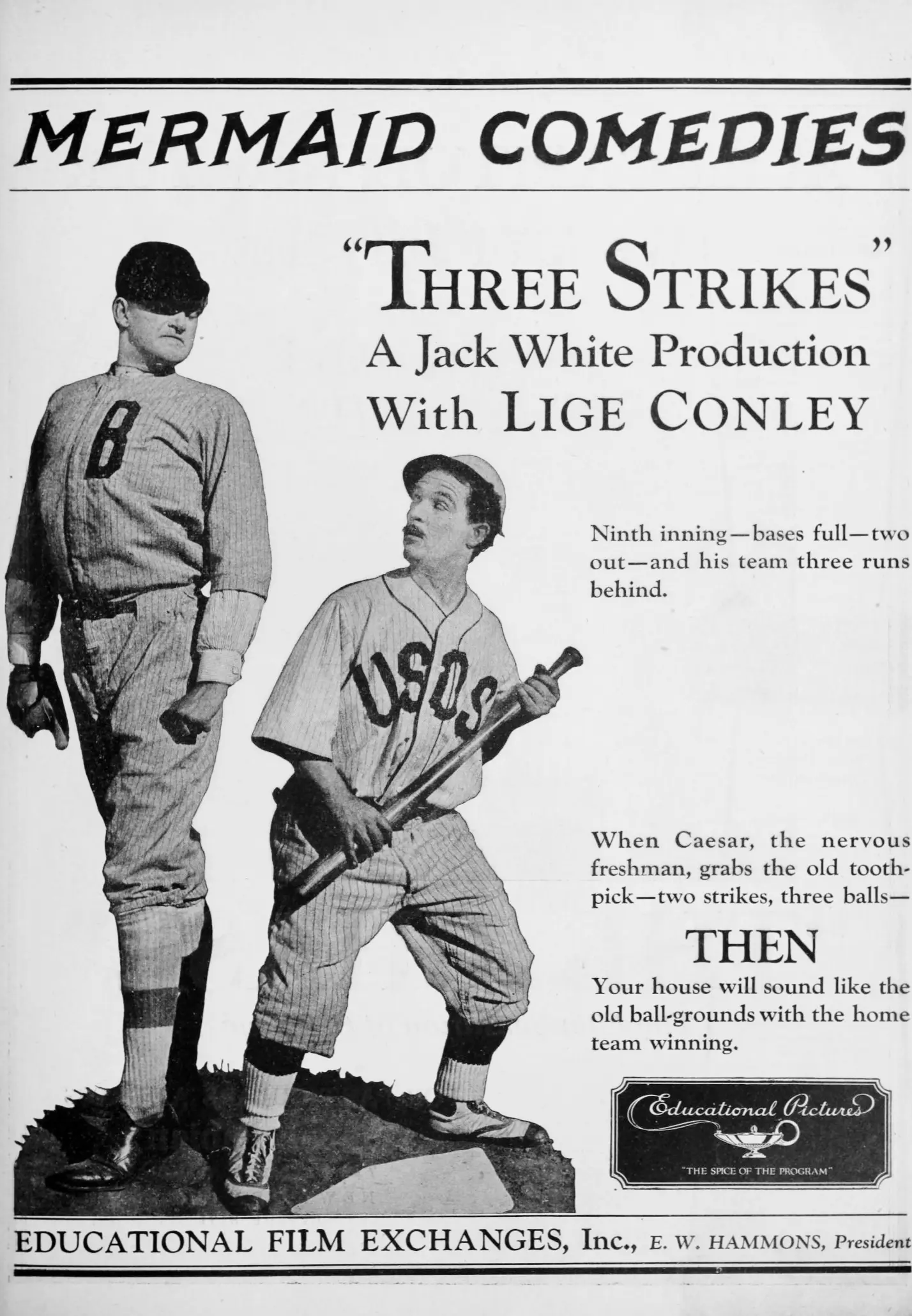
When the title *Three Strikes* first flickers across the screen, the viewer is immediately thrust into a world where the clatter of wooden bats and the rustle of leather gloves replace dialogue, and meaning is conveyed through gesture, expression, and the rhythmic cadence of the game itself. The film’s central conceit—an unbroken 1‑0 scoreline persisting into the ninth inning—creates a crucible that tests not only the physical skill of the players but also the psychological fortitude of the freshman protagonist, portrayed by Lige Conley.
Otto Fries, cast as the stoic coach, employs a restrained physicality that recalls the gravitas of silent‑era patriarchs, reminiscent of the authority exuded by the titular character in The Ace of Hearts. His occasional glances toward the bleachers convey a silent dialogue with the audience, suggesting a deeper narrative about mentorship and the burden of expectation. Sunshine Hart, the film’s effervescent cheerleader, utilizes a kinetic dance vocabulary that mirrors the exuberant energy found in When Kane Met Abel, infusing the sidelines with a chromatic counterpoint that brightens the monochrome tableau.
Cinematographer Anonymous (the era’s records are fragmentary) employs chiaroscuro lighting to sculpt the baseball field into a stage of mythic proportions. The twilight hour, rendered in deep sepia tones, frames the players as silhouettes against a sky that seems to pulse with anticipation. The camera’s occasional low‑angle shots of Conley’s batting stance echo the visual poetry of Danton’s courtroom scenes in Danton, emphasizing the gravity of a single moment that could alter a life’s trajectory.
The screenplay, though bereft of credited writers, constructs a tight three‑act structure that mirrors the titular three strikes. Act One introduces the stakes—a lone run, a team on the brink, and the freshman’s internal conflict. Act Two escalates as the opposition mounts pressure, and the audience witnesses the nuanced interplay between the coach’s strategic silence and the cheerleader’s animated encouragement. Act Three culminates in the decisive swing, a kinetic tableau that resolves both the scoreboard and the protagonist’s arc.
At its core, *Three Strikes* interrogates the myth of the lone hero. While Conley’s home run appears to crown him as the savior, the film subtly hints that his triumph is a confluence of collective effort—the coach’s guidance, the teammates’ morale, and even the opposing pitcher’s fatigue. This thematic layering aligns with the moral complexities explored in The Master Mind, where individual agency is interwoven with societal forces.
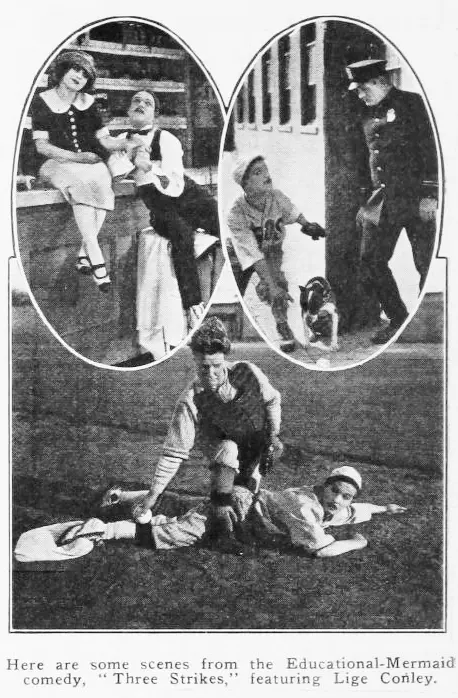
When juxtaposed with contemporaneous sport dramas such as Without Limit, *Three Strikes* distinguishes itself through its minimalist dialogue and reliance on visual metaphor. While *Without Limit* employs intertitles to articulate internal monologue, *Three Strikes* trusts the audience to infer emotion from the cadence of the game, a daring artistic choice that rewards attentive viewers.
The film’s accompaniment, originally performed live by a theater organist, weaves a leitmotif that swells with each pitch and recedes during moments of contemplation. Modern restorations have paired the visuals with a reconstructed score that utilizes brass fanfares during the climactic ninth inning, echoing the auditory strategies found in The Diamond Necklace to amplify tension without overwhelming the silent aesthetic.
Baseball, often hailed as America’s pastime, serves in *Three Strikes* as a metaphorical crucible for the nation’s ideals of fairness, perseverance, and redemption. The film’s release during the post‑World War I era situates it amid a cultural resurgence of optimism, where the triumph of a freshman mirrors the broader societal yearning for renewal.
The set designers employed actual college fields, lending a tactile authenticity that transcends the artificiality of studio backlots. The modest uniforms, rendered in muted fabrics, contrast sharply with the vivid emotional palette of the characters, reinforcing the film’s commitment to grounded realism.
Although *Three Strikes* did not achieve the commercial acclaim of its contemporaries, its narrative economy and visual storytelling have inspired later directors exploring sport as a conduit for character study. Contemporary indie films that focus on a single decisive moment—such as the climactic game in Blackbirds—owe a conceptual debt to the structural daring exhibited here.
*Three Strikes* stands as a testament to the potency of visual narrative, where the absence of spoken word amplifies the resonance of every gesture, every swing, and every breath held by the audience. Its deft intertwining of sport, adolescence, and existential inquiry renders it a hidden gem worthy of rediscovery. For scholars of silent cinema, aficionados of baseball lore, and anyone who cherishes stories of personal metamorphosis, this film offers a richly layered experience that rewards repeated viewings.
IMDb 6.1
1934
Community
Log in to comment.