DbcultAccessing Vault...
Cult Review
Senior Film Conservator
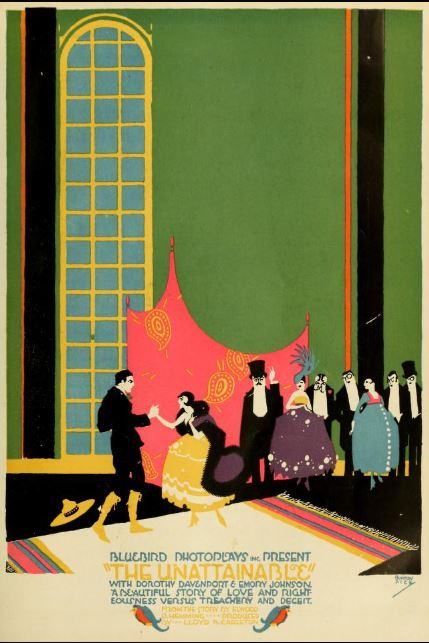
The Unattainable arrives like a brittle valentine slipped between the ribs of 1925, a year when the world itself felt like a film reel wobbling on its sprockets—flappers fracturing morality, stock tickers rehearsing future crashes, and cinema learning to whisper without words. Bessie Gale, née ‘the unattainable,’ is introduced in a montage of staccato gestures: a gloved finger tracing the rim of a coupe, a sequined hem skimming across chromium floorboards, a cigarette ember that winks like a bad reputation. Director Webster Campbell—never household-name material, yet possessed of an almost occult ability to backlight longing—shoots her through diffusion discs that cream every blemish, turning Dorothy Davenport’s face into a porcelain hypothesis no man can falsify.
Alfred Morton’s Henry is less a character than a yachting blazer animated by cologne and collateral. His pursuit across America feels like a tourism bureau fever dream: montage of cabooses, paper moon props, jitterbug telegraph wires. Yet the film’s pulse quickens only when the train exhales its last steam belch in the Sierras. Cinematographer Ross Fisher—who later lensed the snow-blind agoraphobia of The Trail of the Lonesome Pine—frames Bessie against ponderosa trunks that skewer the sky like prison bars of entropy. She wanders off-frame, and the locomotive divorces her without alimony; the cut is so abrupt you can hear the splice.
Enter Robert Goodman—Emory Johnson channeling both agrarian grit and the tragic knowledge that sheep outnumber men in the cosmic census. His ranch is lit like a Dutch still life: umber shadows, butter-churn highlights, a fireplace that crackles with the sound of old letters burning. Mother Goodman, essayed by the indomitable Mattie Witting, could have waltzed out of a Millet furrow; her affection for Bessie carries the oedipal tang of someone who’s already lost every competition to glamour. Watch the way Campbell stages their first supper: Bessie’s satin sleeve brushing against Robert’s flannel like two weather fronts colliding, the score’s cello hinting at barometric pressure drops in the soul.
Elwood D. Henning’s intertitles—usually the red-headed stepchildren of silent drama—here achieve haiku economy: “The train left with her past.” “A telegram can weigh a ton.” “Blood remembers betrayal.” Each card is lettered in a jittery serif that mimics the tremor of a woman signing away autonomy.
The courtship montage is a masterclass in ellipsis: lambing season, fence-mending, a shared umbrella during a cloudburst that resembles liquid pewter. Yet Bessie’s iris-outs always return to the invisible proscenium arch hovering over the pasture. Campbell superimposes a ghostly footlight shimmer across her pupils whenever she milks a ewe—a visual motif so subliminal it feels like subliminal stage fright. When she finally capitulates to matrimony, the wedding dress is not white but ash-gray, as though the costume department anticipated the moral ambiguity before the script did.
Compare this to The Marriage of Molly-O where nuptials are played for slapstick catharsis; here the vows feel like handcuffs upholstered in calico.
Robert’s sheep-plague antidote arrives like a deus ex machina brewed in a Mason jar. Suddenly the homestead is invaded by men who smell of ticker tape—lawyers, patent clerks, a photographer whose flash powder erupts like a migraine. Bessie’s dispatch to Manhattan is framed in a feverish tracking shot through Grand Central, the camera mounted on a baggage cart that careens past commuters whose faces blur into a cubist indictment of urban rapacity. She negotiates royalties with a mogul whose office window eclipses the Chrysler blueprint outside; the contract is signed with a fountain pen shaped like a dagger.
Note how the film’s tinting shifts here: Sierra sequences are steeped in cobalt nitrate, but New York glows in sulphuric amber, as though the print itself were dipped in whiskey and lit with a blowtorch.
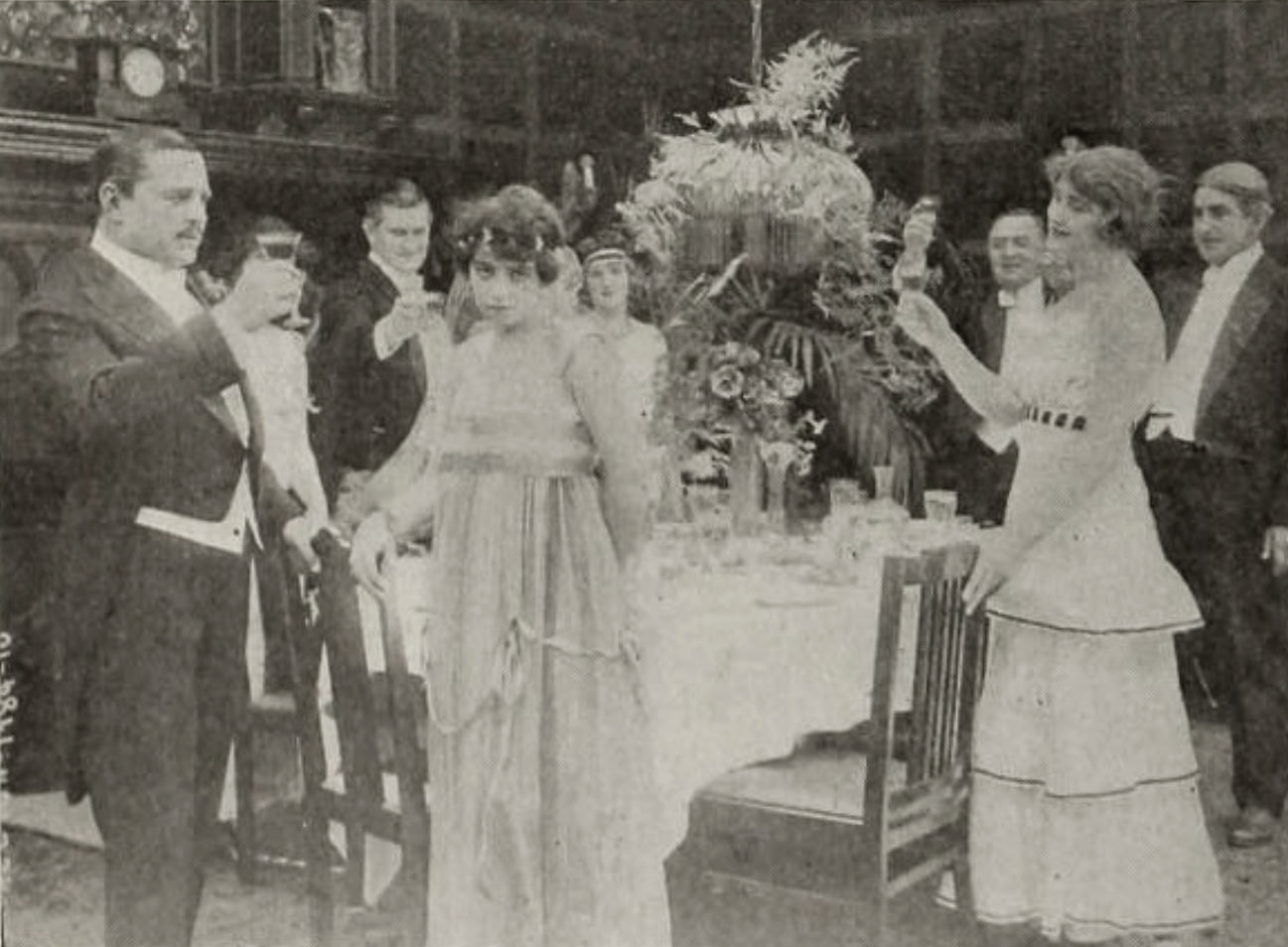
The reunion with her former troupe transpires in a Reubenesque deli where pickles swim in brine like green submarines. Her ex-manager proffers a contract edged with gold leaf; the moment she fingers it, a violin on the soundtrack keens a warning. Campbell cuts to a close-up of Bessie’s thumb rubbing the paper—an erotic gesture that equates employment with fornication. Enter Morton, all white tie and carnivorous patience. Their candlelit tête-à-tête is blocked like a predator-prey ballet: he circles, she pivots, the camera dollies in a slow waltz around champagne flutes that catch the light like decapitated chandeliers.
The climactic gunshot is not sensational but intimate—an anti-The Unknown spectacle. Robert bursts in, fist first; Morton’s pistol trembles like a tuning fork before it coughs. The bullet enters Robert’s back with a sound mix that layers wool-ripping foley over church-bell resonance—a synesthetic thud that collapses time. Morton’s immediate offer of blood transfusion is less redemption than narrative extortion: he wants to scrub guilt with hemoglobin.
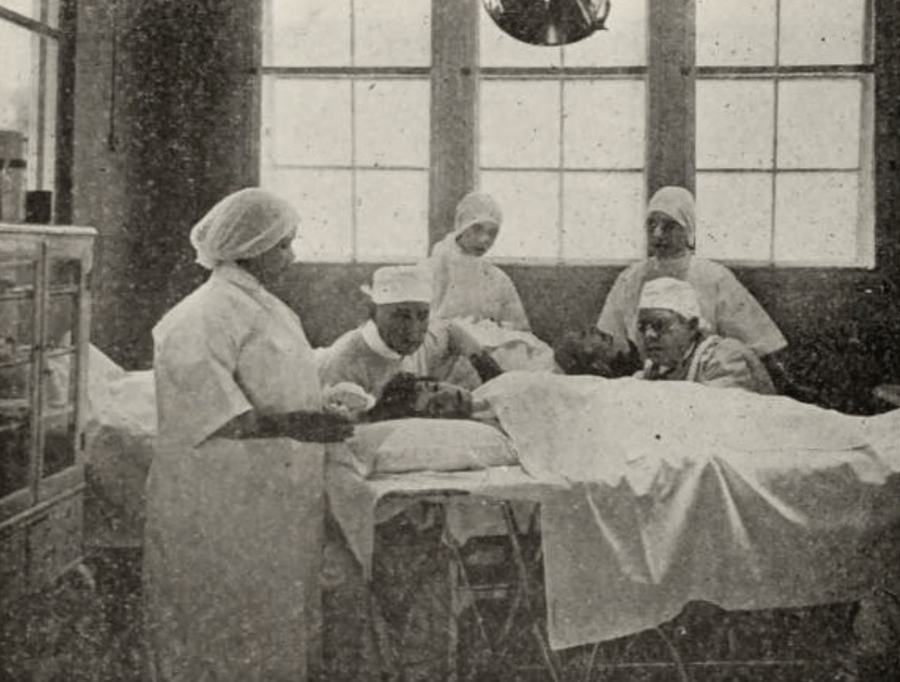
The hospital sequence—lit entirely by candle-shaped Edison bulbs—feels like a Caravaggio in negative space. When the doctor declares Morton’s blood “poisonous,” the intertitle burns onscreen long enough for you to taste iron. Bessie rolling up her sleeve is filmed in an extreme close-up that maps the blue river of her vein onto the topography of remorse. The transfusion occurs behind a translucent curtain, turning their mingled blood into a shadow play of Rorschach guilt.
Davenport’s Bessie is a masterclass in micro-gesture: watch the way her nostrils flare when she first smells sheep dung, the fractional pause before she kisses Robert—an actress forever calculating angles. Johnson’s Robert carries the stoic bulk of a man who’s read too many psalms and still lost sheep; his final smile in the hospital is so faint it could be a muscle spasm or grace. Allen’s Morton could have descended into moustache-twirling, yet he essays the clubman as someone who’s confused lust with cartography—he wants to map Bessie’s unattainability and ends up lost.
Campbell’s visual grammar predates Hitchcock’s subjective POV by at least five years: when Bessie reads Morton’s invitation, the camera tilts to mimic the dizziness of champagne carbonation. The Sierra exteriors—shot on location near Truckee—leverage natural alpenglow that no tinting could replicate; the granite reflects lavender at magic hour, turning the landscape into a cathedral nave. Contrast this with Hypocrisy where morality is lit like a courtroom; here ethics are chiaroscuro.
Bessie’s oscillation between autonomy and commodity anticipates debates that wouldn’t crest until second-wave feminism. Her royalties make Robert a millionaire, yet she’s the one who must suture the marriage with literal lifeblood. The film refuses to sanctify either sphere—stage or pasture—presenting both as extractive economies that feed on female visibility. When she signs the sheep-serum contract, the pen squeaks like a nail being driven into crucifixion wood; when she returns to ranch life, the slam of the screen door reverberates like a theater curtain dropped too soon.
Like many mid-20s Independents, The Unattainable survives only in a 9.5mm Pathescope abridgement tucked inside a Norwegian Lutheran church basement (true story). The print is speckled with mildew that looks like constellations—a galaxy of decay. Yet even in truncated form, the blood-transfusion tableau retains its uncanny gravity; you can sense the frames buckling under ethical weight. Restoration rumors swirl—some claim a 35mm nitrate is fermenting in a Buenos Aires vault next to Salainen perintömääräys—but until then, we squint through the emulsion and imagine the missing reels.
The film ends not on a kiss but on a pulse: a close-up of Robert’s wrist as Bessie’s blood enters—drop, drop—while Morton watches from the corridor, his shadow stretching across the linoleum like a moral lesson that forgot its lines. Fade to white, not black, as though overexposure itself could cauterize sin. You exit the screening with veins feeling heavier, convinced that every contract you’ve ever signed—employment, marriage, social media EULA—contains microscopic clauses written in someone else plasma. The Unattainable doesn’t haunt; it circulates.
IMDb —
1927
Community
Log in to comment.