DbcultAccessing Vault...
6.6/10
Senior Film Conservator
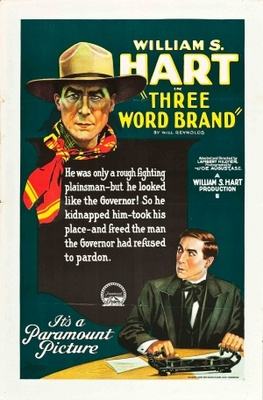
A definitive 6.6/10 rating for a film that redefined the boundaries of cult cinema. Three Word Brand remains a cornerstone of transgressive art.
A bullet cleaves a family, and out of the wound crawl two myths: the man who writes laws and the man who burns brands into hide.
William S. Hart never needed talkies; his cheekbones pronounced verdicts, and the tremor of his upper lip was a whole third-act confession. In Three Word Brand he doubles that economy of gesture by playing both poles of the American psyche—citizen and savage, governor and drifter—without split-screen gimmickry, relying instead on silhouette, negative space, and the audience’s hunger for symmetry. The result is a 65-minute poem etched on nitrate, a Western that predates the Freudian jargon of When a Man Sees Red yet already suspects that every gunslinger drags a shadow named Civilization.
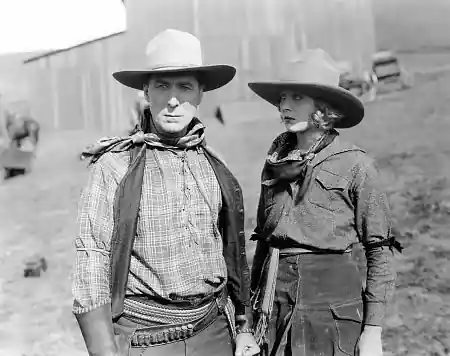
Ben Trego’s death is filmed like a nativity in reverse: dusk instead of starlight, arrows instead of myrrh. Director Lambert Hillyer refuses the spectacle of massacre; we glimpse the assault through a wagon wheel, its spokes segmenting the horror into manageable shards. The boys survive because their father’s torso becomes a human palisade—Hart lingers on that posture, Christ-like yet pragmatic, a flesh-and-blood frontier pieta. One son will remember the taste of iron in the air; the other will remember only the sound of his own scream bouncing off granite. Both memories are equally counterfeit, but they will steer two lifetimes.
Cut. Years collapse into a montage as brisk as a ledger clerk’s wrist. Paul Marsden learns Latin declensions inside adobe walls newly whitewashed to hide bloodstains; Three Word Brand learns to rope wolves by moonlight. Note the nomenclature: the first enjoys the dignity of a surname, the second bears a label as terse as a cattle iron can afford—three words, no more, because language itself is currency and the range is cash-poor. Their wardrobes encode the split: linen versus buckskin, cravat versus bandana, derby versus Stetson beaten soft by alkali. Even the horses collude in the dichotomy; Paul’s bay is groomed for parades, while Brand’s roan—Fritz, the only equine to receive on-screen credit—has eyes like spent rifle shells.
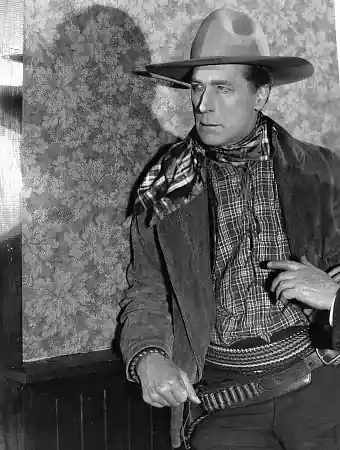
Every Western needs a land grab, but Three Word Brand weaponizes hydrology instead of gold. The neighboring rancher, Herschel Mayall in a performance slimy enough to irrigate acres, dams the creek that feeds Barton’s spread. Water, here, is more than a resource; it is the liquidity of democracy itself. When the governor arrives to adjudicate, he carries a silver fountain pen shaped like a dowsing rod—an emblem of bureaucratic faith in signatures over rain dances. Mayall counters with dynamite, the industrial era’s blunt reply to both pen and prayer. The scheme is almost Shakespearean: control the water, control the vote, control the future.
And then, the moment that still makes cinephiles gasp: Brand spies Paul through carriage window-glass, sees his own visage crowned by silk hat, and time hiccups. No iris-in, no double-exposure—just two profiles grazing each other like celestial bodies. Hart’s eyes register not astonishment but recognition, as if he has dreamt this doppelgänger nightly. The ensuing kidnap is framed like a lover’s tryst: a moonlit hollow, a gag, the swapping of coats. Identity is stripped as casually as swapping horses. One is shackled inside a line-shack whose walls ooze candle-goo; the other strides into a ballroom where chandeliers drip like frozen waterfalls. Each man becomes the other’s unlived life.
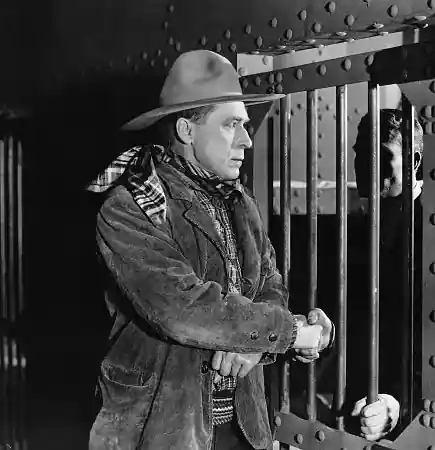
Once Brand occupies the governor’s body—its frock coat, its rhetoric—Three Word Brand turns into a moral thought-experiment. The outlaw, long suspicious of statutes, now signs them. He outlaws water hoarding, nullifies fraudulent deeds, and does it all with the same squint he once aimed at poker cheats. The film’s irony is delicious: only the presumed savage can cleanse the rot of civility. Meanwhile Paul, bound and gagged in denim, tastes the helplessness of every constituent he ever patronized. Their parallel imprisonment is shot with cross-cutting that anticipates Hitchcock: each brother’s predicament illuminates the other’s blind spot.
As Alice Barton, Jane Novak refuses the thankless task of mere ingenue. She plays a rancher whose ledger books balance better than the local bank’s, and her flirtation with Brand is conducted through barbed compliments about overgrazing. Watch her eyes when Brand-as-governor signs her water rights back into legality; she notices the penmanship is too rugged, the signature too hurried. Novak conveys suspicion with nothing more than a tilt of her head, proving that silent film acting is sculpture in motion. Her final embrace of Brand is ambivalent, half gratitude, half indictment—a moment that complicates the otherwise mandatory heterosexual closure.
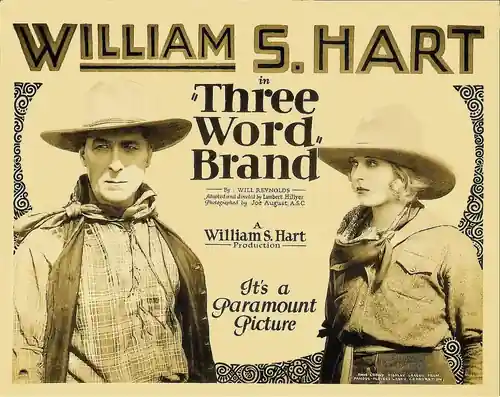
Will Reynolds’s screenplay treats the Utah mesas like punctuation marks: buttes are exclamation points, dry riverbeds em-dashes indicating narrative interruption. Cinematographer Joseph August (uncredited but rightly claimed by historians) captures dust devils at high noon so that motes swirl like parentheses around Hart’s silhouette. The film’s visual lexicon anticipates the later Fordian grandeur of The Heart of Maryland, yet remains intimate, almost whispered. Each frame feels hewn rather than shot, as if the landscape itself were a reluctant witness.
Fritz the Horse deserves special mention. In a medium where animals are usually mere transport, Fritz functions as Brand’s id—ears flattening when he smells deceit, hooves drumming warnings in Morse. The scene where he refuses to cross the dammed creek is played for laughs yet freighted with meaning: nature itself vetoes man’s fiscal casuistry. Compare this to the mechanized locomotives that roar through The Line Runners; here, the moral compass is still quadruped.
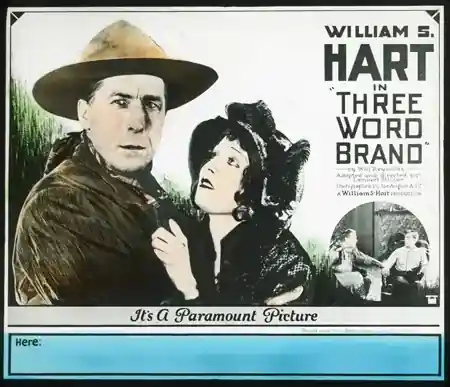
The finale refuses the catharsic shoot-out we crave. Instead, Brand exposes Mayall via a ledger—ink triumphs over lead. Yet violence erupts sideways: a dynamite fuse snakes toward the dam, and Brand must choose between preserving the evidence or saving the valley. He shoots the fuse, not the man, splitting the difference between law and impulse. When the brothers finally stand face-to-face, Hart stages the recognition as a two-shot silhouetted against blown-out sky; no tearful embrace, only a nod that feels biblical. They have swapped destinies and returned, scarred, to the fork where their father fell.
Fast-forward to Lone Hand Wilson or Whispering Smith and you’ll detect Hart’s chromosomes: the outlaw who understands bureaucracy, the civil servant who carries a grudge against paper. Even Kurosawa’s Kagemusha owes a debt to this twin-switch, though the mountain pass is now Japanese. What endures is the suspicion that identity is not lineage but labor—that a man is only the sum of the choices he refuses to outsource.
The 35 mm restoration by EYE Filmmuseum in 2019 scrubbed away decades of nitrate freckles, revealing details like the watermark on Paul’s official stationery (an eagle clutching a quill—subtle gag). Streaming rights are fragmented; your best bet is archival Blu-ray from Kino Lorber or a repertory screening. Avoid the murky YouTube rip that crops the dual-profile shot, reducing Hart’s epiphany to a blurry smudge.
Nearly a century on, Three Word Brand still asks the only question worth its gunpowder: if you met your better self on a dusty road, would you free him—or take his place? Hart already knows the answer; he just dares you to pull the trigger.
IMDb 7
1930
Community
Log in to comment.