DbcultAccessing Vault...
Cult Review
Senior Film Conservator
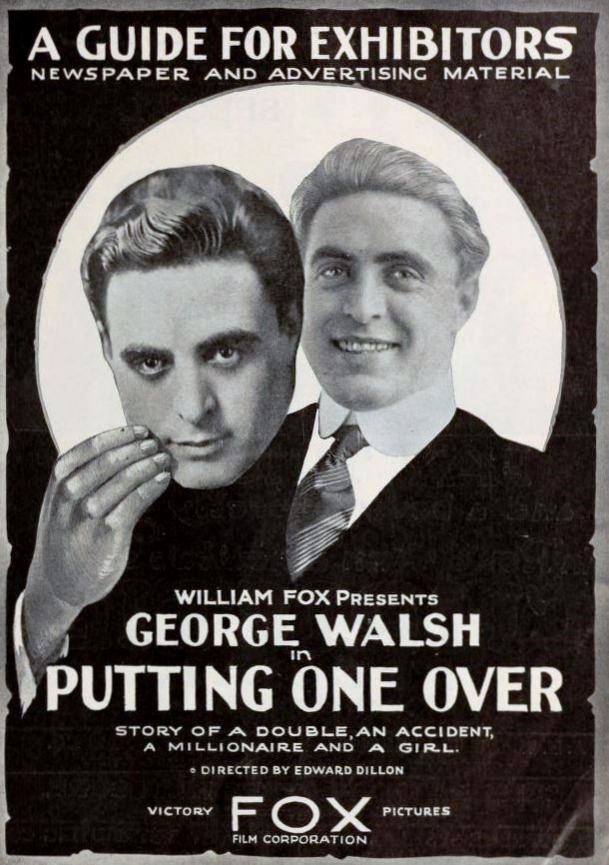
The flickering luminescence of silent cinema often casts long shadows where forgotten narratives reside, waiting to be rediscovered. Among these spectral tales, Putting One Over (1921) emerges not merely as a relic, but as a remarkably taut and surprisingly sophisticated thriller that leverages its core conceit – the unsettling power of the doppelganger – with potent effectiveness. Forget the perceived limitations of the era; this film delivers a cascade of tension, moral quandary, and physical jeopardy that still resonates. Its world is one where identity is terrifyingly fluid, trust is a luxury few can afford, and the gleaming luxury of inherited wealth is perpetually stalked by greed’s cold embrace.
The film wastes no time plunging us into its world of contrasts. The Pullman train, a symbol of modern luxury and societal stratification gliding through the night, becomes an unlikely crucible for destiny. Within its plush confines, two men, strangers bound only by an eerie physical similarity, travel towards vastly different fates. Horace Barney (Frank Beamish) is less a character and more a vessel of impending wealth, a fragile soul shepherded towards a mental sanitarium by the ostensibly concerned but palpably sinister Maurice Claypool (Robert Lee Keeling, radiating reptilian calculation). Claypool’s companions, the smoothly malevolent Dr. Wallace (Matthew Betz, whose professional demeanour thinly veils a chilling amorality) and the brutish enforcer Thomas Farrel (Ralph J. Locke, pure physical menace), complete a cabal dripping with ill intent. Their presence alone casts a pall over the journey.
Sharing the carriage, yet inhabiting a world apart, is Jack Trevor (also Frank Beamish). He is the quintessential hustler, an automobile salesman whose patter and charm are his stock-in-trade, embodying the scrappy energy of the self-made man navigating an uncertain economy. The visual doubling is immediate and jarring – separated perhaps only by a shade of hair dye, but united by Beamish's expressive features. The narrative economy here is superb: we understand the potential for confusion instantly, a loaded gun placed on the mantlepiece in the opening act. The inevitable happens with shocking suddenness – not a mere derailment, but a catastrophic crash, a cacophony of splintering wood and fractured steel rendered with impressive (for the time) practical effects. Order dissolves into chaos; lives are extinguished. Amidst the smoke and groans of the wounded, Claypool’s predatory gaze locks onto opportunity. Barney is dead. Trevor lies unconscious, battered but breathing, a perfect, unwitting substitute. The conspiracy snaps into action with cold efficiency; identities are swapped, bodies disposed of, and Trevor is whisked away to the gilded prison of the Barney estate before he can grasp the nightmare he’s inherited.
Trevor’s awakening is a masterclass in disorientation and mounting dread. The opulence surrounding him – the high ceilings, the heavy drapery, the imperious portraits gazing down – feels alien, suffocating. Servants address him as “Mr. Barney” with unsettling deference. Attempts to assert his true identity are met with patronising smiles or concerned whispers, expertly stage-managed by Claypool and Wallace, who paint his confusion as tragic symptoms of his ‘condition’. The mise-en-scène becomes crucial here; director Harry A. Pollard (uncredited in some prints but instrumental in shaping the film’s suspenseful tone) uses the imposing architecture of the mansion to visually entrap Trevor. Long hallways recede into darkness, doorways frame him like a specimen, and the ubiquitous shadows seem to harbor unseen watchers. It’s a world designed to gaslight, to erode sanity, brilliantly contrasting the supposed sanctuary of wealth with its potential for psychological torture. The film taps into a primal fear: the loss of self, the terror of being trapped within a life not your own, surrounded by enemies masquerading as caretakers.
Enter Helen Townsend (Elizabeth Garrison), the luminous counterpoint to the estate’s pervasive gloom. As Barney’s cousin and the rightful heir should his ‘incapacity’ be proven permanent, Helen is initially a figure of gentle concern, her compassion directed towards the man she believes is her unstable cousin. Garrison brings a vital warmth and intelligence to the role; she’s not merely a decorative damsel. Her interactions with ‘Horace’ are tinged with a faint puzzlement, a sense that something fundamental doesn’t align beneath the familiar face. It’s this burgeoning connection, this spark of genuine feeling amidst the artifice, that becomes Trevor’s lifeline and catalyst. His burgeoning affection for Helen transcends opportunism; it fuels his determination to protect her from the wolves circling her inheritance. The moment Trevor pieces together the conspiracy – perhaps overhearing a damning snippet of conversation, witnessing a furtive exchange between Claypool and Wallace, or finally recognizing the sheer scale of the fortune at stake and the ruthlessness required to steal it – is electric. The salesman’s cunning shifts focus; survival morphs into a mission. He must play the part of the fragile heir while secretly marshalling his wits and courage to expose the truth and save Helen.
Claypool, however, is no passive antagonist. His ambitions are grander than mere theft; he desires control, personified by his determination to marry Helen, securing the fortune and the woman under his complete dominion. Keeling’s performance subtly shifts from oily charm to naked avarice and chilling menace as Trevor’s resistance grows. Recognizing Trevor as an intelligent and dangerous obstacle, Claypool pivots to his most potent weapon: the threat of enforced madness. Dr. Wallace transforms from accomplice to active agent of terror. The spectre of the sanitarium, glimpsed earlier, now looms large. Wallace’s ‘medical assessments’ become interrogations designed to elicit ‘proof’ of insanity, his calm pronouncements carrying the weight of terrifying authority. The societal fear of wrongful commitment, the power of medical professionals to erase inconvenient individuals, resonates deeply, adding a layer of psychological horror to the physical stakes. The film expertly escalates the tension through a series of close calls and near exposures. Trevor might be cornered by Farrel in the stables, leading to a brutal, dust-choked brawl lit only by slivers of moonlight through high windows. He might be forced into a frantic chase through the estate’s labyrinthine gardens, the manicured hedges becoming oppressive walls, pursued by Farrel’s relentless thuggery. Misunderstandings abound: Helen might witness a clandestine meeting between Trevor and a potential ally (perhaps a sympathetic servant played by Henry Hallam) and misinterpret it, her trust momentarily shaken. Claypool sows seeds of doubt, whispering tales of Barney’s supposed violent tendencies, aiming to isolate Trevor further and justify the drastic ‘treatment’ he plans.
The cinematography, though constrained by 1921 technology, becomes remarkably expressive in these sequences. Rapid cuts amplify the chaos of a chase. Dutch angles convey Trevor’s disorientation during Wallace’s ‘examinations’. Deep focus shots allow us to see Trevor spotting a threat in the background while maintaining a facade of calm in the foreground. The use of light and shadow, chiaroscuro effects reminiscent of early German Expressionism, is particularly effective in the mansion’s interiors, turning familiar spaces into landscapes of paranoia. The suspense derives not just from physical danger, but from the constant, exhausting performance Trevor must maintain, the razor's edge between exposing the fraud and being silenced forever as a madman. It’s a testament to Beamish’s performance that we feel the weight of this double burden – the fear, the adrenaline, the sheer mental exertion – etched onto his face.
The climax is a symphony of converging threats and desperate courage. Cornered, facing imminent commitment orchestrated by Wallace and enforced by Farrel, Trevor must abandon subterfuge. What follows is a sequence of explosive physical confrontation – a final, cathartic brawl with Farrel that spills through multiple rooms, shattering the veneer of aristocratic calm – combined with a thrilling race against time. Trevor’s goal shifts from mere escape to securing irrefutable proof and forcing Claypool’s hand, often involving securing documents or luring the conspirators into a trap where their own words condemn them. The resolution hinges on Trevor engineering a confrontation, often involving Helen as a witness, where Claypool’s arrogance or panic overrides his caution. Keeling excels here, his veneer cracking, the genteel villain replaced by a sputtering, rage-filled animal cornered by the resourceful salesman he underestimated. The confession, when it finally erupts, is less a legal proceeding and more a dam bursting, unleashing a torrent of venomous truth meant to destroy Trevor but ultimately sealing Claypool’s own fate. Wallace and Farrel’s complicity unravels instantly in the face of their leader’s collapse.
The denouement is swift, satisfying the era’s demand for poetic justice. Claypool and his cohorts face the consequences – arrest, disgrace, the abrupt termination of their predatory designs. Order is restored, but crucially, it’s a new order. The fraudulent heir is gone, but in his place stands Jack Trevor, no longer the imposter, but the hero who risked everything to expose the truth and protect Helen and the estate. His reward is twofold: the legitimate claim to Helen’s love, forged in the fire of shared peril and mutual respect, and, implicitly, a secure future within the fortune he saved. The salesman becomes the saviour, the outsider becomes the rightful insider through virtue and action, not birthright or deception. The final embrace between Trevor and Helen isn’t just romantic; it’s a triumph of integrity over avarice, courage over conspiracy, a reaffirmation of selfhood reclaimed and love earned amidst the ruins of a meticulously constructed lie.
Putting One Over sits comfortably at the crossroads of several silent-era genres. It’s undeniably a thriller, generating sustained suspense through its core deception and the constant threat of exposure or violence. The doppelgänger element injects a touch of the uncanny, bordering on psychological horror, especially in the gaslighting sequences within the mansion. The inheritance plot, the nefarious guardian, and the vulnerable heiress firmly root it in the tradition of melodrama, though it avoids excessive sentimentality, focusing instead on tension and action. Elements of the detective story surface as Trevor gathers clues and works to expose the plot. Yet, it possesses a harder edge than many of its contemporaries. The train crash is visceral, the fights – particularly Trevor's bouts with Farrel – are surprisingly brutal and well-staged, emphasizing impact and desperation rather than slapstick. This blend gives the film a distinctive flavor – a melodramatic framework infused with thriller pacing and a noirish sensibility before the term existed.
Visually, the film leverages its constraints effectively. While lacking the elaborate sets of a Joan the Woman or the epic scope of a DeMille production, it compensates with atmospheric composition and clever staging. The mansion interiors are meticulously dressed to convey both opulence and oppression. Key sequences, like the tense confinement in Wallace’s makeshift ‘surgery’ room or the frantic chase through moonlit topiary, are composed with a keen eye for spatial relationships and dramatic tension. The use of close-ups on Beamish’s face is paramount, charting Trevor’s journey from bewildered amnesiac to determined fighter, his eyes reflecting fear, calculation, and ultimately, fierce resolve. Intertitles are used economically, often letting the visuals and the actors' expressions carry the narrative weight, particularly during action sequences or moments of high emotion. The cinematography, likely by Charles J. Stumar (though records from this era can be spotty), demonstrates a solid grasp of mood lighting, using high-contrast shadows to heighten suspense and frame characters in morally ambiguous light – Claypool often appears half-shrouded, while Helen is frequently bathed in softer, more direct light.
The film's success hinges significantly on Frank Beamish’s central performance. Playing dual roles requires distinct characterisation, and while Barney has limited screen time, Beamish differentiates the frail, perhaps neurasthenic heir from the vital, sharp-witted Trevor. His true triumph is in conveying Trevor’s complex internal state throughout the deception. We see the constant calculation beneath the feigned confusion, the flashes of fear quickly masked, the simmering anger at his predicament, and the burgeoning protectiveness towards Helen. His physicality shifts too – Barney seems slightly stooped, his movements hesitant; Trevor, even when playing the invalid, retains a core of alertness and suppressed energy that explodes in the action sequences. It’s a remarkably nuanced performance for the era, avoiding broad pantomime in favor of subtlety and relatable human reaction.
Robert Lee Keeling provides the perfect counterweight as Maurice Claypool. He avoids cartoonish villainy, instead portraying a man whose greed and ambition are cloaked in a veneer of respectability and faux concern. His menace is largely verbal and psychological, conveyed through insinuating smiles, cold stares, and calculated manipulation. The moment his mask fully slips, revealing the snarling predator beneath, is all the more effective for the restraint shown earlier. Elizabeth Garrison brings essential warmth and intelligence to Helen Townsend. She avoids the passivity common to many melodrama heroines; her Helen is observant, courageous in her own right, and ultimately instrumental in believing Trevor. The chemistry between Garrison and Beamish feels genuine, grounding the romantic subplot and making Trevor’s fight deeply personal. The supporting villains are effectively sketched: Matthew Betz’s Dr. Wallace is chillingly clinical, his profession weaponized, while Ralph J. Locke’s Thomas Farrel is pure, uncomplicated physical threat, a blunt instrument wielded by Claypool. Henry Hallam and Edith Stockton provide solid support as likely sympathetic household staff, their wary glances hinting at their suspicions.
The script by Raymond L. Schrock and Mary Imlay Taylor, adapting a story by Taylor, is commendably tight, especially for its era. The premise is established efficiently, the complications escalate logically, and the resolution, while satisfying, avoids excessive sentimentality. The plot mechanics involving the inheritance fraud and the substitution hold up surprisingly well, relying on the chaos of the crash and the villains' opportunism rather than glaring contrivance. The film cleverly uses the inherent limitations of the time – communication difficulties, slower travel, the authority vested in figures like doctors and guardians – to make the conspiracy plausible and Trevor’s predicament more desperate.
Beneath the thriller surface, Putting One Over engages with several resonant themes. Identity is central: Trevor must literally assume another man’s life, grappling with the erosion of his own self while simultaneously using the imposture as a shield and a weapon. The film explores the terrifying ease with which identity can be stolen or invalidated, particularly by those in positions of power (guardian, doctor). It touches upon class tensions; Trevor, the working-class salesman, initially infiltrates the upper echelons through accident, but ultimately earns his place through courage and integrity, contrasting sharply with Claypool’s born-to-rule entitlement corrupted by greed. The corrupting influence of wealth is a constant undercurrent, the Barney fortune acting as a magnet for villainy and a source of profound danger for both Helen and Trevor. The abuse of medical authority for personal gain (Wallace’s role) feels particularly prescient. Ultimately, the film champions resourcefulness, courage, and moral fortitude. Trevor triumphs not through birthright, but through his quick mind, physical resilience, and unwavering commitment to the truth and protecting the innocent.
While a unique concoction, Putting One Over resonates with other silent works. The train setting and the inherent drama of rail travel recall films like Wolves of the Rail, though the latter leans more into adventure and labor struggles. The doppelgänger theme, while never as fantastical as in later horror, shares DNA with mistaken identity comedies and thrillers like The Camouflaged Baby, though Putting One Over treats it with far greater stakes and menace. Its blend of inheritance drama and action bears some resemblance to Douglas Fairbanks adventures, though lacking their swashbuckling flamboyance in favor of grittier confrontations. The psychological pressure Trevor endures, the threat of the asylum, foreshadows the darker explorations of sanity and confinement that would come later, even hinting at the paranoid atmospherics of early noir precursors. Compared to a straightforward romantic drama like A Welsh Singer or a society comedy like The Wooing of Riley, Putting One Over feels decidedly more muscular and suspense-driven. Its closest kin might be twisty thrillers like The Tangle or The Serpent, sharing their focus on deception and hidden agendas within seemingly respectable settings.
At its core, Putting One Over is a classic underdog story transmuted through a high-stakes thriller lens. Jack Trevor is the archetypal ordinary man thrust into extraordinary circumstances. His journey mirrors the hero's quest: a call to adventure (the crash and substitution), crossing the threshold (entering the Barney mansion), facing trials and temptations (maintaining the deception, resisting Claypool), confronting the abyss (the threat of commitment, physical confrontations), seizing the reward (forcing the confession, securing the estate), and returning transformed (claiming Helen and a new life). His weapons are not swords or guns, but wit, courage, resilience, and an innate moral compass that allows him to navigate the ethical murk of his situation without becoming corrupted himself. He is the quintessential American hero of the era – self-reliant, quick-thinking, physically capable, and ultimately rewarded for his integrity.
The film also subtly critiques the fragility of wealth and status. The Barney estate, for all its grandeur, is revealed as a place of profound vulnerability, easily infiltrated by predators like Claypool. Security rests on flimsy assumptions and easily exploited legalities. Helen, the rightful inheritor, is powerless against the machinations of her appointed guardian until Trevor intervenes. The film suggests that true security comes not from money alone, but from vigilance, strength of character, and the willingness to fight for what is right – values embodied by the interloper salesman, not the entrenched elite. This theme of earned versus inherited worth gives the film a democratic, almost subversive undercurrent amidst its melodramatic trappings.
Putting One Over stands as a compelling argument against dismissing early cinema as primitive. While its production values belong firmly to 1921, its narrative sophistication, pacing, and thematic resonance feel remarkably modern. It delivers genuine suspense, exciting action, a believable romance, and a satisfying victory for the underdog, all wrapped in a premise ripe with dramatic potential. Frank Beamish’s central performance is a revelation, showcasing a range and subtlety deserving of wider recognition. Elizabeth Garrison provides strong support, and Robert Lee Keeling crafts a villain who is chillingly plausible. The direction is assured, maximizing suspense within the constraints of the setting, and the cinematography effectively utilizes light, shadow, and composition to enhance mood and tension.
Rediscovering films like Putting One Over is crucial. They remind us that silent cinema was not a monolith of slapstick and sentimentality, but a diverse landscape where genres like the thriller were being actively explored and refined with considerable skill. It offers a pulse-pounding story that transcends its era, a masterclass in suspenseful plotting, and a glimpse into the anxieties and aspirations of the early 20th century – particularly concerning identity, class, and the corrupting allure of wealth. More than just a historical curio, Putting One Over is a genuinely thrilling piece of entertainment, a testament to the enduring power of a well-told tale of deception, danger, and the triumph of the resourceful human spirit against seemingly insurmountable odds. It deserves its place alongside better-known silent thrillers and warrants attention from anyone interested in the roots of cinematic suspense.

IMDb 7
1933
Community
Log in to comment.