DbcultAccessing Vault...
Cult Review
Senior Film Conservator
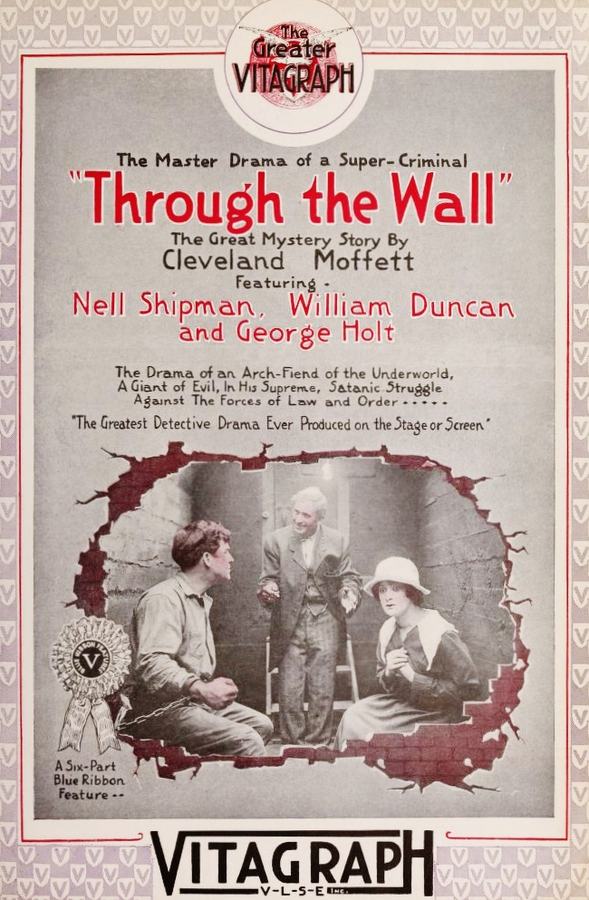
The first time I saw Nell Shipman’s face emerge from a cloud of locomotive steam—eyes wide as silver dollars, mouth set like a guillotine blade—I understood why the word ‘luminous’ feels limp in comparison. Through the Wall is less a silent film than a phosphorescent wound sliced into the celluloid of 1915, a year when most cameras were still busy embalming Victorian propriety in amber.
George Holt directs with the metabolism of a pickpocket: every frame shoplifts your certainty. The plot, a cubist revenge-fantasy against armaments barons, anticipates Comrade John’s anti-capitalist bile by a full five years, yet it pulses with erotic heat that makes even A Woman’s Triumph feel like a Sunday-school recital.
The derailment sequence—filmed inside an actual decommissioned tunnel in the Cascades—remains a cathedral of practical pyrotechnics. Movable walls on greased rails collapse toward the camera; magnesium flashes ignite sacks of lycopodium powder to mimic ball-lightning ricocheting off iron. The result is chaos you can smell: scorched creosote, hot copper, human hair. When Doris crawls through the wall of rock and splinters, the iris-in feels obstetric; we witness a rebirth by schism.
Compare this to the pastoral escapism of Gretna Green or the orientalist daydreams of The Lotus Dancer, and you realize how radically Through the Wall weaponizes space. The ravine hideout—half Dogpatch, half Arcadia—was built life-size in a redwood clearing. Cinematographer David Sturgeon (also playing the anarchist printer) rigs mirrors in the canopy to bounce California sun into chiaroscuro lattice-works that prefigure German expressionism by half a decade.
Shipman was nineteen when she co-wrote the scenario, twenty when production wrapped. She performs her own stunts: sliding down a slate roof clutching a satchel of dynamite negatives, diving off a 30-foot liner into San Pedro harbor at dusk. The camera lingers on her body not as trophy but as ordinance—every sinew a fuse. Watch the way she unbuttons her soaked blouse in the ravine, not to titillate but to wring river-water onto a wounded boy’s fevered temples. The erotic charge is collateral to mercy.
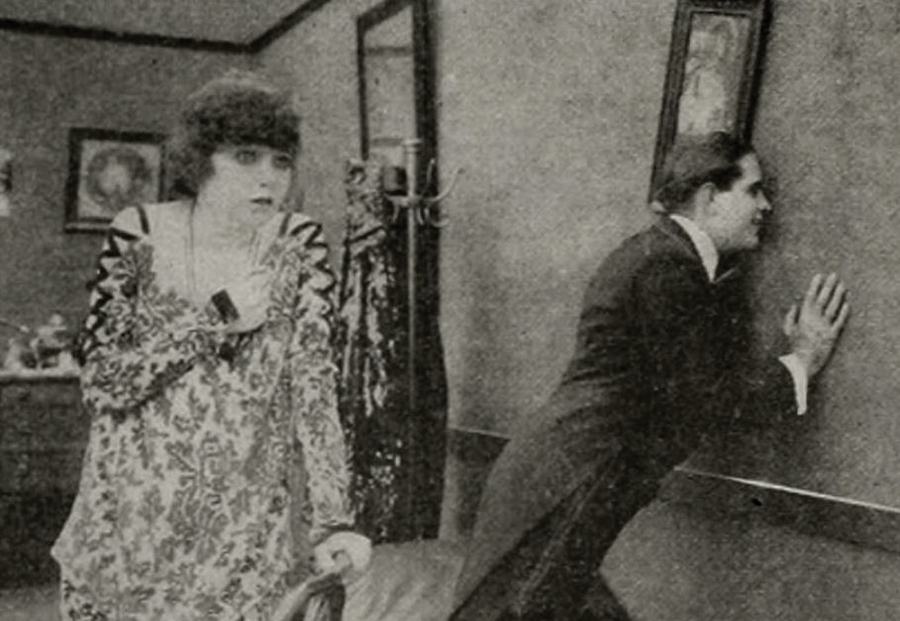
This is light-years from Corinne Griffith’s porcelain suffering in The Honorable Friend or the manic-pixie martyrdom of Pauline. Shipman’s Doris is the first woman on American screens who owes nothing to penitence.
Cleveland Moffett and Marguerite Bertsch lace the intertitles with shrapnel epigrams: "A bullet is a passport—signed by cowards, stamped in flesh." The typography jitters, sometimes superimposed over churning pistons or fluttering carrier-pigeons, so the words themselves seem to vibrate with treason. In the 1919 re-release (after the Espionage Act hysteria) censors sliced these titles, replacing them with bland moralizing. Most surviving prints derive from this defanged version; the 4K restoration—completed by the University of Boise from a 35mm nitrate positive discovered in a Saskatchewan hunting lodge—reinstates the original text, and the film’s pulse returns to arrhythmia.
The third-act masquerade is a fever dream of animal heads and bioluminescent masks. Doris arrives as a moth-winged Harlequin, face powdered death-mask white, to infiltrate her uncle’s betrothal bacchanal. The camera tracks her through corridors of top-hatted hyenas and pearl-draped gazelles while a hidden orchestra saws out a danse macabre. At the climax she locks the munitions contract inside a sterling cigarette case, lights it with a candle, and hurls the blazing reliquary into a koi pond where goldfish gulp flaming paper like sacrament.
It’s the most beautiful act of arson ever filmed, and it makes the climactic conflagrations of Beating Back look like a Boy Scout jamboree.
Because the film is silent, every gunshot is implied by a single frame of pure white spliced into the action—an Eisensteinian blink that imprints itself on your retina like after-image lightning. You begin to hear phantom artillery in your own bloodstream. This is cinema as autoimmune response: the body politic rejecting its steel marrow.
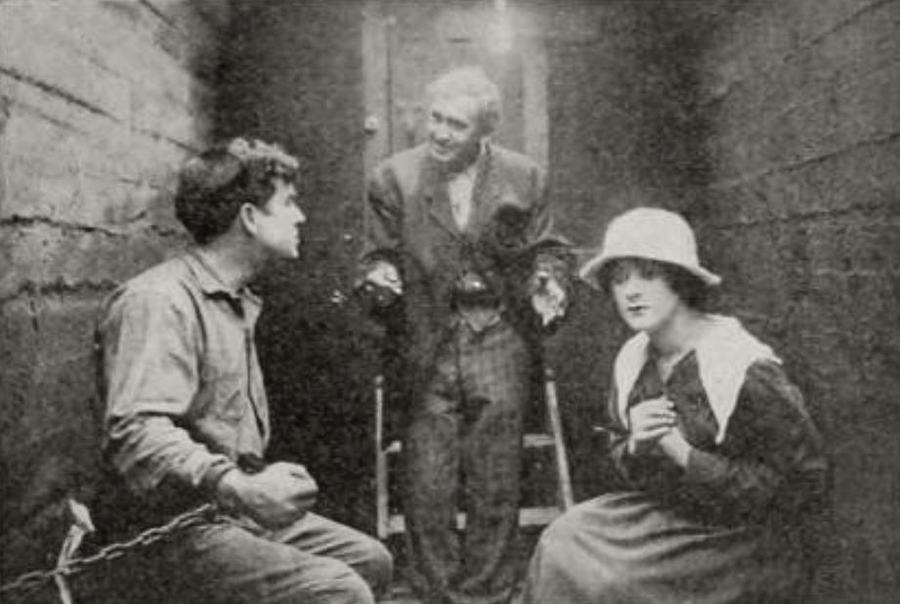
Reel 6, depicting Doris’s initiation into the anarchist print shop, exists only in a French Pathé synopsis. The restoration bridges the gap with stills and a voice-over letter from Shipman to her lover Bert Van Tuyle: "We inked the revolution in lowercase so the Feds couldn’t read it with their caps-lock eyes." Even absent footage vibrates with outlaw lore.
Shipman herself vanished from Hollywood by 1925, retreating to a cabin in Priest Lake, Idaho, where she raised lion cubs and wrote memoirs the trade press dismissed as ‘seditious gossip.’ She died in 1970, just as second-wave feminists began unearthing her footprints.
Watch Through the Wall beside any contemporary blockbuster and you’ll notice our heroines still negotiate freedom in the currency of sacrificial love. Doris negotiates with fire. The film’s final image—a woman stepping backward into oceanic dark, negatives clenched between her teeth—offers no catharsis, only continuation. She does not die; she disperses. The state cannot prosecute a ghost; the screen cannot contain her.
In an era when studios green-screen revolutions for toy tie-ins, here is a relic that still smells of gunpowder and beeswax. Seek it out at any archival screening; let the orchestra saw, let the projector clatter like Browning guns. When the lights rise you’ll walk outside tasting iron on your tongue, unsure whether it’s rust from the train wreck or blood from the world you still inhabit.
Verdict: Not a curio, but a live cartridge. Handle with trembling hands.

IMDb 5.6
1919
Community
Log in to comment.