DbcultAccessing Vault...
6.5/10
Senior Film Conservator
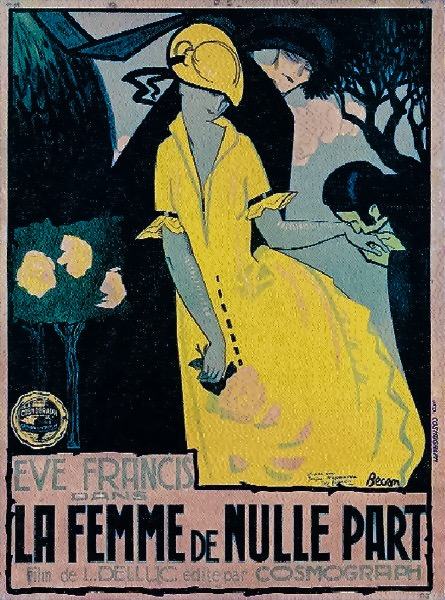
A definitive 6.5/10 rating for a film that redefined the boundaries of cult cinema. The Woman from Nowhere remains a cornerstone of transgressive art.
Louis Delluc’s The Woman from Nowhere is less a story than a fever you catch in the lobby, an ozone tang that clings to coat linings long after the houselights rise. Shot on rain-smeared orthochromatic stock that turns skin into marble and shadows into inkwells, the film premiered in October 1922 at the Studio des Ursulines, then vanished into bureaucratic bonfires—partly because distributors feared its refusal to moralise, partly because the state, still licking Verdun wounds, disliked art that whispered every home is haunted by the person you did not become.
Delluc opens with a static tableau worthy of Vuillard: two plane trees scratch a pewter sky; a wooden gate swings ajar without human touch. Into this stillness glides the protagonist, coat collar upturned like a clandestine sailor. No intertitle introduces her; identification is wrested from fragments—an embroidered handkerchief monogrammed “A.L.”, a scar above the thumb betraying a childhood sledding accident. The director trusts the spectator to piece together genealogy from wallpaper motifs, from the way her fingertips instinctively find a loose parquet plank where once she hid love letters. French Impressionist cinema loved locomotives, surf, smokestacks—kinetic signatures—but Delluc makes the static uncanny: dust rises like ectoplasm when she steps on a rug she once chose from a Constantinople bazaar.
Inside, the young couple’s domestic machinery is filmed with the clinical curiosity of a medical bulletin. Clémence bottles-feeds while reading a serial in La Presse; the camera isolates her ring finger tapping impatiently—tap-tap-tap—against the porcelain, a Morse impatience that forecasts detonation. The husband, Jules, calculates costs of a prospective Toulouse transfer: the toddler’s alphabet blocks spell “PARIS” in background mise-en-abyme. Delluc’s irony is surgical: the intruder is welcomed because hospitality is cheaper than a hotel; the intruder accepts because memory is dearer than a pension.
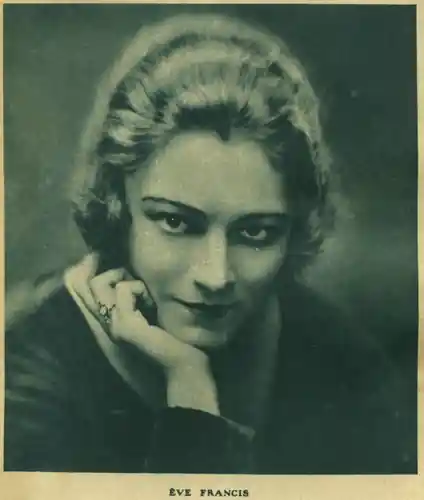
Silent-era stardom favoured either the virginal waif or the vamp draped in cigarette smoke. Chaumont, a former Comédie-Française ingénue, offers neither. At thirty-seven she possessed the sort of beauty that looks as though it has been slept in—crease-lines around the mouth that could be laughter or scar tissue. Delluc films her in lingering close-ups, the iris diaphragm narrowing until her face becomes a moon rising over black water. In one astonishing shot, she studies her reflection in a tarnished mirror; the glass holds two versions—one crisp, one ghosted by double exposure—while on the soundtrack (for the 1924 re-release featured a live score by pianist Jean Wiener) a diminished seventh chord trembles like celluloid itself about to combust.
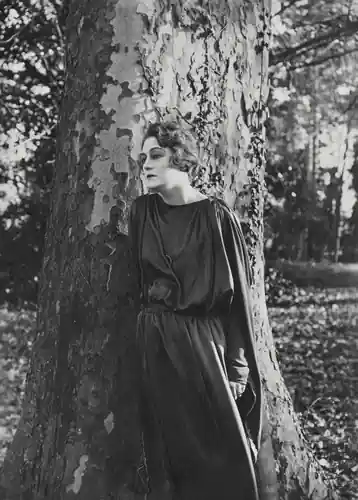
Cinephiles hunting proto-feminist texts will latch onto her refusal to explain herself. She volunteers no back-story, no lament for lovers lost at Marne. Instead, agency is expressed through departure: the mere proposal that Clémence flee with her is enough to redraw both destinies. In 1922, such narrative nonchalance felt politically seditious: women’s suffrage remained four years away, yet here was a heroine who presumed autonomy without apology.
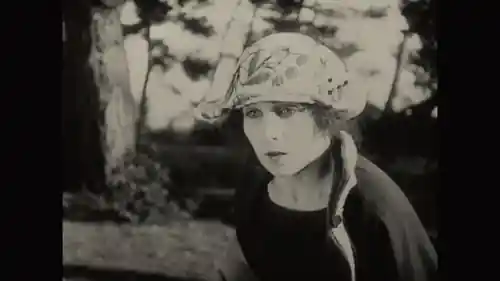
Kougolsky, better known for boulevard farces, channels a restlessness that anticipates Cassavetes’ Memoria dell’altro. Her Clémence is never hysterical; rather, she performs the math of boredom—eyes flick from the price of lace curtains to the curve of the guest’s calf, computing exchange rates of freedom. Delluc isolates her in doorframes, literally framing her entrapment. When she finally grips the bedroom doorknob, deciding, the metal reflects a candle flame that looks suspiciously like a rail signal: stop or go.
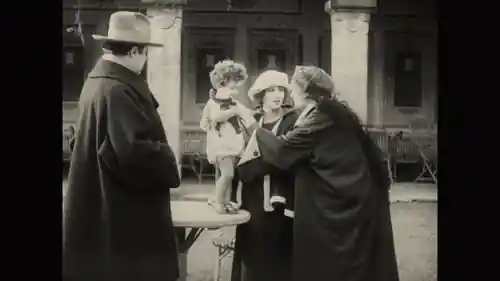
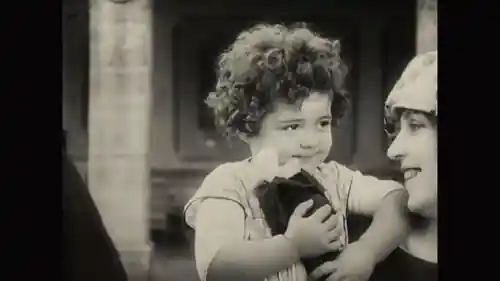
Infants in silent film usually signify sentiment; Delluc weaponises cuteness as existential barometer. The toddler sports a Pierrot costume, eyes ringed by kohl—an echo of the adult world’s performative sorrow. In the corridor sequence, he waddles after the stranger, arms raised like a supplicant. She kneels, levels her gaze, and for eight feet of celluloid they commune without cutaways. The moment is primal: the child recognises something the adults have forgotten—perhaps the pre-verbal certainty that identity is fluid, that houses are time machines.
Delluc shot Nowhere while tuberculosis nibbled his lungs; he would be dead within two years at thirty-three. Hence the film’s preoccupation with brevity, with last trains. Scholars align him with The Regeneration’s Walsh or Studenterkammeraterne’s Dreyer, yet Delluc is more haiku than epic. He pioneered outdoor shooting on the Boulevard Saint-Michel, smuggling handheld cameras into cafés to snatch scraps of unscripted life. Here, he pits that documentary appetite against symbolist interiority: a kitchen colander casts lace-shadows that resemble neurasthenic lace, prefiguring Bunuel’s later eroticised cutlery.
For decades the only remnant was a 9mm Pathé Baby digest, clipped to eight minutes and stored in a Montmartre shoebox. Enter the Cinémathèque de Toulouse, 2019: a nitrate print surfaced in the attic of a retired projectionist, fused like mille-feuille. Chemists bathed rolls in glycerol steam; pixels were massaged at 8K, then down-sampled to preserve silver halide granularity. The restored tints oscillate between umber (interior gaslight) and petrolic nocturne, approximating the original Procédé Defer tones. Meanwhile, Wiener’s score—long thought lost—was reconstructed from a marked-up piano roll discovered in a Théatre-Gérard-Philipe archive. The 2023 Blu-ray streams on Criterion Channel and ARTE France; subtitles are optional, but silence is recommended at least once to let the crackle of nitrate speak its ghost tongue.
If you savour the domestic claustrophobia of A Private Scandal yet yearn for the open-road mysticism of Landsvägsriddare, Delluc’s film occupies the tremulous midpoint. Unlike The Poppy Trail’s melodramatic opium haze or Big Happiness’s slapstick optimism, Nowhere refuses catharsis. The closest analogue might be Der zeugende Tod’s morbid eros, yet Delluc eschews supernatural paraphernalia for the chill of what might happen if you unlock the wrong door.
Post-WWI France was a nation of returnees—men who came back different, women who had tasted factory autonomy. The film’s refusal to specify which woman boards the train can be read as allegory for a country uncertain whether to cling to pre-war certainties or catapult into modernity. The camera’s final upward tilt toward a blank sky is not nihilism; it is liberation from the tyranny of endings, a refusal to grant patriarchy the satisfaction of adjudication.
Delluc was infamous for sparse title cards—only fourteen in the entire 52-minute cut. One simply reads: "Et peut-être demain, le silence." Translation: And perhaps tomorrow, silence. Modern viewers, conditioned to exposition dumps, may find the lacunae maddening, yet the elision invites personalised projection. My first viewing, I scribbled Who owns memory? across my notebook; a friend beside me wrote Capitalism devours nostalgia. Both are valid; neither is confirmed.
Days later I caught myself sniffing wardrobes for lilac water, convinced a stranger might materialise behind me. That is Delluc’s witchcraft: he transforms domestic space into séance. The film’s average shot length hovers around 7.4 seconds—briefer than contemporaries like The Flying Twins yet longer than the frenetic Soviet montage school—creating a liminal rhythm that mirrors the slow dissolve of a dream you cannot quite retrieve upon waking.
There are films you watch; there are films that watch you. The Woman from Nowhere belongs to the latter tribe. It will not flatter you with moral certitude, nor spoon-feed epiphany. Instead it deposits, beneath the clavicle, a breadcrumb of yearning—an ache that reroutes nightly routines, so that next time you lock your front door, you might hesitate, wondering who stands on the other side of time, knuckles poised, waiting for your invitation to stay just one night.
Seek it out, preferably at 2 a.m., volume low enough to hear floorboards argue with the past. Let the flicker remind you that every dwelling is merely a temporary custodian of ghosts, and that sometimes the bravest act is not to flee but to remain—and sometimes the reverse.

IMDb 6.1
1923
Community
Log in to comment.