DbcultAccessing Vault...
Cult Review
Senior Film Conservator
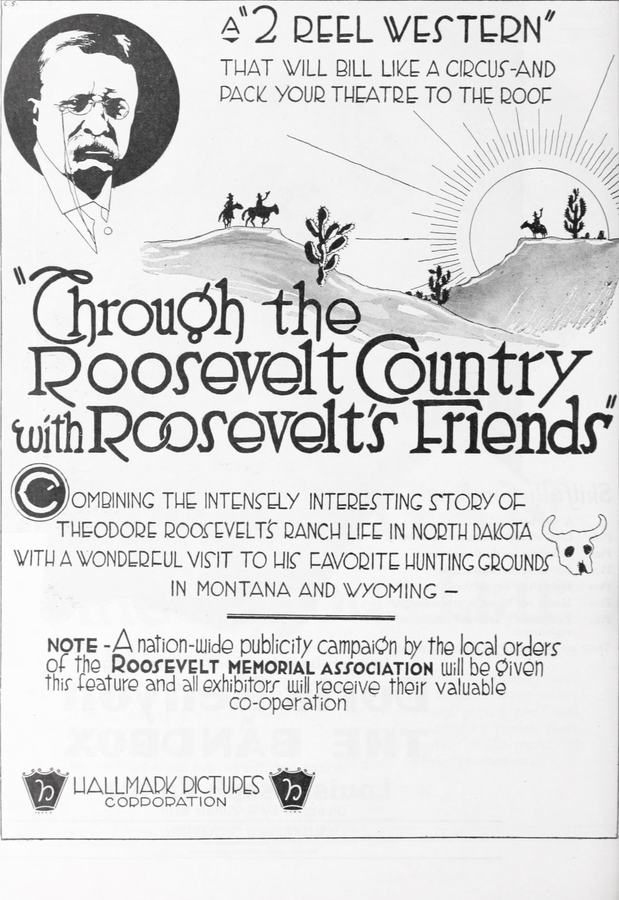
There are films, and then there are historical artifacts masquerading as films—revelations that transcend mere entertainment to offer a direct portal into a bygone era. Such is the profound impact of 'Thru the Roosevelt Country with Colonel Roosevelt,' a cinematic endeavor that, while perhaps overlooked in the grand tapestry of early cinema, stands as an invaluable testament to a man, a nation, and an unfolding consciousness. To call it a documentary feels almost reductive; it is more akin to a visual epic, a raw, unfiltered immersion into the very heart of American identity at the turn of the 20th century. The sheer audacity of its undertaking, capturing the colossal figure of Theodore Roosevelt in his natural element—the untamed wilderness—is a feat that resonates with an almost mythic grandeur even today.
One cannot discuss this film without first acknowledging the sheer magnetic force that is Colonel Roosevelt himself. He is not merely the subject; he is the very landscape, the driving narrative, the beating heart of every frame. The filmmakers, whose names are largely lost to the mists of time, possessed an uncanny knack for capturing his inimitable energy. From the moment he disembarks, a figure of robust vitality, one is immediately struck by his effortless charisma. He doesn't perform for the camera; he simply exists, authentically and powerfully. We see him engaged in animated discussions with local ranchers, his gestures expansive, his smile genuine. We witness him, a true man of the people, interacting with indigenous communities, a stark contrast to the often-problematic portrayals of the era seen in films like The Reward of the Faithless, which often leaned into caricatures. Here, there's an earnestness, a respectful curiosity that feels remarkably progressive for its time.
The true triumph of 'Thru the Roosevelt Country' lies not just in its titular subject, but in the breathtaking visual tapestry it weaves. The 'Roosevelt Country' itself becomes a character, imbued with a personality as grand and rugged as the man traversing it. The cinematographers, likely grappling with cumbersome equipment and the capricious whims of nature, managed to capture vistas that still stir the soul. Sweeping panoramas of towering canyons, their ancient strata etched by millennia, give way to vast, undulating plains where buffalo roam, almost spectral against the horizon. The dense, primeval forests, dappled with sunlight, evoke a sense of profound tranquility and untamed mystery. These are not merely backdrops; they are living, breathing entities, captured with a raw, almost visceral honesty that modern digital wizardry often struggles to replicate. One is reminded of the stark, powerful realism attempted in early narrative features, though often through highly stylized lenses, much like the dramatic compositions found in The Scarlet Car, which, despite its fictional narrative, sought to ground its drama in tangible settings.
The logistical challenges faced by the expedition and its accompanying film crew must have been monumental. Imagine lugging heavy cameras, tripods, and reels of film across treacherous terrain, through rivers, and up steep inclines, all while keeping pace with an indefatigable former president. This inherent difficulty lends an almost heroic quality to the footage itself. Every static shot, every carefully executed pan, feels like a hard-won victory against the elements. The film's black and white palette, far from being a limitation, enhances its timeless quality, lending an almost painterly quality to the landscapes. The stark contrasts of light and shadow emphasize the rugged beauty, turning every sunrise and sunset into a dramatic event. It’s a visual language that speaks volumes, conveying the immense scale and profound solitude of the American West.
Beyond the spectacle of the journey, the film meticulously documents Roosevelt’s profound connection to the natural world. We see him not just as an observer, but as an engaged participant. He points out flora and fauna with the keen eye of a seasoned naturalist, his enthusiasm palpable even through the silent medium of early cinema. There are poignant moments where he pauses, seemingly lost in contemplation, gazing over a vast vista, a silent communion between man and nature. These scenes are remarkably intimate, offering a rare glimpse into the contemplative side of a man renowned for his boisterous energy. It's a striking counterpoint to the more overtly dramatic, almost operatic character studies seen in films like Satan's Rhapsody, where internal struggles are externalized through grand gestures. Roosevelt's internal world here is conveyed through quiet observation and genuine reverence.
The implied narrative, crafted through a series of title cards and sequential scenes, subtly underscores Roosevelt's burgeoning conservationist ethos. While not explicitly didactic, the film acts as a visual argument for the preservation of these magnificent lands. His interactions with indigenous wildlife, whether observing a herd of elk or cautiously approaching a bear (likely a staged or carefully managed encounter, given the era's filmmaking limitations), serve to highlight the delicate balance of the ecosystem. It's a powerful, non-verbal plea for stewardship, a precursor to the modern environmental movement. This early articulation of ecological concern sets it apart from many contemporary films, which often focused on human drama or urban spectacle, much like the societal observations in Mary Moreland, which explored different facets of American life.
From a technical standpoint, 'Thru the Roosevelt Country' is a fascinating study in early cinematic innovation. The use of long takes, the thoughtful framing of landscapes, and the surprisingly dynamic compositions for a film of its age are all noteworthy. While the editing is rudimentary by modern standards, it possesses a charming immediacy, a sense of witnessing events as they unfold. The title cards, often poetic in their descriptions, bridge the narrative gaps, providing context and flavor to the silent images. They guide the viewer through the expedition, highlighting key moments and Roosevelt's pronouncements. This primitive form of storytelling, though quaint, is remarkably effective in conveying the spirit and purpose of the journey.
The film's impact, though perhaps not widely recognized in its immediate aftermath compared to more sensational narratives like The Vampires: The Terrible Wedding, is undeniably profound in hindsight. It provides an unparalleled visual record of a pivotal figure and a changing landscape. It serves as a historical document, capturing not just the physical journey, but the very spirit of an era marked by expansion, exploration, and the nascent stirrings of environmental awareness. It allows us to feel the dust of the trail, hear the imagined sounds of the wild, and experience, however vicariously, the profound awe that Roosevelt himself must have felt. The authenticity of the footage, free from the elaborate staging and dramatic contrivances often found in fictional works of the period, lends it an enduring power.
Comparing it to other works of its time, 'Thru the Roosevelt Country' stands as a unique outlier. It lacks the overt melodrama of a film like The Deciding Kiss, or the societal critique of Lulu. Instead, its focus is external, outward-looking, and deeply rooted in a sense of place and purpose. It is a film that celebrates the grandeur of the natural world and the human spirit's capacity for adventure and foresight. While many films of the era sought to entertain with thrilling plotlines or romantic entanglements, this one aimed higher: to document, to educate, and perhaps, to inspire a nascent sense of national pride in its wild, untamed spaces.
Revisiting 'Thru the Roosevelt Country with Colonel Roosevelt' in the 21st century offers a poignant reminder of what we have lost and what we still fight to preserve. The film, in its quiet eloquence, speaks volumes about the importance of wilderness, the responsibility of stewardship, and the enduring allure of exploration. It's a call to remember our roots, to appreciate the untouched beauty that still exists, and to honor the legacy of those who first recognized its intrinsic value. Roosevelt's passion for the outdoors, so vividly captured here, is infectious. It reminds us that true leadership often involves a deep connection to the land and a vision for its future, a theme explored in different contexts in films like A Man of Honor, albeit through personal ethics rather than environmental stewardship.
The raw, unpolished nature of the footage only adds to its charm and authenticity. There are no special effects, no elaborate set pieces, just the unadorned reality of a journey through breathtaking landscapes with an iconic figure. It's a film that demands patience but rewards it tenfold with its historical weight and visual poetry. It serves as a powerful counterpoint to the often-manufactured realities of contemporary media, offering a glimpse into a time when documentation itself was an act of daring. The simple act of pointing a camera at something real, something monumental, was revolutionary. It's this pioneering spirit that links it, conceptually, to other early cinematic experiments, even those with vastly different aims, such as the experimental narratives that would later emerge.
Ultimately, 'Thru the Roosevelt Country with Colonel Roosevelt' is more than just a film; it is a historical document, a piece of art, and a profound meditation on the relationship between humanity and the wild. It invites us to slow down, to observe, and to reflect on the enduring power of nature and the lasting legacy of those who fought to protect it. It is a cinematic treasure, deserving of renewed attention and appreciation for its pioneering spirit, its breathtaking visuals, and its timeless message. It captures a moment, a man, and a burgeoning national identity with an authenticity that continues to resonate, reminding us that some stories are best told not with words, but with the silent, powerful language of the moving image. Its place in the annals of American cinema, and indeed, American history, is undeniably secure, a beacon of early documentary filmmaking that still shines brightly.
Community
Log in to comment.