DbcultAccessing Vault...
Cult Review
Senior Film Conservator
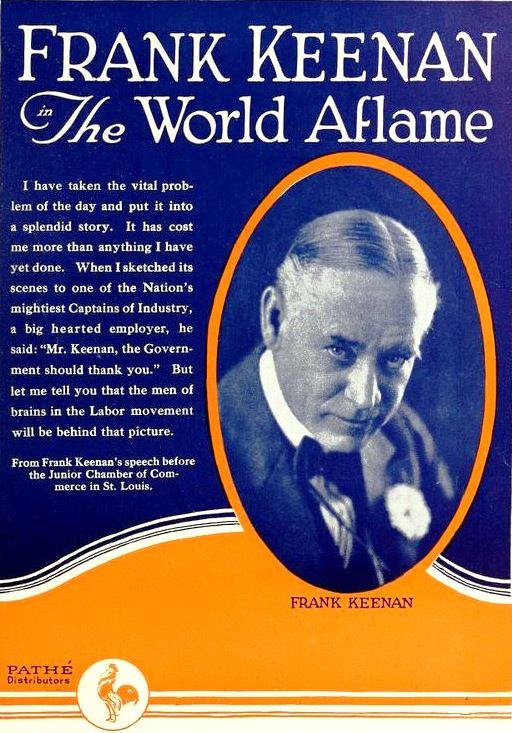
In the annals of silent cinema, few films capture the socio-economic anxieties of their era with the stark, almost prescient clarity of The World Aflame. Directed with a keen eye for dramatic tension and penned by the collaborative vision of Frank Keenan and Jack Cunningham, this 1920 production transcends mere entertainment, offering a profound commentary on the perennial struggle between capital and labor. It's a cinematic artifact that, despite its century-old vintage, resonates with an astonishing contemporary relevance, echoing debates that continue to shape our global discourse. The film’s narrative, anchored by the compelling performance of Clark Marshall as the indomitable Carson Burr, is a fascinating exploration of a society teetering on the precipice of profound change, a world where the foundations of privilege are shaken by the rumblings of widespread discontent.
The story unfurls with Carson Burr, a titan of industry, living a life of opulent detachment. His world, a meticulously constructed edifice of wealth and comfort, begins to crumble not from an external cataclysm, but from the insidious erosion of social order. The initial tremors are deeply personal: the abrupt departure of his long-serving cook, followed by his chauffeur, signals a breach in the seemingly impregnable walls of his domestic tranquility. These weren't mere inconveniences; they were visceral manifestations of a burgeoning labor movement, a collective awakening among the working class demanding recognition and fair treatment. The subsequent public slight, an insult hurled by a seemingly inconsequential waiter, acts as a pivotal moment, shattering Burr’s insulated reality. This isn't just about personal affront; it’s about the very fabric of society unraveling, forcing a man accustomed to command to confront the raw, unfiltered grievances of those he once considered beneath him. This awakening is masterfully portrayed by Marshall, whose subtle shifts in expression convey a man grappling with a newfound, uncomfortable awareness. Much like the societal introspection found in a film such as Mysteries of London, albeit with a different focus, The World Aflame delves into the undercurrents of urban unrest, laying bare the consequences of ignoring the plight of the masses.
Burr's response, however, is not one of retreat but of resolute engagement. He doesn't merely lament the state of affairs; he decides to actively reshape it. His decision to run for mayor, ostensibly to "improve the labor situation," is a fascinating blend of self-interest and genuine civic concern. Is it a magnate’s paternalistic attempt to restore order to his world, or a nascent understanding of collective responsibility? The film cleverly leaves this ambiguity simmering, allowing the audience to ponder the complexities of his motivation. His election is a testament to his charisma and perhaps, the public’s desperate hope for a strong hand to navigate the turbulent waters. This political ambition, born out of personal disruption, sets the stage for a dramatic confrontation that tests not only Burr’s leadership but the very ideological underpinnings of his society.
The true test of Burr's newly acquired authority arrives swiftly, spearheaded by the enigmatic editor of The Red Messenger – a character personifying the radical elements of the labor movement. This figure orchestrates a general strike, paralyzing the city's vital streetcar network, a potent symbol of urban connectivity and daily life. The visual spectacle of silent streetcars, once bustling arteries now static monuments to protest, powerfully conveys the widespread disruption. The city, indeed, becomes "aflame" with tension. Burr’s counter-move is audacious and controversial: he personally takes the controls of a streetcar, backed by a phalanx of armed guards. This scene is a masterclass in silent film dramaturgy, a potent tableau of individual will confronting collective action. It’s a moment designed to elicit both awe at his courage and unease at the militarization of public service. This visceral display of power, while breaking the strike, inevitably escalates the conflict, pushing the narrative into darker, more personal territories.
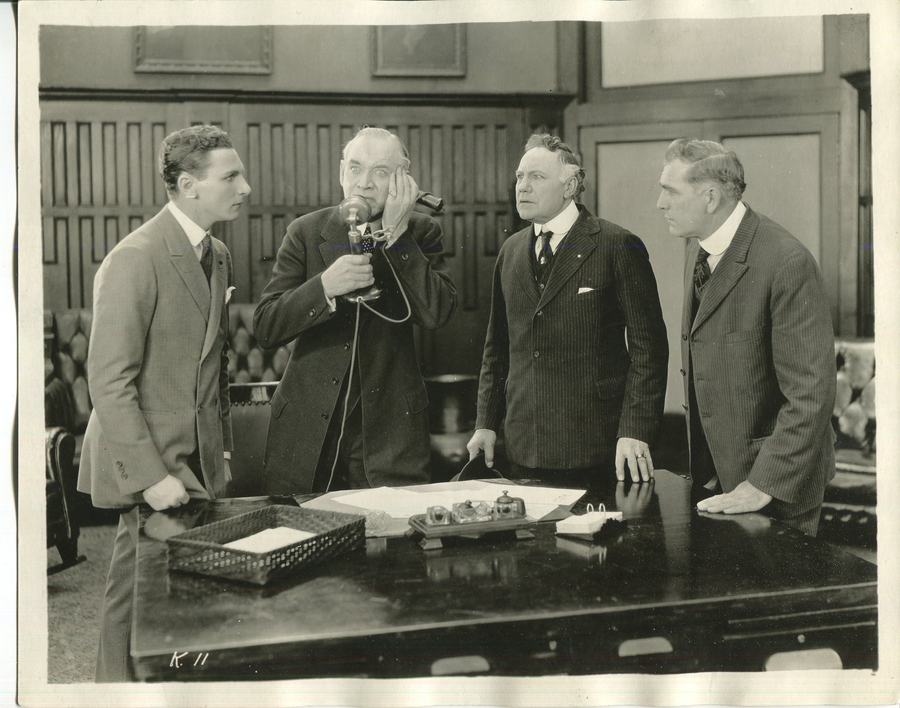
The film doesn't shy away from the harsh realities of such societal fissures. The anarchists, a shadowy and desperate faction, retaliate by abducting Burr's son. This personal tragedy, a direct consequence of his public actions, serves as a brutal test of his conviction. Unlike many protagonists who might buckle under such immense emotional duress, Burr remains steadfast. His refusal to yield, even with his child's life hanging in the balance, solidifies his portrayal as a man driven by an unshakeable belief in his vision for societal order. This dramatic pivot adds a layer of raw, human vulnerability to the larger socio-political drama, elevating the stakes beyond mere economic disputes. The emotional weight here is palpable, reminiscent of the personal sacrifices and moral dilemmas explored in films like The Transgressor or La muerte civil, where individual lives are inextricably tangled with broader societal forces.
With the immediate crisis averted, Burr turns his attention to a more enduring solution. He convenes a gathering of the city’s leading businessmen, proposing a radical, yet ultimately pragmatic, cooperative plan. This isn't about crushing labor but about integrating it, fostering a symbiotic relationship between capital and labor that acknowledges the intrinsic value of both. His vision is one of shared prosperity, a mechanism designed to prevent future strikes by addressing their root causes rather than merely suppressing their symptoms. This represents a significant evolution in Burr's character, moving beyond reactive crisis management to proactive, systemic reform. It speaks to a nascent understanding that true stability cannot be achieved through force alone, but through equitable partnership. The film, through this proposed solution, offers a hopeful, if perhaps idealistic, blueprint for industrial harmony, reflecting the reformist spirit that occasionally punctuated the progressive era.
The abstract ideal of capital and labor unity finds its most poignant and personal expression in the burgeoning romance between Burr’s daughter and his former valet, who has ascended to the crucial role of personal secretary. This subplot, handled with a delicate touch by director and writers, is far more than a conventional love story. It is a powerful metaphor, a microcosm of the larger societal reconciliation Burr strives for. The valet, through his diligence and intellect, crosses the rigid class lines that once defined his station, earning not just a position of trust but also the affection of his employer's daughter. This union, bridging the chasm between the privileged elite and the upwardly mobile working class, symbolizes the film’s ultimate message: that genuine understanding and cooperation can transcend established social hierarchies. Kathleen Kerrigan and Joseph McManus, though operating within the constraints of silent film acting, convey this evolving relationship with a genuine warmth that grounds the film's grander themes in relatable human experience. This narrative thread, exploring love across social strata, echoes the romantic complexities and societal expectations often seen in contemporary dramas like The Lonely Woman, adding a layer of emotional depth to the political narrative.
The ensemble cast of The World Aflame delivers performances that are both emblematic of the silent era and remarkably effective in conveying complex emotions and ideological stances. Clark Marshall, as Carson Burr, anchors the film with a gravitas that evolves from aloof confidence to a deeply empathetic, albeit still formidable, leader. His transformation is not merely external but feels earned, communicated through subtle gestures and powerful expressions that speak volumes without uttering a single word. Claire Du Brey, as Burr’s daughter, imbues her character with a quiet strength and a burgeoning independence, making her romantic arc feel authentic rather than a mere plot device. Bert Sprotte likely portrays the fiery editor of The Red Messenger with the necessary zeal and conviction, embodying the revolutionary spirit that challenges the status quo. The supporting cast, including Janice Wilson and Frank Keenan, contribute to a richly textured world, each playing their part in the intricate dance of social dynamics. The collaborative writing of Keenan and Cunningham is evident in the film’s tightly structured plot and its ability to weave personal drama with sweeping societal concerns, ensuring that the narrative never loses its focus or its emotional core.
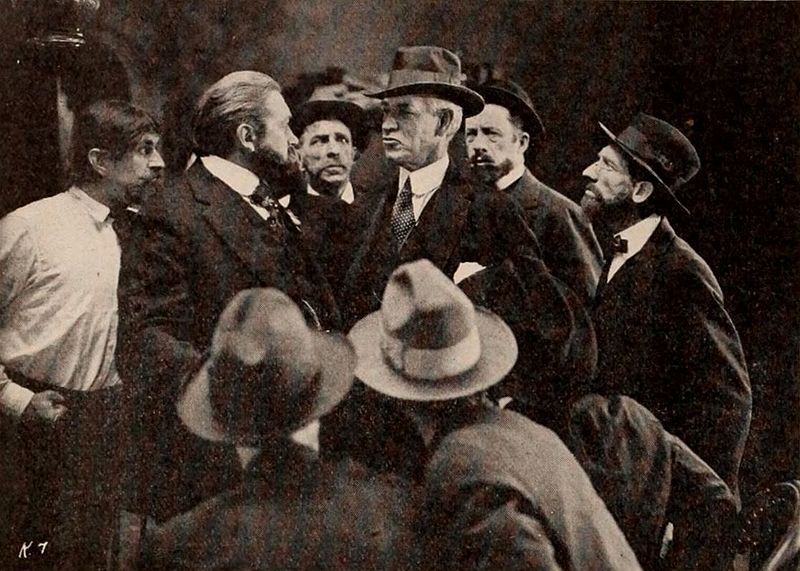
From a technical standpoint, The World Aflame showcases the burgeoning artistry of silent cinema. While specific cinematographic details might be lost to time or require deeper archival study, the film’s ability to create a palpable sense of urban tension, the chaos of a strike, and the intimacy of personal moments speaks to competent direction and editing. The use of intertitles, a crucial element of silent film storytelling, would have been carefully crafted to convey not only dialogue but also the film’s philosophical underpinnings and the ideological clashes at its heart. The pacing, a vital component in maintaining audience engagement without spoken word, would have been meticulously controlled, building suspense during the strike and abduction sequences, and offering moments of reflective calm during Burr’s policy formulations. The film's overall production design, though perhaps not as lavish as some of the epic spectacles of the era, effectively grounds the story in a believable, if heightened, reality of early 20th-century urban life.
What truly distinguishes The World Aflame is its enduring thematic resonance. The conflict between capital and labor, the role of political leadership in times of social unrest, the tension between individual ambition and collective welfare—these are not relics of a bygone era but fundamental questions that continue to vex societies worldwide. The film, in its silent eloquence, posits a solution rooted in cooperation and mutual respect, a vision that remains remarkably aspirational even today. It avoids simplistic demonization, presenting both sides of the conflict with a degree of nuance rare for its time. Burr, the capitalist, is not a villain but a man who evolves, learning to bridge divides. The radicals, while resorting to extreme measures, are portrayed as driven by genuine grievances, not just malice. This balanced perspective elevates the film beyond mere propaganda, transforming it into a thoughtful meditation on the possibilities of social harmony. Its message, therefore, is not just historical but profoundly contemporary, urging us to consider how we might yet reconcile our own internal "world aflame."
Comparing it to other films of the period, one might find parallels in their shared ambition to capture the spirit of an age. While a film like Thais might delve into moral decay and redemption, or Ålderdom och dårskap explore personal decline, The World Aflame stands out for its direct engagement with the socio-political zeitgeist. It doesn't shy away from depicting the raw power struggles, yet it also holds out a hand of hope for reconciliation. The film's examination of leadership and societal responsibility can be seen in conversation with works like On the Steps of the Throne, which might explore the burdens of power from a different angle. Even the more intimate dramas, such as My Little Boy, focusing on familial bonds, find a distant echo in Burr's personal stakes with his son's kidnapping, demonstrating how personal and public spheres constantly intertwine in cinema.
Ultimately, The World Aflame endures not merely as a historical curiosity, but as a vibrant, compelling piece of filmmaking that deserves renewed attention. It’s a powerful testament to the capacity of silent cinema to tackle grand themes with both nuance and profound emotional depth. Through the transformative journey of Carson Burr, audiences are invited to reflect on the persistent challenges of class division and the enduring human quest for unity. The film serves as a potent reminder that while the tools of communication and the specific manifestations of conflict may evolve, the underlying human desires for fairness, respect, and a stable society remain constant. This cinematic endeavor, truly, ignites a conversation that continues to burn brightly a century later, proving that some stories, and some flames, are simply timeless.
IMDb 6.8
1931
Community
Log in to comment.