DbcultAccessing Vault...
Cult Review
Senior Film Conservator
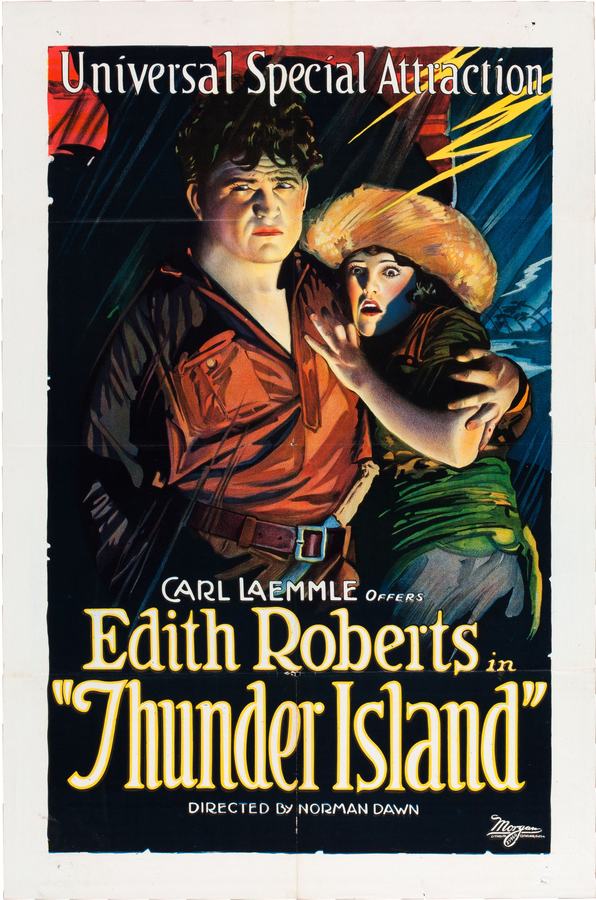
Thunder Island is a sun-scorched relic of 1920s cinema, a film that marries the swashbuckling energy of a pirate yarn with the simmering tension of a psychological drama. Set against the jagged coastlines and crumbling haciendas of Baja Mexico, it tells the story of Isola Garcia (Edith Roberts), a shepherdess whose life is upended by a series of ill-fated choices. Her marriage to the ailing Don Pio Mendoza (Arthur Jasmine) is less a union of love than a financial transaction—an arrangement that thrusts her into a world of decaying aristocracy and simmering violence. When American schooner captain Paul Corbin (Fred DeSilva) arrives to thwart a bandit raid on her flock, their chemistry is electric, a spark that will set off a chain reaction of deceit and rebellion.
The film’s first act is a masterclass in visual storytelling. The hacienda, with its peeling murals and dusty chandeliers, is a character in itself, a symbol of fading Spanish colonial power. Isola’s initial reluctance to accept Pio’s marriage proposal is conveyed through close-ups of her hands fidgeting with a rosary, a tactile metaphor for her spiritual and economic entrapment. The bandit raid that follows—staged with frenetic energy—is a stark contrast to the static formality of the hacienda. Here, the camera moves with urgency, capturing the chaos of stolen livestock and the visceral threat of violence. It’s in this moment, when Paul Corbin materializes in a white linen suit against a backdrop of burning straw, that the film’s central conflict crystallizes: Isola’s yearning for freedom versus her duty to a system that has exploited her.
What sets Thunder Island apart from its contemporaries is its unflinching portrayal of gender dynamics. Isola is not merely a damsel in distress; her agency is evident in her calculated escape from the hotel, where she buys a bandit’s clothes and masquerades as a commoner. The scene is both practical and poetic—her transformation from silk-clad bride to rough-spun rebel mirrors the Mexican Revolution’s own subversion of class and power. The film’s writers, Beatrice Grimshaw and Wallace Clifton, lean into this duality, crafting a narrative where every disguise serves a purpose. Even the counterfeit Pio, played with unsettling charm by John B. O’Brien, becomes a metaphor for the performative nature of identity. His insistence on consummating the marriage only after a formal church ceremony is less a romantic gesture than a power play, a reminder that Isola’s autonomy is still subject to male validation.
Technically, the film is a marvel of its era. The cinematography by Fred Kohler bathes the Baja landscapes in a golden glow, the ocean’s turquoise depths a stark contrast to the ochre earth. The schooner scenes, though limited by silent film conventions, are elevated by clever editing. The raid on Corbin’s vessel is a standout sequence: the camera lingers on Isola’s determined gaze as she plunges into the dark waters, her body a silhouette against the moonlit waves. The use of shadows is particularly effective during the hotel confrontation, where the flickering candlelight on the secretary’s face hints at his true allegiance. These visual cues are essential in a film without dialogue, guiding the audience through a web of lies and half-truths.
Performances are another highlight. Edith Roberts brings a quiet intensity to Isola, her expressions conveying volumes through subtle shifts in posture and gaze. Her chemistry with DeSilva is palpable, especially in their shared glances during the beachwalk—a moment of tender vulnerability amid the surrounding chaos. Arthur Jasmine’s portrayal of the dying Pio is equally compelling, his frailty masking a calculating ruthlessness that emerges in the film’s darker turns. The bandit Sanchez, played by Fred DeSilva in a supporting role, injects levity with his drug-induced antics, a comic relief that prevents the film from becoming overly grim. Yet, it’s the ensemble’s ability to convey complex emotions through physicality that truly elevates the film. In one haunting scene, Isola’s trembling hands as she dons the bandit’s jacket speak volumes about her internal conflict.

The soundtrack, though minimal, is masterfully integrated. The absence of spoken dialogue means that the film relies on piano and string arrangements to underscore its emotional beats. During the final escape, the music swells with a triumphant brass motif, a sonic parallel to the schooner cutting through the waves. This auditory boldness contrasts sharply with the silence of the earlier scenes, where tension is built through prolonged stares and environmental sounds—the creak of the schooner’s hull, the howl of the wind. The score’s restraint is as effective as its flourishes, allowing the visuals to take center stage.
Thunder Island also offers a nuanced critique of colonialism and class. The hacienda’s opulence is juxtaposed against the bandits’ crude campfires, a visual metaphor for the exploitation of indigenous resources. Isola’s eventual flight to the United States is not framed as a resolution but as a continuation of her journey toward self-determination. This theme resonates with other films of the era, such as The Life Story of John Lee, where characters grapple with legal and moral boundaries. Similarly, the bandit’s marijuana-induced stupor echoes the drug-fueled antics in Hop - The Devil’s Brew, though here it serves a more comedic purpose.
However, the film is not without its flaws. The pacing falters in the second act, particularly during the hotel scenes, where the back-and-forth between the fake Pio and Isola feels drawn out. Additionally, the resolution—Isola and Paul sailing into the horizon—borders on cliché, though it’s softened by the authenticity of their bond. For a modern viewer, the silent film’s reliance on intertitles to explain plot points can be jarring, though it offers a unique intimacy, as if the audience is privy to the characters’ innermost thoughts.
Comparisons to other adventure films of the 1920s are inevitable. Like The Eagle’s Eye, Thunder Island uses nature as both adversary and ally, though its focus on romance sets it apart. The film’s bold color palette and atmospheric cinematography also evoke For Napoleon and France, but where that film is steeped in historical grandeur, Thunder Island grounds its drama in personal stakes. Its closest cousin, however, might be The Probation Wife, another tale of women navigating patriarchal systems with wit and defiance.
In conclusion, Thunder Island is a testament to the silent film era’s creative ingenuity. It’s a film that defies easy categorization, blending romance, action, and social commentary into a cohesive whole. While its technical limitations are evident by today’s standards, its emotional resonance and thematic depth ensure its place in cinematic history. For those seeking a film that dares to subvert genre expectations while delivering thrilling set pieces, Thunder Island is an essential watch. It’s a reminder that even in the absence of dialogue, a story can roar to life through the power of visual storytelling.

IMDb 7
1932
Community
Log in to comment.