DbcultAccessing Vault...
5.2/10
Senior Film Conservator
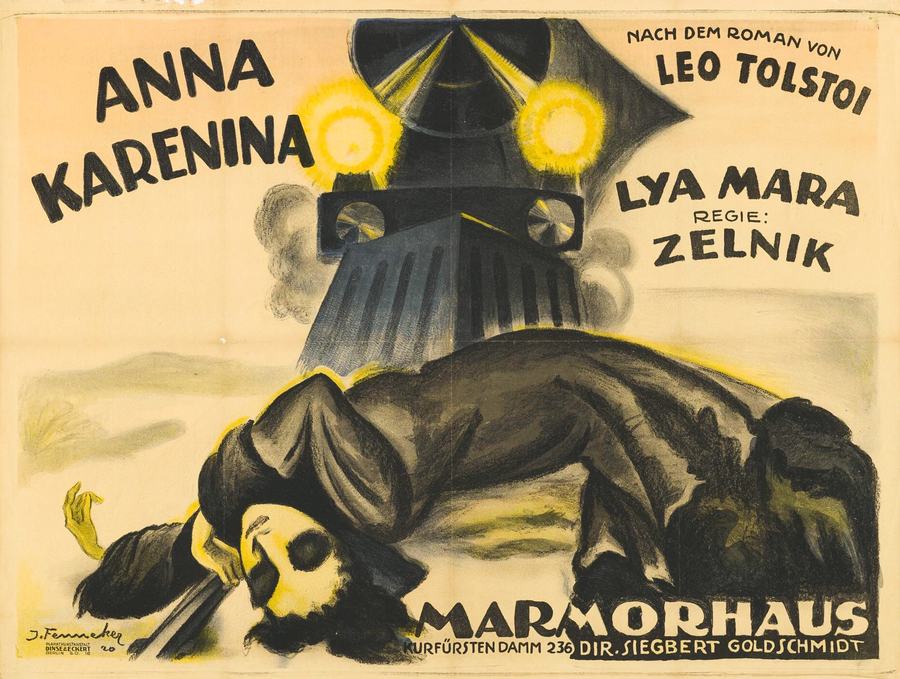
A definitive 5.2/10 rating for a film that redefined the boundaries of cult cinema. Anna Karenina remains a cornerstone of transgressive art.
The year 1920 marked a pivotal epoch for the Weimar Republic’s burgeoning film industry, a period where the shadows of Expressionism began to lengthen across the landscape of European storytelling. In this fertile ground, the adaptation of Anna Karenina emerged not merely as a literary translation but as a visceral exploration of the human psyche trapped within the amber of Victorian-esque rigidity. Directed with a keen eye for the atmospheric, this silent rendition captures the haunting essence of Tolstoy’s prose, stripping away the linguistic density to reveal the raw, thrumming nerves of its protagonists.
Lya Mara’s portrayal of Anna is a masterclass in the economy of gesture. In an era where histrionics often defined the screen, Mara opts for a more internalised suffering, her eyes serving as the primary vessel for the character’s burgeoning desperation. We see her first not as a victim, but as a woman of immense social capital, navigating the ballrooms with a grace that feels both effortless and exhausting. Contrast this with the work seen in Womanhood, the Glory of the Nation, and one immediately perceives a shift from nationalistic archetypes to the deeply personal, almost claustrophobic intimacy of the domestic drama.
The film’s visual language is heavily indebted to the stark chiaroscuro that would soon define the decade. The interiors of the Karenin household are rendered as palatial prisons—vast, echoing spaces where the silence is palpable. Rudolf Forster, as the cuckolded Alexei Karenin, brings a chilling, bureaucratic coldness to the role. His performance is a stark reminder of the legalistic cruelty inherent in the social contract of the time, a theme explored with similar gravitas in the thematic undercurrents of Blind Justice.
Johannes Riemann’s Vronsky is perhaps more enigmatic than his literary counterpart. He embodies the reckless vitality of youth, yet there is a perceptible vacuity behind his charm—a suggestion that his love for Anna is less about the woman herself and more about the thrill of the conquest. This dynamic creates a tension that elevates the film above mere melodrama. It becomes a critique of the romantic ideal itself. Unlike the more sentimental explorations found in Heart Strings, Anna Karenina (1920) refuses to offer the audience the solace of a pure, unadulterated love. Instead, it presents passion as a corrosive force, one that bleeds the color out of the world even as it promises to illuminate it.
The pacing of the film, guided by the script from Fanny Carlsen, mirrors the slow tightening of a noose. The early scenes are languid, filled with the decadent fluff of high society—horse races, opera boxes, and hushed conversations in moonlit gardens. However, as Anna’s social standing begins to erode, the editing becomes more fragmented, reflecting her deteriorating mental state. This rhythmic shift is a sophisticated piece of craftsmanship, reminiscent of the experimental narrative structures found in Il giardino del silenzio, where silence is used as an active participant in the storytelling process.
To fully appreciate the gravity of this 1920 adaptation, one must view it within the context of its contemporaries. While American cinema was often preoccupied with the rugged individualism of films like The Midnight Trail or the exotic escapism of The Virgin of Stamboul, the German approach to Tolstoy is far more somber and introspective. There is no attempt to sanitize the tragedy for the sake of a palatable ending. The film leans into the inevitability of Anna’s fate with a grim determination.
When we look at Forget-Me-Not, we see the tropes of the lost woman utilized for emotional catharsis. Anna Karenina, however, uses these same tropes to interrogate the very foundations of the society that creates them. The film asks: is it the woman who is lost, or is it the world around her that has lost its humanity? The inclusion of Levin’s storyline—often truncated in shorter adaptations—provides a necessary counterpoint. Levin’s search for meaning in the soil and the simplicity of rural life offers a fleeting glimpse of an alternative to the artifice of the city, much like the pastoral yearnings found in Blue Jeans, though handled here with significantly more philosophical weight.
The locomotive, that great iron beast of the 19th century, looms over the narrative like a pagan deity. From the moment of Anna’s first encounter with Vronsky at the train station, the machine is associated with death and transformation. The cinematography excels in these sequences, capturing the billowing steam and the rhythmic churning of the wheels with a tactile intensity. It is a far cry from the adventurous spectacle of Ali Baba and the Forty Thieves; here, technology is not a source of wonder but a harbinger of the modern world’s indifference to the individual soul.
This thematic preoccupation with the crushing weight of modernity is a hallmark of European cinema of this period. It resonates with the sense of moral displacement found in The Dishonored Medal, where duty and honor become cages rather than virtues. For Anna, the train is the only exit from a social labyrinth that has become uninhabitable. Her final walk toward the tracks is staged with a haunting stillness, the camera lingering on her face as she realizes that the only way to reclaim her agency is through self-annihilation.
Viewing Anna Karenina (1920) today, one cannot help but notice the parallels between the crumbling Tsarist Russia it depicts and the fragile state of the Weimar Republic during the film's production. There is an underlying anxiety about the collapse of tradition and the uncertainty of what lies beyond. The film speaks to a world in flux, where the old rules no longer apply but the new ones have yet to be written. This sense of existential dread is a far cry from the more straightforward moral lessons of The Lion and the Mouse or the lighthearted escapades of Dodging a Million.
The supporting cast deserves significant praise for grounding the film in a believable reality. Fritz Schulz and Olga Engl provide nuanced performances that flesh out the periphery of Anna’s world, ensuring that the central tragedy doesn't exist in a vacuum. These characters represent the "chorus" of society—the observers whose whispers and judgments form the invisible walls of Anna’s prison. The film captures the suffocating nature of this environment with an efficacy that rivals the thematic depth of The Bar Sinister, another exploration of social exclusion and the cruelty of lineage.
How does one translate Tolstoy’s internal monologues into a silent medium? The 1920 film solves this through symbolism and mise-en-scène. A flickering candle, a shattered glass, a lingering shadow—these are the tools used to convey the unsaid. While later sound versions would rely on dialogue to explain Anna’s motivations, this silent version forces the viewer to engage with her on a more primal, emotional level. It is a testament to the power of pure cinema, a medium that, at its best, transcends the need for words.
In comparison to Conquered Hearts, which deals with similar themes of romantic struggle, Anna Karenina feels more monumental, more attuned to the cosmic ironies of fate. It is not just a story about a woman who leaves her husband; it is a story about the impossibility of freedom in a world built on constraints. Even Levin’s eventual domestic bliss feels hard-won and fragile, a temporary reprieve from the overarching tragedy of the human condition. This sense of pervasive melancholy is what makes the film so enduring.
The technical aspects—the costume design by the uncredited artisans of the era, the grand sets that evoke the cold majesty of St. Petersburg—all contribute to a sense of time and place that is utterly immersive. Even when the film veers into the melodramatic, it is anchored by a sense of historical reality. It avoids the pitfalls of the overly theatrical, opting instead for a gritty, almost documentarian approach to the lives of the elite. This realism is what separates it from more fantastical silent fare like Where Bonds Are Loosed.
Ultimately, the 1920 version of Anna Karenina stands as a towering achievement of early cinema. It is a film that understands the weight of its source material and rises to meet it with a visual and emotional intensity that remains undiminished by the passage of a century. It is a haunting, beautiful, and devastating reminder of the cost of living—and loving—outside the lines.
IMDb —
1934
Community
Log in to comment.