DbcultAccessing Vault...
Cult Review
Senior Film Conservator
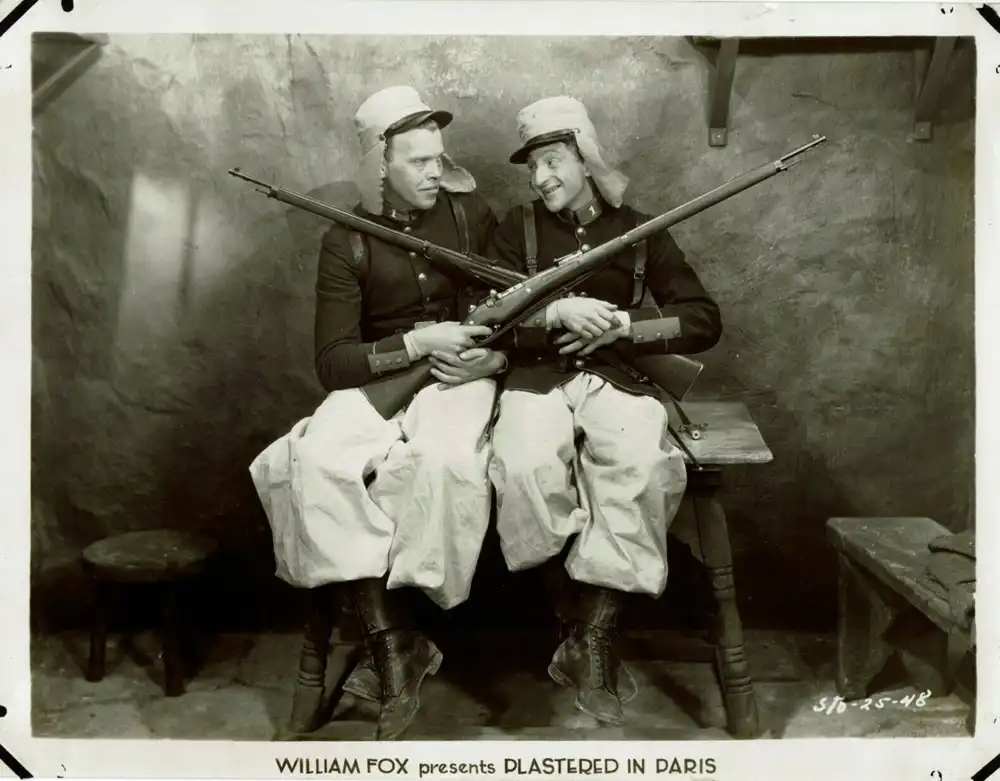
Okay, so Plastered in Paris. Is it worth your time today? Look, if you’re hoping for some big, sweeping cinematic experience, probably not. But if you’ve got a soft spot for really old slapstick, the kind where you can practically hear the piano player in the background, then absolutely, give it a whirl. Anyone expecting modern pacing or subtle humor will likely be checking their watch, but folks who love digging into early cinema quirks will find a lot to chuckle at.
The movie drops us right into Paris with our wide-eyed American, a sculptor named Arthur (played by Mario Dominici, doing his best bewildered tourist face). He’s there for inspiration, you see. Mostly, he just finds trouble. Specifically, he finds himself tangled up with a very particular brand of Parisian chaos.
There’s this one scene, Arthur is trying to buy a baguette, and the whole thing just... spirals. A pigeon flies by, he ducks, knocks over a fruit stand, and suddenly he’s got a grumpy vendor chasing him down Rue de la Paix. It’s all very predictable, but Lola Salvi's reaction shot as she watches from a café is just perfect. A raised eyebrow, a tiny, almost imperceptible smirk. She gets it.
Fred Kelsey pops up as a very stern-looking gendarme. He's got that _heavy_ stride, you know? Like every step is a moral judgment. He’s always just a *little* too slow to catch Arthur, but fast enough to add to the general mayhem. There's a moment where he slips on a banana peel – a classic, sure – but the way his hat stays perfectly perched is actually kinda impressive. You almost wonder if they glued it down for the shot. 🎩
The *plaster* part of the title comes in during a surprisingly long sequence in an artist’s studio. Arthur, trying to help out a fellow American artist (Madalynne Field, who has this incredibly expressive face), accidentally gets drenched in a bucket of wet plaster. This scene goes on about 20 seconds too long, and the silence starts to feel awkward rather than emotional. But then he tries to *run* and the plaster starts cracking and flaking off, and it really does become funny. Like, really funny.
Dickie Moore, as the kid who keeps showing up at the worst possible times, is a real scene-stealer. His grin is so mischievous. He’s not in it much, but every time he pops up, you know something silly is about to happen. There’s a bit where he throws a tiny snowball at Kelsey’s gendarme and just *vanishes* around a corner. Kid’s got timing.
The film’s whole vibe is just... frantic. They really lean into the chase sequences. At one point, Arthur is running through a market, and the camera just *barely* keeps up. You can almost feel the cameraman huffing and puffing. It’s got this raw energy, a little messy, but it makes you feel like you're right there.
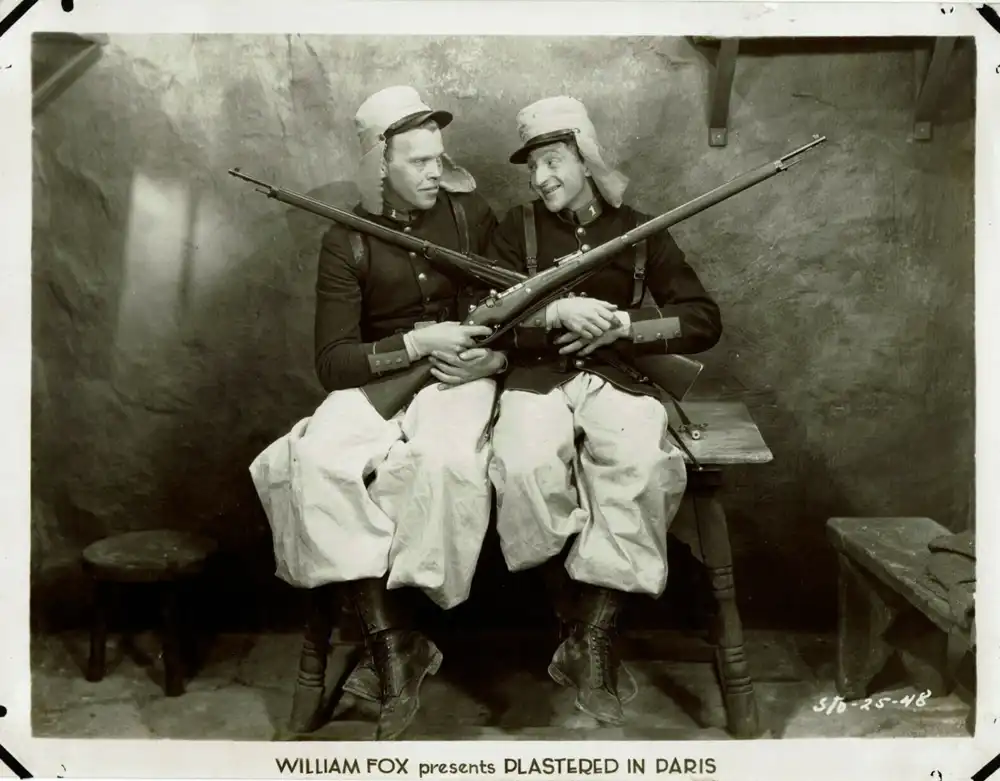
Some of the gags don't land at all. There’s a bit with a very fake-looking dog chasing Arthur, and it’s just not convincing. You can tell it’s someone in a suit, even from a distance. The crowd scenes have this oddly empty feeling, like half the extras wandered off for lunch. 🤷♀️
But then you get these little flashes of brilliance. A shot of the Eiffel Tower, almost casually placed in the background of a chaotic street scene. It just grounds everything, reminds you where you are, even amidst all the silliness. It’s a nice touch.
The whole *misunderstanding* plot, about a lost letter that implicates Arthur in some minor theft, feels a little tired even for the era. But it does give everyone a reason to run around. And really, that's what this movie is about: people running around Paris, making a mess.
I found myself thinking about Smile Please a few times while watching this. Similar kind of energy, just a bit more... refined, maybe? *Plastered* feels more raw, more immediate.
One reaction shot lingers so long it becomes funny. It’s Michael Visaroff, I think, as the chef who keeps losing his pastries. Just this wide-eyed, mournful stare at the ruined confections. It’s gold. Pure, unadulterated silent film gold.
The ending is, well, an ending. It ties things up with a neat little bow, maybe a *little* too quickly. But you leave with a sense that Arthur finally found his inspiration, even if it was just pure, unadulterated chaos. And maybe that's enough.
IMDb —
1920
Community
Log in to comment.