DbcultAccessing Vault...
6.8/10
Senior Film Conservator
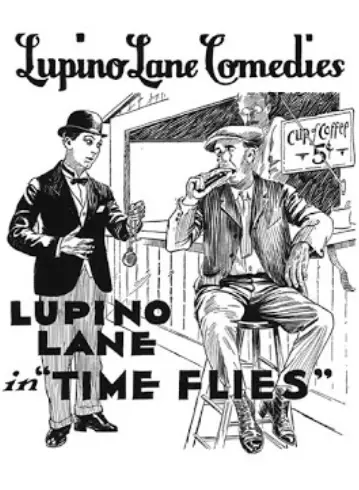
A definitive 6.8/10 rating for a film that redefined the boundaries of cult cinema. Time Flies remains a cornerstone of transgressive art.
Is Time Flies worth your attention today? Short answer: yes, but primarily as a technical artifact of physical genius rather than a narrative masterpiece. This film is for those who worship at the altar of silent slapstick and the physics of the human body; it is not for those who require a plot to make a lick of sense.
Lupino Lane occupies a strange, often overlooked space in the silent comedy pantheon. He lacks the melancholic soul of Chaplin or the stoic architectural brilliance of Keaton, but he possesses a kinetic, almost violent agility that feels modern even a century later. Time Flies is a frantic showcase of that agility, wrapped in a plot that feels like it was written on the back of a cocktail napkin during a particularly heavy drinking session.
1) This film works because Lupino Lane’s commitment to the 'fall' is absolute, turning mundane accidents into high-stakes choreography.
2) This film fails because the narrative transitions are jarringly episodic, often feeling like three different short films stitched together with twine.
3) You should watch it if you want to understand the missing link between British music hall acrobatics and the American silent film boom.
The film opens with a premise so ridiculous it borders on the surreal: a duel over whether a 'full house' or 'five aces' is the better hand. It is a joke about the corruption of logic, and it sets the tone for everything that follows. Colonel Blackwell and Major Wimpett are archetypes of a fading Victorian rigidity, and Lane’s character is the chaotic force that shatters their world.
The intervention scene, where Lane crashes his high-wheeled cycle into the duel, is a marvel of timing. When the bullet strikes the watch, it isn't just a lucky break; it’s a thematic statement. Time, quite literally, saves the day. However, the film doesn't dwell on this irony. It immediately pivots into a 'city vs. country' narrative that feels reminiscent of The Pinch Hitter, though with significantly more head trauma.
Once Lane reaches the 'cold, cruel city,' the film shifts into a darker, more cynical gear. There is a sequence involving a lunch counter that remains one of the most frustratingly funny moments in silent cinema. Lane has a single dime. It is his entire world. When that coin accidentally falls into a stranger’s coffee and is swallowed, the look on Lane’s face is a masterclass in understated despair. It’s a brutally simple sentence of poverty: He is broke. He is hungry. He is invisible.
This moment works because it grounds the later, more fantastical elements. We care about the 'Waterbury' watch because we have seen the boy lose everything else. The city is portrayed not as a place of opportunity, but as a trap. This is a common trope in the 1920s, seen in films like The Show-Off, but Lane handles it with a frantic energy that prevents it from becoming a melodrama.
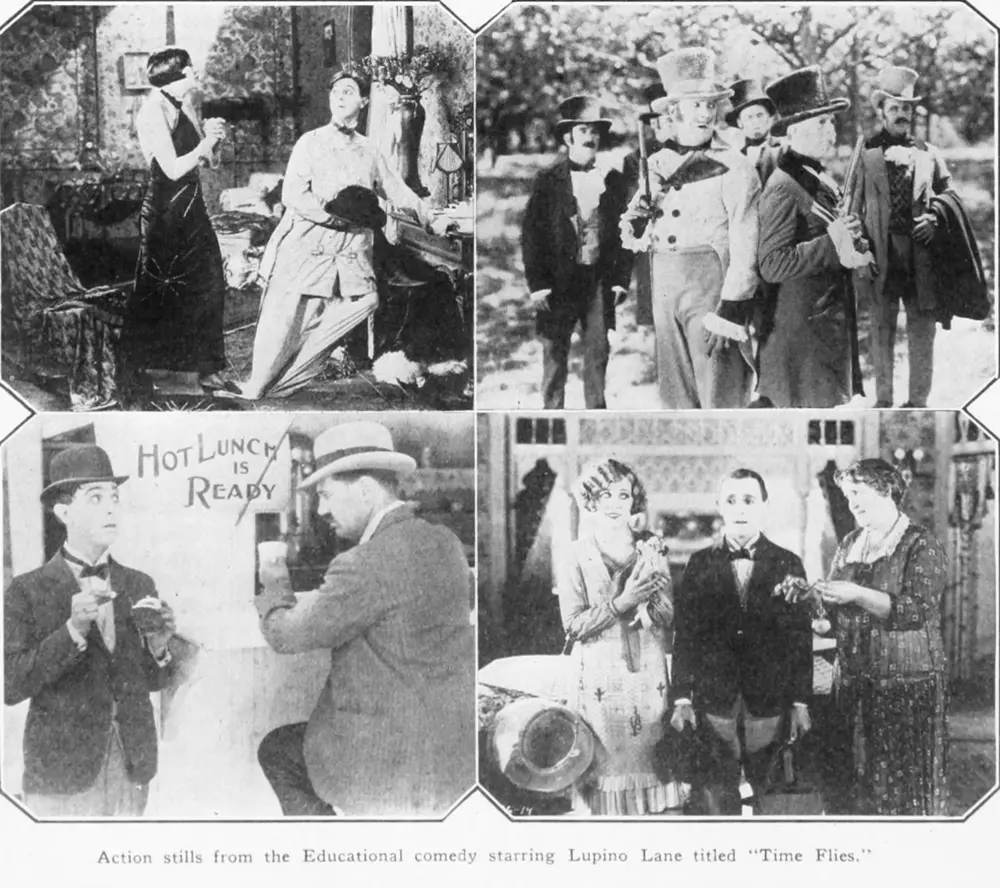
Yes, Time Flies is worth watching for any serious student of comedy. While the plot is a messy collection of coincidences, the individual set pieces are executed with a precision that modern CGI cannot replicate. It captures a specific moment in cinematic history where the stuntman and the actor were the same person, and the stakes felt real because they were.
The middle act introduces an 'adventuress' and a plot involving a missing heir. This is where the film starts to feel a bit cluttered. The transition from the suicidal lover (a surprisingly dark gag involving a 'harmless' gun) to the home of the vamp is clunky. However, Virginia Vance and Gwen Lee provide excellent foils for Lane’s frantic energy. The way the adventuress tries to 'vamp' him—a term that feels wonderfully dated now—is played for maximum awkwardness.
The 'Waterbury' watch, previously a shield, now becomes a target. The film uses the watch as a clever MacGuffin, linking the boy’s past to a future he didn't know he had. It’s a standard trope, much like the hidden identities in Molly Make-Believe, but Lane uses the plot mostly as an excuse to jump through windows and slide down bannisters.
The direction (often attributed to Lane himself or his close collaborators) is remarkably fluid. The camera doesn't just sit and watch; it anticipates the movement. In the final chase sequence, the editing creates a sense of escalating panic. Lane’s 'tricks'—his ability to use his environment to evade pursuers—are the highlight. He doesn't just run; he flows. He turns a simple room into an obstacle course, much like the frantic energy found in Every Man for Himself.
One surprising observation: the film’s pacing is actually better than many of its contemporaries. While many 1920s shorts suffer from long, static title cards, Time Flies keeps the visual momentum high. The 'brutally simple' nature of the gags—a lamp falling on a head, a coin in a cup—requires very little explanation. It works. But it’s flawed in its connective tissue.
Pros:
- Incredible stunt work that remains impressive 100 years later.
- Short runtime ensures the gags don't overstay their welcome.
- A fascinating look at 1920s urban anxieties and 'vamp' culture.
Cons:
- The 'coincidence' level of the plot is astronomically high.
- Some of the darker humor (the suicide attempt) may feel misplaced to modern audiences.
- Secondary characters are largely forgettable compared to Lane.
Time Flies is a fascinating, if fragmented, piece of silent comedy. It lacks the cohesive vision of a feature-length film like The Lone Wolf, but it makes up for it with sheer, unadulterated energy. Lupino Lane is a marvel to watch, a man who seems to defy the laws of gravity and common sense in equal measure. While the 'missing heir' plot is a bit of a cliché, it serves its purpose as a vehicle for some of the best physical comedy of the era. If you can forgive the loose narrative, you will find a film that is as vibrant and chaotic as a ticking clock about to explode. It is a minor gem that deserves to be pulled from the shadows of the greats.
IMDb 5.8
1934
Community
Log in to comment.