DbcultAccessing Vault...
Cult Review
Senior Film Conservator
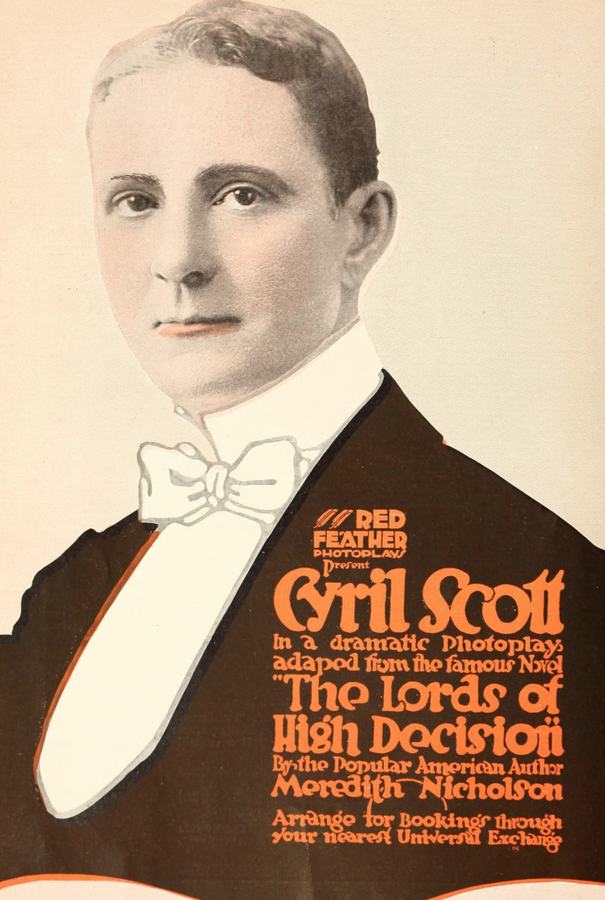
A canvas of soot, stocks, and sabotage
William H. Lippert’s scenario, distilled from Meredith Nicholson’s serialized social gospel, lands like a graphite smear on clean paper: Pittsburgh’s capital colossus Craighill—equal parts Morgan and Mephistopheles—plotting the asphyxiation of a recalcitrant coal baron while his own progeny discovers conscience in the very hamlet slated for extinction. The camera, still learning to walk in 1918, stalks boardrooms where chandeliers drip like frozen champagne, then tramps down shaft roads where carbide lamps tremble like guilty secrets. Every intertitle is a subpoena to the conscience of the Jazz-Age-in-waiting.
Art director H. Ullrich turns the Hercules Bank’s directors’ room into a mausoleum of mahogany: leather chairs that swallow men whole, ledger books thick as tombstones, a panoramic map of rail arteries that resembles nothing so much as an anatomical chart of a nation whose heart is coal. When Craighill jabs a manicured finger toward Gregory’s spur line, the gesture feels surgical—an amputation performed with cufflinks. The shot is held long enough for the gilt frame to become a proscenium arch for predation.
Jean Gregory, played by Marguerite Skirvin with eyes that seem perpetually dilated by twilight, is introduced daubing vermilion onto a canvas while her grandfather’s furnaces stand cold behind her. The chromatic clash—scarlet pigment vs. ashen machinery—renders her an artist attempting to fresco a mausoleum. Conversely, Wayne Craighill (Cyril Scott) enters wearing a collegiate letterman’s sweater whose chenille V is as loud as a bugle call. The costume design quietly foreshadows class fracture: the sweater will be replaced by a trench coat of corporate gravitas, the palette by a dirt-smudged skirt as the film refuses anyone the comfort of caste stasis.
The midnight strike sequence—shot in real foundry sheds around Braddock—unspools like a fever chart. Cinematographer William Wagner trades klieg lights for molten steel as illumination, so faces emerge from Stygian gloom only to vanish again, an early experiment in chiaroscuro that anticipates the noir vocabulary of the forties. Brooks, Walsh’s agent provocateur, whispers through cupped hands, the audio implied by the flicker of lips and the sudden snap of a valve wheel. The workers desert the furnaces; slag cools into black glass. Yet Wayne’s intervention—half noblesse oblige, half awakening libido—re-lights the forge, a moment the film neither celebrates nor condemns, but records with the cold curiosity of an ethnographer.
Adelaide Churchill, essayed by Mildred Gregory with flapper bangs and a mouth that seems always mid-scandal, is the film’s most underwritten yet visually electric figure. Her courtship with Craighill père condenses into a montage of yacht decks and ticker-tape confetti that feels borrowed from a newsreel wedding. When she later drapes herself across a Steinway singing “Love’s Old Sweet Song,” the performance is so deliberately off-key it becomes a lament for her own commodification. The film refuses her the redemption it ultimately grants Wayne, leaving her stranded in a mansion whose lights have been cut by the bank examiner.
Gregory’s demise—off-screen but sonically suggested by the thud of a body against Persian rug—turns the library into a crime-scene diorama. The mise-en-scène is cluttered with the iconography of collapsed empire: a toppled globe, an inkwell bleeding across a balance sheet, a portrait of Grant glowering at the trespass of time. Craighill’s hunched silhouette, backlit by tulip-shaped sconces, could be Lucifer discovering that even damnation carries overdraft fees. The moment is pure American gothic: patricide by proxy, capitalism ingesting its own progenitor.
When the ground disgorges petroleum, the tonal register lurches from social realism to ecstatic allegory. Crude arcs skyward in a reverse baptism, coating the tattered red kerchiefs of miners now transfigured into wildcatters. The edit is ecstatic: a miner’s pickaxe jammed into the earth becomes a derrick lever; a woman’s washboard becomes a speculative stock ticker. The film’s closing iris-in on Jean and Wayne—framed against a geyser that resembles both oil and the pillar of fire that once guided exodus—suggests that America’s true covenant is not manifest destiny but manifest liquidity.
Joseph Daly’s Craighill oscillates between magnate grandeur and Lear-on-the-heath frenzy, his eyes bulging like a bullfrog when the examiner tallies the $100,000 shortfall. William Welsh imbues Walsh with a nasal singsong that anticipates the boardroom serpents of 1980s cable news. Marguerite Skirvin risks melodrama but claws back credibility in a silent close-up where her pupils seem to dilate with grief and possibility simultaneously—a masterclass in micro-gesture before the term existed.
Surviving prints, held by the Library of Congress, arrive truncated at 58 minutes; intertitles betray Dutch censorship snips, suggesting continental distribution sought to dull the film’s class-war incisors. The original tinting schema—amber for daylight interiors, viridian for exteriors, cobalt for night—survives only in descriptive ledgers, so contemporary screenings rely on live tri-tone accompaniment, a spectral resurrection that underscores the film’s obsession with capital as ectoplasm.
Compare the oil-cursed finale to the cyclone of currency that concludes Legion of Honor, or the maritime strike staged in The Tide of Death. Where The Morals of Marcus flirts with redemption through matrimony, Lords insists that marriage is merely another merger, liable to hostile takeover. The film’s DNA even seeps into later gothic Americana: the ancestral guilt of Das wandernde Licht and the petro-apotheosis prefigure the gushers of There Will Be Blood without the Protestant sermons.
For scholars of early corporate noir, The Lords of High Decision is a holy relic: a silent that anticipates both the strike montages of Eisenstein and the boardroom satire of Chayefsky, yet remains irreducibly itself—raw, reckless, reeking of coal smoke and fiduciary brimstone. For casual viewers, its melodrama creaks, but the creak is that of a galleon whose timbers still remember how to ride the squall. Seek it out during archive festivals; let the newfound oil soak your shoes, and remember that every gusher begins with a grave.
IMDb 5.9
1928
Community
Log in to comment.