DbcultAccessing Vault...
7.4/10
Senior Film Conservator
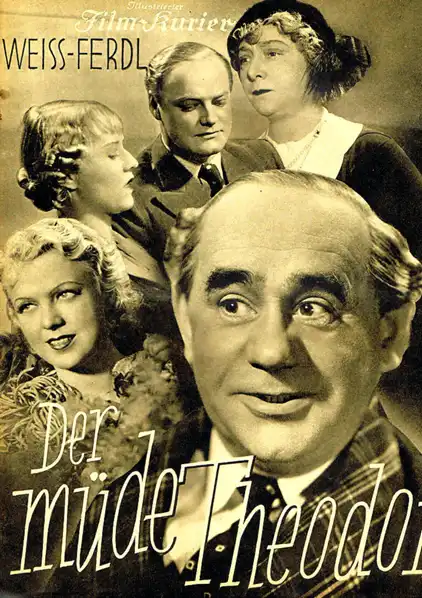
A definitive 7.4/10 rating for a film that redefined the boundaries of cult cinema. Tired Theodore remains a cornerstone of transgressive art.
If you're a fan of old-timey misunderstandings and people running around in aprons, you'll probably get a kick out of Tired Theodore. If you need your movies to be sharp, modern, or fast-paced, you’re going to be checking your watch every five minutes. It’s definitely for a specific crowd—the kind that likes the smell of old film stock and gentle, low-stakes chaos.
The whole premise is just a classic disaster waiting to happen. Our guy Theodore pawns his wife's necklace, which is about as smart as poking a sleeping bear. He’s doing it for his niece’s singing lessons, which is sweet, I guess, until you realize he’s entirely incompetent at keeping a secret. Watching him try to navigate the hotel and the table service job is mostly just watching a man sweat for an hour.
The pacing is a bit of a slog, honestly. Sometimes a scene just hangs there, with actors staring at each other like they’re waiting for someone to remember their lines. It’s imperfect, sure, but it feels human. It reminds me of watching something like The Barber Shop, where the environment is almost more interesting than the actual plot points.
There is a sequence in the dining room where things get predictably rowdy. Trays go flying. People trip over nothing. It’s the kind of physical comedy that hasn't changed in a hundred years. You can almost feel the director shouting 'more energy!' from behind the camera. It didn't always work, but you have to admire the effort to make a pile of dishes falling over look like a major life crisis.
Is it a masterpiece? No. Is it a perfect way to spend a rainy afternoon when you don't want to think too hard? Maybe. The stakes are small, the acting is big, and the whole thing feels like a dusty souvenir you found in a drawer. It’s not quite as sharp as Mickey's Rivals, but it’s got a weird, tired soul that kept me watching until the end. ☕
IMDb 5.8
1920
Community
Log in to comment.