DbcultAccessing Vault...
3.2/10
Senior Film Conservator

A definitive 3.2/10 rating for a film that redefined the boundaries of cult cinema. Let's Build remains a cornerstone of transgressive art.
From the opening frame, the camera lingers on the dust‑caked living room of Angelica and J. Tewkesbury Spat, a space that feels both freshly emptied and imminently occupied. Laura Roessing, as Angelica, exudes a restless optimism that is instantly counterbalanced by Sidney D'Albrook’s J., whose sardonic grin hints at an undercurrent of doubt. Their banter, peppered with quick‑fire repartee, establishes a tonal rhythm that feels simultaneously intimate and theatrical.
The inciting incident—a seemingly innocuous suggestion from Angelica’s brother Ambrose (Frank Butler) to construct a home in a single weekend—acts as a catalyst for the film’s exploration of ambition versus ability. Ambrose, whose presence is as much a comedic foil as a narrative engine, brings an earnestness that borders on delusion, propelling the trio into a frenzy of blueprint sketches, hardware store raids, and midnight soldering.
What distinguishes "Let's Build" from conventional slap‑slap comedies is its meticulous layering of humor with structural tension. The film’s pacing mirrors a construction schedule: rapid, relentless, and punctuated by inevitable setbacks. When the trio discovers that their lumber supply is mis‑measured, the resulting improvisation—using reclaimed pallets and a questionable amount of duct tape—becomes a visual metaphor for their shaky marital foundation.
The cinematography, saturated in a palette of dark orange (#C2410C) for the sunrise scenes and sea blue (#0E7490) for the nocturnal shots, underscores the emotional temperature of each sequence. The warm hues illuminate moments of fleeting intimacy, such as when Angelica and J. share a whispered confession over a half‑finished wall, while the cooler blues cloak the frantic night‑time labor, casting long shadows that echo the looming uncertainty of their endeavor.
Roessing’s portrayal of Angelica is a study in controlled chaos. She oscillates between the buoyant project manager and the vulnerable spouse fearing that the house she envisions may become a tomb for her marriage. D'Albrook, meanwhile, delivers a performance that is at once sardonic and sympathetic; his deadpan delivery of lines about “structural integrity” doubles as commentary on relational stability. Butler’s Ambrose is the wild card, his exaggerated gestures and over‑the‑top optimism providing the necessary comic relief while also embodying the archetype of the well‑meaning but misguided family member.
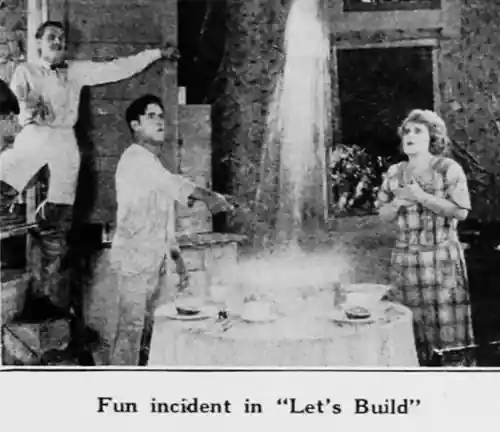
The chemistry among the three leads is palpable, each scene crackling with an undercurrent of tension that feels both rehearsed and spontaneous. The trio’s interactions are reminiscent of the dynamic in The Wood Nymph, where familial bonds are tested against external pressures, though "Let's Build" opts for a more overtly comedic approach.
At its core, the film is a meditation on the constructs we erect—both literal and metaphorical. The 48‑hour deadline functions as a narrative crucible, forcing each character to confront their limitations and aspirations. The house, as it slowly takes shape, becomes a mirror reflecting the fractures and strengths within the Spat family.
The screenplay, though sparse in credited writers, exhibits a deft hand at balancing exposition with visual storytelling. Dialogue is sparingly used, allowing the physicality of construction—sawing, hammering, the echo of nails striking wood—to convey much of the emotional subtext. This restraint aligns the film with the minimalist aesthetic of Society for Sale, where silence speaks louder than words.
From a technical standpoint, the production design excels in authenticity. The set, built on a real construction site, features genuine tools and materials, lending credibility to the frantic building sequences. The sound design, particularly the clatter of timber and the rhythmic thump of a hammer, creates an auditory tapestry that immerses the viewer in the laborious process.
The editing, paced with the urgency of a ticking clock, employs rapid cuts during moments of crisis—such as the collapse of a partially erected wall—while allowing lingering shots when the characters share quiet moments of reflection. This duality sustains tension without exhausting the audience, a balance often mishandled in comparable works like Le Paradis Perdu, where pacing falters.
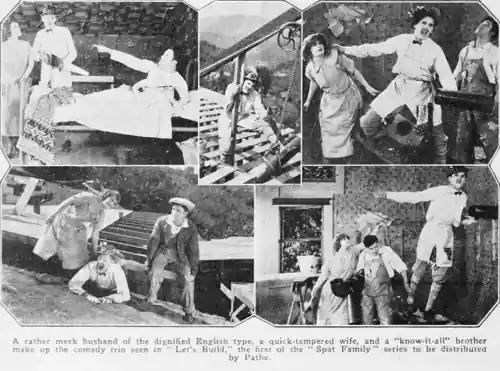
"Let's Build" situates itself within a lineage of DIY‑centric narratives that blend humor with existential inquiry. Its comedic timing echoes the absurdist beats of Schlagende Wetter, yet its emotional stakes are more intimately tied to marital dynamics than the broader societal critiques present in that film.
The film’s brevity—approximately ninety minutes—does not impede its depth; rather, it mirrors the compressed timeline of the plot, reinforcing the thematic cohesion between form and content.
Visually, the director employs recurring motifs of scaffolding and unfinished walls to symbolize the characters’ incomplete understandings of one another. The recurring shot of a lone wooden beam against a dark sky, illuminated by a solitary lantern, evokes a sense of hope amidst uncertainty, reminiscent of the visual poetry found in Das Frauenhaus von Brescia.
Color grading is purposeful: the warm orange tones dominate scenes of collaboration, while the cooler sea blue hues dominate moments of isolation or conflict. This chromatic dichotomy subtly guides the audience’s emotional response without overt exposition.
Early screenings suggest that "Let's Build" resonates particularly with viewers who have experienced the pressures of homeownership or the trials of newlywed life. Its blend of relatable anxiety and exaggerated comedy creates a shared catharsis, encouraging audiences to reflect on the foundations—both structural and relational—that they construct in their own lives.
The film’s modest budget is evident in its reliance on practical effects rather than CGI, a choice that endears it to purists who appreciate tangible craftsmanship. This authenticity has spurred discussions on social media platforms, where users compare the film’s DIY ethos to real‑world renovation challenges.
In sum, "Let's Build" is a deftly orchestrated exploration of ambition, love, and the inevitable missteps that accompany both. Its humor is sharp without being cruel, its characters are richly textured, and its visual language is both cohesive and inventive. While the narrative resolves with the house standing—albeit precariously—the film leaves lingering questions about the durability of the relationships that built it. For aficionados of character‑driven comedy and those intrigued by the symbolism of construction, this episode of The Spat Family offers a compelling, richly layered experience that merits both scholarly attention and casual enjoyment.
IMDb —
1913
Community
Log in to comment.