DbcultAccessing Vault...
Cult Review
Senior Film Conservator
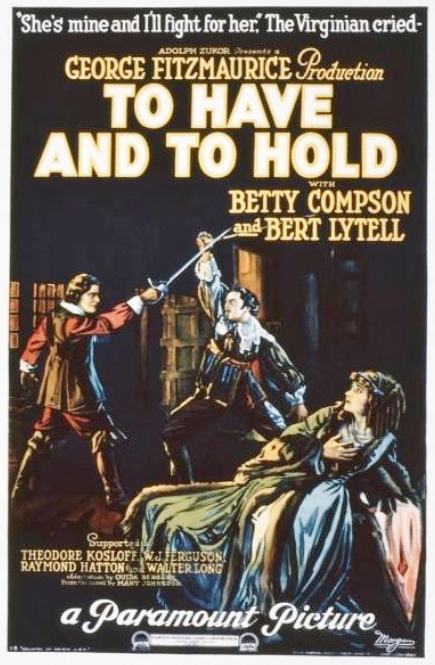
No one survives the voyage unscarred—neither the women auctioned like spice casks nor the men who swear the ocean is honest. In To Have and to Hold (1922), director George Fitzmaurice turns Mary Johnston’s best-seller into a fever dream of colonial squalor and candle-lit yearning, every intertitle dripping with brine and gunpowder. The first image—Jocelyn’s gloved hand slipping a signet ring into a maid’s palm—already foreshadows the film’s obsession with barter: bodies for land, loyalty for titles, love for merciless survival.
Fitzmaurice shoots Jamestown like a plague village: half-timbered hovels squat under skies the color of pewter, while mosquito haze hovers above the James River as if the very air resists possession. Cinematographer Arthur C. Miller (two years shy of his breakthrough on The Hunchback of Notre Dame
Betty Compson plays Jocelyn with the regal brittleness of a Dresden figurine slowly discovering its own hairline cracks. Watch her pupils in the close-up during the proxy wedding: they tremble like candle wicks, half terror, half calculation. Compson’s silent-era contemporaries—Mary Pickford’s perpetual cupid, Lillian Gish’s airborne suffering—traded on archetype; Compson instead weaponizes ambivalence. She can tilt her jaw an imperial inch and still suggest the girl who once believed governesses’ fairytales. That oscillation powers the film’s central miracle: a marriage of convenience that mutates, without declarative speeches, into erotic complicity. Opposite her, Bert Lytell’s Captain Percy carries the slanted grin of a man who has already pawned his tomorrow. Lytell’s physique lacks the barrel-chested heft we associate with seafaring heroes; instead he conveys velocity through posture—every boot-to-heel pivot signals a mind mapping exits. In the pirate-camp sequence, shirt shredded, torso lacquered with studio molasses “blood,” he still projects gentlemanly restraint, as if civility were a garment you can’t flay off. The quiet scene where he teaches Jocelyn to load a musket becomes courtship: powder, patch, ball, ramrod—each motion a stanza of bodily scripture. And then there is Theodore Kosloff’s Lord Carnal—slit-eyed, velvet-voiced even in title cards, a panther in shoulder-molded satin. Kosloff, a Diaghilev alumnus, dances the villainy rather than declaims it; his bow is a provocation, his rapier extension of spine. When he corners Jocelyn in the hold of his ship, candle guttering between them, the space contracts to predator-prey physics. The intertitle reads: “You were bred to ornament my estates.” The subtext—ornament as both décor and possession—slides under the skin like cold iron. The storm that catapults the triangle onto the pirate isle arrives with biblical sadism. Miniatures bob in a slopping tank, but Miller’s backlighting turns studio water into Sturm und Drang; masts snap like wishbones, and the sky—double-exposed negative—seethes with demonic cherubs. Fitzmaurice intercuts parchment maps catching wind, as if destiny itself rips at the seams. In this chaos the class ladder splinters: gentlemen, seamen, and cutthroats share the same barrel-basined lifeboat, democracy born of desperation. The pirate stronghold, shot on a Santa Monica beach draped with gaffers’ tarps, pulses with outlaw ethnography. Women in indigo head-wraps gamble for tobacco plugs; a fiddler with gold teeth re-scores Purcell for squeezebox; children dart beneath crates of Dutch contraband. Among them, Walter Long—the eternal heavy—plays Blackbeard proxy “Red Ned,” beard plaited with gun-lanyards, voice supplied via intertitle colloquialisms: “Yer lungs fer ransom, pretty gentry-birds.” Yet even Ned bows to narrative fate when Percy, gambling his life on a single die throw, wins Jocelyn’s release. The scene epitomizes silent cinema’s poetry: no spoken wager, only the clatter of bone cubes across driftwood, a cut to Jocelyn’s dilated nostrils, then the pirates’ collective inhalation—cinema as tribal ritual. Back in London, the palette shifts to pewter and soot. Fitzmaurice borrows the urban expressionism that would later bloom in Häxan, staging Newgate’s corridors in forced perspective—bars angling toward a vanishing point of despair. Percy’s cell, rim-lit from below, turns his face into a gargoyle; the jailor’s key-ring clinks like doom’s metronome. Meanwhile Carnal parlays with King James’ minions, promising Virginia acreage for a marriage license—statecraft reduced to dowry ledger. The intertitle “The Crown weighs love in carats of tobacco” could headline any modern news story on colonial extraction. The escape sequence—Percy swinging from a rope onto a Thames barge—owes everything to Douglas Fairbanks, yet Lytell undercuts athletic bravura with desperation: his coat snags on mooring spikes, he dangles like gutter-rag, then scrambles up, panting. The camera tilts, earth skewing, subjectivity pitched toward seasickness. Lord Buckingham (Lucien Littlefield, effete and lethal) enters as deus ex machina, silk mask hiding smallpox scars, whispering “I have tasted prison air; it curdles ambition.” Their alliance is transactional, a prototype for every later buddy-cop negotiation. The climactic duel in a Whitehall courtyard—torches hissing in rain—remains one of silent cinema’s most kinetically lucid swordfights. Kosloff and Lytell performed their own choreography, blades flickering like moth wings. Fitzmaurice shoots in overlapping montage: wide for footwork, medium for thrust-parry, insert for knuckle on bell-guard. When Percy disarms Carnal, the latter’s blade spins into mud—an aristocratic symbol dethroned by gravity. Jocelyn, watching from a balcony, does not swoon; instead Compson lets a micro-smirk curl, recognition that marriage’s ledger has finally been balanced by steel rather than gold. Criterion’s 4K restoration, struck from a 35mm nitrate print discovered in a Slovenian monastery, reveals textures previously devoured by time: the brocade on Jocelyn’s traveling cloak now shows iris-threaded pheasants, each stitch a heraldic boast; the pirate sloops’ sails bear patched mends that narrate prior plunder. The tinting scheme—amber for Virginia dawn, arsenic-green for sea nights, rose for the wedding—recalls the hand-poached dyes of 1920s Pathé. Eric Beheim’s new score, performed on gut-string viola da gamba and wooden flute, eschews swashbuckling bombast for ground-bass variations on a 17th-century ayre, letting tension pool rather than spike. Comparative lenses prove fruitful: where The Silent Avenger mythologizes vigilante justice and The Heart of Rachael domesticates female sacrifice, To Have and to Hold interrogates the marriage contract itself as colonial instrument. Its closest spiritual sibling among 1922 releases is actually Häxan—both films understand how patriarchal structures demonize female agency; where Benjamin Christensen renders it as Satanic hallucination, Fitzmaurice stages it as geopolitical farce. Yet the film is not without fissures. The racial optics—African slaves glimpsed in tobacco fields, unnamed and grinning—reek of Southern-belle nostalgia even as the narrative indicts class privilege. Modern restorers added content warning cards, but the scar remains. Similarly, the dénouement’s restoration of aristocratic order feels too neat; once Percy’s sword reclaims Jocelyn, the pirates evaporate, the indentured vanish, Virginia becomes real-estate brochure. One wishes for a coda where the couple, back in the New World, confront the plantation they now co-own—yet silence seals that moral aperture. Still, the movie endures because it trusts gesture over exposition. When Jocelyn, ship-bound for the second time, presses her palm against the splintered rail, the camera isolates the action: five fingers splayed against oak grain, wedding band gleaming like a shackle she no longer minds. No intertitle intrudes. The sea beyond is black glass. In that hush we grasp every silent-era paradox—freedom discovered within bondage, identity forged by masquerade, love legitimized through violence. Fitzmaurice, neither rebel nor reactionary, captures the moment when feudal certainty fractures into mercantile modernity, and two mismatched souls gamble on the horizon’s blank promise. View today, the film vibrates with contemporary resonance: forced migration, marriage as passport, the rich bartering human futures. Streaming in 1080p on Criterion Channel under the searchable slug to-have-and-to-hold-1922, its rip-roaring set pieces deliver pulp ecstasy while its subtext gnaws at the viewer long after the final torch gutters. To watch it is to swallow the ocean’s brine and taste empire’s spoils—salt, blood, tobacco, gold.
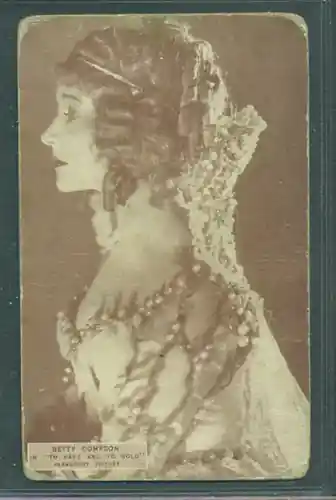 Cinematic perspective: Exploring the visual vocabulary of To Have and to Hold (1922) through its definitive frames.
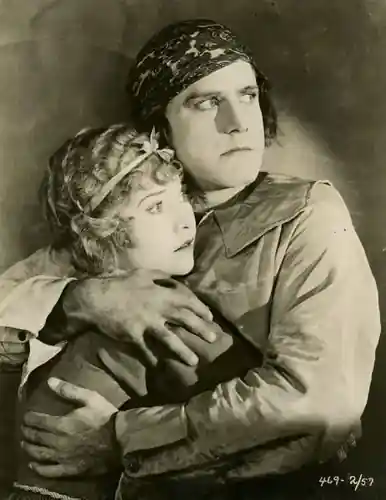 Cinematic perspective: Exploring the visual vocabulary of To Have and to Hold (1922) through its definitive frames.
IMDb —
1924
Community
Log in to comment.