DbcultAccessing Vault...
2.8/10
Senior Film Conservator
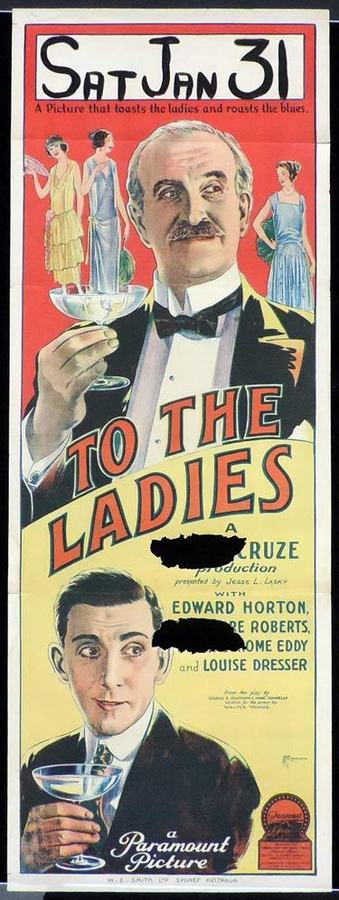
A definitive 2.8/10 rating for a film that redefined the boundaries of cult cinema. To the Ladies remains a cornerstone of transgressive art.
In the nascent years of the Roaring Twenties, a period often romanticized for its economic boom and cultural shifts, cinema was still finding its voice, evolving from mere novelty to a sophisticated art form capable of nuanced social commentary. Amidst this vibrant backdrop emerged 'To the Ladies' (1923), a film that, despite its vintage, offers a surprisingly perspicacious glimpse into the labyrinthine world of corporate ambition and the often-unseen levers of power. It's a delightful, if somewhat forgotten, relic from an era when silent films conveyed complex narratives through subtle gestures, expressive visages, and well-placed intertitles. The story, adapted from a stage play by the formidable George S. Kaufman and Marc Connelly, two titans of American theatre known for their sharp wit and satirical edge, concerns itself with the seemingly prosaic machinations within a piano manufacturing concern. Yet, beneath this unassuming premise lies a trenchant observation on human nature, the pursuit of status, and the unexpected sources of influence that often dictate our professional trajectories. This isn't merely a quaint period piece; it’s a shrewd dissection of ambition, cloaked in the comedic sensibilities of its time. The film’s enduring charm lies in its ability to transcend its silent origins, speaking volumes about the timeless dynamics of power and personal advancement.
At the heart of 'To the Ladies' is a classic narrative setup: three clerks—Beebe, Baker, and Mullin—each vying for the coveted position of factory manager. This particular triumvirate provides a splendid canvas for exploring different approaches to career progression. Mullin, we can infer, represents the diligent but perhaps uninspired worker, relying solely on his output. Baker, portrayed with a sly, almost Machiavellian cunning, quickly discerns the true power broker in the organization: Mrs. Kincaid, the president's wife. In an era where women's roles in business were largely confined to secretarial work or ownership by proxy, Mrs. Kincaid's influence is a fascinating and subversive element. She isn't just a figurehead; she is the veritable decision-maker, a quiet force whose domestic sphere extends its tendrils into the corporate boardroom. Baker, with his keen understanding of human psychology and a flair for currying favor, wastes no time in ingratiating himself with Mrs. Kincaid. His strategies are a masterclass in flattery and social maneuvering, ensuring he becomes the presumptive choice for the managerial role. This initial triumph of calculated charm over genuine merit sets up a compelling tension, questioning the very definition of professional competence and the often-circuitous path to success. The film cleverly highlights how peripheral relationships can become central to career advancement, a theme that remains startlingly relevant even in today's ostensibly meritocratic environments. It's a reminder that human organizations, regardless of their stated principles, are ultimately governed by human relationships and the subtle art of persuasion.

The true genius of 'To the Ladies' lies in its subversion of expectations. Just as Baker's manipulative tactics seem destined for success, the narrative pivots dramatically, introducing an element of genuine intellectual appreciation. Mrs. Kincaid, far from being swayed solely by superficial pleasantries, is ultimately impressed by the intelligence of Beebe's wife. This pivotal moment is a stroke of narrative brilliance, shifting the focus from overt ambition and strategic flattery to the quiet power of intellect and character. It’s a bold statement for a film of its time, suggesting that true discernment looks beyond the obvious and values substance over showmanship. The decision to choose Beebe, not for his own direct efforts to impress Mrs. Kincaid, but through the reflected brilliance of his spouse, offers a profound commentary on partnership, shared virtues, and the often-unacknowledged contributions of women. Beebe’s wife embodies a different kind of power, one rooted in wisdom and insight, which Mrs. Kincaid, herself a woman of considerable influence, recognizes and values. This thematic thread elevates 'To the Ladies' beyond a simple office comedy, transforming it into a subtle exploration of gender roles, the criteria for leadership, and the unexpected ways in which merit can be perceived and rewarded. It’s a delightful, almost progressive, turn that champions genuine intellect over mere political maneuvering, offering a refreshing counter-narrative to the cutthroat corporate world it depicts.
The screenplay for 'To the Ladies' benefits immensely from the formidable talents of its writers: Marc Connelly, Walter Woods, and, most notably, George S. Kaufman. Kaufman, a Pulitzer Prize-winning playwright and director, was renowned for his incisive satire, rapid-fire dialogue, and keen observations on American society. His collaboration with Connelly yielded some of Broadway's most enduring comedies, and their influence is palpable even in this silent film adaptation. The underlying structure of the plot, with its meticulous setup and surprising twist, bears the hallmarks of Kaufman’s theatrical genius. He had an uncanny ability to craft characters who, while often comedic, felt deeply human, driven by relatable ambitions and foibles. The subtle humor, the ironic situations, and the ultimate moral of the story resonate with Kaufman’s signature style. While silent film inherently lacks the verbal sparring that was a hallmark of his stage work, the narrative still manages to convey a sense of cleverness and wit through its visual storytelling and the carefully constructed actions of its characters. This isn't broad slapstick; it's a more nuanced form of comedy, relying on situational irony and character-driven humor. The writers’ ability to translate complex social commentary into an accessible and entertaining cinematic experience, without the aid of spoken dialogue, is a testament to their skill. Their work ensures that 'To the Ladies' remains not just a historical curiosity, but a genuinely engaging and intelligent piece of filmmaking. The film's structural integrity and its ability to deliver a satisfying narrative arc underscore the importance of a strong script, a principle that remains timeless, whether in the silent era or the age of talkies.
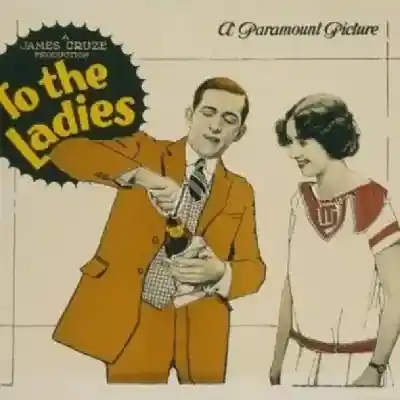
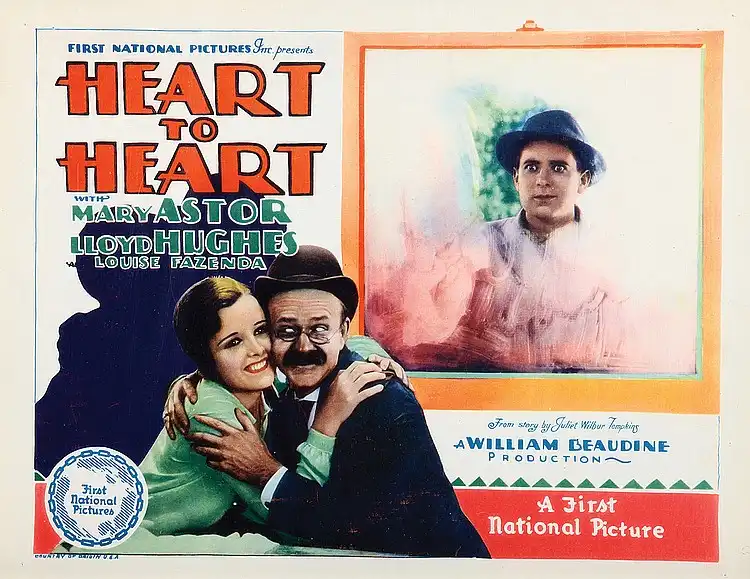
The success of any silent film hinges significantly on the expressive capabilities of its cast, and 'To the Ladies' boasts an ensemble that skillfully navigates the demands of the medium. Theodore Roberts, a veteran character actor of the era, likely brings a commanding presence to his role, perhaps as the president, embodying the traditional authority figure who is ultimately outmaneuvered by his wife's quiet power. His experience in numerous Cecil B. DeMille productions would have honed his ability to convey gravitas and nuance without dialogue. Edward Everett Horton, a master of comedic timing and nervous exasperation, is a particular highlight. Even in his early career, Horton excelled at portraying anxious, slightly befuddled characters, a persona that would perfectly suit one of the ambitious but perhaps less astute clerks, like Mullin or even Beebe himself, enhancing the comedic potential of their struggles. His physical comedy and distinctive facial expressions would have been invaluable in conveying character and emotion. Mary Astor, who was just beginning her illustrious career, likely plays Beebe's intelligent wife. Her early performances often showcased a natural grace and understated intelligence, qualities that would be essential for a character whose sagacity ultimately dictates the film's resolution. Her ability to convey wit and depth with minimal overt action would have been crucial. The supporting cast, including Patricia Palmer, Jack Gardner, Helen Jerome Eddy, Z. Wall Covington, Louise Dresser, and Arthur Hoyt, undoubtedly contribute to the film's texture, each playing their part in the intricate dance of corporate ambition and social maneuvering. Their collective ability to project personality and drive the narrative through purely visual means is a testament to the unique artistry of silent film acting. The film also showcases how casting specific types of actors, like Horton, could immediately communicate character traits and comedic leanings to the audience, even before an intertitle appeared.
'To the Ladies' occupies an interesting space within the silent film canon, offering a nuanced comedic take on themes that were both contemporary and timeless. Unlike films that relied on grand spectacle or overt melodrama, this picture finds its strength in its observational humor and its insightful critique of social dynamics. While it may not share the epic scope of something like The Man Unconquerable, which might delve into more heroic or individualistic struggles against adversity, 'To the Ladies' focuses on the quieter, more insidious battles waged in the workplace. Its comedic approach to ambition, where subtle flattery and domestic influence trump overt merit, could be seen as a precursor to later workplace satires. It contrasts sharply with more direct narratives of social climbing or legal battles, such as one might infer from a title like Cowardice Court, where the stakes might be more overtly dramatic and the social anxieties more pronounced. Instead, 'To the Ladies' presents a more genteel, yet equally potent, form of social commentary. The film's unique perspective on women's influence also distinguishes it. While A Little Princess might explore resilience and virtue in a young female protagonist, 'To the Ladies' showcases a more mature, behind-the-scenes female power that subtly steers the course of corporate destiny. This film, therefore, offers a compelling counterpoint to narratives that either overtly champion or marginalize women, instead portraying their influence as an understated, yet ultimately decisive, force. It's a testament to the film's originality that it manages to explore these complex themes with such a light touch, making its observations all the more impactful.
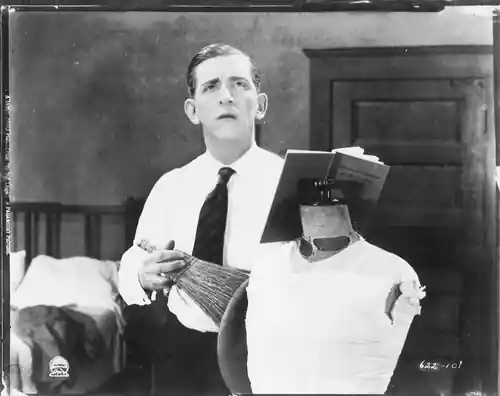
Beyond its comedic veneer, 'To the Ladies' delves into profound questions about the nature of power and the often-overlooked contributions of women in a patriarchal society. The character of Mrs. Kincaid is particularly fascinating; she is not merely the president's wife but the true arbiter of corporate decisions, a silent power broker whose authority is both absolute and discreet. This portrayal challenges conventional notions of leadership, suggesting that influence can manifest in myriad forms, often outside the traditional structures of male-dominated boardrooms. Her decision to favor Beebe, not for his own sycophantic efforts, but for his wife's intelligence, is a radical statement for its time. It implicitly argues that a man's professional success can be intrinsically linked to the intellectual and moral qualities of his partner, elevating the 'domestic' sphere to a position of corporate relevance. This perspective offers a nuanced view of gender roles, acknowledging that while women might have been excluded from overt positions of power, their intelligence and character could still shape outcomes in significant ways. The film subtly critiques the superficiality of corporate politics, where appearances and flattery often trump genuine merit, while simultaneously championing an alternative metric for success—one rooted in authentic intellect and partnership. It's a compelling argument for valuing wisdom wherever it resides, regardless of societal expectations or traditional power dynamics. The film's message, wrapped in gentle humor, remains remarkably relevant, prompting viewers to consider where true authority lies and how often it goes unrecognized.
In conclusion, 'To the Ladies' stands as a compelling testament to the sophistication of silent cinema and the enduring power of well-crafted storytelling. Its exploration of corporate ambition, the unseen influence of domestic partners, and the subversive nature of female power resonates far beyond its 1923 release. The film’s success lies in its ability to blend astute social commentary with genuine comedic situations, all brought to life by a talented cast and the sharp wit of its legendary writers. It reminds us that the pursuit of success is rarely a straightforward path, often influenced by unforeseen factors and the discerning eye of those who truly hold the reins. For enthusiasts of classic cinema, or anyone interested in the evolution of comedic storytelling and social critique, 'To the Ladies' offers a rich and rewarding viewing experience. It's a film that quietly asserts the importance of intellect and character over superficial charm, a message that, despite the passage of a century, remains as pertinent and refreshing as ever. Its legacy is not in grand pronouncements, but in its subtle, yet profound, observations on human nature and the intricate dance of power. It’s a film that, like a finely tuned piano, hits all the right notes, leaving a lasting impression of wit, intelligence, and unexpected depth.
IMDb 4.4
1927
Community
Log in to comment.