DbcultAccessing Vault...
5/10
Senior Film Conservator
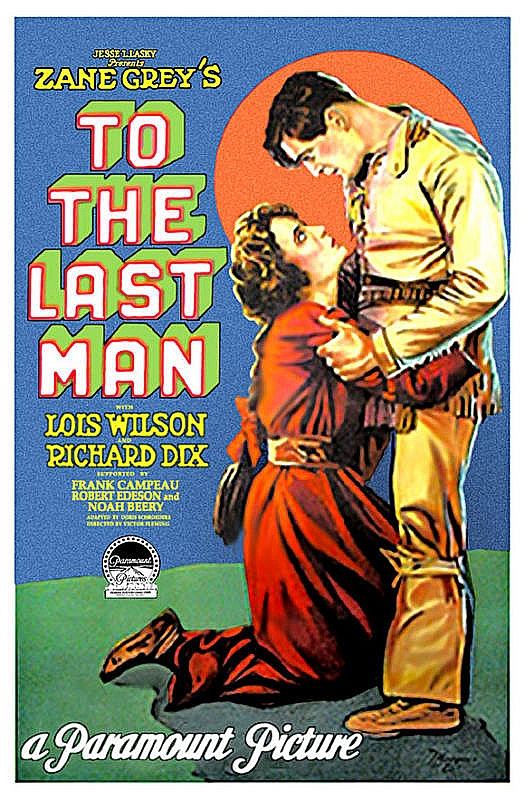
A definitive 5/10 rating for a film that redefined the boundaries of cult cinema. To the Last Man remains a cornerstone of transgressive art.
Ah, the Western. A genre often dismissed as simplistic, a mere backdrop for heroics and villainy. Yet, at its zenith, it serves as a profound mirror to the human condition, reflecting themes of justice, survival, and the enduring struggle against both nature and one's own kind. Zane Grey, the undisputed bard of the American frontier, understood this intrinsically, and his novel, 'To the Last Man,' adapted to the silver screen in 1923, stands as a testament to the genre's capacity for complex narrative and emotional depth. This isn't just a story about cowboys and Indians, or good versus evil; it's a visceral exploration of inherited hatred, the futility of vengeance, and the audacious courage of love blooming in the desolate landscape of an ancient feud.
From its very opening frames, 'To the Last Man' immerses the viewer in a world governed by an almost tribal code of loyalty and retribution. The central conflict, a simmering, generations-old animosity between entrenched ranchers and the itinerant sheepherders, is not merely a plot device; it's the very bedrock of the narrative, a chasm that threatens to swallow all who dare to bridge it. The film, under the pen of Doris Schroeder adapting Grey's potent prose, masterfully portrays this societal fissure not as a simple disagreement over land, but as a deep-seated cultural clash, almost an existential struggle for identity and survival. The ranchers, seeing themselves as the rightful custodians of the vast, open range, view the sheepherders as encroachers, their flocks despoiling the land and their very presence a threat to a way of life. The sheepherders, in turn, are depicted as resilient, fiercely independent, and often misunderstood, fighting for their right to exist and thrive in a world that seems determined to cast them out. This foundational tension creates an atmosphere thick with suspicion and the ever-present threat of violence, a tension that the film exploits with gripping effectiveness.
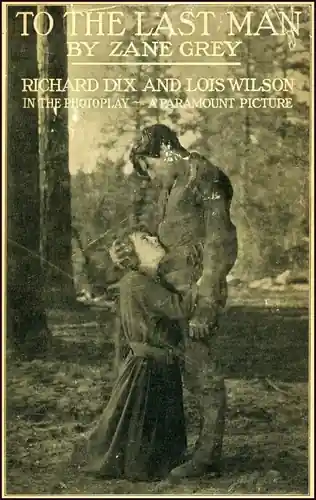
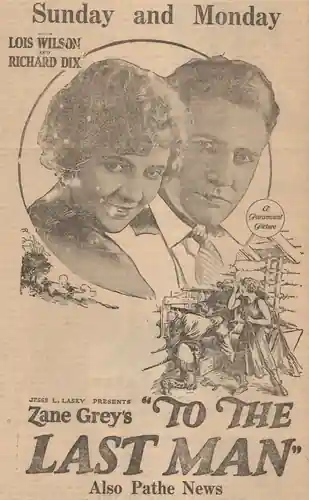
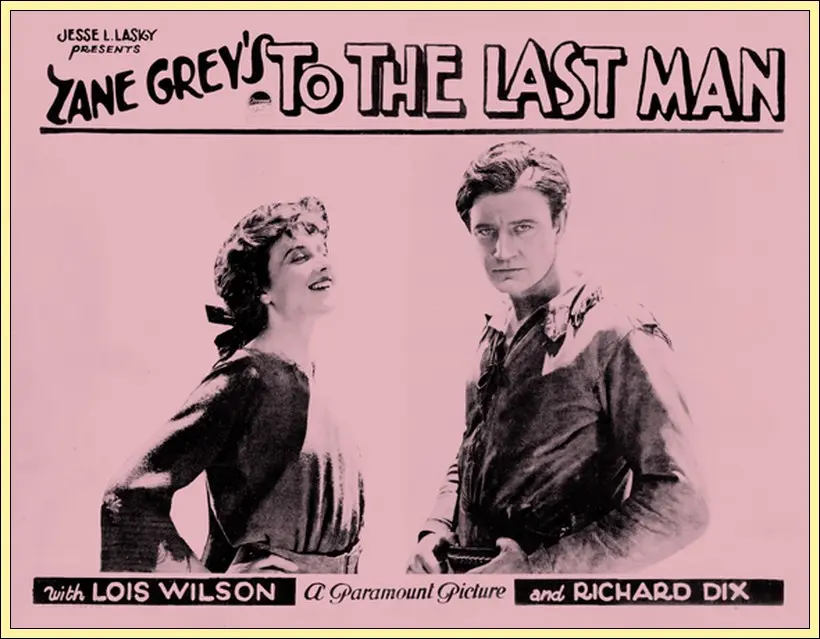
Into this crucible of animosity steps Jean Isbel, portrayed with a compelling blend of rugged stoicism and nascent idealism by Richard Dix. Dix, a prominent figure of the silent era, brings a nuanced vulnerability to Jean, imbuing him with the weight of his family's legacy while simultaneously hinting at a desire for something beyond the endless cycle of revenge. His counterpart, Ellen Jorth, brought to life by the luminous Lois Wilson, is no mere damsel in distress. Wilson crafts Ellen as a woman of formidable spirit, her eyes reflecting both the hardship of her existence and an unwavering inner strength. Their fateful encounter, far from a saccharine contrivance, feels like a cruel twist of destiny, a magnetic pull between two souls tragically tethered to opposing forces. The film doesn't shy away from the immense complications their love introduces. Every stolen glance, every hushed conversation, is fraught with peril, a betrayal to their respective clans, an act of rebellion against the very fabric of their inherited identities.
The performances here are particularly noteworthy, especially given the constraints of silent cinema. Richard Dix conveys Jean's internal torment through subtle facial expressions and body language, his gaze often shifting between resolute determination and profound sadness. Lois Wilson's Ellen is equally expressive, her defiance against the societal norms palpable, her love for Jean a beacon of hope against the encroaching darkness. Their chemistry, though conveyed without dialogue, is palpable, making their forbidden romance the emotional anchor of the entire narrative. The tragic beauty of their situation resonates deeply; they are victims of circumstances, yet also agents of change, their love a desperate, fragile attempt to break the chain of hatred that binds their families. This aspect of forbidden love against a backdrop of societal strife is a timeless narrative, one that echoes in other cinematic portrayals of star-crossed lovers, though 'To the Last Man' grounds it firmly in the unique, unforgiving ethos of the American West.
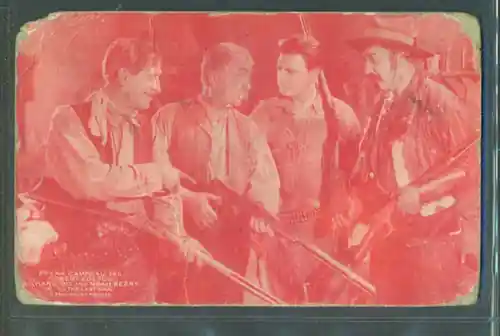
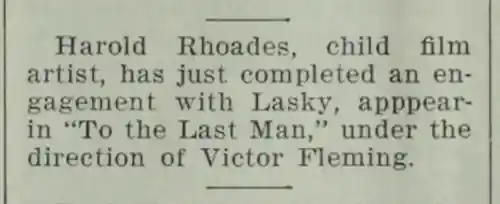
The supporting cast, a robust ensemble of character actors, further solidifies the film's gritty realism. Noah Beery, often cast in villainous roles, brings a menacing authority to his character, embodying the hardened resolve of the feud's more zealous participants. His presence alone suggests a deep-seated antagonism that fuels much of the narrative's conflict. Fred Huntley, Robert Edeson, and Frank Campeau, among others, contribute to the tapestry of the frontier community, each face etched with the weariness and resilience characteristic of the era. Guy Oliver, Winifred Greenwood, Ed Brady, Harold Rhoades, and Eugene Pallette, though perhaps in smaller roles, collectively build a believable world, populated by individuals whose lives are inextricably linked to the feud. The film understands that such conflicts are not just between two families, but involve an entire community, each member playing a role, however minor, in perpetuating or resisting the violence.
One cannot discuss 'To the Last Man' without acknowledging the pervasive influence of Zane Grey. His literary fingerprints are all over this adaptation, evident in its unflinching portrayal of frontier life's harshness and its romanticized yet realistic depiction of the Western landscape. Grey's narratives often explore the moral ambiguities of the West, where notions of justice are frequently personal and often brutal. Doris Schroeder's screenplay manages to capture the essence of Grey's thematic concerns: the struggle for survival, the clash between civilization and wilderness, and the profound impact of loyalty and betrayal. While the silent film medium naturally necessitates certain narrative compressions, Schroeder’s adaptation retains the core emotional intensity and moral quandaries that make Grey's work so enduring. It's a testament to her skill that the film feels both expansive and intimately personal, balancing grand sweeps of action with moments of quiet despair and desperate hope.
Visually, the film capitalizes on the majestic and often brutal beauty of the Western landscape. Though specific directorial credits for this era can sometimes be murky, the visual language employed is undeniably effective. The vast, open plains, the rugged mountains, and the dusty trails are not just backdrops; they are active participants in the story, mirroring the characters' isolation and the grand scale of their struggle. Cinematography in silent films often relied on strong compositions and evocative lighting to convey mood and narrative, and 'To the Last Man' is no exception. We see wide shots that emphasize the smallness of man against nature's grandeur, contrasting with tight close-ups that magnify the raw emotions etched on the characters' faces. The action sequences, particularly those depicting the clashes between the rival factions, are staged with a visceral energy that would have undoubtedly thrilled audiences of the time. The raw, untamed quality of the American West is captured with an authenticity that allows the audience to feel the dust, the sweat, and the tension of a world teetering on the brink of constant conflict.
The pacing, a critical element in silent cinema, is handled with a keen understanding of dramatic ebb and flow. Moments of intense action and suspense are interspersed with quieter, more reflective scenes that allow the emotional weight of the narrative to settle. This rhythmic variation prevents the film from becoming monotonous, maintaining audience engagement throughout its runtime. The visual storytelling techniques—from the use of intertitles to convey dialogue and exposition, to the emotive performances and expressive gestures—all contribute to a cohesive and compelling cinematic experience. It’s fascinating to consider how these early filmmakers, without the benefit of synchronized sound, developed such sophisticated methods of conveying complex narratives and character motivations. The skill demonstrated in 'To the Last Man' is a testament to the ingenuity and artistry of the silent film era.
The central theme of the feud, while specific to its Western setting, carries a universal resonance. The senseless cycle of violence, where generations inherit grievances they barely understand but are compelled to uphold, is a tragic constant in human history. In this regard, 'To the Last Man' offers a poignant commentary on the destructive nature of prejudice and the devastating consequences of an unwillingness to forgive or compromise. The film vividly portrays how easily animosity can fester, consuming individuals and entire communities, often to the point where the original cause of the conflict becomes secondary to the act of vengeance itself.
This examination of deep-seated, generational conflict finds thematic parallels in various forms across cinematic history. One might draw a comparison to the stark, almost operatic drama of films like Hearts Aflame, which, while perhaps not a Western, delves into intense emotional conflicts and familial divisions that threaten to tear lives apart. The sheer emotional weight of such protracted struggles, where personal happiness is sacrificed at the altar of ancestral pride, is a powerful and recurring motif. Even in films like His Enemy's Friend, one can find explorations of overcoming deeply ingrained biases, albeit perhaps through different narrative resolutions. 'To the Last Man' stands out for its raw depiction of how challenging, almost impossible, it is to break free from such a suffocating legacy, especially when the lines between right and wrong become so blurred by history and pain. The film's title itself, 'To the Last Man,' underscores the grim, uncompromising nature of the conflict, suggesting a battle fought until utter annihilation, a chilling prospect that hangs heavy over Jean and Ellen's desperate romance.
Despite its age, 'To the Last Man' retains a compelling power, a testament to the timelessness of its themes and the enduring appeal of its narrative. It's a film that, like many silent era Westerns, helped define the genre, establishing tropes and character archetypes that would be revisited and reinterpreted for decades to come. The struggle for land, the clash of cultures, the fight for love against overwhelming odds—these are ingredients that resonate with audiences across generations. For those interested in the evolution of cinematic storytelling, particularly within the Western genre, this film offers invaluable insights into the techniques and narrative ambitions of early Hollywood.
The film doesn't offer easy answers or simplistic resolutions. Instead, it presents a stark, often brutal, vision of the American frontier, where survival is paramount and justice is often meted out with a gun. Yet, amidst the violence and despair, there is the glimmer of hope embodied by Jean and Ellen's love, a desperate attempt to forge a different path, to break the cycle of hatred. Their story is a powerful reminder that even in the most entrenched conflicts, the human heart yearns for connection, for peace, and for a future unburdened by the ghosts of the past. It’s a narrative that, while rooted in a specific historical and geographical context, speaks to the universal human struggle against prejudice and the enduring power of empathy.
Watching 'To the Last Man' today is more than just an exercise in historical appreciation; it's an opportunity to engage with a foundational text of the Western genre, to witness the origins of many narrative conventions, and to experience a story that continues to resonate with contemporary audiences. It reminds us that even without spoken dialogue, the power of visual storytelling, compelling performances, and universal themes can transcend time. It’s a gritty, romantic, and ultimately tragic vision of the West, a testament to the indomitable spirit of those who carved out a life in a land where every sunrise brought the promise of both beauty and brutality. The film serves as a potent reminder of the weight of history, the cost of unwavering pride, and the profound, often perilous, journey of finding love amidst the ruins of inherited conflict.
Ultimately, 'To the Last Man' is an essential piece of cinematic history, offering a window into the narrative prowess of Zane Grey and the technical artistry of early filmmaking. It's a tale that challenges us to consider the origins of conflict, the nature of loyalty, and the redemptive, albeit often precarious, power of love. The performances of Richard Dix and Lois Wilson anchor the emotional core, making their struggle feel intensely personal against the vast, unforgiving backdrop of the West. The film's exploration of the rancher-sheepherder feud is more than just a plot; it's a sociological study of entrenched divisions, a microcosm of larger human conflicts that continue to plague societies. The film's enduring message, that hatred begets hatred and that true peace requires a willingness to transcend inherited animosity, remains as relevant today as it was a century ago. It’s a powerful, often brutal, yet ultimately hopeful depiction of the human spirit's capacity for both destruction and profound connection, making 'To the Last Man' a compelling watch for anyone interested in the foundational narratives of American cinema and the timeless allure of the Western genre.
Review by Your Esteemed Film Critic
IMDb —
1913
Community
Log in to comment.