DbcultAccessing Vault...
Cult Review
Senior Film Conservator
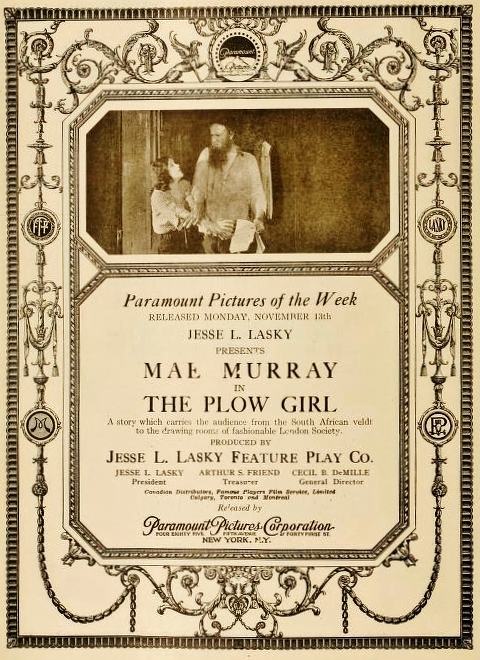
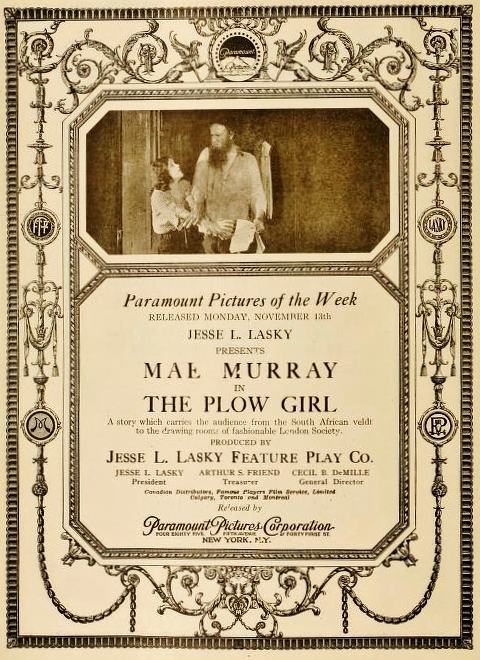
Cinematic history often forgets the visceral power of the early feature-length drama, yet The Plow Girl (1916) remains a staggering testament to the medium's nascent ability to bridge disparate worlds. Directed with a keen eye for atmospheric contrast, the film serves as a vehicle for Mae Murray, who delivers a performance that oscillates between feral desperation and refined elegance. It is a work that demands we look past the flicker of aged celluloid to witness a profound meditation on class, heritage, and the resilience of the human spirit.
The opening sequences, set against the backdrop of the South African veldt, are masterfully stark. Here, the landscape is not merely a setting but an antagonist. We see Margot, portrayed by Murray with an uncharacteristic grit, laboring under the yoke of a life that offers no reprieve. The cinematography captures the isolation of the colonial frontier, a space where the social contracts of Europe feel like distant myths. Unlike the more whimsical transformations seen in The Butterfly, the struggle here is grounded in a palpable, earthy misery.
The domestic tyranny Margot suffers at the hands of her supposed father (played with menacing conviction by William Elmer) provides the narrative’s emotional anchor. It is a portrayal of patriarchal oppression that feels surprisingly modern in its psychological weight. The film uses the vastness of the veldt to emphasize Margot's entrapment; the horizon is endless, yet she is shackled to the plow. This visual metaphor for the pre-suffrage female condition is impossible to ignore, echoing the thematic depth found in other dramas of the era like The Price of Tyranny.
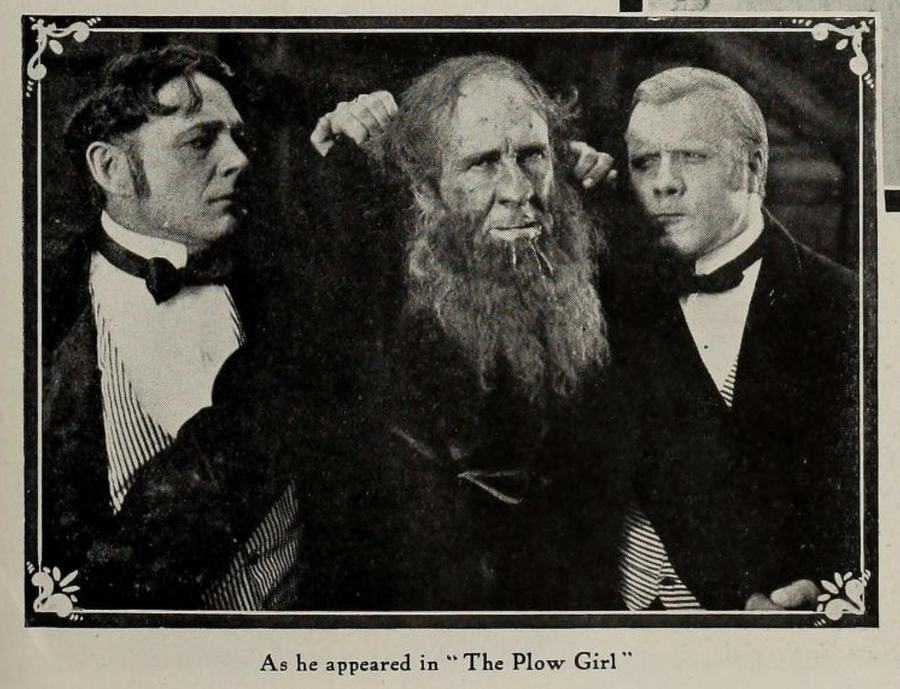
When the plot shifts its gears toward the drawing rooms of London, the film undergoes a radical aesthetic shift. The dusty ochres of the veldt are replaced by the high-contrast whites and deep blacks of Edwardian interiors. This is where the "Lasky look"—that famed approach to lighting and art direction—truly shines. The transition is jarring, intentionally so, as Margot is thrust into a world where her value is measured by her ability to mimic the affectations of the elite.
Mae Murray’s metamorphosis is the film’s centerpiece. Known often for her more flamboyant, dance-oriented roles, Murray here exhibits a surprising range. In the drawing rooms, she is a fish out of water, yet her innate dignity remains her shield. The film avoids the easy pitfalls of broad comedy, choosing instead to focus on the quiet humiliations of social stratification. It reminds me of the social critiques embedded in The Yellow Passport, where the protagonist's identity is constantly under fire from institutional prejudices.
The supporting cast elevates the production beyond a mere star vehicle. Elliott Dexter, as the man who facilitates Margot’s transition, provides a steady, empathetic presence. His chemistry with Murray is subtle, eschewing the over-the-top gesticulation often associated with the period. Theodore Roberts, a stalwart of the era, brings a gravitas to the screen that anchors the London sequences, ensuring the stakes feel genuine rather than melodramatic.
Furthermore, the writing—credited to Edward Morris, Charles Sarver, and Harvey F. Thew—shows a sophisticated understanding of narrative structure. The way the mystery of Margot’s birth is unspooled mirrors the investigative tension of The Master Mind or The Sphinx, though here the focus remains firmly on the emotional fallout of the discovery rather than the mechanics of the plot twist itself.
From a technical standpoint, The Plow Girl is a marvel of its time. The use of shadow in the veldt scenes creates a sense of foreboding that rivals the work in The Final Judgment. There is a specific shot—Margot silhouetted against the setting sun—that encapsulates the loneliness of her existence better than any dialogue could. This visual storytelling is what separates the masters of the silent era from the mere craftsmen.
The costume design also deserves mention. The transition from Margot’s tattered rags to the intricate gowns of London is not just a costume change; it’s a narrative device. Each layer of lace and silk represents another barrier between her and her authentic self. It’s a theme explored in various international productions of the time, such as the Hungarian Halálítélet or the Russian Sonka zolotaya ruchka, where clothing serves as both a disguise and a prison.
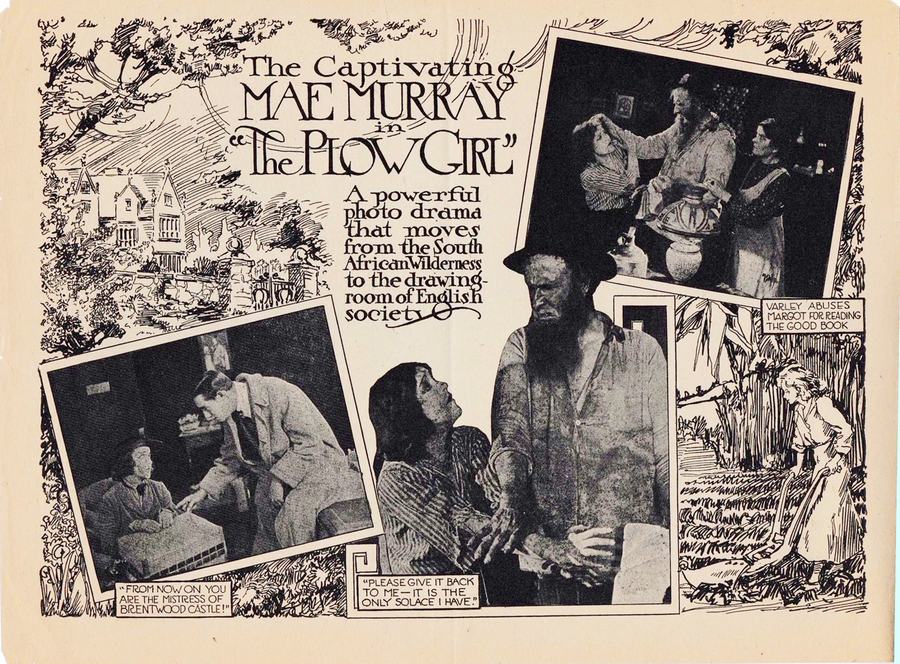
While the film is ostensibly a romance and a drama of manners, it carries an undercurrent of colonial critique. By contrasting the raw reality of South Africa with the decadent artificiality of London, the filmmakers (perhaps unintentionally) highlight the disconnect between the empire’s heart and its extremities. Margot is the bridge between these two worlds, a product of the colony who finds herself an outsider in her ancestral home. This sense of displacement is a powerful motif, one that resonates with the darker themes found in Dope or the moral quandaries of The Silence of Dean Maitland.
The pacing of the film is remarkably tight. Unlike some of its contemporaries that languish in long, static takes, The Plow Girl maintains a brisk momentum. The editing ensures that the tension of Margot's secret—and the looming threat of her past catching up with her—never dissipates. It shares this kinetic energy with films like The Blue Streak and The Silent Rider, which utilized movement to heighten the drama.
What ultimately lingers after the credits roll is the emotional authenticity of the piece. In an era where acting was often synonymous with pantomime, the ensemble here opts for a more internal approach. When Margot looks into the mirrors of her London estate, we see the reflection of a woman who hasn't quite forgotten the feel of the plow. It’s a haunting realization that wealth can change one's circumstances but cannot erase the scars of the past. This psychological depth is what elevates The Plow Girl to the status of a minor masterpiece.
The film’s exploration of the "fallen woman" trope, or rather the "wronged woman" trope, is handled with more nuance than The Leap of Despair. Margot is never a victim of her own choices, but rather a survivor of her environment. Her journey is one of reclamation—of her name, her status, and her agency. In this regard, the film feels surprisingly ahead of its time, offering a protagonist who is active in her own salvation rather than a passive recipient of fate’s whims.
For those interested in the evolution of cinema, The Plow Girl is essential viewing. It showcases a studio at the height of its creative powers and a star who was much more than just a pretty face. The film’s ability to weave together the disparate threads of colonial hardship and aristocratic intrigue into a cohesive, compelling narrative is nothing short of remarkable. It stands alongside For France and Eugene Aram as a definitive example of how early cinema sought to tackle complex social issues through the lens of individual struggle.
In the grand tapestry of 1916 releases, this film shines with a particular luster. It is a story of metamorphosis that refuses to offer easy answers, choosing instead to dwell in the uncomfortable spaces between who we are and who the world expects us to be. As we look back over a century later, the dust of the veldt and the polish of the drawing room still feel remarkably vivid, a testament to the enduring power of well-crafted storytelling.

IMDb 5.5
1929
Community
Log in to comment.