DbcultAccessing Vault...
6.9/10
Senior Film Conservator
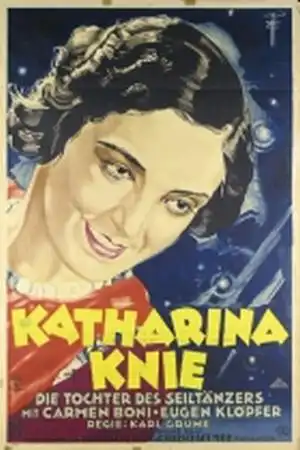
A definitive 6.9/10 rating for a film that redefined the boundaries of cult cinema. Katharina Knie remains a cornerstone of transgressive art.
So, is Katharina Knie worth digging up today? Probably yes, but it’s a specific kind of 'yes.' If you have a soft spot for silent-era dramas, especially ones with a touch of circus magic and a simple, heartfelt story about finding your place, you'll probably find something to love here. If you're looking for modern pacing or snappy dialogue, you'll probably be checking your watch, maybe even before the first act closes. 🕰️
This film is all about Katharina, a young woman literally born into the sawdust and glitter of the circus. Her whole life has been under the big top, swinging on the trapeze with her father. It’s a life full of movement and color, even in black and white, you can feel the energy.
Then, things go sideways. Tragedy hits, and suddenly she's got to leave. The idea is to live a ‘normal’ life, away from the spectacle. It’s a pretty classic setup, right?
The movie really leans into this contrast between the circus and the town. The circus scenes are a flurry of activity, even if a bit chaotic at times. You see the acrobats, the clowns, the animals—a lot of activity, you know?
But then Katharina, played by Ursula Grabley, moves to this quiet, almost *too* neat town. Her expressions here are really what sell it. She looks so lost, like a bird in a cage. You can practically see her trying to remember how to just… *be* a normal person. It’s quite touching. There’s one shot where she’s just sitting at a small table, trying to sew, and her hands look so clumsy, so out of place. It’s a tiny detail, but it speaks volumes.
The pacing, well, it’s definitely from a different era. Some scenes linger a bit longer than you might expect, letting the emotions play out on the actors' faces. This is a silent film, after all. The music (if you’re watching with a good score) does a lot of the heavy lifting. It swoops and swells in just the right places, sometimes a little too much, but it works.
I found myself particularly drawn to the scenes back at the circus. There's this older fellow, I think it’s Ludwig Stössel, who plays a kind of gruff but loving ringmaster or something. His face is just *everything*. He’s seen it all. When Katharina tells him she’s leaving, his reaction isn't overblown, just a quiet sadness that feels very real.
And the way the other performers look at her. It’s not just goodbye; it’s like they know she’s making a mistake, but they can’t stop her. A real sense of community there. It made me think about The Gaucho, another film that really gets the feel of performers as a family unit.
Back in town, Katharina tries hard. She really does. But she keeps bumping up against the rigid expectations. It’s not just the fancy clothes she has to wear, but the way people *look* at her. Like she's still got sawdust on her shoes, even if she doesn't. 👣
The film isn't about huge dramatic twists. It’s much more about an internal journey. You can feel the pull of the circus, like a magnet she can’t escape. It's almost a character itself. The smell of the canvas, the roar of the crowd – it’s all implied, but strongly felt. One moment, she just stops in the street, hearing a faint melody, and you know exactly what she’s thinking. She misses it. 🎪
The ending, when it comes, feels right. It’s not a big surprise, but it’s satisfying. It makes you think about where we truly belong, and if we can ever really escape our roots. Some things are just in your blood, you know?
So, yeah. If you're into old movies, especially those that capture a specific kind of melancholy and charm, give Katharina Knie a watch. It might not blow you away with special effects, but it's got a quiet heart that still beats. And honestly, it's pretty cool to see how these stories were told way back when. ✨
IMDb 6.6
1925
Community
Log in to comment.