DbcultAccessing Vault...
Cult Review
Senior Film Conservator
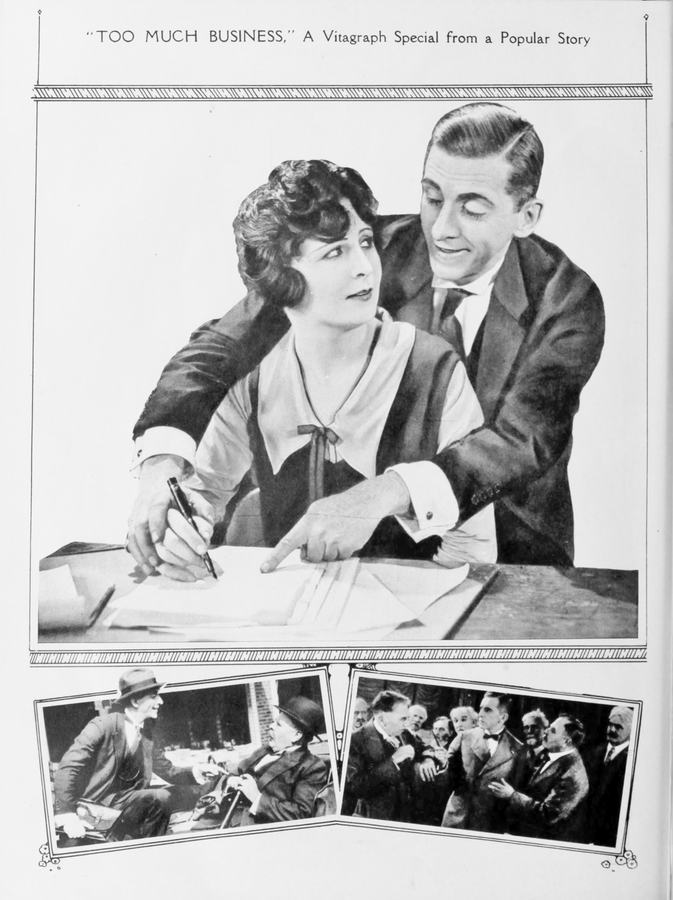
Rodney Marvin saunters into the newsroom like a champagne bubble that’s learned to walk, his spats flashing semaphore signals of fraudulent confidence while the linotype machines clatter a metallic hymn to manufactured truth.
There is, in this brittle 1922 newsprint universe, a whiff of cordite and corn starch, of cigars left to smolder in chipped enamel trays, of telegrams that arrive like death warrants sealed with a smirk. Director Ford Beebe—better remembered for western serials—here orchestrates a chamber piece of civic entropy, letting the camera linger on faces lit by the sodium flare of flashbulbs, each grin a hairline fracture in the municipal façade.
The plot, gossamer as onion-skin, follows Rodney’s escalating charade: he parlays a fabricated scoop into partnership with battle-scarred editor Matt Hayward, then weaponizes gossip to reconcile Hayward with his nemesis, Mayor Gorham. Nothing is verified; everything is syndicated. The film’s satire anticipates our own clickbait century, where outrage is monetized and retractions are printed in 5-point type.
Edward Everett Horton, still a decade away from Fred Astaire’s wingman, plays Rodney as a man who’s read too many etiquette manuals and too few ethics textbooks. His eyebrows operate on a separate payroll, arching like startled circumflexes whenever a lie reaches its expiration date. Watch him in the compositing room, where he dictates a retraction while balancing on a rolling stool—his torso tilts, the ceiling fan slices the cigarette haze, and for a heartbeat the camera fetishizes the precariousness of credibility.
Across the newsprint battlefield, James Corrigan’s Hayward exudes the slumped fatigue of a man who once believed in watchdog journalism but now settles for lapdog advertorials. Their partnership is less a merger than a mutually agreed-upon contamination: Rodney provides the swagger, Hayward the stationery.
Cinematographer George Richter lenses the newsroom in chiaroscuro so severe it feels carved, not lit. Note the sequence where Rodney first spots Mayor Gorham’s silhouette through the frosted glass of an office door: the mayor’s derby blooms like a black sun, the city seal behind him reduced to a coin-like wink. It’s a masterclass in using shallow depth to conflate power and paranoia.
Intertitles—often a blunt instrument in silent comedies—here crackle with epigrammatic venom. One card, tinted tobacco-amber, reads: "A lie can sprint the length of Main Street before the truth has tied its shoelaces." The typography itself jitters, as if the letters are jockeying for front-page placement.
For a film predating the Hays Code, Too Much Business oozes libidinal subtext. The mayor’s secretary, played with feline insouciance by Ethel Grey Terry, trades quid-pro-quo favors like baseball cards. In a scene destined for rediscovery by film scholars, she corners Rodney inside the city vault, among ledgers yellowed like old bruises. The camera dollies past iron filing cabinets, their shadows forming prison-bar grids across her décolletage—an eloquent reminder that knowledge, not sex, is the true currency of coercion.
Where Maria Magdalena mythologizes fallen women with stained-glass solemnity, Too Much Business prefers its sinners unrepentant and caffeinated. The Borgia poisonings in I Borgia feel almost operatic compared to the venial ink-stained sins here—arsenic is honest; yellow journalism is gaslighting in paragraph form.
Meanwhile, the juvenile antics of Two Little Imps operate in a moral sandbox; Beebe’s adults play in a cesspool with better lighting.
The 2023 4K restoration, struck from a Czech nitrate print, reveals textures previously swallowed by darkness: the herringbone weave of Hayward’s waistcoat, the chalk doodles on the police-beat blackboard, the pinholes in city maps where pushpins once anchored campaigns now forgotten. The tinting schema—amber for interiors, cerulean for exteriors—reinstates emotional syntax lost for a century.
Today’s TikTok metabolisms may balk at the film’s mid-act quadrille of office-door farce, yet therein lies its charm. Watch how Beebe cross-cuts between Rodney dictating a fraudulent exposé and the linotype machinist converting it into lead slugs: the montage accelerates like a heartbeat on cocaine, the metal letters clacking Morse code to a nation hooked on gossip.
The new score by Janusz Stokłosa refuses quaint ragtime pastiche. Instead, he interpolates klezmer clarinet riffs with prepared-piano thuds, sonically translating the newsroom’s clash between immigrant hustle and WASP entitlement. During the reconciliation scene—where mayor and editor bury the hatchet over bootleg bourbon—a solo cello sustains a harmonic that refuses resolution, implying the truce is merely a cease-fire.
In an era when local newspapers shutter weekly, Too Much Business feels less nostalgic than prophetic. Rodney’s tactics—fabrication, misdirection, strategic apology—are the same ones deployed by digital opportunists gaming algorithms. The film whispers an uncomfortable truth: every epoch gets the press it deserves, and ours merely upgraded the baud rate.
To watch Too Much Business is to inhale the dust of a newsroom where ethics were sold by the column-inch, where typewriter bells tolled like cash registers, where the front page was both altar and auction block. Beebe’s film survives not as a quaint artifact but as a cracked mirror—its silver nitrate reflecting our own image, pixelated yet recognizably venal.
Seek it out in the restoration; let the celluloid splinters remind you that every headline is a dare, every byline a bet against posterity. And as the end title card wryly reminds: "The paper is tomorrow’s fish wrapper—only the stink remains."
IMDb —
1925
Community
Log in to comment.