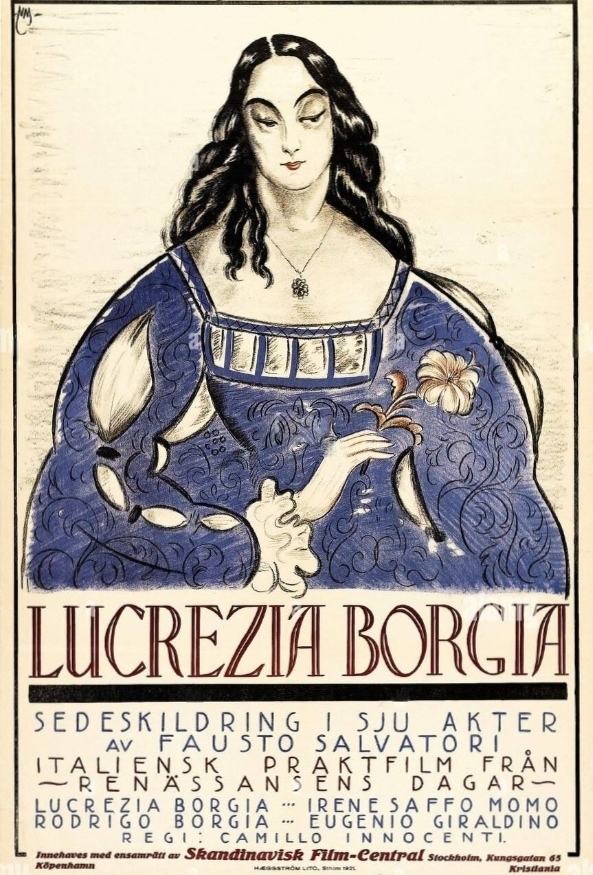
The tale opens with the election of Rodriga Borgia to the office of Pope Alexander VI. Then it switches to a succession of attempts by Caesar Borgia to kill or have killed Alfonzo of Aragon, husband of Lucretia.
Fausto Salvatori
Italy
When we peer through the sepia-toned lens of the 1920 production of I Borgia, we are not merely observing a historical recreation; we are witnessing the birth of the political thriller in its most primal, silent form. Directed during a period of immense transition for the Italian film industry, this work captures the z...
Community
Log in to comment.
"When we peer through the sepia-toned lens of the 1920 production of I Borgia, we are not merely observing a historical recreation; we are witnessing the birth of the political thriller in its most primal, silent form. Directed during a period of immense transition for the Italian film industry, this work captures the zeitgeist of a nation grappling with its own historical ghosts while simultaneously pushing the boundaries of visual storytelling. The film avoids the pitfalls of mere hagiography, ..."