DbcultAccessing Vault...
5.9/10
Senior Film Conservator
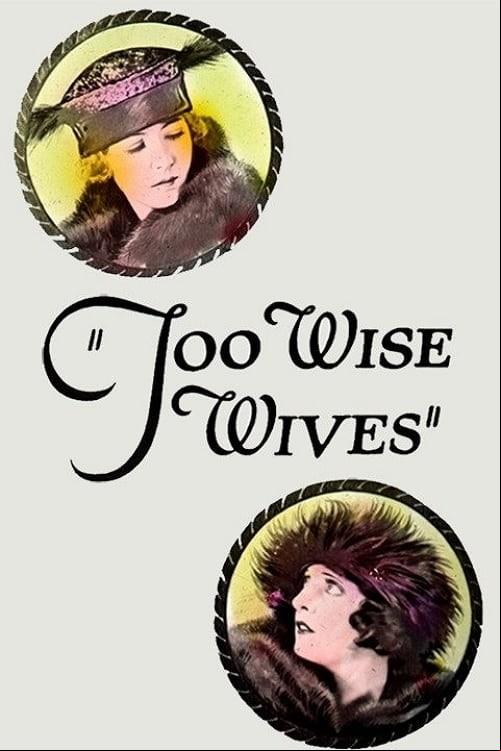
A definitive 5.9/10 rating for a film that redefined the boundaries of cult cinema. Too Wise Wives remains a cornerstone of transgressive art.
Imagine, if you will, a drawing-room comedy that has swallowed a cyanide capsule and waits politely for the froth to turn the color of old lace. Too Wise Wives is that film: a society melodrama which pretends to comfort its corseted heroines while actually eviscerating the very institution that keeps them corseted. Shot in 1920, released in the spring of 1921, and buried for decades beneath the celluloid rubble of more flamboyant Roaring Twenties fare, this quietly incendiary chamber piece now re-emerges looking like a feminist gaslight noir decades before either word existed.
Lois Weber, once Hollywood’s highest-paid director and today a half-erased matriarch, stages the marital skirmish with surgical detachment. She begins with a God's-eye insert of twin breakfast trays: one porcelain, one slightly chipped. In that single cut we understand class, expectation, and the microscopic chasm that will widen into an unbridgeable gorge. The camera—operated by Weber herself, legend says—hovers like an omniscient spouse, refusing the male gaze even when the women disrobe to chemises. Instead, the lens lingers on the tremor of a hand as it hesitates over a cut-glass perfume bottle, half expecting the atomizer to hiss out the name of the other woman.
Marie, essayed by Claire Windsor in a performance so transparent it feels like watching ice sweat, transforms paranoia into performance art. Her eyes perform a daily calisthenics of doubt: widening at a husband’s yawn, narrowing at the maid’s over-cheerful salutation, sliding sideways toward the telephone as though the bell were an alarm for which she has lost the code. Windsor’s trick is to let us glimpse the child inside the wife—the little girl who once won spelling bees and now spells out doom in cigarette ash on the balcony balustrade.
Louis Calhern’s David is that particularly 1920s specimen: the bored bank vice-president whose libido is stirred less by flesh than by nostalgia. Adèle, the ex-flame, embodies a past version of himself—footloose, piano-bar bohemian, pre-responsibility. Every rekindled glance is less an erotic advance than a time-travel experiment, an attempt to step into an older skin that no longer fits. Calhern, tall and saturnine, gives David the gait of a man perpetually walking away from himself; his guilt is indistinguishable from ennui.
The film’s most unsettling sequence occurs at a charity bazaar where the wives sell homemade candied violets while the men bid on “exotic curios.” Weber crosscuts between Adèle’s laughter—low, three bourbons beneath sea level—and Marie’s trembling attempt to fold tissue paper into roses. The montage builds a sinister arithmetic: every giggle in aisle three subtracts a petal from Marie’s bouquet, every sidelong glance adds a wrinkle to her brow. No dialogue, merely the rustle of crêpe and the clink of a gavel, yet the scene vibrates with the subtextual hum of livestock before a lightning storm.
Where contemporaries like The Matinee Girl traded in slapstick innocence and Todd of the Times busied itself with jazz-age shenanigans, Too Wise Wives interrogates marriage as an economic contract whose terms are renegotiated nightly on the pillow battlefield. The husbands speak of “interest rates” and “preferred shares,” while the wives calculate social capital in dinner invitations and the caloric expenditure of a smile. Jealousy, then, becomes a form of inflationary panic: if another woman can mint the same affections, the currency of wifehood devalues overnight.
Weber and co-writer Marion Orth embed this thesis in throwaway props. A close-up of Marie’s household ledger shows grocery totals penciled in red, followed by a single black entry: “Hope – $0.” Later, when David bestows on Adèle a modest diamond barrette, we cut to Marie clipping coupons at the kitchen table, her scissors snipping away at the word “Luxury” in a newspaper advert. The metaphor is blunt, but the emotional algebra is devastating.
Though shot in monochrome, the film’s surviving tinted print suggests a chromatic psychology. Amber glows denote recollection; sickly green washes accompany deceit; a brief, startling cobalt flare erupts during the moment Marie first articulates her suspicion aloud. Modern restorations can’t quite replicate the original dyes, yet even the faded yellows evoke the nicotine stain of a secret kept too long. Weber’s visual lexicon anticipates the coded palettes of Hitchcock and Sirk, only here the palette is not mere embellishment but evidence presented to the jury of our eyes.
Textures, too, testify. Adèle’s velvet shawl glides over banisters like a guilty whisper; Marie’s cotton housedress clings with static electricity, crackling when she crosses her arms as though the fabric itself were gossiping about her. In one exquisite insert, Weber films a hand gloved in kid leather sliding a love letter into a desk drawer. The camera tilts down to the parquet floor where a single pearl, loosened by nervous friction, rolls until it stops against the steel foot of a typewriter. A universe of marital jurisprudence encapsulated in a 12-second shot.
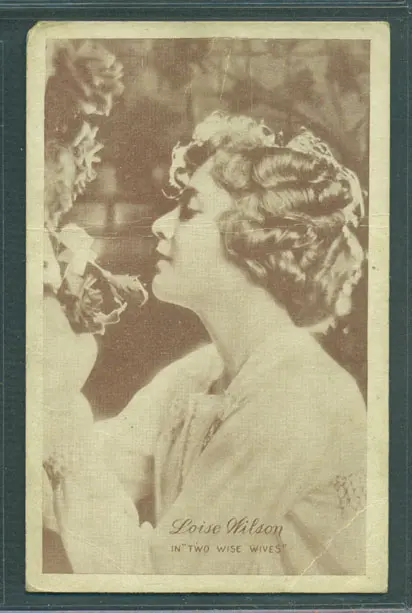
Archival records indicate that Weber wanted a synchronized score of solo viola, arguing that the instrument’s woody timbre mirrored “the human voice when it attempts to lie.” Financial collapse at Paramount’s boutique label, Famous Players–Lasky, nixed the experiment. Thus the film circulated with whatever pit pianist could sight-read. Yet silence suits it. The absence of orchestral reassurance turns every mundane noise—clock tick, fountain pen scratch, distant train—into potential proof of conspiracy. Viewers in 1921 reportedly jumped at the rustle of their own coats.
Spoilers are a century old, yet the finale still bruises. David, confronted, confesses not adultery but something murkier: “a wish to want again.” Adèle, chastened, retreats to Europe, leaving not triumph but a vacancy. Marie, triumphant on paper, stands at her dressing table staring at two combs—one hers, one left behind by Adèle. She tries both; neither feels at home in her hair. Weber ends on a sustained close-up: Marie’s reflection superimposed over the empty hallway, as though she haunts her own house. Fade to black. No moral, only the chill that perhaps every marriage hosts a third, invisible spouse named Dread.
Trade papers of the era labeled the picture “morbid,” “un-American,” and “a sure cure for betrothal.” Theater owners in the Midwest demanded an alternate happy ending; Weber refused. Box-office receipts dipped below cost, contributing to her ousting from Paramount. Yet critics in Motion Picture Magazine praised its “surgical honesty,” and the New York Telegraph prophetically declared, “Future sociologists will study this print as cavemen once studied fire.”
In 2019, the Cinémathèque Française unearthed a 35mm tinted nitrate print in a convent basement—apparently donated by Weber’s Catholic estate. Scanned at 4K, the new restoration premiered at Bologna’s Il Cinema Ritrovato, where audiences gasped at the clarity of Windsor’s micro-expressions. Kino Lorber’s 2022 Blu-ray pairs the film with an audio essay by Shelley Stamp, author of Lois Weber in Early Hollywood, plus a 1917 short, Telephones and Troubles, demonstrating Weber’s early fascination with communication breakdown.
A century later, when dating apps quantify desirability in pixels and push notifications, Too Wise Wives feels eerily prescient. Its concerns—digital or analog—boil down to metrics of attention. Replace handwritten letters with Instagram DMs, gramophone silence with read receipts, and the emotional calculus is identical. Weber’s achievement lies not in predicting technology but in diagnosing the pathology of measurement: the moment affection becomes score-keeping, love metastasizes into audit.
Scholars often slot the film beside Her Husband’s Friend (1920) for its triangular tension, but its true lineage stretches forward to Sirk’s All That Heaven Allows and backward to Ibsen’s A Doll’s House. Kubrick’s Eyes Wide Shut borrows Weber’s tactic of turning upper-middle-class décor into surveillance apparatus; the Christmas lights in Too Wise Wives’ bazaar scene prefigure the orgy’s masked lanterns. Even the Coen Brothers echo in the film’s sardonic use of household objects as plot engines—note the pearl rolling to the typewriter, a visual ancestor of the hat in Miller’s Crossing.
Claire Windsor’s face, once derided as “vapid” by 1920s critics, now reveals a proto-neorealist transparency. Watch her pupils dilate when David claims a late meeting; the iris nearly eclipses the cobalt tint. Louis Calhern’s subsequent career as urbane villains (see The Magnificent Yankee) retroactively implicates David with foreshadowed menace. Mona Lisa, saddled with the ironic moniker, plays Adèle with feline minimalism—she seduces by listening, a technique later perfected by Barbara Stanwyck.
The tracking shot through a keyhole reappears in Mr. Robot; the domestic inventory montage prefigures the Mad Men episode where Betty Draper weighs her kitchen utensils like evidence. Even the pearl-on-parquet image resurfaces in Killing Eve when Villanelle rolls an earring across a Parisian floor—an homage so specific it could only be intentional.
Too wise? Perhaps. Too honest? Undoubtedly. Too Wise Wives offers no catharsis, only a scalpel. It will not comfort the recently betrothed, nor vindicate the happily divorced. Instead, it holds up a mirror—slightly clouded, silvering at the edges—inviting us to recognize our own surveillance habits: scrolling, snooping, quantifying affection in likes and response times. To watch it is to suspect yourself. And that, in 1921 or 2024, is the most radical act any film can demand.
Streaming Availability: 4K restoration on Kino Lorber Blu-ray, Kanopy (library card required), and occasional repertory screenings. Runtime: 80 min. Silent with optional English intertitles and multiple musical scores.
IMDb 7.9
1937
Community
Log in to comment.