DbcultAccessing Vault...
5.6/10
Senior Film Conservator
A definitive 5.6/10 rating for a film that redefined the boundaries of cult cinema. The Spirit of '76 remains a cornerstone of transgressive art.
A reel soaked in gunpowder and lilac
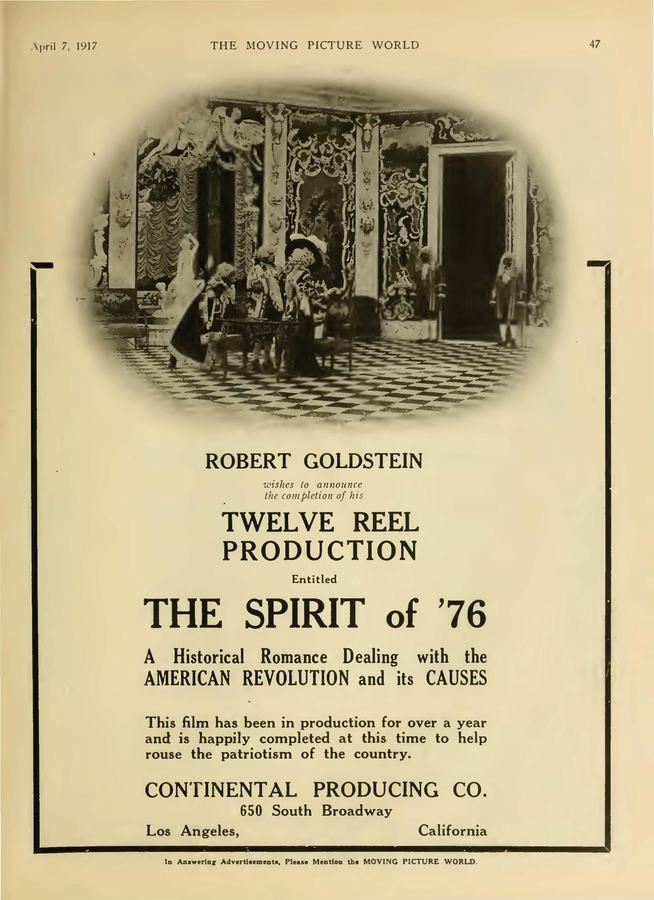
The first time we see Catherine Montour’s eyes, they are double-exposed: over the silhouette of a tomahawk and the dazzle of St. Paul’s dome. That visual paradox—savage and courtier soldered into one flickering frame—announces the film’s wager: can a single woman’s appetite redraw the borders of two colliding worlds? Released in the bruised spring of 1917, while Europe cannibalized its youth in muddy trenches, The Spirit of ’76 arrived like contraband smuggled through a back door of history. No trumpet fanfares, no white-glove premieres; it simply materialized in converted nickelodeons, smelling of nitrate and insurgency.
Director Robert Goldstein, a Jewish immigrant newly stripped of his U.S. citizenship for pacifist agitation, saw the Revolutionary War not as patriotic folklore but as a wound that never closed. He pours that ache into every iris shot: candle flames morph into scalping knives, powdered wigs dissolve into eagle feathers, until the viewer can’t decide whether to stand for the national anthem or scalp it.
Adda Gleason, remembered today—if at all—as a footnote in Griffith’s ensemble epics, delivers here a performance so feral it feels peeled off a cave wall. Her Catherine prowls George III’s gilded cage with the coiled grace of a panther, silk skirts whispering over Turkish carpets like distant war drums. Watch the way she exhales cigar smoke: slow, deliberate, a declaration that the air itself is annexed territory. When the king—Jack Cosgrave in a mercury-sick performance—offers her a tiara of American rubies, she laughs, a sound like ice cracking underfoot, and the laugh is the real crown.
Yet the film refuses the easy tonic of girl-power hagiography. Catherine’s agency is purchased in currencies that blister: she trades knowledge of tribal movements for British muskets, betrays a Shawnee lover (Dark Cloud, magnetic and merciless) to save her own scalp, and ultimately signs a death warrant she herself composed. The camera does not forgive; it lingers on her trembling lips after each transaction, recording the precise instant conscience calcifies into strategy.
Goldstein’s montage is caffeinated on modernist jitters. Intertitles arrive sliced, staccato, sometimes mid-sentence—“The revolution will not be—” smash-cut to a drum head bursting. That nervous rhythm infects the geography: Boston Harbor bleeds into Buckingham Palace via a match-cut of dripping tea and spilt blood. Space folds like a cheap pamphlet; time is a coin flipped by every character, landing red or rebel depending on the angle of desperation.
Compare it to the same year’s Seventeen, all pastel flirtations, or the operatic masochism of Madame Butterfly. Where those films enshrine innocence as porcelain, The Spirit of ’76 treats it as gunmetal. Even the child actor Lottie Kruse, cast as a drummer boy, ends the narrative with a face powdered by gun-smoke, eyes aged a hundred winters.
There is, remarkably, a 12-minute sequence shot entirely on location in Seneca territory—probably the earliest surviving footage of the Allegheny plateau. Cinematographer Norval MacGregor straps the camera to a canoe, letting rapids jostle the lens until the frame itself seems to hyperventilate. You see Catherine’s hair unbraided by wind, her cheeks lacquered with river spray, and the effect is so tactile you can almost smell cedar burning. Silent-era audiences, weaned on studio-bound pageantry, must have felt the vertigo of discovery: America watching itself be stolen in real time.
But the film’s true radicalism lies in its erotic circuitry. Hollywood censors of the period—those self-appointed custodians of virtue—demanded that interracial desire be punished, preferably by death. Goldstein thumbs his nose: Catherine beds whom she pleases, and the camera luxuriates in her autonomy. One astonishing close-up frames her collarbone, glistening with post-coital sweat, while a British officer’s hand enters from off-screen, not to possess but to hesitate, trembling like a compass needle that has forgotten north. That hesitation is the movie’s moral pivot: lust recognized as geopolitics in microcosm.
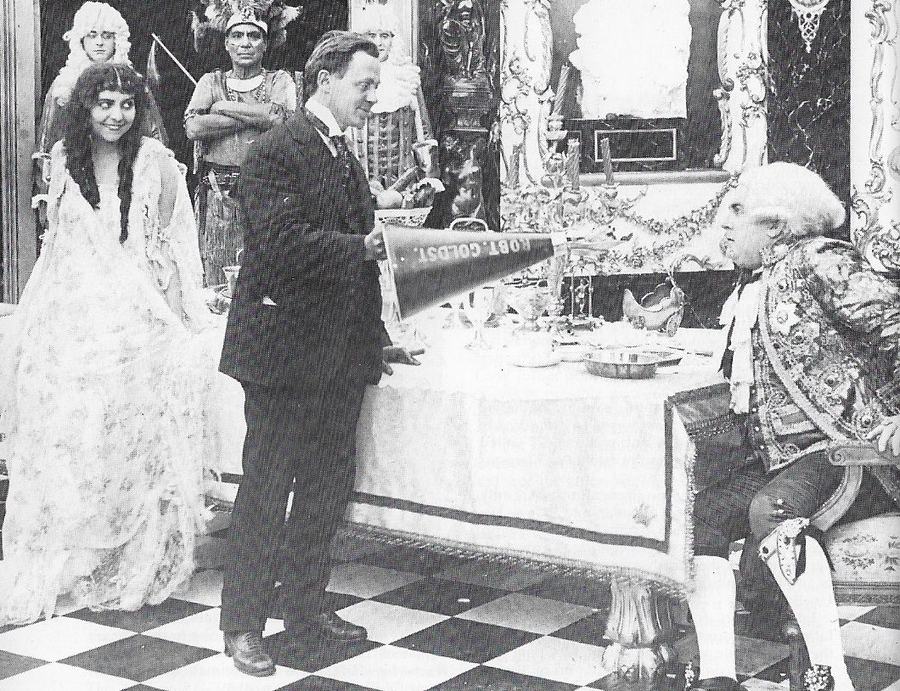
Still, the production itself became a battlefield. Financier W.E. Lawrence pulled funding when he discovered Goldstein’s anti-war pamphlets, forcing the crew to recycle costumes from The Black Chancellor. You can spot the cheat: in the ballroom scene, Catherine’s gown abruptly loses its beadwork, a ghost of austerity haunting opulence. Such seams, rather than diminishing, enhance the film’s bruised authenticity—revolution, after all, is improvised or it is nothing.
Jane Novak, playing Catherine’s mulatto half-sister, delivers a performance pitched at operatic despair. Their reunion, staged in an abandoned chapel lit only by cannon flashes through stained glass, is silent cinema’s hidden Sistine: two women divided by color but yoked by conspiracy, tracing each other’s scars like braille prophecies. Novak’s eyes—huge, ink-dark—hold the knowledge that every emancipation is purchased with another’s chains. When she is eventually captured and auctioned, the intertitle reads simply: “Sold—for the price of a single freedom.” No orchestral swell, no sentimental iris. Just the brute arithmetic of history.
Howard Gaye, channeling the same patrician frost he lent to Elusive Isabel, appears as a pamphleteer who prints seditious verses on Catherine’s silk petticoats. The image of lingerie inked with Thomas Paine is both ludicrous and luminous, a perfect metaphor for the film’s method: sedition smuggled inside seduction. Watch the way Gaye’s fingers smudge ink across Gleason’s thigh—an act at once carnal and sacramental, like signing a treaty with bodily fluid.
Chief John Big Tree, actual Seneca elder, plays Catherine’s maternal grandfather. His presence is not decorative ethnography but living archive. In a scene that survives only in fragmented tint, he teaches Catherine to count coup by touching an enemy without killing him—an indigenous philosophy of restraint that the film juxtaposes against colonial scorched-earth policy. The moment is interrupted by British soldiers who burn the longhouse, yet Big Tree’s stoic gaze, smoke-wreathed, endures as the film’s ethical North Star.
The score, now lost, was rumored to include Iroquois water drums juxtaposed with Handel. Imagine that percussive heartbeat under the finale: Catherine, hair shorn, dressed in a soldier’s coat too large for her frame, walking into a winter forest as snow erases her footprints. The camera retreats, crane-like, until she becomes a single ember against monochrome. No fade-out, just a cut to black—an ending so abrupt that early exhibitors thought the final reel was missing. It isn’t; it’s the first cinematic use of negative space as political statement: revolution belongs to no one, least of all the screen.
Critics of the time—those who bothered—dismissed the film as “anarchic fantasy.” They were half right. The fantasy is the notion that nations are forged by consensus rather than conquest. Yet the anarchy is methodical, a surgical dismantling of every Founding-Father myth still percolating in schoolbooks. Where Sealed Valley sanctifies Manifest Destiny and Heimgekehrt launders empire through domestic melodrama, The Spirit of ’76 insists that America was birthed in a double infidelity: betrayal of British father and Indigenous mother.
What lingers, long after the nitrate dissolves, is the taste of impossible choices. Catherine’s last gesture—burning the map that would grant her safe passage west—feels less defiant than exhausted, the way one might tear up a lottery ticket after realizing the jackpot is genocide. The smoke curls into the shape of a question mark: who gets to write the epilogue of conquest? Not the victors; their ink is blood, illegible once dried. Not the vanquished; their throats are stuffed with dirt. Perhaps only the camera, that merciless eye, retains the right to keep rolling, documenting the moment when history swerves into mythology.
So, is The Spirit of ’76 a masterpiece? The question is malformed. Masterpieces crown themselves; this film uncrowns everyone within reach. It is a shrapnel-spray of contradictions: feminist yet colonial, anti-war yet fetishizing muskets, sympathetic to Indigenous plight yet centering a mixed-race savior. That incoherence is its most radical truth: revolution is not a line but a tangle, and anyone who claims otherwise is selling you a flag.
See it, if you can, on 35mm—when the projector’s claw-gate scratches the emulsion, each blemish feels like a bayonet. In digital, the image flattens, the political fangs extracted. But even pixelated, Gleason’s gaze cuts through codec and compression, a reminder that some insurgencies refuse archival burial. One hundred and six years later, her eyes still ask the same subversive question: whose freedom are you wearing tonight, and who had to die for the fitting?
IMDb —
1931
Community
Log in to comment.