DbcultAccessing Vault...
4.8/10
Senior Film Conservator
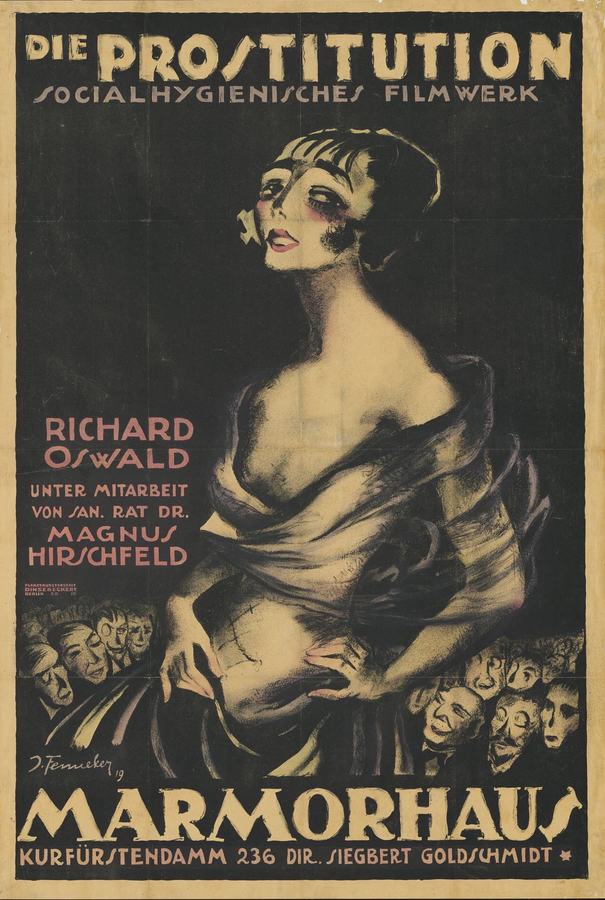
A definitive 4.8/10 rating for a film that redefined the boundaries of cult cinema. Prostitution remains a cornerstone of transgressive art.
Richard Oswald's "Prostitution" erupts onto the screen not as titillation but as a Molotov cocktail hurled at Weimar Germany's moral complacency. The year is 1919 – a nation reeling from defeat, revolution, and hyperinflation – and Oswald weaponizes cinema to dissect how societal collapse commodifies the female body. Forget courtroom procedural; this is expressionist jurisprudence where chandeliers cast guilt-laden shadows and marble columns seem to sweat under the weight of collective hypocrisy.
Werner Krauss portrays Professor von Malten with terrifying serenity. Watch his hands – not gesticulating wildly like the outraged delegates, but calmly turning legal documents like pages in a necrology of Western morality. His monologue on the "economic algebra of desperation" remains cinema's first unflinching treatise on how poverty manufactures sexual exploitation: "When a factory pays starvation wages while charging rent for lice-infested barracks, it has already drafted its employees into prostitution." Krauss delivers this with the detached clarity of an autopsy report, making the subsequent sputtering outrage from frock-coated diplomats feel grotesquely comedic.
Oswald fractures the courtroom drama with shards of brutal realism. Gussy Holl's Gretchen isn't a fallen angel but a pragmatic survivor – her descent begins not with seduction but with a factory foreman's casual dismissal. The camera lingers on her hollow-eyed walk through Berlin's Scheunenviertel district, past posters advertising "The Clean-Up" morality campaigns that ironically displace the vulnerable. Anita Berber, the era's notorious "dancing cocaine goddess", plays a version of herself – a cabaret star traded between financiers like a stock certificate. Her tremors during withdrawal aren't acted; they're documented.
The most devastating thread involves Marga Köhler's bourgeois wife. Her nocturnal double life as high-end escort "Madame Claude" collapses when a client recognizes her pearl necklace – the same strand her husband praised at breakfast. Oswald stages her exposure in a hellish sequence: a jazz band's syncopation morphs into a judge's gavel striking wood, champagne bubbles become the flashbulbs of tabloid photographers. It's the inverse of the courtroom's abstract debates – here, shame has teeth and saliva.
Technically, Oswald anticipates neorealism decades early. He smuggled cameras into actual brothels and unemployment offices, creating verité footage later intercut with Conrad Veidt's haunting cameo as a morphine-addicted war veteran. Veidt's skeletal frame leaning against a piss-stained wall, trading his Iron Cross for a vial, becomes the film's accidental thesis: when nations glorify death in trenches, why feign shock at life sold in alleys?
The editing functions as moral indictment. After a delegate condemns prostitution as "foreign degeneracy", Oswald cuts to Wilhelm Diegelmann's industrialist character auctioning off underage refugees. When a clergyman invokes scripture, we jump to Gretl Basch's character forced to abort in a butcher shop backroom – the surgeon's tools juxtaposed with sausages grinding in the next room. This isn't subtlety; it's deliberate savagery against bourgeois sensibilities.
Modern viewers expecting cathartic triumph will choke on the finale. The World Court delivers not condemnation but resignation – acknowledging von Malten's arguments while doing absolutely nothing. As delegates file out, a Serbian sex worker (Kissa von Sievers) spits on the flagstones. Von Malten stares directly into the lens, breaking the fourth wall before turning into a silhouette against stained-glass windows depicting "Justice". The message is volcanic: institutions exist to maintain power, not enact morality.
Comparing "Prostitution" to contemporaneous films reveals its radicalism. Where "The Soul of Kura San" exoticizes Japanese courtesans or "Beautiful Lake Como, Italy" romanticizes suffering, Oswald offers zero titillation. Even "The Scarlet Road" feels prudish next to Berber's unvarnished depiction of addiction. Only "Legion of Honor" approaches its fury, but without the gender critique.
Oswald paid dearly for his audacity. Bavarian censors butchered the print, removing scenes linking prostitution to returning World War I soldiers. Critics branded it "cinematic syphilis" – a smear Oswald cheekily quoted in later advertisements. Yet its DNA permeates films from "Pandora's Box" to "Roma". That final shot of von Malten's silhouette directly inspired Orson Welles' closing of "The Trial".
What electrifies today isn't just its politics but its tactile textures: the sweaty close-ups of panicked delegates, the sulfuric glow of gas lamps in alleys, the chilling silence when von Malten drops his evidence ledger – a thud echoing like a coffin lid. This isn't a film you watch; it's one you inhale and cough up for weeks afterward. Its genius lies in making the abstract profoundly visceral: when a sex worker describes her body as "real estate owned by hunger", you feel the deed transfer in your bones.
The 2021 4K restoration uncovers astonishing details: the embroidery on Berber's decaying kimono spelling "forgotten" in kanji; the glassy despair in child actor Fritz Beckmann's eyes as he sells his sister for bread. Most devastating is realizing Veidt's character wears the same tunic as in "The Vigilantes" – now repurposed as rags. Oswald whispers: heroism rots faster than flesh.
Unlike sentimental melodramas like "My Old Dutch" or "May Blossom", "Prostitution" offers no redemption. Its closest kin might be "Faith" in its critique of religious hypocrisy, but Oswald pushes further – arguing that morality without material change is theater. The film’s power resides in its unresolved anguish, like a wound cauterized but never stitched.
In the century since its release, the debate has shifted terminology but not substance. Replace "World Court" with "social media tribunal" and von Malten's arguments about economic coercion and male demand remain explosively relevant. That’s the film’s triumph and tragedy: its closing indictment could be delivered verbatim today, in any language, to identical applause and inaction. "Prostitution" doesn’t age because society refuses to evolve beyond its pathologies.
Ultimately, Oswald crafted neither polemic nor prurience but a cracked mirror reflecting capitalism’s ugliest transaction. As gallery spectators weep watching their own complicity dramatized, we glimpse cinema’s nuclear capability: to weaponize empathy. When the lights rise, you’ll question every pearl necklace, every sanctimonious speech, every convenient silence. That discomfort is the film’s legacy – a century-old bruise still tender to the touch.
IMDb 5.4
1934
Community
Log in to comment.